CG Policy · 2025
In this section7 topics
Corporate Governance Policy
Has a Corporate Governance Policy
Yes
Policy Description
The Company maintains a steadfast belief that Good Corporate Governance is a management system that fosters fairness, builds investor confidence, and creates long-term shareholder value. Such principles instill trust among all stakeholders while promoting a streamlined, efficient, and effective management framework. This enhances the organization's competitive advantage and ensures sustainable growth. The Board of Directors oversees sustainability and ESG (Environmental, Social, and Governance) operations through the Corporate Governance and Sustainable Development Committee to ensure that business practices align with Good Corporate Governance principles, international standards, and stakeholder expectations. Furthermore, the Company has established a Compliance Unit to supervise and monitor the Company, directors, executives, and employees to ensure adherence to external regulatory requirements. The Company adopts the Three Lines Model Governance Framework by the Institute of Internal Auditors (IIA), which comprises:
First Line: Management
Second Line: Risk Management and Compliance Functions
Third Line: Internal Audit Function
Policy Document Link
https://sustainability.supalai.com/en/document/viewer/26/
Page Number in Report
1-75
Policy & Practices — Board of Directors
Has Policy & Guidelines for the Board
Yes
Board Guidelines
| Guideline | Other — Please Specify | Detail | Document Link | Page Number in Report | |||||||||||||||||||||||||||||||||||||||||||||||||||||||||||||||||||||||||||||||||||||||||||||||||||||||||||||||||||||||||||||||||||||||||||||||||||||
|---|---|---|---|---|---|---|---|---|---|---|---|---|---|---|---|---|---|---|---|---|---|---|---|---|---|---|---|---|---|---|---|---|---|---|---|---|---|---|---|---|---|---|---|---|---|---|---|---|---|---|---|---|---|---|---|---|---|---|---|---|---|---|---|---|---|---|---|---|---|---|---|---|---|---|---|---|---|---|---|---|---|---|---|---|---|---|---|---|---|---|---|---|---|---|---|---|---|---|---|---|---|---|---|---|---|---|---|---|---|---|---|---|---|---|---|---|---|---|---|---|---|---|---|---|---|---|---|---|---|---|---|---|---|---|---|---|---|---|---|---|---|---|---|---|---|---|---|---|---|---|---|---|---|
| Nomination of Directors | The Board of Directors prioritizes transparency and independence within the nomination process. Consequently, the Nomination and Compensation Committee has been established, comprising three members, two-thirds of whom are Independent Directors. This structure ensures that the selection of directorial candidates is conducted with impartiality, remains free from conflicts of interest, and allows for independent judgment to serve the best interests of the Company and its shareholders. The Company promotes board diversity in terms of skills, experience, age, gender, and expertise to ensure effective corporate governance. The director recruitment strategy focuses on fostering Board Diversity, utilizing a Board Skill Matrix as a primary tool to identify qualified individuals whose knowledge, expertise, and experience align with the corporate business strategy. The Board has set an overall target expertise level for its composition at no less than 80%, utilizing broad and diverse recruitment channels as follows:
Furthermore, the Company has established a policy limiting the number of directorships held by each director in listed companies to no more than five positions, without exception. This policy aims to maintain operational efficiency and ensure the consistent quality of strategic advice provided to the Company. Further details are disclosed in Section 2: Corporate Governance, Item 8: "Report on key operating results on corporate governance", under the sub-heading: "Meeting attendance and remuneration payment to each board member" Furthermore, the Company encourages directors to participate in training programs organized by the Thai Institute of Directors (IOD), such as the Director Accreditation Program (DAP) and the Director Certification Program (DCP). Director Orientation The Company recognizes the vital importance of preparing new directors to discharge their duties effectively. Consequently, the Company has established guidelines for director onboarding to ensure that newly appointed directors understand the expectations regarding their roles, duties, and responsibilities. These guidelines also cover company policies, business operations, and corporate governance practices, while fostering a comprehensive understanding of the Company’s business units through site visits. This preparation enables directors to commence their duties immediately, as summarized below:
The Board of Directors has assigned the Company Secretary to deliver the "Director’s Manual" to newly appointed directors and advisors, along with organizing orientation sessions on relevant topics. To ensure efficiency, the manual is delivered via a dedicated QR Code system. Furthermore, directors provide consent for the Company to collect, use, process, and disclose their personal data, as well as data pertaining to related persons or close relatives. In 2025, there were no newly appointed directors. | https://sustainability.supalai.com/en/document/viewer/26/ | 51-52 | ||||||||||||||||||||||||||||||||||||||||||||||||||||||||||||||||||||||||||||||||||||||||||||||||||||||||||||||||||||||||||||||||||||||||||||||||||||||
| Determination of Director Remuneration | The Board of Directors is committed to operating under the principles of transparency and independence. To ensure this, the Board has mandated the Nomination and Compensation Committee, comprising at least three members with a majority of independent directors, to oversee these processes. This structure ensures that the remuneration framework and criteria are equitable, free from conflicts of interest, and aligned with the best interests of shareholders. The key considerations for determining remuneration are as follows:
Full details of the compensation are disclosed in Section 2: Corporate Governance, Item 8: Board of Director Performance Summary, under the sub-heading: the Remuneration of the Board of Directors. | https://sustainability.supalai.com/en/document/viewer/26/ | 56-57 | ||||||||||||||||||||||||||||||||||||||||||||||||||||||||||||||||||||||||||||||||||||||||||||||||||||||||||||||||||||||||||||||||||||||||||||||||||||||
| Independence of the Board of Directors from the Management | Supalai Public Company Limited adheres to the principles of good corporate governance, focusing on the establishment of effective oversight mechanisms and a system of checks and balances between the Board of Directors and the Management. This ensures the protection of the best interests of shareholders and all stakeholders with full transparency. The Company has established independent director qualifications that are more stringent than the minimum requirements of the Securities and Exchange Commission (SEC). Specifically, shareholding is restricted to no more than 0.5% of the total voting shares, and directors must have no conflicts of interest or relationships that could impair their independent judgment. Furthermore, although the Chairman of the Board and the Chairman of the Executive Committee are the same individual to enhance operational agility, the Company has implemented a governance structure with sufficient checks and balances. This includes a formal separation of roles and responsibilities between the Chairman of the Board (governance oversight) and the Chairman of the Executive Committee (executive management). Additionally, power is balanced by maintaining a proportion of independent directors of no less than one-third of the total board members and appointing a "Lead Independent Director" to co-determine board meeting agendas and act as a clear channel for reflecting independent opinions. Moreover, independent directors play a vital role in providing recommendations on strategy and sustainability. The Company arranges meetings among non-executive directors at least once a year to discuss key issues without the presence of management. It also requires an annual review and certification of independence to ensure that the board functions effectively and in alignment with international standards. | https://sustainability.supalai.com/en/document/viewer/26/ | 40-45 | ||||||||||||||||||||||||||||||||||||||||||||||||||||||||||||||||||||||||||||||||||||||||||||||||||||||||||||||||||||||||||||||||||||||||||||||||||||||
| Director Development | The Company places the highest priority on enhancing the potential of the Board of Directors and senior executives, recognizing them as pivotal mechanisms in driving the organization toward sustainability. The Board has established a policy to encourage continuous knowledge and skill development to remain abreast of evolving economic conditions, regulations, and modern technologies. This ensures that their duties in strategic direction-setting and corporate oversight are performed with maximum efficiency, in alignment with the Principles of Good Corporate Governance. Promotion of Knowledge Development: The Board of Directors encourages and supports directors, senior executives, and the Company Secretary in attending training courses, seminars, and knowledge-sharing activities organized by leading institutions, such as the Thai Institute of Directors Association (IOD), the Stock Exchange of Thailand (SET), the Securities and Exchange Commission (SEC), and other relevant professional bodies. The key content areas include:
The Company has consistently implemented knowledge development programs and supported training throughout the year, with a focus on applying acquired knowledge and experience to organizational development and creating long-term sustainable value for shareholders. Details of the 2025 training courses are provided in Section 2: Corporate Governance, Item 8: Report on Key Performance Results in Corporate Governance, under the sub-heading: Information on Director Development. | https://sustainability.supalai.com/en/document/viewer/26/ | 57 | ||||||||||||||||||||||||||||||||||||||||||||||||||||||||||||||||||||||||||||||||||||||||||||||||||||||||||||||||||||||||||||||||||||||||||||||||||||||
| Board Performance Evaluation | The Board of Directors conducts an annual performance evaluation. These assessments are aligned with Corporate Governance principles and the Board's scope of duties and responsibilities. The results are utilized to review performance and enhance operational effectiveness. Furthermore, these evaluations serve as a reference for CG Ratings and comply with international sustainability benchmarks, such as the FTSE4Good Index, which prioritizes board structure and efficiency. The Company facilitates evaluations for the Board of Directors and its four sub-committees: the Audit Committee, the Nomination and Remuneration Committee, the Corporate Governance and Sustainability Committee, and the Risk Management Committee. The evaluation process consists of two main formats:
Additionally, the Nomination and Remuneration Committee compiles meeting attendance data for reporting to the Board. Key performance summaries are as follows:
The overall performance evaluation scores for 2025 are disclosed in Section 2: Corporate Governance, under Item 8: Key Performance Report on Corporate Governance, sub-heading: Board of Directors Performance Evaluation. Chief Executive Officer (CEO) Performance EvaluationThe Company maintains a remuneration policy for the CEO that is linked to the effectiveness of strategic implementation in both the short and long term. This is measured through a system of Key Performance Indicators (KPIs) approved by the Board of Directors. Emphasis is placed on management aligned with ESG (Environmental, Social, and Governance) integration, reflecting the commitment to driving the organization toward sustainability across all dimensions. The overall evaluation results for 2025 are disclosed in Section 2: Corporate Governance, under Item 8: Key Performance Report on Corporate Governance, sub-heading: Chief Executive Officer Performance Evaluation . | https://sustainability.supalai.com/en/document/viewer/26/ | 56 | ||||||||||||||||||||||||||||||||||||||||||||||||||||||||||||||||||||||||||||||||||||||||||||||||||||||||||||||||||||||||||||||||||||||||||||||||||||||
| Corporate Governance of Subsidiaries and Associated Companies | Corporate Compliance: The Company places significant emphasis on compliance, viewing it as a vital mechanism that ensures all work processes and procedures are accurate and prudent. It further empowers the Company to execute strategic plans, achieve objectives, and maintain operations in accordance with regulations, Articles of Association, and requirements of relevant authorities. This ensures that directors, executives, and employees strictly adhere to legal principles and various notifications, both internal and external, in the performance of their duties. Furthermore, the Company monitors the enactment of new legislation impacting business operations, including various draft bills. This preparation allows for the identification and clarification of potential obstacles, ensuring that business operations remain compliant with future laws. The following units have been assigned specific responsibilities:
Governance of Subsidiaries The Company has established a governance policy for its subsidiaries by selecting qualified and experienced representatives to serve as directors in proportion to its shareholding, subject to Board approval. Significant transactions, such as capital increases or decreases and the dissolution of subsidiaries or associates, must receive prior approval from the Board of Directors. The scope of governance is as follows: 1. Financial Reporting: Ensures transparency by requiring subsidiaries to use the same auditing firm as the Company to facilitate thorough examination and obtain appropriate evidence for the preparation of consolidated financial statements. 2. Resources: Allocates resources efficiently, including the use of the SAP Enterprise Resource Planning (ERP) system and the 1720 complaint hotline, to enhance operational speed and efficiency. 3. Legal Compliance: Maintains oversight units to ensure subsidiary operations strictly follow regulations and bylaws to protect shareholder interests and create sustainable corporate value. 4. Internal Control System: Oversees the implementation of appropriate internal control systems. The Audit Committee approves internal audit plans to review these systems, with findings reported directly to the Audit Committee and the Board of Directors, respectively. 5. Adherence to the Code of Conduct: Ensures that directors, executives, and employees of subsidiaries consistently comply with the Code of Conduct and Good Corporate Governance policies. | https://sustainability.supalai.com/en/document/viewer/26/ | 1-65 | ||||||||||||||||||||||||||||||||||||||||||||||||||||||||||||||||||||||||||||||||||||||||||||||||||||||||||||||||||||||||||||||||||||||||||||||||||||||
| Other guidelines regarding the board of directors | Disclosure and Transparency | In 2025, at the Board of Directors Meeting No. 12/2025 held on December 9, 2025, the Board conducted a formal review of the Company's vision and mission to ensure continued alignment with business goals and strategies. Furthermore, the Board monitored the implementation of these strategic elements and oversaw management’s performance to ensure that operations adhered to established policies and plans with maximum efficiency and effectiveness. Shareholding Structure: The Company maintains clear and up-to-date disclosure of its shareholding structure, providing stakeholders with transparent information regarding the Company’s ultimate beneficial owners. This disclosure includes detailed information on major shareholders and the proportion of minority shareholdings. Additionally, the Company does not have a policy permitting reciprocal shareholding between two or more companies for the purpose of business grouping or creating complex corporate structures, such as cross-holding or pyramid holding structures. The direct and indirect securities holdings of directors and executives as of December 31, 2025, are reported as follows:
Note: Securities holding information is disclosed in accordance with Section 59 and Section 89/12 of the Securities and Exchange Act B.E. 2535 (1992). Reporting of Directors’ Interests: The Company has established a policy requiring directors and executives to submit reports on their own interests and those of their related persons. This measure is designed to prevent potential Conflicts of Interest and ensure that the Company’s operations are transparent and accountable, in strict compliance with Section 89/12 of the Securities and Exchange Act B.E. 2535 (1992) (as amended) and relevant notifications of the Capital Market Supervisory Board. Guidelines and Timelines: 1. Reporting Parties: Directors and executives must submit their interest reports to the Company according to the following schedule:
2. Role of the Company Secretary:
3. Maintain and compile the interest report data to serve as a database for monitoring and overseeing Related Party Transactions (RPT), ensuring strict adherence to regulatory requirements. In 2025, there were no reported instances of directors, executives, or related persons having interests or entering into transactions that could lead to a conflict of interest with the Company. Limit on the Number of External Directorships for the Executive Chairman and Managing Director: Supalai Public Company Limited (the “Company”) is committed to adhering to the Corporate Governance Code for Listed Companies 2017 of the Office of the Securities and Exchange Commission (SEC), as well as the OECD Principles of Corporate Governance. With a particular focus on the dedication of time by directors, and to ensure that governance oversight is performed with maximum efficiency while safeguarding the sustainable interests of shareholders, the Company has established a clear policy limiting the number of directorships held in other listed companies. This policy aligns with international standards and the guidelines of the Stock Exchange of Thailand, as detailed below: 1. Directorship Limits: Directors must recognize the importance of allocating sufficient time to perform their duties to the best of their abilities. Each director is permitted to hold directorships in a total of no more than five (5) listed companies (both in Thailand and abroad), including their position at the Company. This ensures that directors can dedicate quality time to scrutinizing work and driving the Company’s strategy. 2. Scope of Application: This guideline applies strictly to all Company directors, including Independent Directors, Non-Executive Directors, and Executive Directors, demonstrating transparency, accountability, and equality according to international governance principles. 3. Reporting and Disclosure: For the benefit of disclosure to shareholders and the public, directors must immediately notify the Company Secretary of any changes in their directorship positions in other listed companies to ensure that information in the Form 56-1 One Report remains accurate, complete, and up-to-date. 4. Pre-appointment Assessment: Before accepting a new directorship in another listed company, directors should review their current obligations to ensure that the additional role will not exceed the specified limit or adversely affect their performance and attendance at the Company’s meetings. Throughout 2025, the Executive Chairman and the Managing Director strictly complied with the policy regarding the limit on external directorships. | https://sustainability.supalai.com/en/document/viewer/26/ | 42-57 | |||||||||||||||||||||||||||||||||||||||||||||||||||||||||||||||||||||||||||||||||||||||||||||||||||||||||||||||||||||||||||||||||||||||||||||||||||||
Policy & Practices — Shareholders and Stakeholders
Has Policy & Guidelines for Shareholders and Stakeholders
Yes
Shareholder & Stakeholder Guidelines
| Guideline | Other — Please Specify | Detail | Document Link | Page Number in Report | ||||||||||||||||||||||||||||||||||||||||||||||||||||
|---|---|---|---|---|---|---|---|---|---|---|---|---|---|---|---|---|---|---|---|---|---|---|---|---|---|---|---|---|---|---|---|---|---|---|---|---|---|---|---|---|---|---|---|---|---|---|---|---|---|---|---|---|---|---|---|---|
| Shareholder | The Company recognizes and prioritizes shareholder rights, refraining from any actions that violate or infringe upon such rights while focusing on the provision of fundamental rights on an equitable basis. These include the right to demonstrate ownership of held shares, trade or transfer shares, receive dividends and profit sharing, consider all forms of remuneration, and access sufficient and timely corporate information. Furthermore, shareholders are entitled to participate in shareholder meetings or appoint proxies to attend on their behalf to exercise voting rights for the appointment or removal of directors, the appointment of auditors, and the consideration of significant matters impacting the Company. The Company has no policy to establish anti-takeover mechanisms that could enable management or controlling parties to operate with a lack of transparency. The Company’s shareholding structure is free from cross-shareholding or pyramid schemes within the corporate group. Additionally, the Company maintains a minority shareholding proportion (Free Float) of more than 40% of the total issued and paid-up shares. Moreover, the Board of Directors has established an Equitable Treatment policy to safeguard fundamental rights and encourage all shareholder groups including major shareholders, retail shareholders, institutional investors, and foreign investor to fully exercise their legal rights. The Company is committed to conducting business with integrity, transparency, and accountability, implementing measures to protect assets from impairment or unjustifiable loss, and preventing the pursuit of personal interest or benefits for related parties. To instill investment confidence, the Company ensures equal information disclosure regardless of gender, age, race, religion, social status, or disability. Should shareholders be unable to attend meetings in person, they reserve the right to appoint a proxy or an independent director to attend on their behalf. The Company also maintains a policy to facilitate and encourage institutional investors to attend meetings, ensuring that shareholder meetings comply with the law and the Best Practices of the Stock Exchange of Thailand. In 2025, the Company strictly adhered to the Code of Business Conduct for directors, executives, and employees. This covers the management of conflicts of interest, the protection of confidential information, and responsibility toward all stakeholders to create maximum long-term value for shareholders. A summary of the rights and shareholder treatments implemented over the past year is as follows: 1. Right to Receive Share Certificates and the Right to Buy, Sell, or Transfer Shares The Company has appointed Thailand Securities Depository Co., Ltd. to perform the duty as its securities registrar to provide convenience to shareholders regarding securities registration matters of the Company. 2. Rights to Receive Equitable Treatment for Repurchase of Shares by the Company The Articles of Association of the Company prohibits the Company to own or pledge its own shares, except in the following cases:
Shares held by the Company from the repurchase are not counted as a quorum at the shareholders' meeting, nor are they entitled to vote and receive dividends. The Company is required to dispose of the repurchased shares within the specified period in the share repurchase program specified by the Company. In the case that the Company cannot dispose of the repurchased shares within such specified period, the Company will decrease the paid-up capital by cutting off the unsold portion of the registered shares. 3. Right to Propose Meeting Agenda Items, Nominate Candidates for Directorship, and Submit Inquiries Regarding the Company Recognizing the importance of equitable treatment of shareholders, the Company has established criteria allowing minority shareholders to propose agenda items for the Annual General Meeting (AGM), nominate individuals for directorship, and submit advance questions concerning the Company. This initiative aims to promote engagement in corporate governance and ensure the selection of qualified personnel to perform duties effectively for the maximum benefit of shareholders and all stakeholders. For the 2025 Annual General Meeting, the Company published the criteria, procedures, and supporting information in both Thai and English on the Company’s website and notified shareholders via the Stock Exchange of Thailand’s information disclosure system at least three months prior to the end of the fiscal year. Shareholders were given the opportunity to propose agenda items and nominate director candidates from September 10, 2024, to November 10, 2024. Upon the conclusion of said period, no shareholders proposed any agenda items or nominated any individuals for directorship in advance. 4. Right to Attend Shareholder Meetings
The Company maintains a policy to convene the Annual General Meeting of Shareholders once a year, within four months from the end of the fiscal year. The Company discloses the schedule, date, time, and venue of the meeting with sufficient notice to facilitate shareholders in allocating time to attend the meeting appropriately. In 2025, the Company held the Annual General Meeting on April 22, 2025, at the Convention Room, 33rd Floor, Supalai Grand Tower, No. 1011 Rama III Road, Chong Nonsi Subdistrict, Yan Nawa District, Bangkok. On the meeting date, the Board of Directors, Board Advisors, senior executives in charge of finance and accounting, and the authorized auditors were present in their entirety to provide clarifications and respond to shareholder inquiries on various matters with transparency.
Thailand Securities Depository Company Limited, the Company’s share registrar, is responsible for forwarding an invitation to attend the meeting along with supporting documents for various agendas with adequate details for decision making as well as proxy forms as prescribed by the Ministry of Commerce and Annual Registration Statement/Annual Report (Form 56-1 One Report) in the format of (QR Code) to the shareholders not less than 21 days before the date of the meeting. This is to give its shareholders and institutional investors time to study details of each agenda and to make preparation for proxy where it is not convenient to attend the meeting on one’s own. In addition, the stamp duties for affixing on the proxy forms are also provided free of charge to lessen the burden of shareholders as well as for their convenience. Furthermore, the letter of invitation to attend the 2025 Annual General Meeting of Shareholders, along with supporting documents and proxy forms in both Thai and English, will be posted on the Company’s website (www.supalai.com) more than 28 days before the meeting. This will serve as an additional channel of information for shareholders, providing the same details forwarded by the Company to is shareholders in documented form. In 2025, the meeting notification would also be advertised on the Company‘s website for a period of 3 consecutive days, starting 14 days before the meeting, in accordance with the Notification of the Department of Business Development B.E. 2565 (2022) regarding Electronic Media Advertising. The Company always informs its shareholders in the letter of invitation to attend the meeting of their legal voting right, principle and procedure. There would not be any other agenda added without prior notice except in case of urgency arisen after forwarding the invitation letter, or upon any urgency relating to or affecting the shareholders’ interest and it is necessary to propose that as a special agenda. In such case, the Company would urgently call an Extraordinary General Meeting of Shareholders which the Company Secretary will take the minutes of the meeting properly and completely of every agenda to be further examined by its shareholders. The shareholders who wish to propose the agenda must possess the following qualifications:
Please note that if, after the Company has checked the name of the shareholder(s) on the record date (as stipulated in 4) and it appears that such shareholder(s) in 1 does not hold the shares as stipulated in 2., the Company reserves the right not to nominate the candidate for consideration at the Annual General Meeting, even though the candidate has been included in the notice of the meeting.
The Company delivers a complete edition of invitation letter to a meeting of shareholders with required documents both in Thai and English to the shareholders to study in advance at least 21 days before the meeting date, both in Thai and English. The shareholders will then be well-prepared for the subjects to be considered at the meeting and also for their consideration whether to attend or not. The documents will include objectives and rationales along with opinions of the Sub-Committees and the Board of Directors to support the consideration of each agenda clearly. The Company clearly defines the agenda items to be proposed to the Annual General Meeting of Shareholders and each matter shall be approved separately. The Company will avoid adding any agenda that had not been identified in advance as it will not be fair to the shareholders who are unable to attend the meeting. Regarding the appointment of directors, the Company will provide the names and brief bio-data of each director to be appointed to the shareholders. Similarly, as for the appointment of the auditor, the Company will clearly identify the name of the auditor, his/her affiliated company, experience, skills, independence and the length of duration that the proposed auditor had been the auditor at the Company including his/her audit fees. Also, the Company will propose at the meeting to pay the dividend (if any). The Company’s dividend policy will be announced with the dividend rates being proposed to the shareholders along with reasons and background information. Regarding the shareholders’ meeting, in the invitation letter, the Company will present the list of 3 independent directors in order for the shareholders unable to attend the meeting in person from the meeting to choose whether to appoint independent directors or other shareholders as their proxies at his/her own discretion. With respect to the voting of each agenda, the shareholders can vote as pre-specified in proxy forms or their proxies can vote for all agendas at the meeting. For institutional investors or foreign investors appointing a custodian in Thailand as a depositor and supervising shares, the Company has coordinated in the matter of documents and evidence that must be presented in advance before attending the meeting to ensure the easier and faster registration process on the meeting day.
The Company gives its shareholders equal voting right, one share one vote for ordinary share, which is the only type of share issued by the Company to its shareholders. One share shall be counted as one vote, and the majority of votes shall be deemed as the resolution of the shareholders’ meeting.
The Company informed its shareholders in the event that they were unable to attend the meeting in person. These shareholders could appoint a proxy or an independent director nominated by the Company, who would be given rights and treated as a shareholder. The Company provided these shareholders with convenience by delivering to them a proxy form as set out by the Department of Business Development, Ministry of Commerce along with an invitation letter to the meeting in both English and Thai. This proxy form described thorough and clear details of the proxy and was delivered to the shareholders not less than 21 days prior to the meeting date. To ensure clarity and avoid inconvenience in attending the meeting of the proxies, details about the meeting, i.e., meeting schedule, agendas, including information on the procedures, documents and testimonials required for the proxy are also provided in the invitation letter. Such information was also posted on the Company's website (www.supalai.com) in the Section "Investor Relations" under the heading "Shareholder’s Meeting" at least 28 days prior to the meeting. In this regard, the shareholders can request further information via phone, e-mail to the Investment Relations Section (For details, please see the Section "Investor Relations").
To facilitate the shareholders who are foreigners, the Company has prepared all relevant documents in two languages, i.e. English and Thai for Thai and foreign shareholders such as in Thailand and overseas, such as the notice of the meeting, proxy instrument, minutes of the meeting, Annual Registration Statement Annual Registration Statemen Annual Report etc., and developed the Company’s website (www.supalai.com) in two languages. The Company will send the notice of the meeting and relevant supportive documents of various agendas to the shareholders not less than 21 days prior to the meeting date and will publicize details about the meeting, the meeting schedule and the meeting agenda on the website of the Company (www.supalai.com) 28 days prior to the meeting date. The Company did not impose any conditions or rules that needed to be certified by government offices or other regulations that caused difficulties for shareholders to appoint a proxy. To lessen the shareholders’ burden of acquiring stamp duties and photocopying, the Company provided stamp duties for affixing in the proxy form at the meeting to reduce the burden of providing stamp duty. Officers were assigned to provide free photo copy services for attached documents in the registration area and check the validation of the documents. Registration is available at least 2 hours before the meeting. In addition, such officers were ready to provide advice and respond to any inquiries. Technology had been applied to shareholders' meetings by using the barcode system for rapid vote casting.
On the day of the Annual General Meeting of Shareholders, the Company assigned officers for implementing registration, providing advice, responding to inquiries for the convenience of shareholders and proxies attending the meeting in advance before the meeting and continuously until the meeting is completed, to ensure that the meeting is transparent and in line with the best practice of listed companies. In addition, electronic technology and barcodes are applied to AGM, E-Registration, and E-Voting program, which start from the process of preparing attendee information, meeting attendance registration, ballot printing, voting processing by agenda item, and meeting reporting to facilitate the meeting of shareholders. The Company encourages shareholders to use voting ballots for all agenda items by preparing separate ballots for each agenda item so that shareholders can vote as they deem fit. Such ballots will be collected from the meeting. Before the meeting begins, the Chairman will assign the Company Secretary to inform the meeting clearly of submission of inquiry and comments, as well as the voting and vote-counting procedures for each agenda item under the articles of association. The use of voting ballots for all agenda items is required to allow shareholders to vote as they deem fit and to clearly exercise their right to vote on each agenda item. Explanation on submission of inquiry, comments, voting procedures and vote-counting are as follows:
For the selection of directors, the vote would be cast individually to enable shareholders to elect the preferred directors, whereby the Company would nominate names to be voted one by one. For transparency of this agenda, every shareholder who either votes for, approve, disapprove or abstain, vote on the ballot, and the staff will collect the ballot when all directors were completely voted. Each director who is elected must receive more than half of the entire votes cast by shareholders who attend the meeting and have the right to vote. The shareholders who attend the meeting after the beginning time are entitled to exercise their voting rights or to cast their votes for the agenda during consideration and not yet voted, and the Company attendees would also be given an opportunity to raise questions or to give opinions with reasonable time for discussion. To allow all shareholders to be adequately informed of information and details of such matters, the issues of the questions and answers would be recorded in the minutes of the meeting in order to inform the shareholders who had not attended the meeting, and the Chairman would conduct the meeting according to the agendas. In addition, other agenda items that are not determined in advance must not be included in the shareholders' meeting without providing a prior notice to the shareholders. In 2025, the Company organized the Annual General Meeting of Shareholders of April 22, 2025 at the Convention Room, 33 Floor at Supalai Grand Tower, 1011 Rama III Road, Chong Nonsi Subdistrict, Yannawa District, Bangkok. On the meeting date, the Chairman presided over the meeting to meet and answer questions posed by shareholders regarding the management of the Company. The Chairman of every Sub-Committee, Board of Directors, Advisory of the Board, Chief Accounting-Financial Officer and Company Secretary, totaling 13 persons, had attended the meeting by the concerted as follows:
Furthermore, the Company had invited 2 auditors from EY Office Limited, namely Ms. Krongkaew Limkittikul and Ms. Salitta Piyanonthaya, to attend the meeting since its starting to listen to opinions and answer questions raised by shareholders. At the meeting, the Chairman of the meeting assigned the Company Secretary to clarify the Meeting about voting procedures, vote counting, and announcement of voting results. The Company will announce the voting results after the end of agenda items. The Company also offers opportunities to shareholders who have inquiries or would like to express opinions on the agenda can raise their hands to ask questions before voting at the end of each agenda. Regarding any matter other than the agenda, shareholders can raise questions at the end of the period, which they have equal rights and sufficient time.
The meeting of shareholders will be facilitated by the Company, ensuring that it does not contain any complicated procedure or limit the opportunity of those who wish to study the information of the Company. In addition, the Company shall not perform in any way that creates barriers to or hinders effective communication among shareholders. The Company shall take into account the convenience of the participants by not organizing the meeting on traditional holidays or holidays of commercial banks. Also, it shall conduct the meeting during appropriate period, that is, during 8.30 - 17.00 hours, and convenience is provided such as having the staff to provide sufficient convenience, to check documents, answer inquiries and provide duty stamps for affixing the power of attorney, while convenience is provided for the elderly and the disabled as well as security system and emergency plan for the participants. In 2025, the Company organized the Annual General Meeting Shareholders on April 22, 2025, of which 10 directors representing 100%. Presently, the Company has its registered capital in the amount of 1,955,666,261 Baht and its paid-up capital in the amount of 1,953,054,030 Baht with the par value of 1.00 Baht per share. Today, there were 670 shareholders attending the meeting in person, holding altogether 1,292,961,552 shares or equivalent to 66.2020% of all outstanding shares categorized as follows:
Therefore, the quorum was duly constituted according to the Company’s Articles of Association and under the Public Limited Companies Act B.E. 2535 (1992), which requires not less than 25 shareholders presented in person or represented by proxy at the meeting, with shareholding altogether of not less than one-third of issued shares. To conduct the meeting transparently and in accordance with the best practices for e-Shareholder Meeting of listed companies, the Company assigned 1 volunteer, Ms. Waraporn Angsirikulchot, to participate in the vote counting at the shareholders' meeting in the vote counting area and collect the ballots signed by the above vote counting witnesses for later verification. In each agenda item of the meeting, the Company arranges vote casting and clearly records the resolutions of the meeting as to how many votes are approval, disapproval or abstention.
The Company had disclosed the resolutions of the Annual General Meeting with result of the vote in a letter to the Director and Manager of the Stock Exchange of Thailand and on the Company’s website (www.supalai.com) within 1 day after completion of the meeting, which was on April 22, 2025 as well as the minute of the meeting with the votes for each agenda and important questions or suggestions fully recorded. The minutes of the meeting had been forwarded to the Stock Exchange of Thailand (SET), the SET’s Board of Governors and relevant agencies within 14 days from the date of the meeting, that is on May 6, 2025 for the Annual General Meeting of Shareholders. The information on the meetings is available on the Company's website, and the Company had publicized VDO live of the sessions on the Company's website. (www.supalai.com) to serve interested shareholders.
In order for the shareholders to review meeting details within a reasonable time and to ensure equality for both Thai and foreign shareholders concerning access to the information, the Company has implemented a policy on distributing minutes of the shareholders’ meeting accurately and in a comprehensive manner. Each agenda contains important information, comprising explanation of the voting procedures, the essence of agendas, resolutions and voting results (either votes for, against, or abstained), as well as questions, clarifications, and comments during the meeting in both Thai and English, including the list of directors, with names and positions provided, attending the meeting, of which in 2025, all of them had attended. Such information will be displayed on the Company's website within 14 days from the meeting date for shareholders to ensure the accuracy of the minutes’ data which will be later forwarded to the Ministry of Commerce within the time prescribed by laws. In 2025, the Company publicized the minutes of the Annual General Meeting of Shareholders on May 6, 2025. 5. Rights to Receive Dividends and Share of Profits The Company allocates profits to its shareholders in the form of dividends. The Company’s dividend payment policy, the proposed interim dividend rate with reasons and information supporting consideration shall be informed to the shareholders. The 2025 Annual General Meeting of Shareholders passed the resolution to approve the 2024 net profit allocation for dividend payment totaling 1.45 Baht per share. 6. The Right to Consider Remuneration for Directors As regards remuneration for directors, the Company has complied with the policy on the criteria for considering and proposing the directors’ remuneration to shareholders. Accordingly, the Nomination and Compensation Committee was appointed to consider the form and criteria for the payment of remuneration to each position of the directors. Such remuneration has been considered by taking into account the business size, business environment and economic condition in whole, overall performance that reflects and connects with the results of operations, as well as comparing with remuneration of those in the same industry at competitive and reasonable level. The Company has also proposed all forms of remuneration, i.e., monthly allowance, gratuity and meeting allowance, which will be proposed to the shareholders for approval at every Annual General Meeting of Shareholder. Neither cash nor other assets will be offered to the directors unless it is the remuneration as per the rights and entitlements on a normal basis for the position as directors of the Company (For details, see “Meeting Attendance and Remuneration Payment for Individual Directors”). The remuneration payment shall be in accordance with the Public Limited Companies Act, Section 90, which stipulates that the remuneration payment to directors must be in accordance with the resolutions of the general meeting of shareholders that consists of not less than two-third of the total votes of the shareholders present at the meeting. 7. The Right to Receive Adequate Business Information in a Timely Manner The Company has disclosed business-related information on the news system of the Stock Exchange of Thailand while also posting important information and current updates on its website (www.supalai.com). Such an effort is considered the protection of shareholders’ rights beyond their legal rights. 8. The Right to Approve the Appointment of Auditors and Determination of Audit fees The Company has set out agendas for the appointment of auditors and determination of audit fees for shareholders to approve at the general meeting of shareholders on an annual basis. Details on the names of auditors proposed, the companies to which they belong, experience and capabilities, independence issue, and audit fees will be provided sufficiently to shareholders for consideration. 9. Right to Approve Special Transactions Shareholders of the Company are entitled to approve connected transactions or the acquisition or disposition of assets with transaction sizes as specified in relevant laws and regulations or consider and approve any other matter that has a significant impact on the Company. If the shareholders will enter into a Shareholder Agreement, the Company shall make all efforts to ensure that such Shareholder Agreement does not cause a significant impact on the Company or other shareholders. In 2025, the Company did not violate the compliance with the regulatory authorities' guidelines regarding the prohibition of shareholders from communicating with each other or the non-disclosure of shareholder agreements that have a significant impact on the Company or other shareholders. 10. Related Party Transaction The Company has complied with the policies on related party transaction by requiring that directors, executive management and all employees as well as employees in the subsidiaries and associated companies strictly comply with the regulations of the Stock Exchange of Thailand in every respect. When a transaction is not in accordance with normal trading conditions, an approval must be obtained from the Audit Committee and then presented to the Board of Directors for approval of the transaction. The implementing steps regarding interrelated transactions or related party transaction are as follows:
The directors, executive management and all employees must avoid any personal interest that will have a negative effect on the performance of work for the benefit of the Company or making it difficult to perform the task correctly and efficiently. A conflict of interest may arise in many situations. However, in performing duties, the Company’s benefit under legitimate law and ethics must be observed. The Company had completely disclosed related party transaction in its Annual Registration Statemen Annual Report (Form 56-1 One Report). Furthermore, the Company forbids its executives and employees from undertaking or participating in any business that is in competition with the Company’s business, regardless of whether such directors, executives and employees will receive either direct or indirect interests. It is clearly indicated in the Company’s Code of Conduct. However, to conduct related party transaction or transactions with conflict of interest, the Board of Directors has laid as a policy that they must be considered and approved by the Board before proceeding. In addition, the information on names, relationship of connected persons, transaction value, reasons and the need must be disclosed in the Annual Registration Statement and Annual Report as per the rules of the Stock Exchange of Thailand and the Office of the Securities and Exchange Commission, Thailand. The meeting must also be attended by the Audit Committee to ensure that the related party transaction are conducted fairly, reasonably, and with proper pricing policy, taking into consideration the maximum benefit of the Company, the Company has publicized guidelines on the website of the Company (www.supalai.com) to inform the shareholders and the general public. In 2025, there was not connected transactions, which has violated and/or has not complied with the rules and regulation of the Stock Exchange of Thailand and the Office of the Securities and Exchange Commission, Thailand. In addition, the Company had no agenda for connected transactions and reporting required to be approved by the Annual General Meeting and the Company has no business group structure that has connected transactions in the form that might have conflict of interest. 11. Enhancing Shareholder Rights through Collaboration with the Thai Investors Association (TIA) The Company recognizes the significance of establishing a balance of power within the capital market. Consequently, it supports the mission of the Thai Investors Association (TIA) in acquiring shares and exercising rights at shareholder meetings of listed companies nationwide. This enables the TIA to legally participate in meetings and drive mechanisms for minority shareholder protection, thereby establishing corporate governance benchmarks for the overall economy and strengthening the Thai capital market. The Company provides support in the following areas:
| https://sustainability.supalai.com/en/document/viewer/220 | 1-2 | |||||||||||||||||||||||||||||||||||||||||||||||||||||
| Employee | The Company consistently recognizes that employees at all levels are its most valuable assets. Consequently, it strictly adheres to its Employee Treatment Policy, Compensation and Benefits Policy, and Employee Development Policy. The Company ensures fair and non-discriminatory treatment, enhances employees' quality of life, and provides support for their families during emergencies. This includes equitable practices regarding employment, termination, and compensation—benchmarked against industry peers and aligned with Company performance (with short-term incentives tied to annual profitability). Furthermore, the Company manages appointments, transfers, training, new employee orientation, professional development, and welfare benefits. It actively solicits employee feedback and focuses on fostering a safe and conducive working environment that empowers employees to realize their full potential, thereby contributing to the organization’s sustainable growth. Moreover, the Company has fully and punctually contributed to the Fund for Encouragement and Development of the Quality of Life of Disabled Persons, in strict compliance with the Empowerment of Persons with Disabilities Act, B.E. 2550 (2007). To ensure long-term financial security and provide tax benefits, a voluntary Provident Fund has been established. This is complemented by role-specific online training curricula (Supalai Beyond Training). The Company disseminates these policies to all employees via its corporate website and the Corporate Governance and Quality System Intranet. Detailed information is available in Section 2: Corporate Governance, Item 8: Key Operating Results on Corporate Governance, under the "Employee Information" sub-section. | https://sustainability.supalai.com/en/document/viewer/43 | 1 | |||||||||||||||||||||||||||||||||||||||||||||||||||||
| Customer | The Company has strictly adhered to its Customer Treatment Policy, which is binding upon all directors, executives, and employees, including those within its subsidiaries and associates. This commitment aims to foster customer satisfaction and confidence, anchored in the principles of fairness, integrity, and ethical conduct. The Company treats all customers equitably, ensuring that engagement is based on mutual fairness and the delivery of high-quality products at reasonable prices. Furthermore, the Company is dedicated to the procurement, development, and production of quality goods and services to meet customer needs. This includes regular evaluation and mitigation of any potential product impacts. To ensure transparency, concrete channels for feedback and complaints have been established to facilitate continuous operational improvement. The Company also maintains rigorous quality control to ensure compliance with standards, regulations, consumer protection laws, and other relevant legal requirements, providing efficient service to all clients. Monitoring customer satisfaction via the Customer Satisfaction Score (CSAT) system to measure, evaluate, and enhance processes as follows:
Further details are disclosed in Section 1: Business Operations and Performance, under "Driving Business for Sustainability," specifically within the "Customer Information" subsection. | www.supalai.com | 1 | |||||||||||||||||||||||||||||||||||||||||||||||||||||
| Business competitor | The Company strictly adheres to its Competitor Treatment Policy, which is binding upon all directors, executives, and employees, including those within its subsidiaries and associates. Our primary focus is to promote free and fair competition, protect our reputation and that of others, and safeguard consumer interests. We strictly refrain from acquiring competitors' trade secrets through dishonest or improper means and avoid any actions that lead to market price distortion, which could adversely affect consumers. The key principles are as follows:
In 2025, the Company faced no litigation or legal proceedings regarding anti-competitive behavior. Further details are disclosed in Section 1: Business Operations and Performance, under "Driving Business for Sustainability," specifically within the "Social Policies and Guidelines - Partner Rights" subsection. | https://sustainability.supalai.com/en/document/viewer/183 | 1 | |||||||||||||||||||||||||||||||||||||||||||||||||||||
| Business partner | The Company adheres to a policy of fair and equitable treatment for all business partners, including contractors, vendors, and financial institutions. This policy is strictly observed by all directors, executives, and employees, including those within subsidiaries and associates. Our operations are conducted with the Company’s best interests in mind and are based on the principle of mutual benefit. We actively avoid situations involving conflicts of interest, honor all contractual commitments, and provide factual information and accurate reporting. Negotiations and dispute resolutions are grounded in maintaining long-term business relationships. Furthermore, we provide continuous support to residential construction contractors to encourage the sustained delivery of high-quality craftsmanship.
Detailed information is provided in Section 1: Business Operations and Performance, under the heading "Driving Business for Sustainability," within the sub-heading "Social Policies and Practices—Partner Rights." | https://sustainability.supalai.com/en/document/viewer/182/ | 1 | |||||||||||||||||||||||||||||||||||||||||||||||||||||
| Creditor | The Company adheres to a policy regarding the treatment of creditors, which is strictly observed by all directors, executives, and employees, including those in subsidiaries and associates. We are committed to conducting business with fairness and accountability to build and maintain creditor trust. In the event that any terms or conditions cannot be met, the Company shall promptly notify the creditors to collaboratively seek reasonable solutions. We strictly prohibit any fraudulent practices in our dealings with creditors. To ensure transparency and integrity, the Company has established the following guidelines for creditor relations:
Detailed information is provided in Section 1: Business Operations and Performance, under the heading "Driving Business for Sustainability," within the subheading "Social Policies and Practices Partner Rights." | https://sustainability.supalai.com/en/document/viewer/184 | 1 | |||||||||||||||||||||||||||||||||||||||||||||||||||||
| Government agency | The Company has complied with the laws while operating according to international standards and strictly reported on such compliance, be it the tax payment and other expenses according to the regulations and rules prescribed by the state sector, and provided cooperation and support in implementing the state policies for the benefits of the country. It is also committed to carry out projects beneficial to the public, either being assigned by the state sector or initiated by the Company itself. The Company has established channels of communication for stakeholders to communicate and provide suggestions and information beneficial to the Company’s business operation or to directly submit complaints to the Audit Committee in case of malpractices. Such information or complaints shall be kept confidential in order to protect informants or whistleblowers and maintain confidentiality of the complainants, as the access to this kind of information would be restricted to only responsible persons to examine the complaint issues, and only independent directors shall consider, give instructions, and report to the Board of Directors via the channel 1720. | https://sustainability.supalai.com/en/document/viewer/61 | 1 | |||||||||||||||||||||||||||||||||||||||||||||||||||||
| Community and society | The Company has strictly adhered to its social policies and guidelines concerning community engagement. These practices are consistently observed by all directors, executives, and employees, including those within its subsidiaries and associates. The Company is committed to conducting its business with accountability toward the community, society, and the environment to foster sustainable development across economic, social, and environmental dimensions. By considering the interests of all relevant stakeholders—both within project areas and society at large the Company aims to deliver long-term benefits and ensure enduring sustainability for the community and the environment. Further details are provided in Section 1: Business Operations and Performance, under the 'Driving Business for Sustainability' chapter, specifically within the 'Community and Social Information' subchapter. | https://sustainability.supalai.com/en/document/viewer/186/ | 1-3 | |||||||||||||||||||||||||||||||||||||||||||||||||||||
| Other guidelines regarding shareholders and stakeholders | Responsible to Stakeholders | Analysis of Stakeholder and Development of Operation Strategies The Company attaches importance to the attention to and care for all groups of stakeholders both inside and outside the Company including the responsibility to the society and the environment. Accordingly, the stakeholders have been divided into 11 groups, namely, employees, customers, shareholders/investors, communities including the responsibilities towards the society and the environment, trading partners/suppliers, government agencies, SET, banks and competitors. whereby the criteria on connection has been taken into consideration. Criteria for Stakeholder Identification The Company has categorized its stakeholders into 2 major groups as follows:
Due to a wide variety of stakeholders, the Company has arranged various tools and channels to look for the needs and expectations of each group of stakeholders, as well as to exchange opinions for further development by the Company.
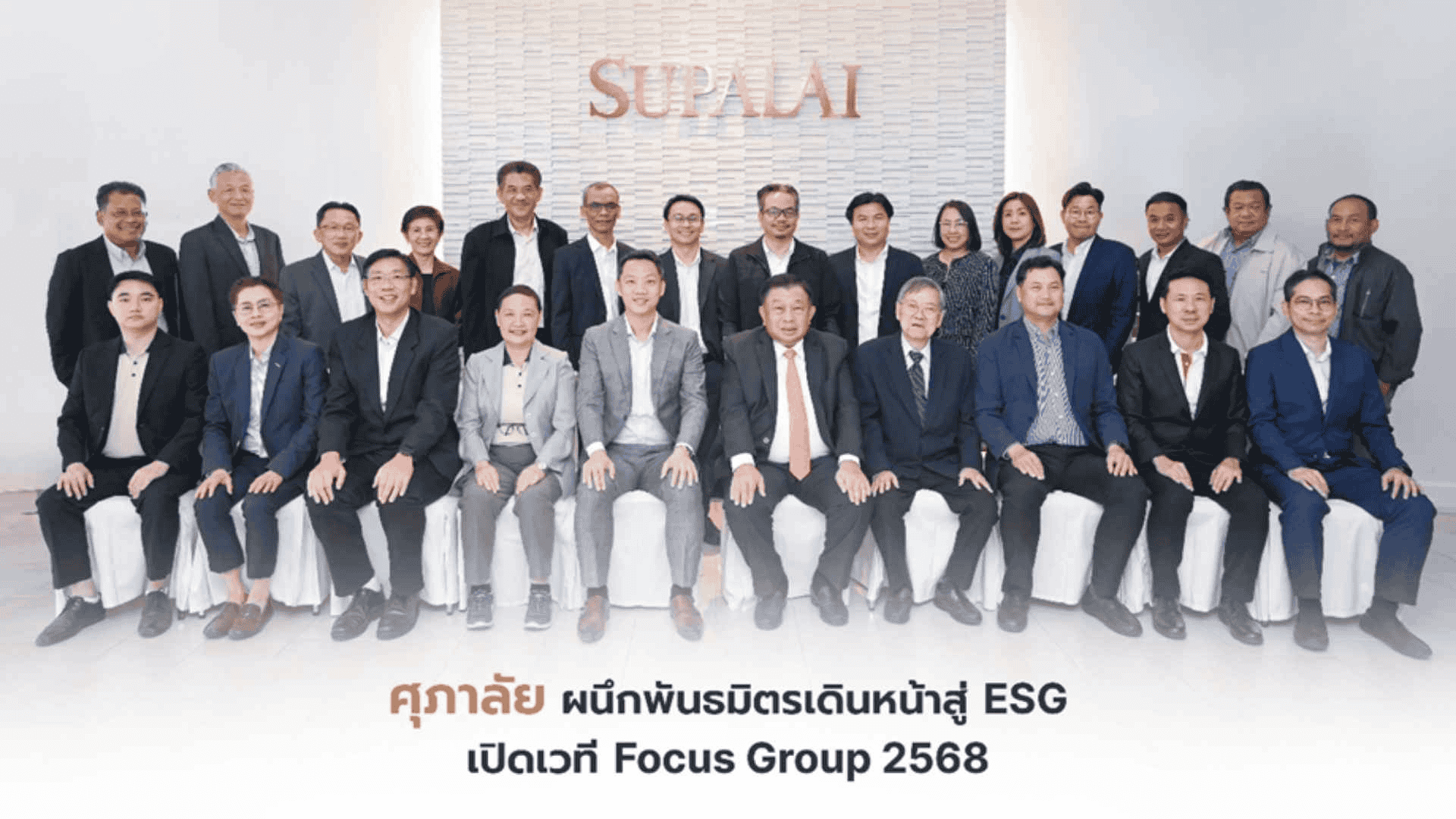
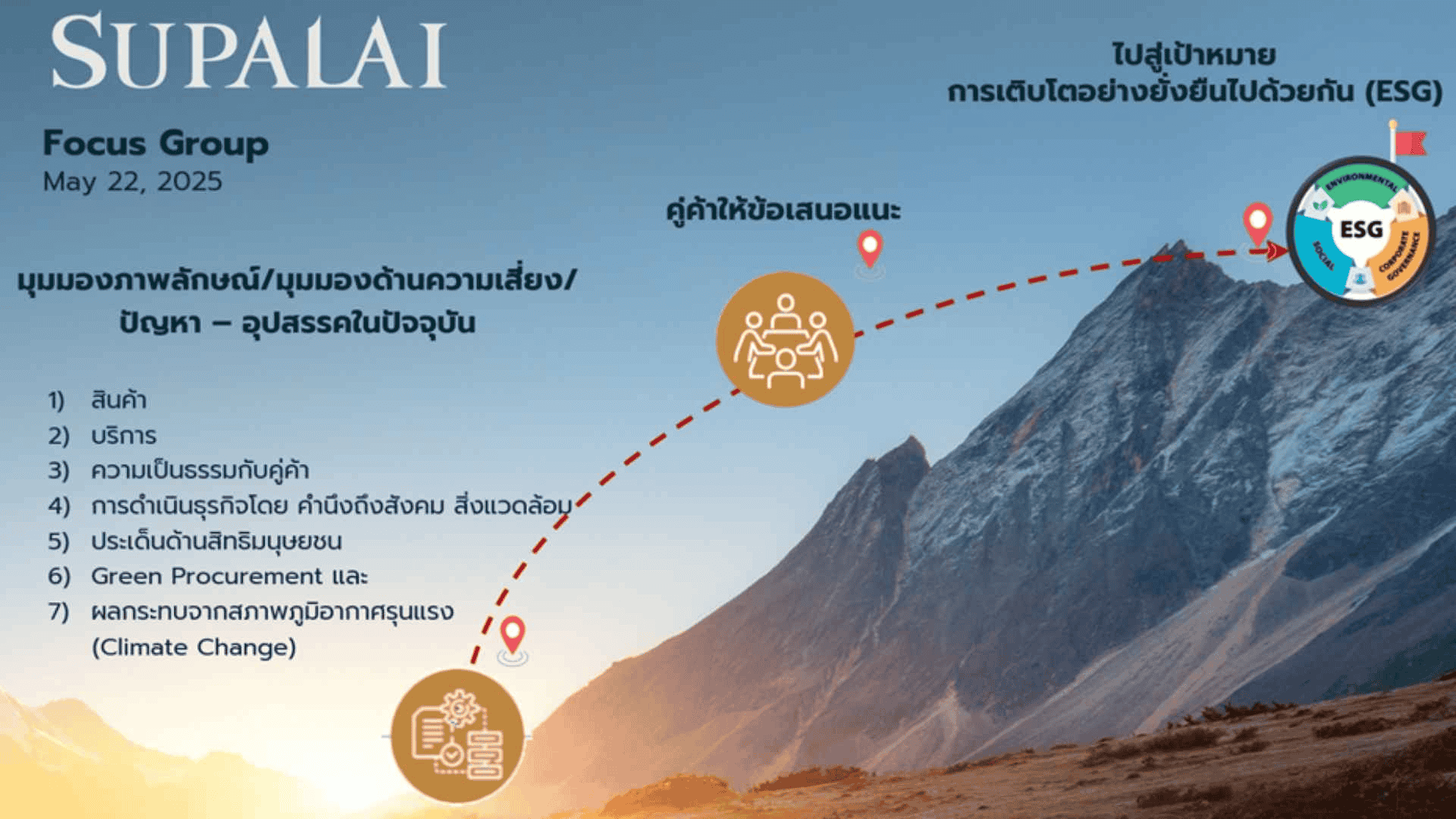
The Risk Management Committee organized a stakeholder and external expert engagement forum for the year 2025 in collaboration with key executives from construction material suppliers and contractors involved in high-rise projects. Participating companies included SCG Ceramics Public Company Limited, Westcon Company Limited, Deco Enterprises Company Limited, Starmark Manufacturing Company Limited, Duraflor Corporation Limited, and SECCO Engineering & Construction Company Limited. The forum served as a platform for exchanging views on a range of key issues, including product and service image, fairness toward business partners, responsible business operations with due consideration for social, environmental, and governance (ESG) aspects, human rights issues, green procurement, and the impacts of climate change. Discussions also covered corporate image development and risk assessment, with the objective of fostering continuous innovation and improvement while prioritizing the interests of stakeholders, society, the environment, and customers.
. | https://sustainability.supalai.com/en/document/viewer/54 | 1-69 |

Code of Conduct
Introduction
The Board of Directors of Supalai Public Company Limited recognizes the importance of good corporate governance and social responsibility, as it believes that good corporate governance is a crucial factor in the company's business success and in building confidence in having an efficient, transparent, and auditable management system. This helps build confidence among shareholders, investors, stakeholders, and all relevant parties, leading to quality and sustainable growth and creating added value for the company. The Board of Directors understands its roles, duties, and responsibilities towards shareholders and various stakeholders and is committed to conducting business under the principles of good corporate governance, in accordance with best practices or regulations of the Stock Exchange of Thailand and the Securities and Exchange Commission, as well as other related regulations.
The code of conduct for directors, executives, and employees is considered a discipline that all employees must uphold and strictly adhere to. Employees who violate or fail to comply will be subject to disciplinary action.
All directors, executives, and employees, including employees of subsidiaries, have a duty to comply with and promote compliance with the code of conduct among others.
The following actions constitute a violation of the code of conduct:
Non-compliance with the code of conduct.
Advising, promoting, or supporting others not to comply with the code of conduct.
Neglecting or ignoring violations or non-compliance with the code of conduct when one knows or should know, as it relates to work under one's responsibility.
Failing to cooperate or obstructing investigations to ascertain facts regarding alleged violations or non-compliance with the code of conduct.
Unfair actions towards others due to failure to report non-compliance with the code of conduct.
Any actions constituting a violation of the aforementioned code of conduct shall be subject to the consideration and disciplinary processes outlined in the Human Resources Department's regulations. Furthermore, employees who violate the code of conduct may face legal penalties if their actions constitute a legal offense.
Therefore, executives, in their capacity as supervisors, must monitor and advise their subordinates to uphold and conduct themselves strictly, and they may arrange appropriate development for them. Directors, executives, and employees must uphold and strictly adhere to these principles.
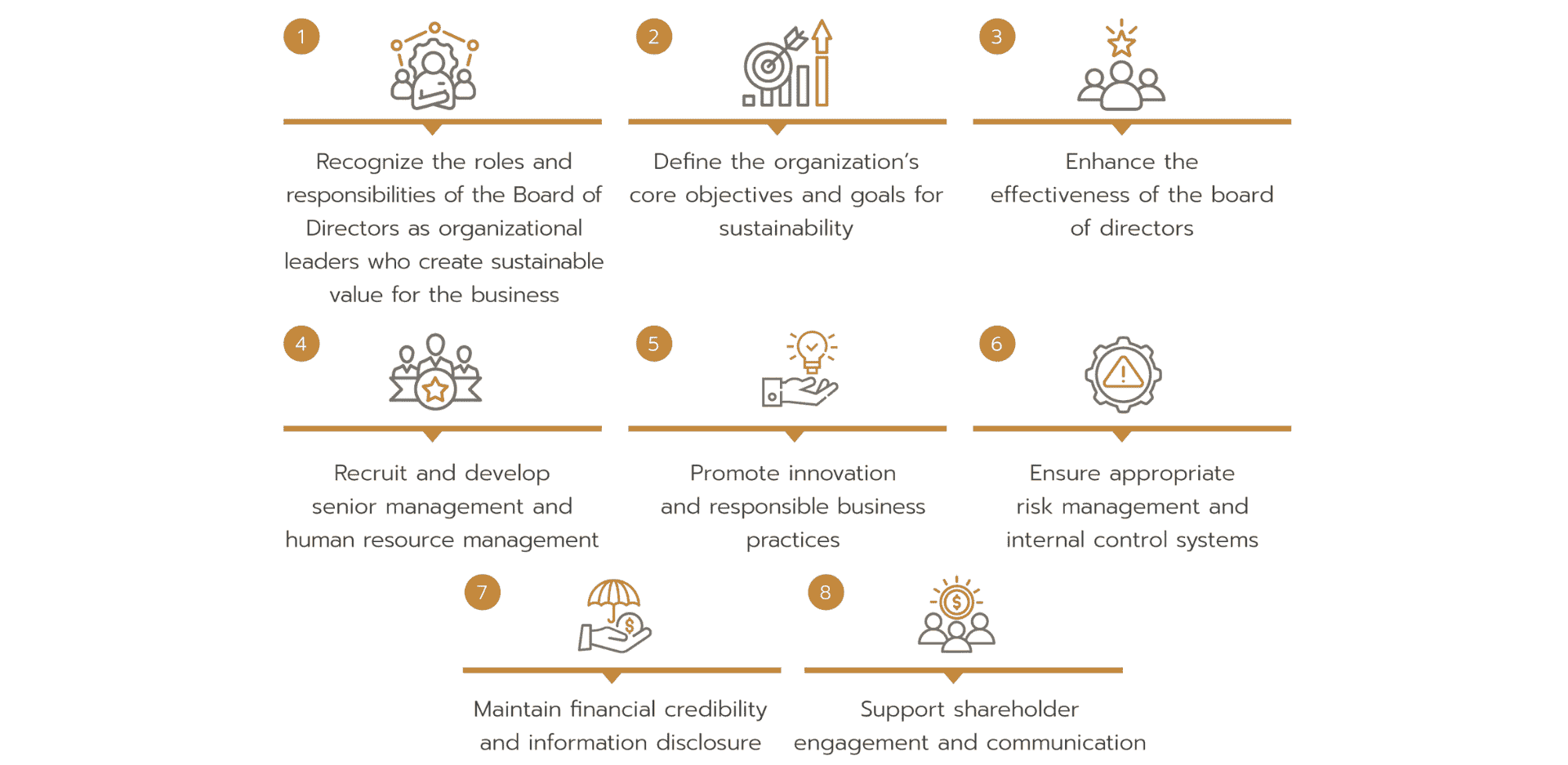
As the company emphasizes and focuses on developing good corporate governance, the Board of Directors promotes continuous adherence to good corporate governance principles and reviews the 8 topics of the CG Code, which are:
Has a Business Code of Conduct
Yes
Code of Conduct Description
The Board of Directors has approved the written “Corporate Governance Policy Manual” and “Business Code of Conduct” which covers good practices, roles and responsibilities of directors, and effective internal control mechanisms. These guidelines have been communicated to all stakeholders via the Company’s website. In 2025, the Company reaffirmed its commitment to building confidence among stakeholders and the Thai capital market by participating in the JUMP+ project (Promoting Value Creation for Listed Companies), which aims to enhance the potential of listed companies in various dimensions. The Company has established a Value Enhancement Plan covering 3 main areas as follows:
1. Business Growth Strategy
The Company focuses on stable growth to generate sustainable returns for shareholders through continuous product/service development and customer base expansion, as well as transparent communication of business direction through Investor Relations activities to enhance confidence and increase the Company's Corporate Visibility among both domestic and international investors.
2. Enhancing Corporate Governance Excellence
The Company adheres to good corporate governance as a fundamental principle in its business operations. In the past year, it has elevated standards in 3 key areas:
Anti-Corruption: Establish clear policies and guidelines to foster a transparent organizational culture.
Prevention of Insider Trading: Develop a strict system for controlling and monitoring data usage to ensure equality and fairness for all shareholders.
Information Security: Elevate technology system management standards to prevent risks from cyberattacks and protect the confidentiality of customer and organizational data.
3. Environmental Management (Environmental Management)
The Company recognizes its role in reducing environmental impact and therefore has prepared a Greenhouse Gas Management Plan and set clear greenhouse gas reduction targets to become a low-carbon organization and align with international standards.
The Company has established a Corporate Governance Policy Manual and a Code of Conduct for directors, executives, and employees. Directors, executives, and employees have consistently adhered to it. Directors and executives have set good examples, overseen, and encouraged subordinates to comply with the Good Corporate Governance Policy Manual, the Code of Conduct for directors, executives, and employees, and fostered a work environment conducive to ethical conduct. At the same time, there is a commitment to prevent violations of the Code of Conduct. In cases of non-compliance or violation, penalties are considered and imposed according to Human Resources department regulations. Communication and public relations efforts are made to foster understanding among executives and employees, and compliance with these guidelines is monitored. Stakeholders can access this information on the Company's website (www.supalai.com)
Prevention of incidents and behaviors that may constitute unethical conduct
The Board of Directors has appointed a Corporate Governance and Sustainable Development Committee with clearly defined roles and responsibilities.
Organize at least one meeting per year of the Corporate Governance and Sustainable Development Committee to report on the performance of ethical compliance.
Directors, executives, and employees of Supalai Public Company Limited and its subsidiaries must study and understand the Code of Conduct manual.
Additionally, the “Corporate Governance Policy Manual” and “Code of Conduct” have been published on the Company's website for external stakeholders. The Company has established guidelines to promote, supervise, and monitor compliance with the Code of Conduct by directors, executives, and employees of both the Company and its subsidiaries, as follows:
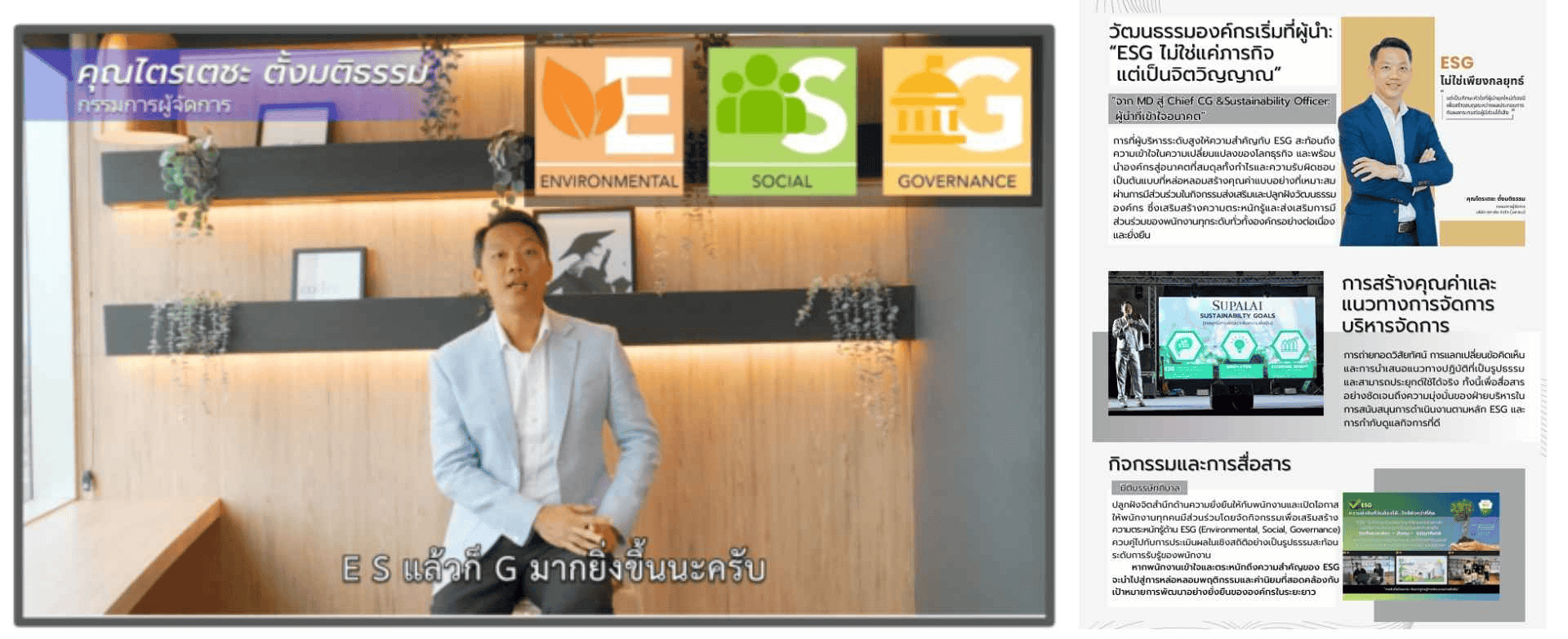
Driving organizational culture through communication from senior management (Tone from the Top) to reinforce adherence to business ethics.
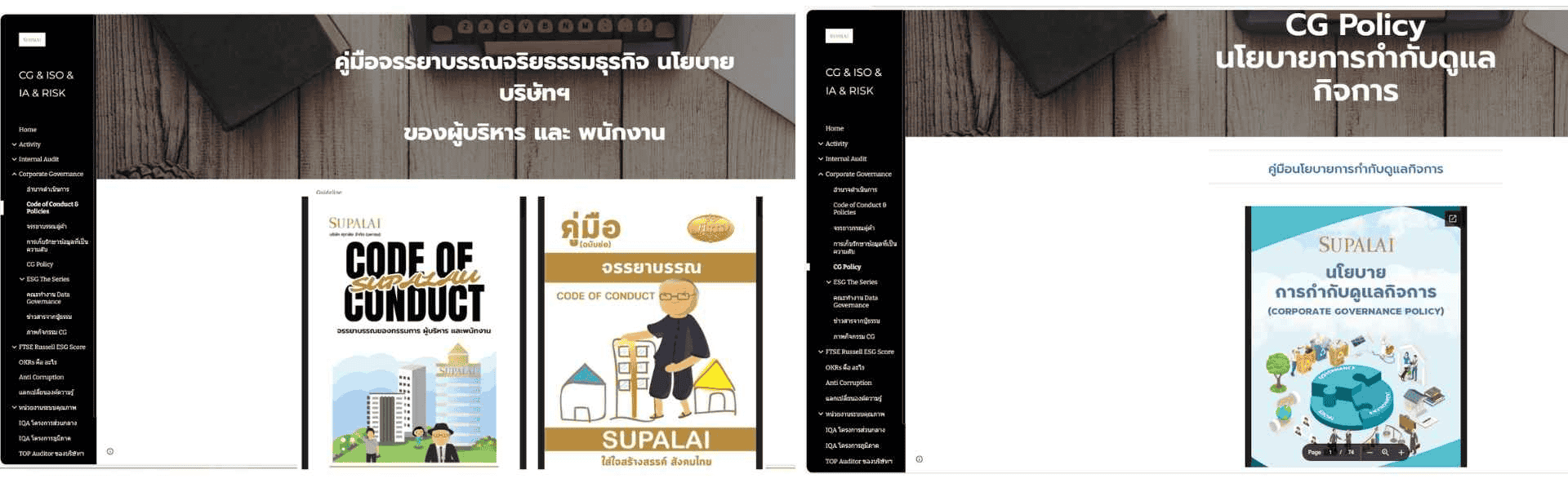
The Code of Conduct (abridged version) is ready for dissemination to directors, executives, and employees
via the Intranet system and the company's website.
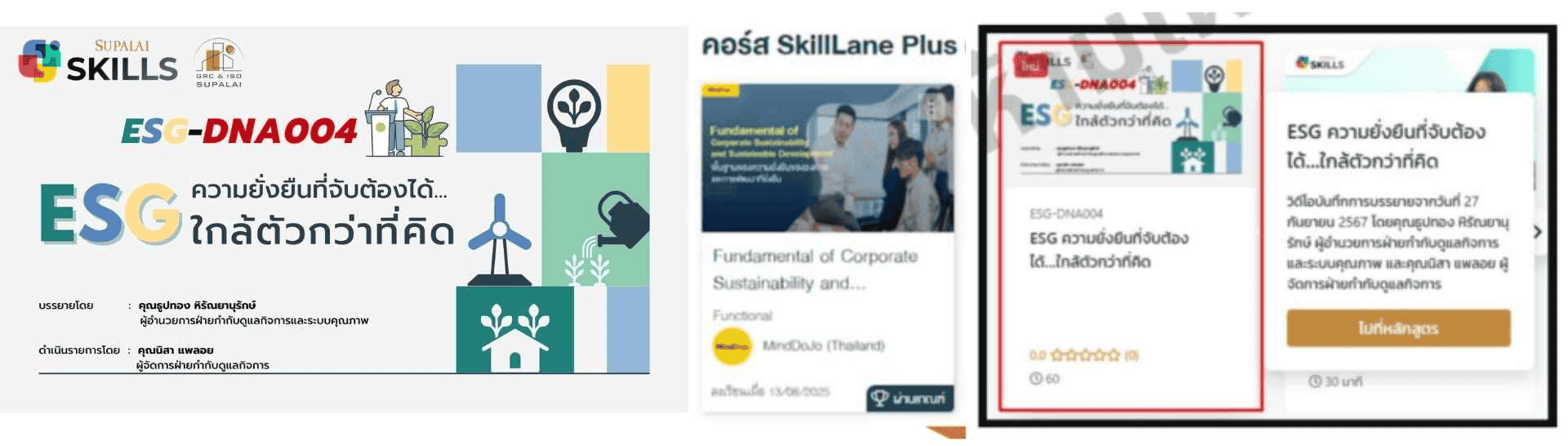
Develop ESG knowledge sets by providing ESG sustainability courses and knowledge videos on the topic of tangible sustainability, closer than you think, via the SUPALAI SKILLS platform.
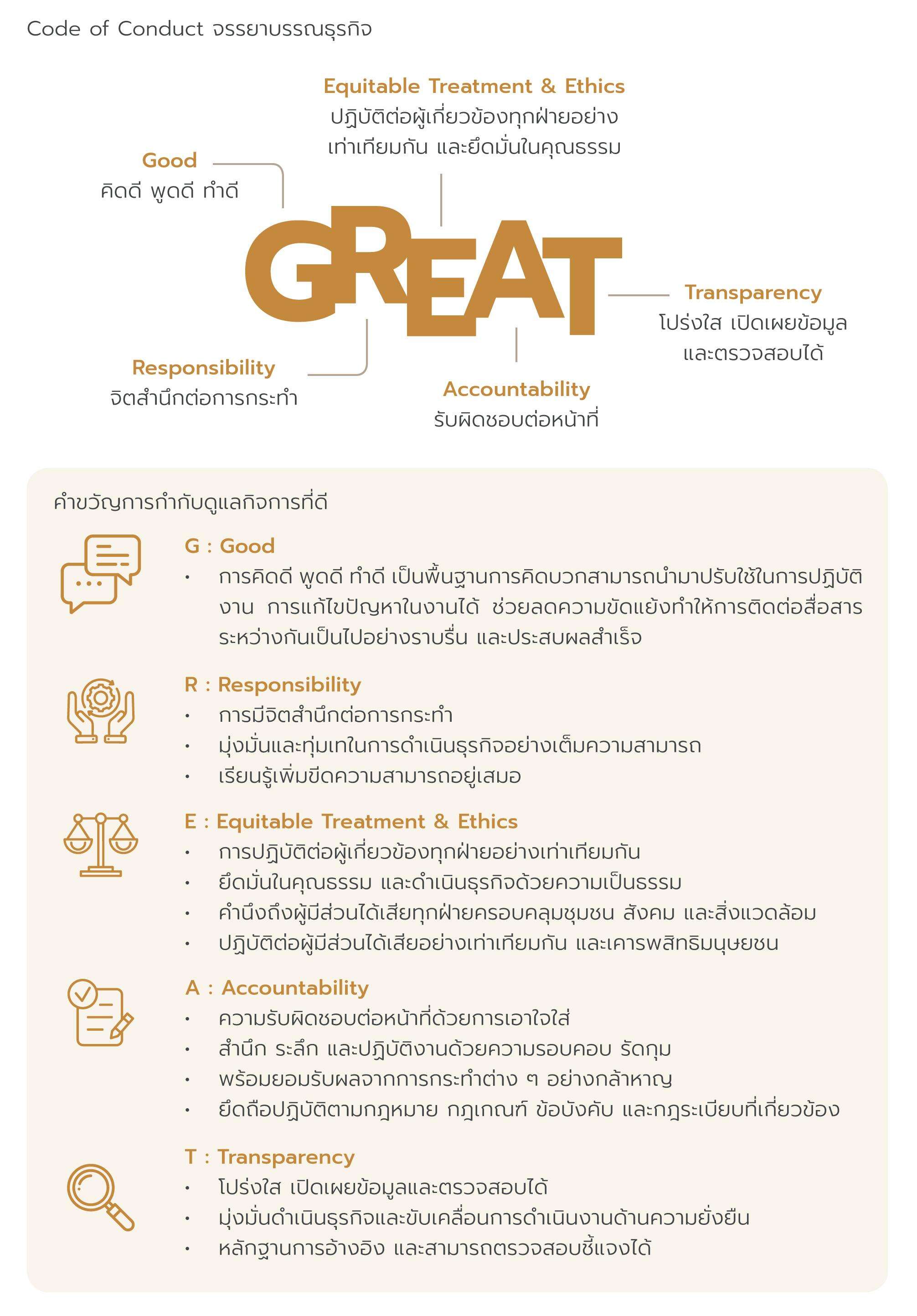
Activities to enhance ethical awareness through the Supalai ESG DNA: The GREAT Series knowledge set.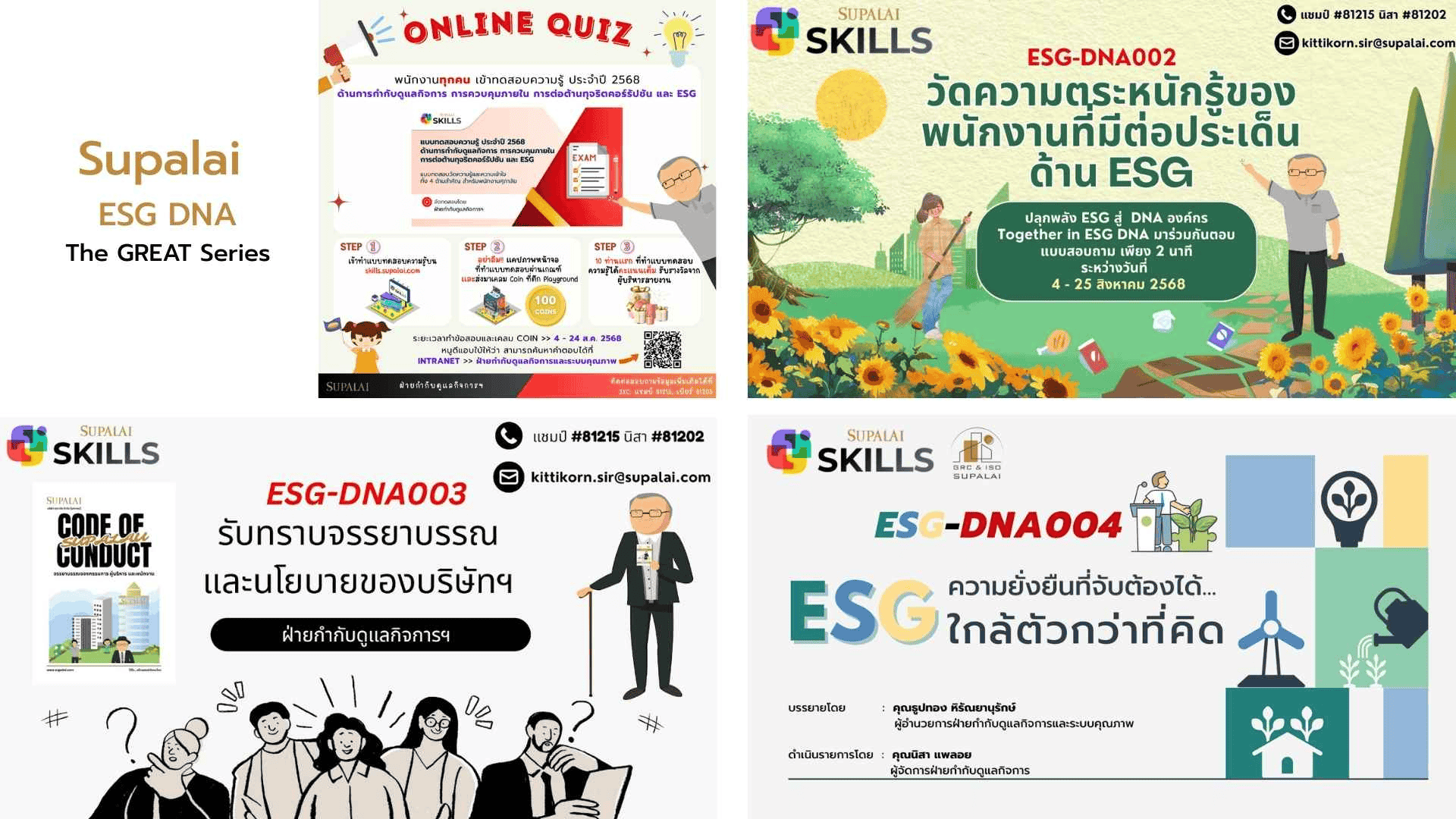
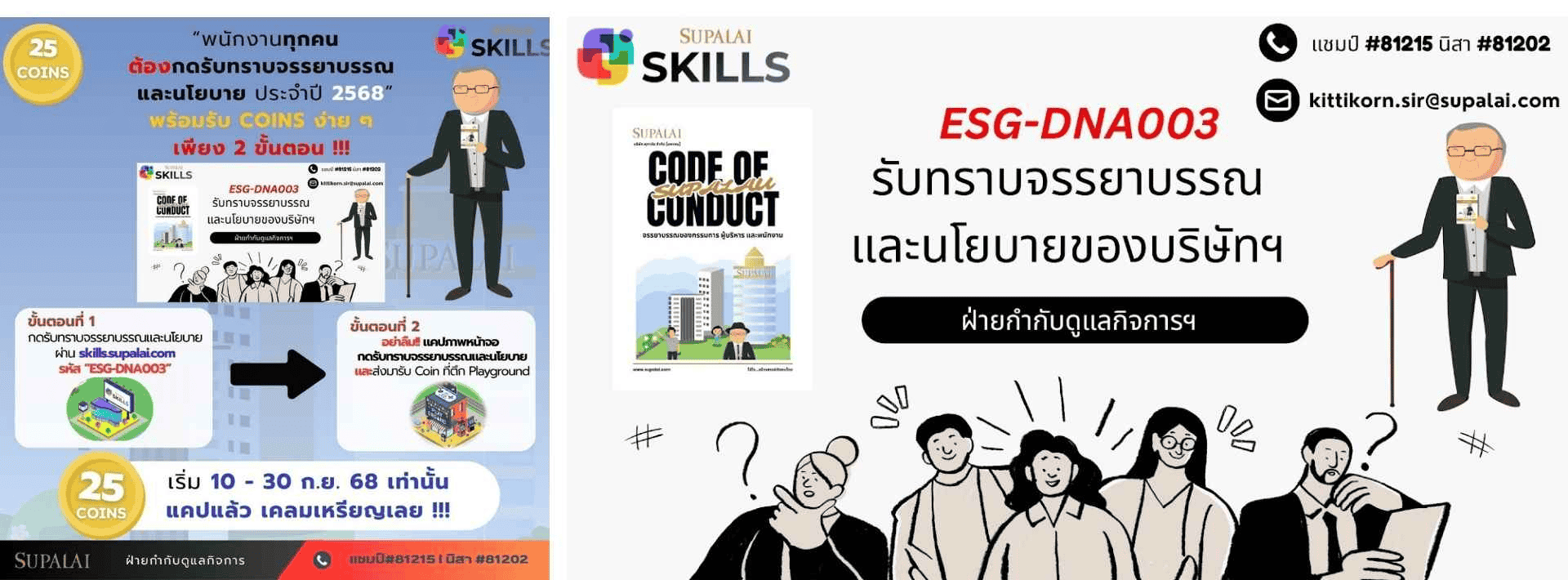
Performance: Annual activity of signing acknowledgement of the Company's Code of Conduct and policies.
Target | Performance in 2025 |
Company and subsidiary employees Sign acknowledgement of the Code of Conduct and various policies via the SUPALAI SKILLS platform 100% | Company and subsidiary employees 1,847 people participated in the test, 100% (Company 1,465 people, subsidiaries 382 people) |
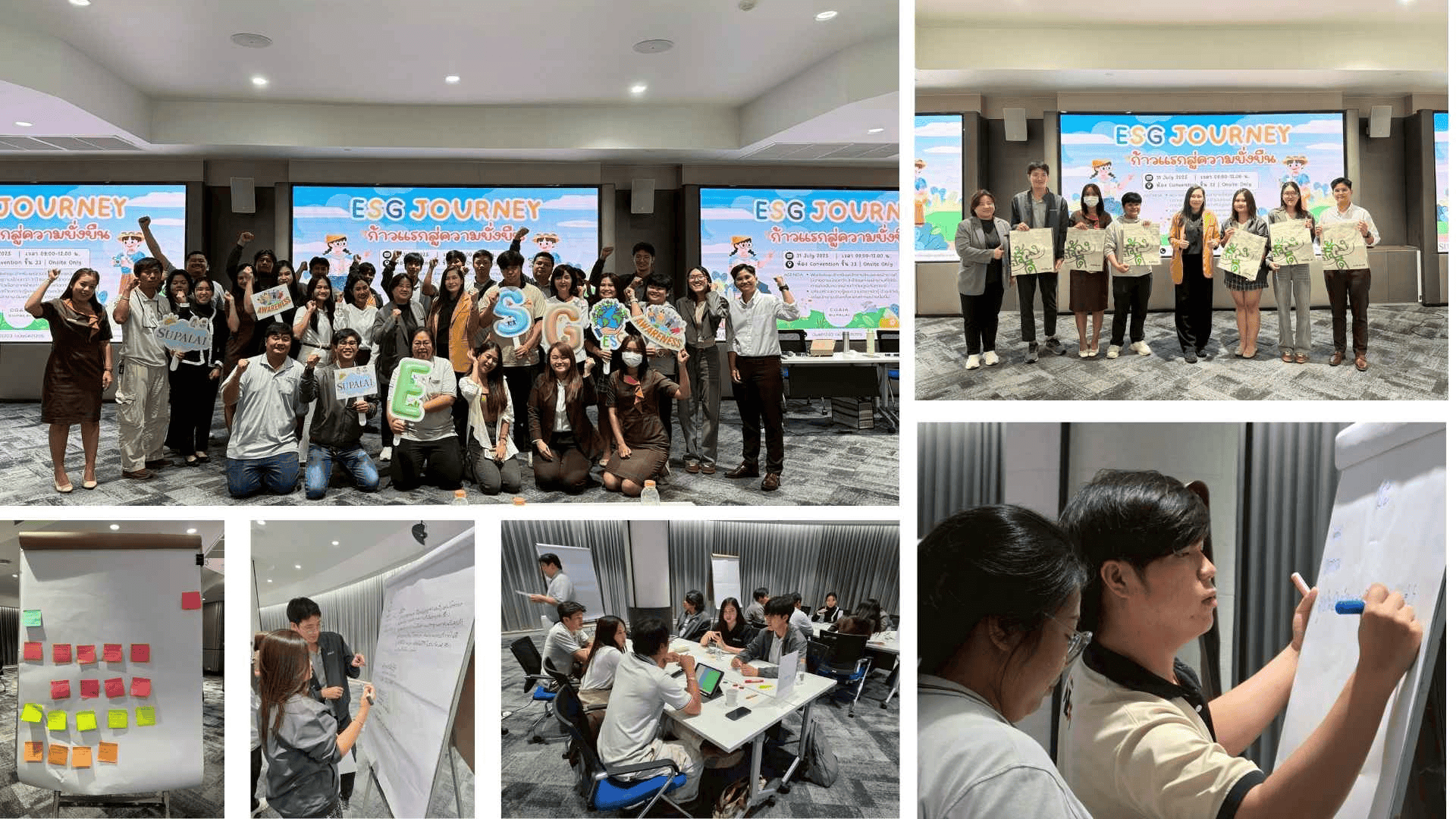
Performance: Activities to measure employee awareness regarding ESG issues through Focus Group activities,
using Post-it Brainstorming and Group Discussion techniques
Target | Performance in 2024 | Performance in 2025 |
Employees are aware of ESG. No less than 80% | 54% | 65% |
If the results of the ESG awareness assessment for employees do not meet the target, the Company will analyze the causes, improve communication and knowledge-building activities, and continuously monitor and re-evaluate to enhance employee understanding. | ||
Code of Conduct Link
https://sustainability.supalai.com/en/document/viewer/54
Page Number in Report
1-69
Code of Conduct Practices
| Guideline | Other — Please Specify | Detail | Document Link | Page Number in Report | ||||||
|---|---|---|---|---|---|---|---|---|---|---|
| Prevention of Misuse of Inside Information | Driving the policy on preventing conflicts of interest The Board of Directors has approved the policy and conflicts of interest. All executives and employees, incl uding employees in subsidiaries and joint ventures, are required to strictly adhere to it. All employees must report conflict of interest situations. The Audit Committee has assigned the Internal Audit Department to oversee, monitor, and report on various situations to the Audit Committee and the Board of Directors by March of each year. Monitoring and evaluation of conflict of interest prevention All executives and employees of the company and its subsidiaries participate in answering the conflict of interest questionnaire through the SUPALAI SKILL platform. In 2025, no executives or employees were found to have violated the regulations regarding conflicts of interest. Communication for employees to disclose conflicts of interest through the SUPALAI SKILLS platform.
| https://sustainability.supalai.com/en/document/viewer/62 | 1-2 | |||||||
| Anti-corruption | Driving Anti-Corruption Policies and Measures The Board of Directors approved the "Anti-Corruption Policy and Measures" to serve as clear guidelines for personnel at all levels, focusing on fostering a transparent organizational culture through systematic communication and evaluation processes. Driven by its commitment to transparent business operations, the company's membership in the Thai Private Sector Collective Action Against Corruption (CAC) has been renewed for the second time. This certification will remain effective until March 2027. In 2025, significant changes and developments were as follows: Monitoring and Evaluation of Anti-Corruption Efforts
Performance Results: Knowledge testing activities on corporate governance, internal control systems, and anti-corruption measures are conducted once a year.
Executives awarded employees who scored 100% on knowledge and understanding tests. Knowledge test on corporate governance, internal control systems, and anti-corruption measures to provide positive reinforcement to employees, thereby building a strong and unified organizational culture that aligns with the company's future direction, which is considered a crucial foundation for the company's success. .
6 types of benefits for partners who join the declaration of intent
Publicizing special discounts on the purchase of residential properties in 2 projects under the announcement regarding special discounts for the company's partners.
From 2026 - 2028, Supalai elevates its governance under the COSO ERM framework through the "Enhancing Anti-Corruption" strategic plan, aiming to foster a culture of integrity from policy level to practical implementation. It targets pushing at least 10 partners annually to join the CAC declaration of intent and supporting them until they receive CAC Certification. A CAC Training & Monitoring team will also be established to build readiness throughout the supply chain. Furthermore, stringent risk management is integrated into the procurement system and construction inspection through Digital Site Inspection technology, along with the use of random audit systems and whistleblowing channels, to reinforce verifiable transparency standards in all dimensions and create sustainable value for the organization.
| https://sustainability.supalai.com/en/document/viewer/56 | 1 | |||||||
| Whistleblowing and Protection of Whistleblowers | Driving Whistleblowing and Complainant Protection The Board of Directors has approved Whistleblowing or Corruption Complaint Policy from illegal acts, ethical breaches, or behaviors that may indicate corruption or misconduct by individuals within the organization, including employees and all stakeholder groups. This also includes mechanisms for protecting information providers and emphasizing the confidentiality of tips and complaints to build confidence among whistleblowers or complainants. Complaint and Corruption Whistleblowing Management Process 1. Receive complaints: Divided into
By Standard Response: The Company sends a standard response message to the whistleblower immediately to confirm receipt of information and build confidence in the investigation process. 2. Gather and verify facts: In cases where initial information is insufficient, the responsible department will politely coordinate to request additional information to ensure the investigation is accurate and relevant. 3. The Disciplinary Committee investigates facts, with representatives from: From the main departments, as follows:
4. Summarize results for the complainant: After the resolution of the Disciplinary Committee 5. Reporting results to the Audit Committee and the Board of Directors: After the resolution of the Disciplinary Committee 6. Follow up and rectify: In cases where the Audit Committee or the Board of Directors deems it necessary to prevent corruption, the Internal Audit Department will monitor and report at the next meeting. Whistleblowing Monitoring and Evaluation In 2025, the Internal Audit Department reported to the Audit Committee and the Board of Directors once, specifically Meeting No. 12/2568 on December 2, 2025. Measures for Protecting Whistleblowers or Complainants The Company has established a policy for the protection of whistleblowers or complainants regarding corrupt practices, as follows:
| https://sustainability.supalai.com/en/document/viewer/60 | 1-4 | |||||||
| Preventing the Misuse of Inside Information | Driving efforts to prevent the use of inside information for personal gain. The Board of Directors has approved a policy on the use of inside information to enhance good corporate governance and transparency in business operations. This policy aims to ensure that all directors, executives, and employees collectively safeguard important non-public information to prevent its use for personal gain or for the benefit of others in unfair securities trading. The company has established appropriate data access systems and defined a Blackout Period for refraining from securities trading prior to financial reporting, in order to protect shareholders' interests and the organization's positive image. Compliance with this policy is considered an integral part of the ethical standards that all personnel are expected to uphold. Monitoring and evaluation in terms of in preventing the use of inside information for personal gain. Details are disclosed in Section 8.1.4 Monitoring compliance with corporate governance policies and guidelines, sub-section: Use of inside information for personal gain. In the past year, 2025, the Company participated in the Value Enhancement Plan for Listed Companies (JUMP+), a strategic initiative designed to elevate the potential and capabilities of listed companies.
During 2026 - 2028, Supalai is committed to elevating corporate governance under the COSO ERM framework through a strategic plan that links policies from the Board of Directors to practical implementation across the entire organization. This focuses on establishing internal control systems via the 3 Lines of Defense mechanism and conducting annual employee ethics assessments. A key highlight is the use of Automated Real-Time Insider List technology to automatically update the list of individuals with access to critical information and send notifications for the Silent Period (prohibition on securities trading). This aims to reduce risks from human error and effectively prevent insider trading, while fostering a culture of responsible data usage to enhance transparency and sustainably protect stakeholders' interests.
| https://sustainability.supalai.com/en/document/viewer/62 | 1-2 | |||||||
| Prevention of money laundering | Driving anti-money laundering efforts Adhering to good corporate governance principles, the company has therefore established anti-money laundering guidelines within its Business Code of Conduct for all directors, executives, and employees to strictly adhere to proactive inspection measures focusing on transparent Know Your Customer (KYC) processes and rejecting the use of aliases in all cases, along with international risk management: enhancing the screening of foreign business partners by rejecting transactions with legal entities without clear establishments and thoroughly verifying credibility before commencing relationships, and having a surveillance system to identify suspicious behaviors such as unusually large cash transactions, transfers to third-party accounts, or transactions exceeding the customer's true financial standing, including establishing a timely response mechanism: fostering a strong reporting culture by suspending suspicious transactions and immediately reporting them to supervisors or the legal department to prevent risks to the organization. | https://sustainability.supalai.com/en/document/viewer/54 | 52 | |||||||
| Giving or receiving gifts, entertainment, or business entertainment | Initiatives Regarding Giving or Receiving Gifts or Business Entertainment The Company has established an anti-corruption policy, which covers policies regarding the acceptance and giving of gifts, assets, or any other benefits, to ensure that all directors, executives, and employees strictly adhere to it. The Company conducts its business with honesty, integrity, and in compliance with the law. To maintain its reputation, the Company has established a No Gift Policy concerning the acceptance and giving of gifts, assets, or any other benefits that are permissible according to tradition and ethical principles, to express gratitude or to maintain normal business relationships. However, if the acceptance or giving of gifts, assets, or any other inappropriate benefits could influence decision-making in performing duties and potentially cause the Company to lose benefits, the Company will not support such actions. Monitoring and Evaluation Aspect Policy Giving or Receiving Gifts or Business Entertainment The Company adheres to the principles of good governance and transparency by establishing a "No Gift Policy" to prevent the risk of corruption. Annually, from November to January, the Chairman of the Executive Board communicates the Company's stance on not accepting gifts or any other benefits from business partners and the public. The Company monitors and evaluates compliance through mechanisms under the anti-corruption topic. The Chairman of the Executive Board communicates the Company's stance on not accepting gifts or any other benefits from business partners and the public annually.
| https://sustainability.supalai.com/en/document/viewer/57 | 1-2 | |||||||
| Compliance with laws, rules and regulations | Compliance with laws and regulations related to the company's business Supalai Public Company Limited fully complies with relevant laws and regulations, including the Public Limited Company Act B.E. 2535 (1992), the Securities and Exchange Act B.E. 2535 (1992), as well as the regulations of the Securities and Exchange Commission (SEC) and the Stock Exchange of Thailand (SET). Over the past 5 years, the Company, its Board of Directors, and executives have had no record of serious misconduct or violations of the aforementioned regulatory bodies' rules, no criminal cases or bankruptcy proceedings; and no significant conflicts of interest or labor disputes have been found. Furthermore, no executives have resigned due to corporate governance issues, reflecting standards of transparency and trustworthiness. The Company conducts its marketing communications and advertising activities in a responsible manner (Responsible Marketing), providing accurate and clear information about its products and services to ensure consumers are not misled. Furthermore, the Company strictly adheres to consumer protection laws and related guidelines. | https://sustainability.supalai.com/en/document/viewer/26 | 10,17,28 | |||||||
| Use and maintenance of data and assets | Commitment to Internal Data Management and Asset Preservation: Emphasizing Governance and Systematic Control Supalai Public Company Limited is committed to conducting business in accordance with good corporate governance principles, considering data security and asset management as fundamental to sustainability. The company has therefore established a strict and tangible governance structure as follows:
| https://sustainability.supalai.com/en/document/viewer/26 | 58-59 | |||||||
| Anti-competitive | Driving Anti-unfair competition Supalai Public Company Limited conducts its business under the principles of free and fair competition, adhering to ethical business practices, transparency, and compliance with relevant competition laws. The Company has established a Policy on Treatment of Competitors, which has been considered and approved by the Board of Directors, to serve as a framework for business operations and to prevent actions that may constitute unfair competition (Anti-competitive Practices). The Company has established the following key practices:
Furthermore, the Company communicates these policies and practices to employees through internal channels such as the Intranet and internal communications to enhance awareness of competition laws and business ethics. Continuous monitoring of policy compliance is also conducted to prevent risks arising from actions that may constitute unfair competition. The Company is committed to conducting business based on principles of transparent, fair, and responsible competition to build trust among stakeholders and support the organization's sustainable growth. | https://sustainability.supalai.com/en/document/viewer/183 | 1 | |||||||
| Cyber security | Implementation Progress Data and Information Security The Company prioritizes Information Security Governance and Information Technology Risk Management and Cybersecurity Risk Management. To this end, it has developed an Information Security Management System (ISMS) to enhance Data Protection and the security of the organization's information systems in accordance with international standard ISO/IEC 27001:2022. The Company prioritizes Customer Data Privacy by complying with relevant data protection laws, such as the Personal Data Protection Act (PDPA), and international data protection standards. We have established stringent measures for the collection, use, disclosure, and storage of customer data. Furthermore, the Company defines data subject rights, including the right to access, rectify, or request the deletion of data, to ensure that customer information is handled securely and with full respect for individual privacy rights. The Company has established a crucial Information Security and Data Protection Framework, including the Information Technology and Security Policy, Personal Data Protection Policy, Company Email Usage Policy, and guidelines for the appropriate and secure use of Artificial Intelligence (AI) technology. These policies have been reviewed and approved by the Board of Directors. The Company has communicated its policies and guidelines to employees through internal channels, such as the Company's Intranet and internal emails, to promote data security awareness and continuously support compliance with the Company's Cybersecurity and Data Protection measures. Communication of Information Technology and Data Protection Policies via the Company's Intranet
In 2025, the Company conducted a Gap Assessment between its operational processes and the requirements of ISO/IEC 27001:2022. It also provided training on the standard's requirements and raised cybersecurity awareness among employees. Furthermore, a Gap Assessment was conducted for the Digital Technology Department to identify risks and develop approaches for improving data security management processes. Currently, the Company is in the process of improving its operations to close identified gaps. An Information Security Management System (ISMS) working group has been established, operational procedures and related documents are being prepared, the capabilities of internal auditors are being developed, and internal audits are being conducted to test system effectiveness. Furthermore, preparations are underway for ISO/IEC 27001:2022 certification. Such operations are part of the monitoring, review, and continuous improvement process aimed at enhancing the security of the organization's data and information systems and mitigating risks from cyber threats that could affect business operations. | https://sustainability.supalai.com/en/governance-and-economic/cybersecurity-and-data-privacy | 1 | |||||||
| Environmental management | Driving Policy Sustainable environmental aspects The Company Governance and promotion of an organizational culture of environmental responsibility, with the significant aim of building knowledge, understanding, and oversight regarding environmental responsibility among company employees to ensure correct and comprehensive operations across the supply chain. The Board of Directors has approved the sustainable environmental policy to be used as a common guideline, and to communicate it to employees to foster widespread awareness and understanding through the learning system. Supalai Skill and the company's Intranet. Concurrently, information has been disclosed to the public via the company's website in the Corporate Governance and Sustainability section to build confidence among all stakeholders. Details regarding the monitoring of policy implementation are disclosed under the heading "Driving Business for Sustainability", subheading "Sustainability Management in the Environmental Dimension". | https://sustainability.supalai.com/en/document/viewer/181 | 1-4 | |||||||
| Human rights | Driving Policy Human Rights The Company focuses on fostering a culture of equality, non-discrimination, and value, with a work approach founded on mutual respect for dignity and honor. The Board of Directors has approved a Human Rights Policy to serve as a common guideline for practice, and has communicated it to employees to foster widespread awareness and understanding through the Supalai Skill learning system and the Company's Intranet. Concurrently, information has been disclosed to the public via the Company's website in the Corporate Governance and Sustainability section to build confidence among all stakeholders. Details regarding the monitoring of policy compliance are disclosed under the heading "Driving Business for Sustainability," subheading "Human Rights Performance." | https://sustainability.supalai.com/en/document/viewer/45 | 1-17 | |||||||
| Occupational health and safety | Driving Policy on Safety, Occupational Health, and Working Environment The Company focuses on fostering a safety culture. The Board of Directors has approved the policy on safety, occupational health, and working environment to serve as a common guideline, and to communicate it to employees to ensure widespread awareness and understanding through the Supalai Skill learning system and the Company's Intranet. Concurrently, information has been disclosed to the public via the Company's website in the Corporate Governance and Sustainability section to build confidence among all stakeholders. Details regarding the monitoring of policy compliance are disclosed under the topic "Driving Business for Sustainability," sub-topic "Safety and Occupational Health Performance." | https://sustainability.supalai.com/en/document/viewer/26 | 31-32 | |||||||
| Other guidelines related to business code of conduct | Code of Conduct for Business Partners | The company prioritizes responsible supply chain management by establishing a Supplier Code of Conduct and requiring partners to acknowledge and sign it via the AppSheet platform. This facilitates systematic document submission and tracking of partner signatures, demonstrating partners' understanding and commitment to adhering to the company's standards in business ethics, human rights, labor, safety, and anti-corruption. Additionally, the company conducts Supplier Site Visits to monitor actual operations, including Human Rights Due Diligence (HRDD) assessments within the supply chain, to ensure that partners' business operations comply with the company's standards. In 2025, the company will implement responsible supply chain management as follows:
Supplier Site Visit Furniture Group System Materials and Water Tanks
Supplier Site Visit Group Decorative Materials
The Company has utilized feedback and information received from partners to analyze the root causes of issues and continuously improve collaborative processes. This aims to reduce coordination obstacles, enhance operational efficiency, and promote more agile, swift, and transparent collaboration between the company and its partners. | https://sustainability.supalai.com/en/document/viewer/188 | 1-7 | ||||||
| Other guidelines related to business code of conduct | Responsibility to Customers | Supalai recognizes that customers are key stakeholders essential to the organization's success. Consequently, the Company has established business guidelines that prioritize safety, product quality, and fair treatment of customers, based on the principles of transparency, accountability, and respect for consumer rights. The Company is committed to developing and delivering high-quality and safe residential projects, emphasizing construction standards, quality control, and pre-delivery inspections to ensure that customers receive products of superior quality that meet all relevant standards. Furthermore, the Company promotes the communication of accurate and clear product and service information, ensuring it is not misleading, so that customers can make well-informed decisions (informed decision-making). | https://sustainability.supalai.com/en/document/viewer/26 | 23 |
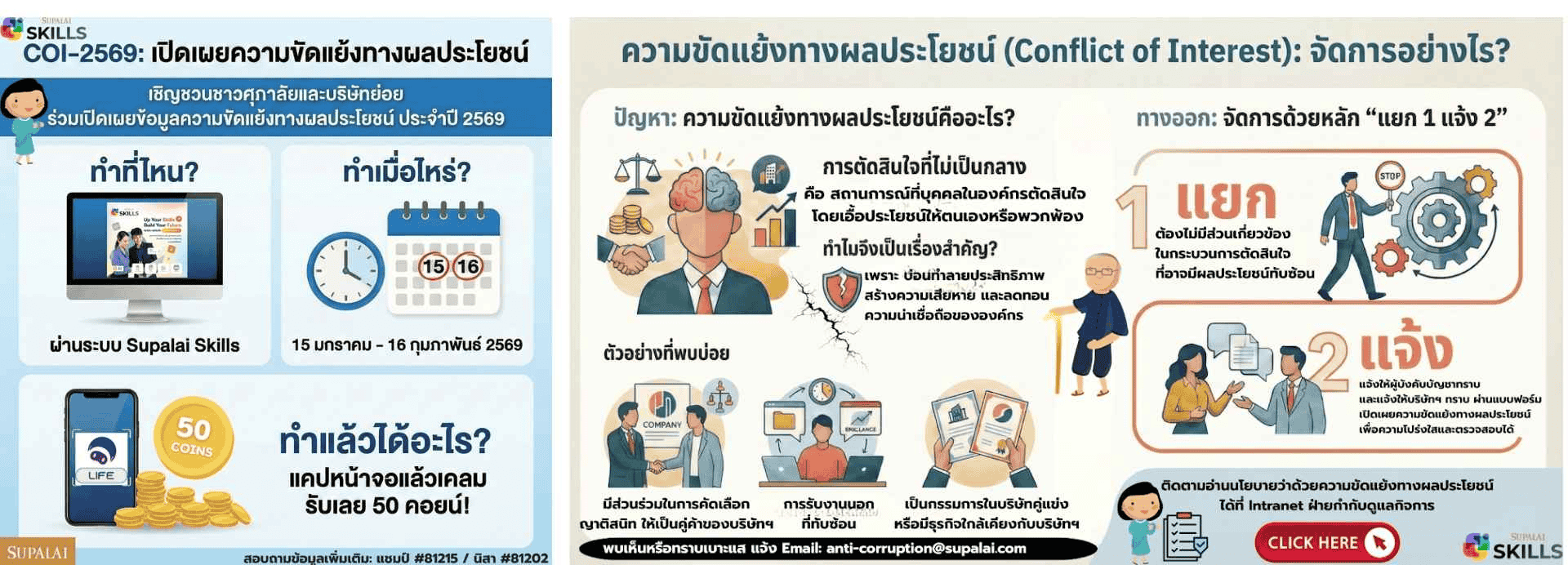
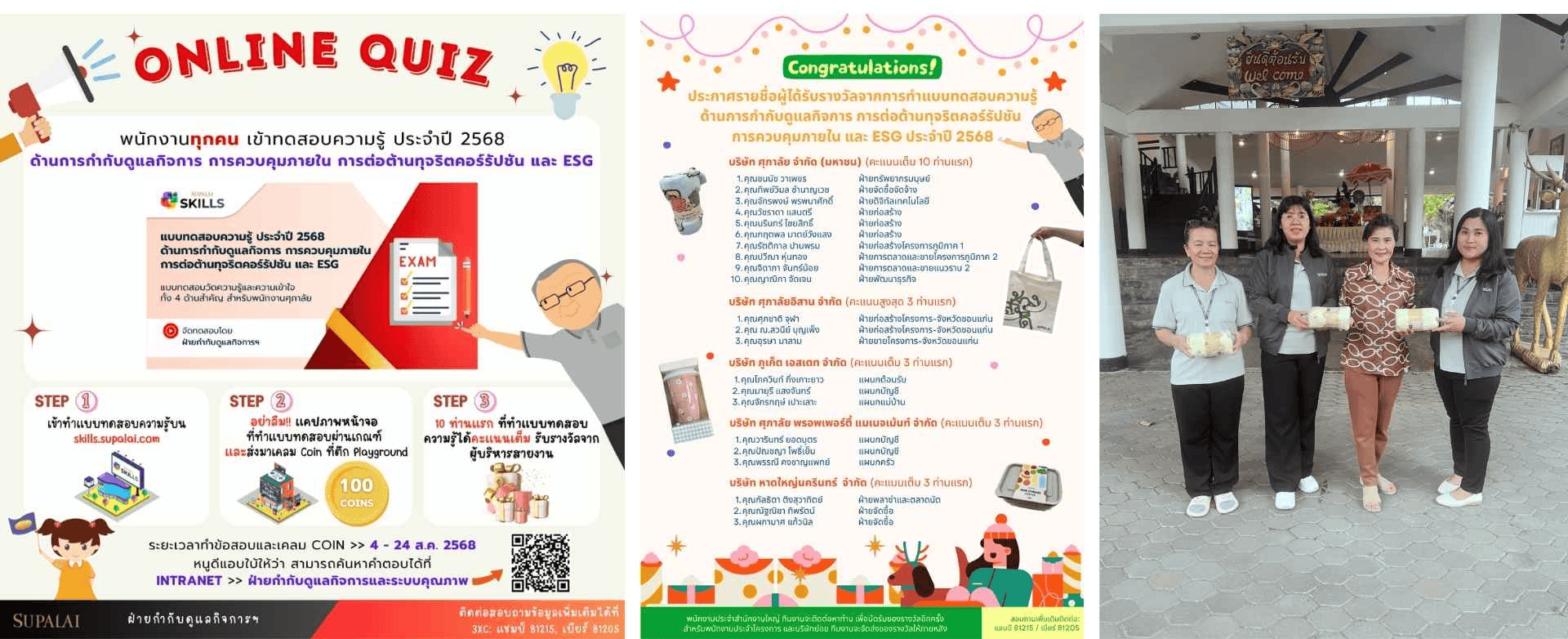
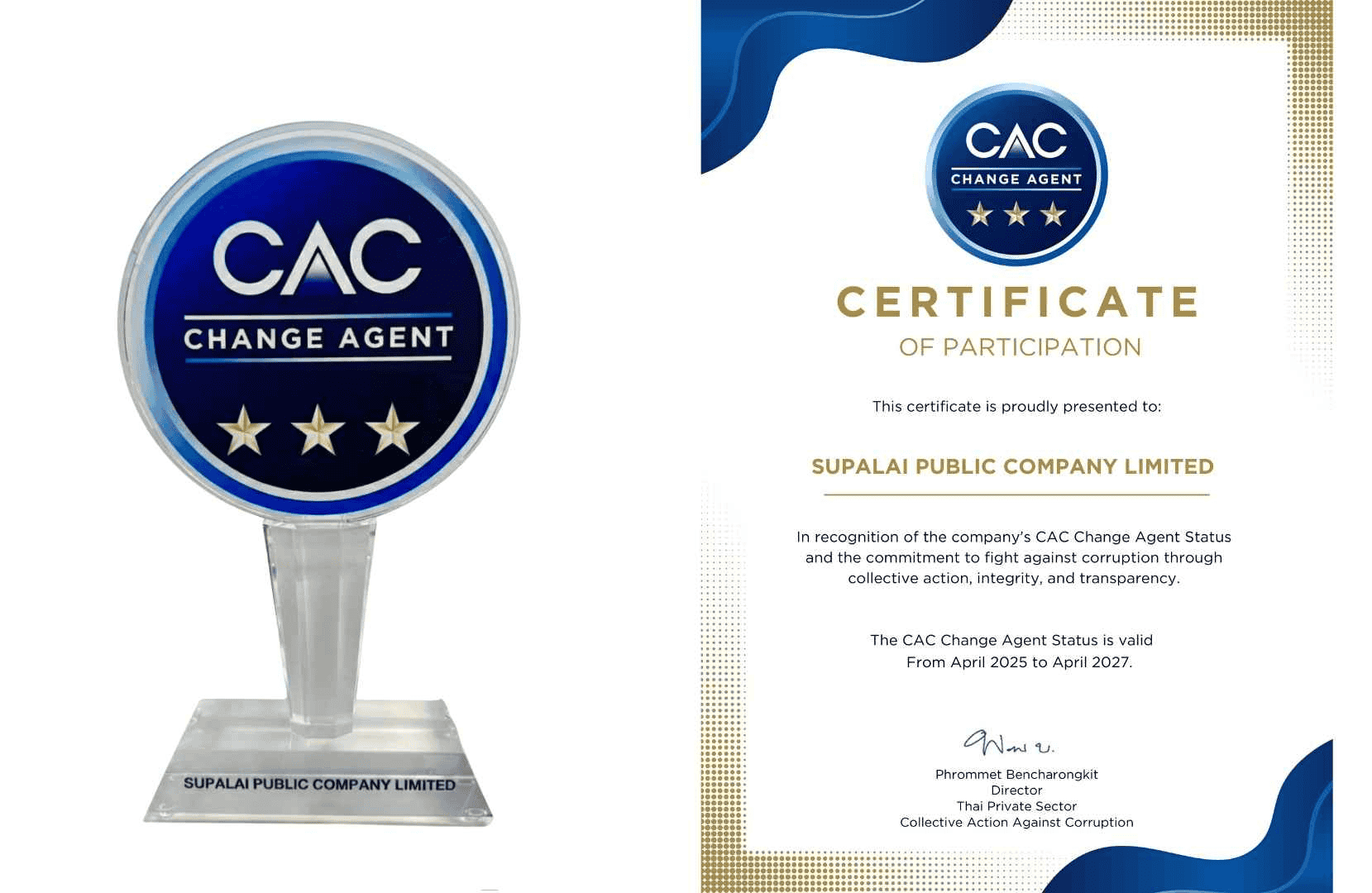
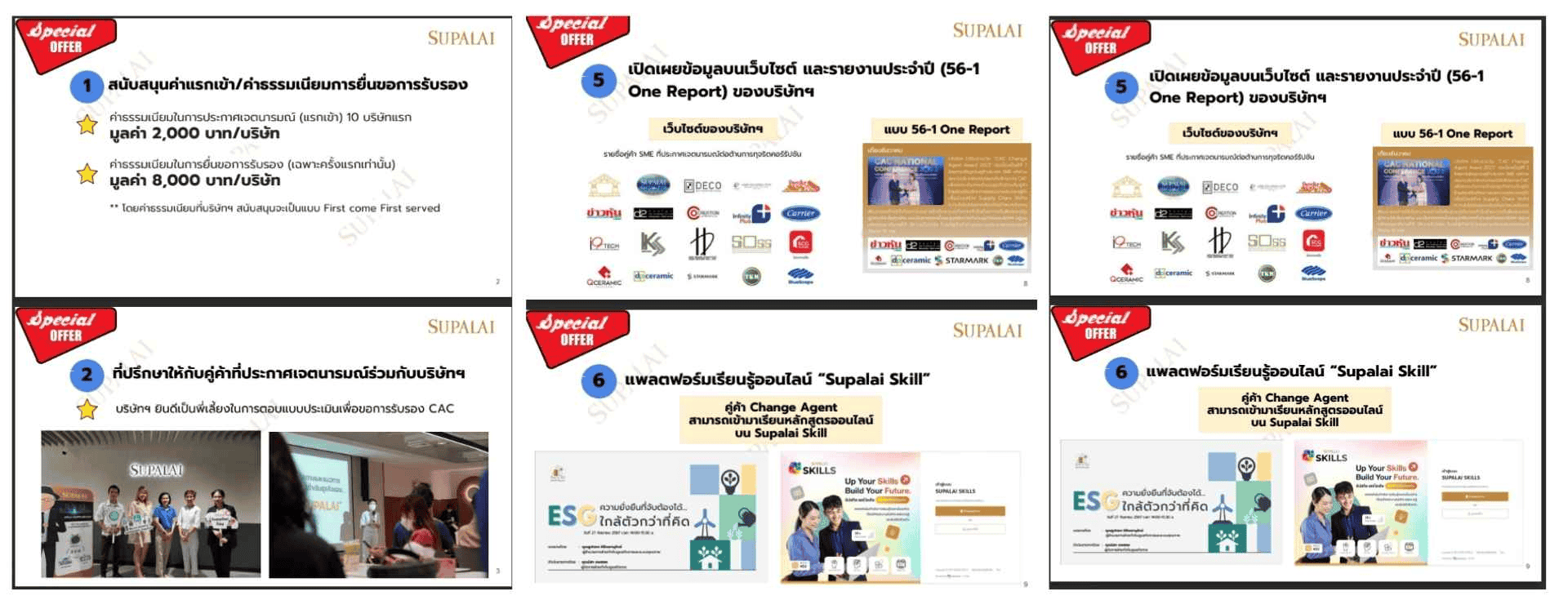
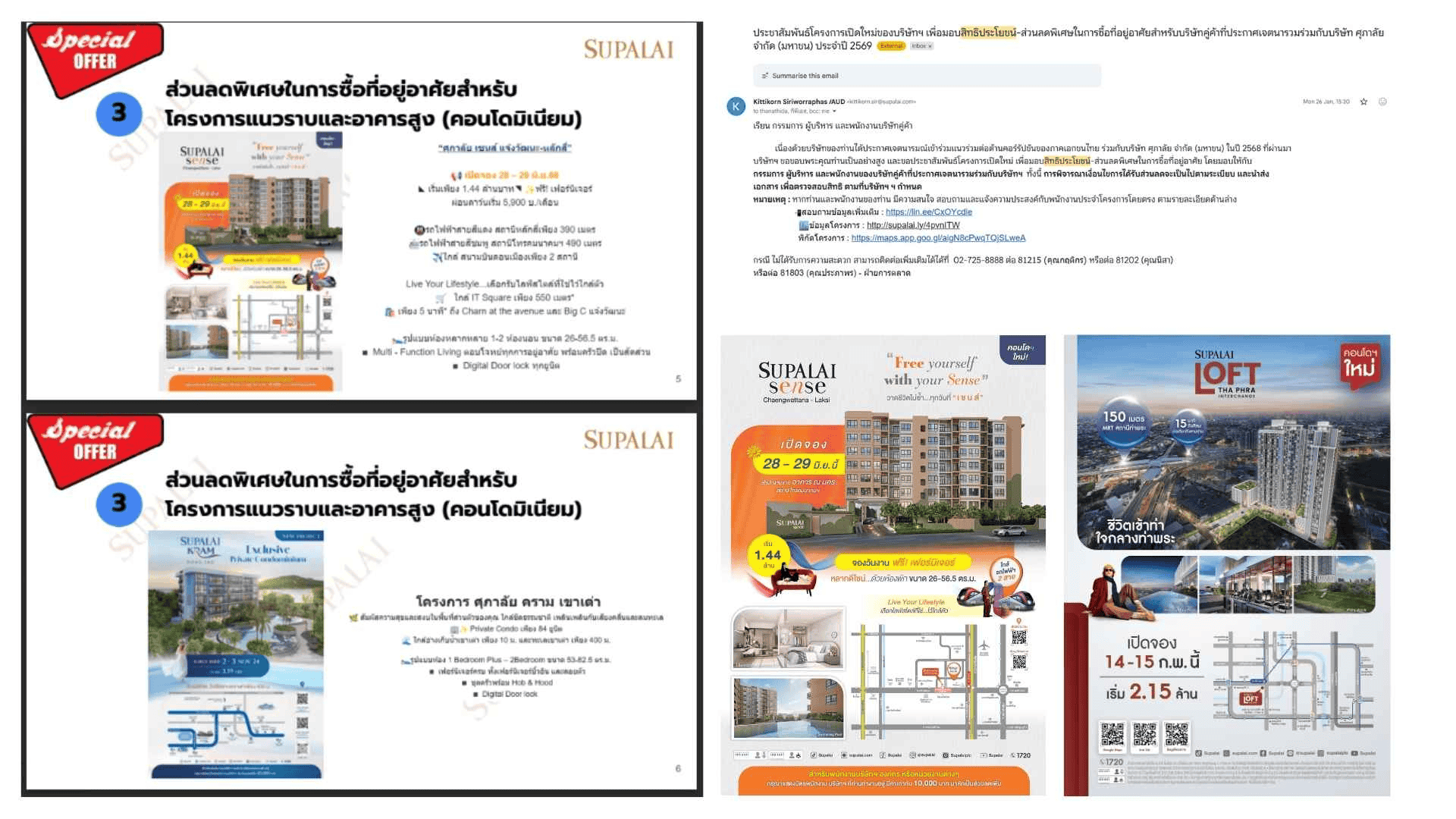
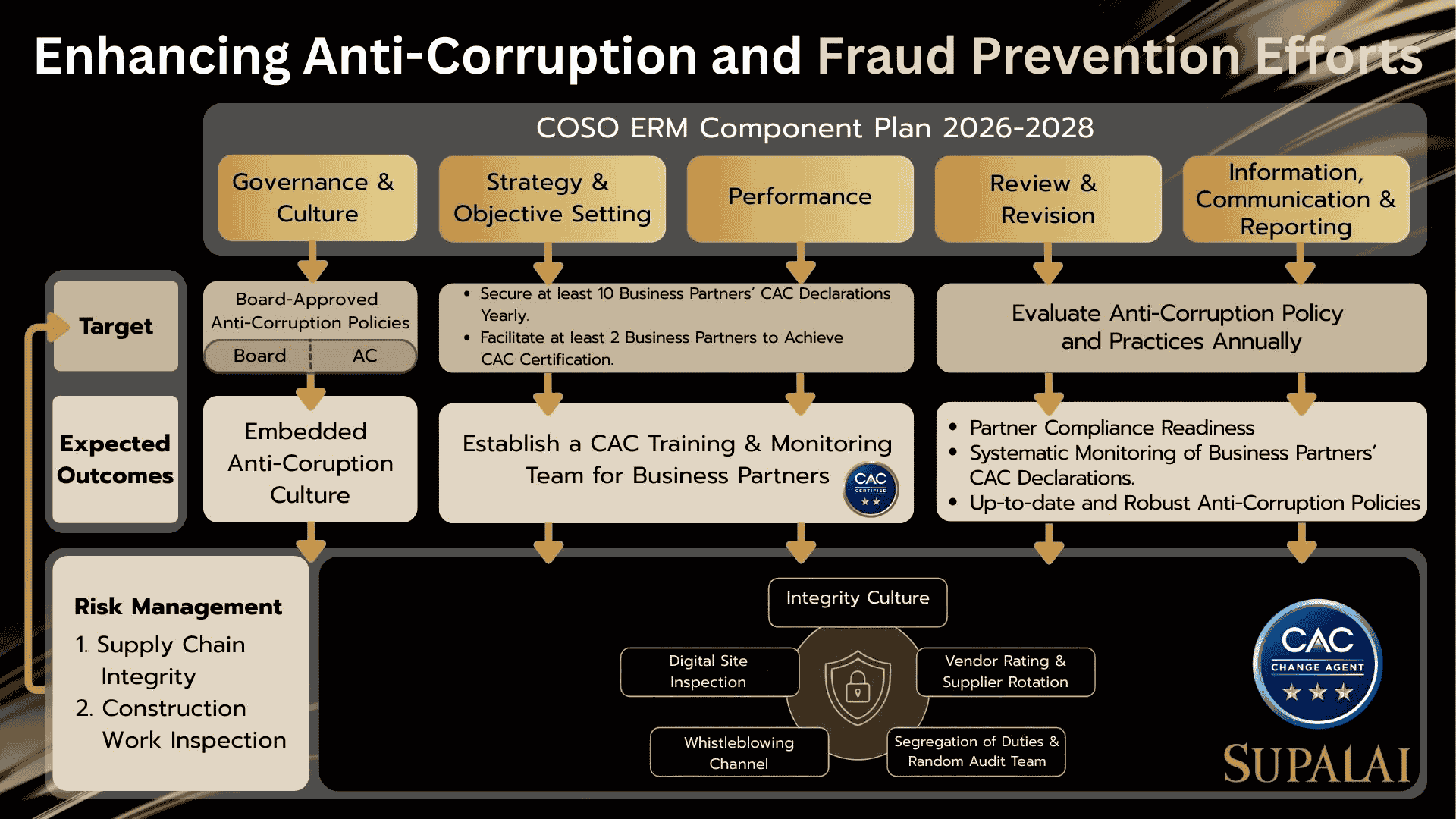
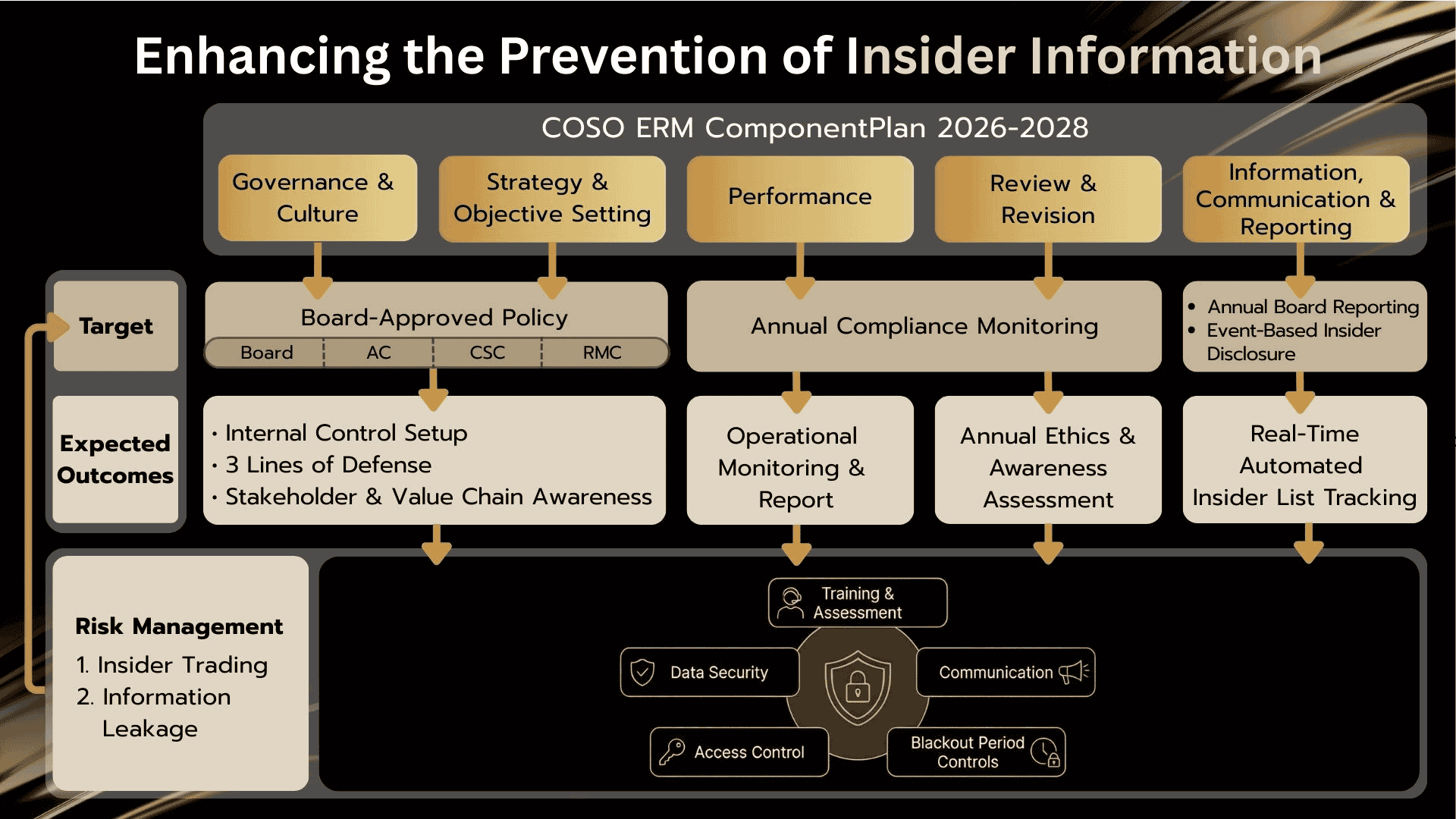
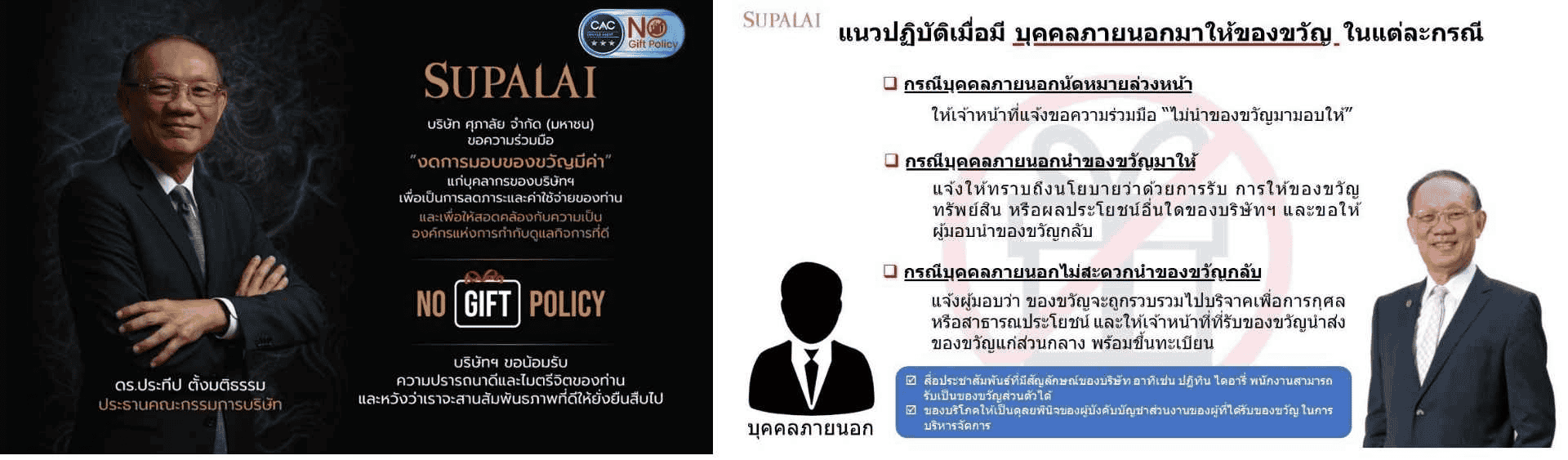
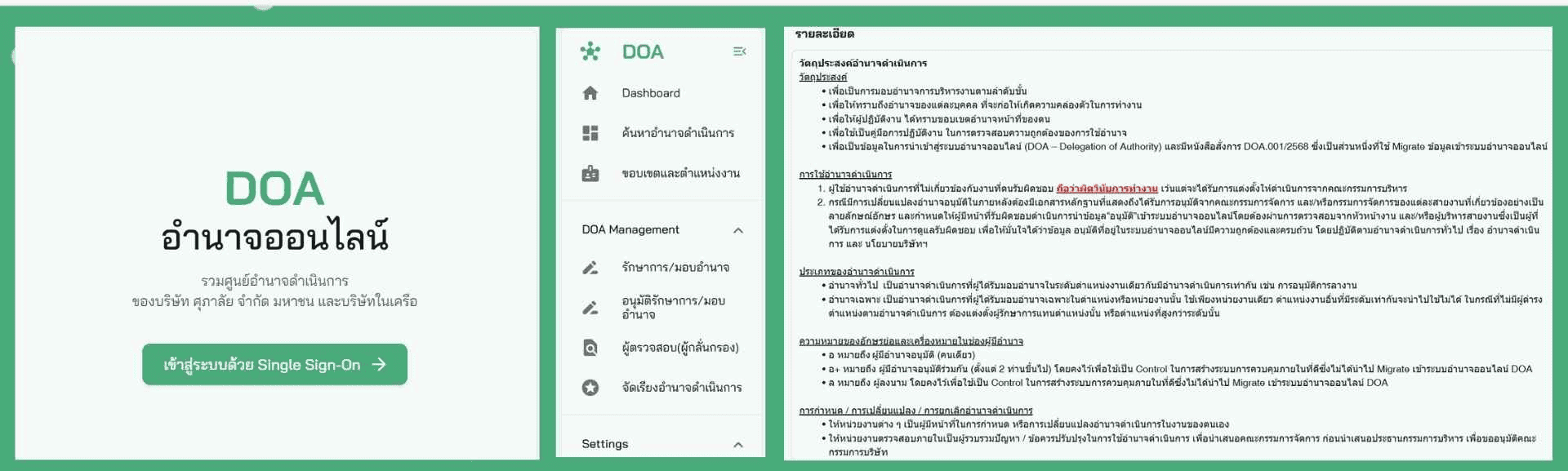
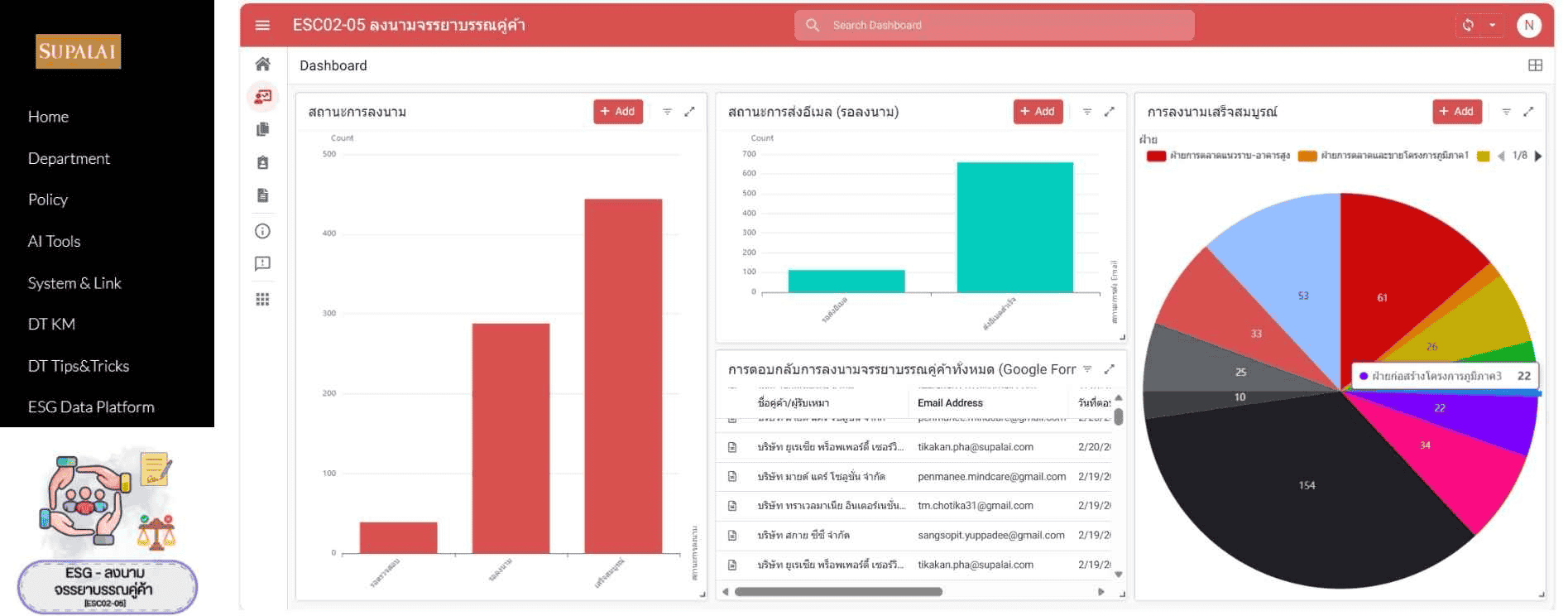
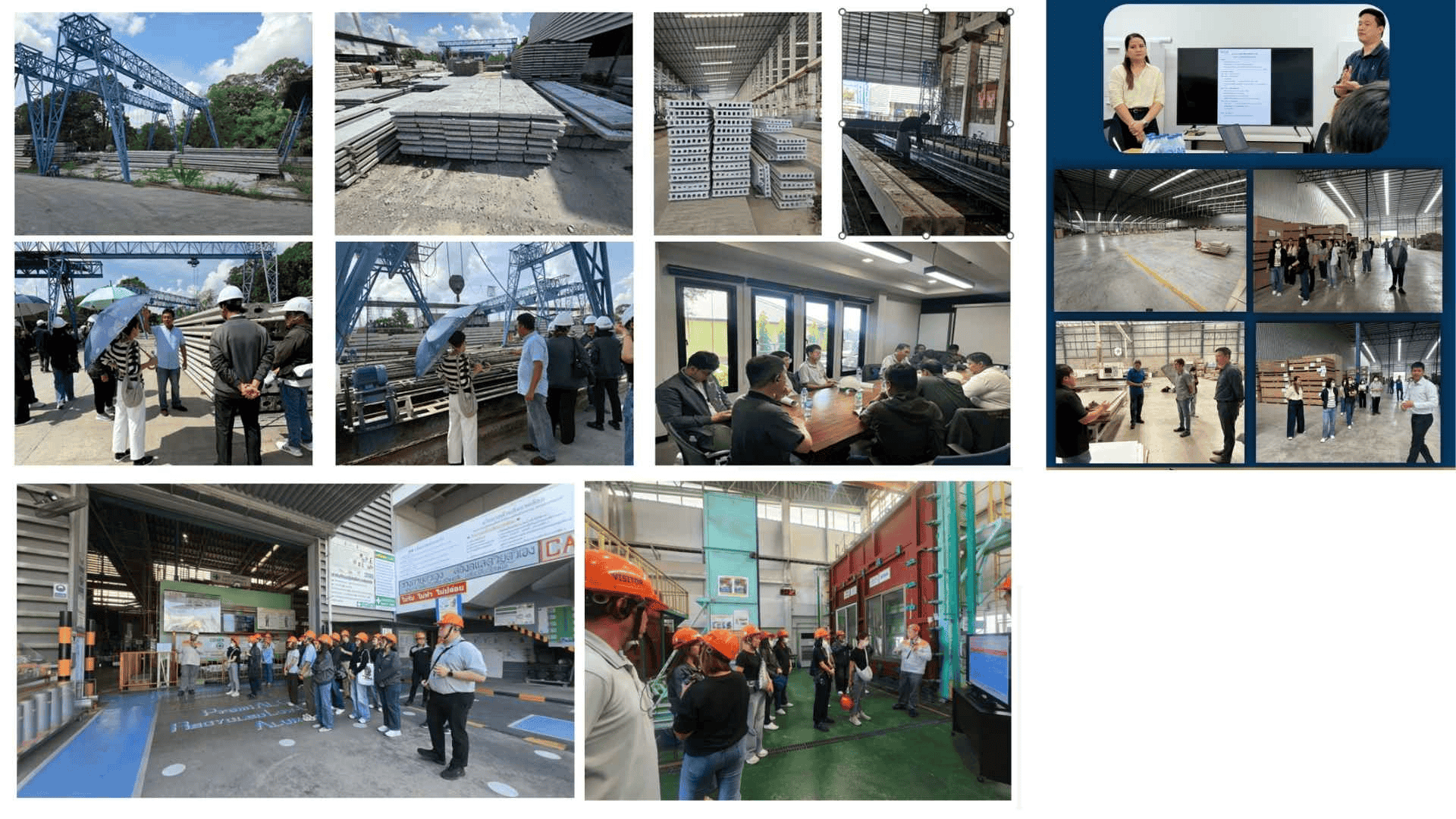
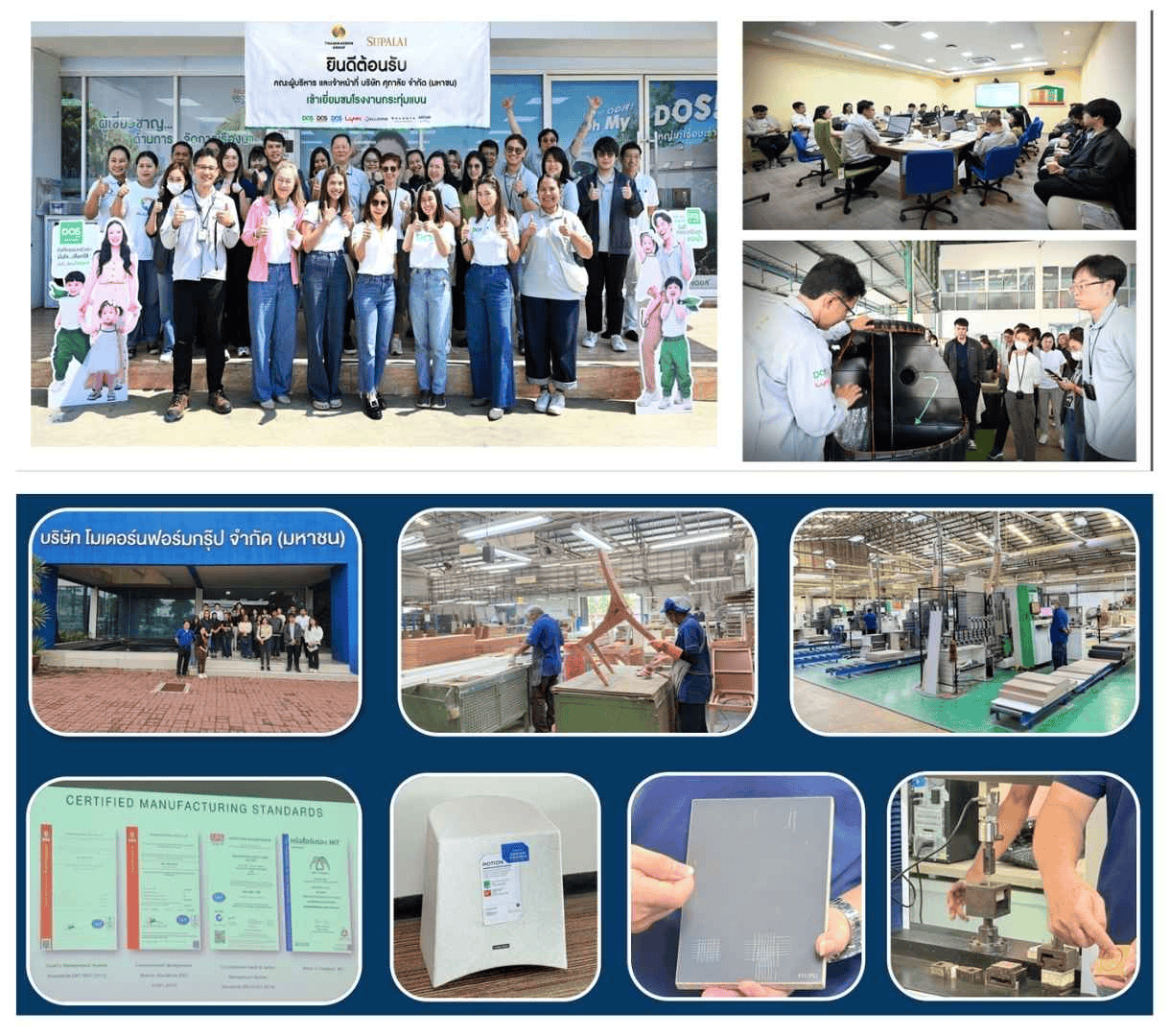
Promoting Compliance with the Code of Conduct
Promotes Compliance by Directors, Executives and Employees
Yes
Description
The Board of Directors regularly reviews policies and codes of conduct annually to align with changing circumstances. In the past year, important policies were reviewed and approved to enhance sustainability in all dimensions, as follows:
1. Review and Improvement of Key Policies (Review of Existing Policies)
The company has reviewed the abridged Code of Conduct for employees and the Good Corporate Governance Policy to ensure clear implementation, comprising:
Sustainable Corporate Governance Policy
Policy on Limiting the Number of Directorships in Listed Companies for Company Directors
Human Rights Policy
Supplier Code of Conduct
2. Approval of Additional Policies for Sustainability (New ESG Policies)
To elevate environmental, social, and governance (ESG) management, the company has approved 8 additional new policies to serve as a comprehensive operational framework, as follows:
Environmental Aspects: Sustainable Environmental Policy, Climate Change Management Policy, Resource and Waste Management Policy, and Biodiversity Management Policy
Social and Employee Aspects: Sustainable Social Policy and Responsible Termination Policy
Management Aspects: Environmental Management Policy
The company has established a communication strategy for the Corporate Governance Policy Handbook and the Code of Conduct to enhance employees' knowledge, understanding, and awareness of good corporate governance principles. Content has been developed to clearly explain operational guidelines, along with examples of situations that should and should not be practiced, enabling employees to understand and apply them appropriately in their work.
These communication guidelines are designed to align with the principles of good corporate governance of the Stock Exchange of Thailand, as well as best practices under the Corporate Governance Development Project for listed companies, to encourage the company's personnel to operate with transparency, ethics, and continuous adherence to good corporate governance standards.
The company has disseminated and communicated this information through the internal Intranet system to ensure that directors, executives, and employees of the company, including its subsidiaries, can access and understand the operational guidelines thoroughly. This will support personnel at all levels in using it as a guideline for appropriately and consistently interacting with all stakeholder groups, in line with the company's good corporate governance policy, which covers all four key categories.
Shareholders' Rights and Equitable Treatment of Shareholders
Consideration of Stakeholder Roles and Sustainable Business Development
Disclosure and Transparency
Board of Directors' Responsibilities
Process Document Link
https://sustainability.supalai.com/en/governance-and-economic/corporate-governance-business-ethics-and-tax-policy
Page Number in Report
1
Anti-Corruption Networks & Projects
Joined or Declared Intent to Join Anti-Corruption Networks
Yes
Networks & Projects Joined
| Network / Project | CAC Certified |
|---|---|
| Thai Private Sector Collective Action Against Corruption: CAC | Y |
| United Nations Global Compact (UNGC) | |
| Participation of anti-Corruption networks and initiatives |
Material Changes & Developments in CG
Reviewed the CG Policy or Board Charter in the Past Year
Yes
Material Changes or Developments in the Past Year
Yes
Policy Review — Description
Each sub-committee regularly reviews its charter and related policies on an annual basis to ensure alignment with its roles, responsibilities, and appropriate practices in accordance with the Principles of Good Corporate Governance. In this regard, the sub-committees have performed their duties as assigned by the Board of Directors comprehensively and have provided constructive recommendations that support the Company’s business operations, while continuously adhering to the Corporate Governance Code (CG Code). The results of such reviews are subsequently proposed to the Board of Directors for consideration and approval on an annual basis.
In 2025, the Company established sustainability targets in the governance dimension and disclosed the performance outcomes of its sustainability management, which can be summarized as follows.
Sustainability Goal Governance | Key Sustainability Management Performance Results For the Year 2025 |
Evaluation of the quality of | Consistent total score of 100 points. |
Surveying of excellent corporate | 5 stars, survey result in |
Sustainability assessment, | 100 points consecutive |
FTSE Russell ESG Scores theme Corporate Governance and Anti-Corruption full score of 5 points | Corporate Governance: achieved a full score of 5 points (2024: 4 points) Anti-Corruption: achieved a full score of 5 points (2024: 5 points) |
Member seal of commitment | 3 stars member seal. |
Implements the CG Code for Listed Companies
Yes
CG Code — Description
The Company has considered the "Corporate Governance Code for Listed Companies 2017" (CG Code) prepared by the Office of the Securities and Exchange Commission (SEC) to apply the CG Code to create sustainable value for the business.
Throughout the year 2025, the Company had consistently complied with the CG Code in accordance with the criteria of the survey of the corporate governance of the listed company project. The Company also considered and reviewed the implementation of the CG Code, which might not cover some criteria. However, the Company has conducted other approaches which are different from the specified criteria. They have been considered by the Board of Directors in terms of the reasonableness and suitability under the environment of the Company's business operation in order to achieve the Company's objectives and take into account the best interests of shareholders. The matters that the Company has not implemented are as follows:
Practices under CG CODE and CGR | Reasons for or replacement measures of the Company |
Election of directors by cumulative voting | The Company has not determined the cumulative voting methods for director election because the Company considers that such criteria still have disadvantages in a practical way. In other words, these criteria encourage minority shareholders to gather and vote for electing directors that are different from those nominated by the Company. This may cause the elected directors' representatives to be inconsistent with the Board Skill Matrix, which is a tool used to nominate directors based on the Company's strategy. In addition, the management approaches of elected directors may be conducted for the interests of a particular group of shareholders, which is not for the best interests of shareholders, leading to a divisive relationship between the directors and executives that affect the management in the same direction. |
Forming policies to limit the number of years for the term of office of independent director more than 9 years from the date appointed for the first time. | The Company has 4 independent directors, of which 4 directors shall hold office for more than 9 years. However, the Nomination and Compensation Committee and the Board agreed that independent directors are fully qualified according to the criteria set by the Securities and Exchange Commission, Thailand that is, they are knowledgeable, capable with experience suitable for the business. They can provide opinions freely and perform their duties as independent directors well. All independent directors have also proved that they can maintain independence and have no conflict of interest and/or significant vested interest in the company whatsoever. |
The Board of Directors reviews the matters that the Company has not been able to comply with the principles of good corporate governance on an annual basis.
Other CG Performance & Outcomes
Other Practices in Good Corporate Governance to Support the ASEAN CG Scorecard Assessment
Supalai Public Company Limited is committed to continuously strengthening its good corporate governance practices by conducting business with transparency, accountability, and due consideration for all stakeholders. The Company strives to align its governance framework with international standards in order to support sustainable business growth.
In 2025, the Company was assessed under the ASEAN Corporate Governance Scorecard (ASEAN CG Scorecard) and was recognized in the ASEAN Asset Class PLCs category. Supalai was among 74 listed companies in Thailand that received this recognition at the regional level. The ASEAN CG Scorecard assessment covers listed companies from six ASEAN member countries, namely Thailand, Malaysia, Singapore, the Philippines, Indonesia, and Vietnam, totaling 569 companies.
This recognition reflects the Company’s strong commitment to continuously enhancing its corporate governance standards. Supalai integrates good corporate governance principles with environmental, social, and governance (ESG) considerations across its business operations to create sustainable value for all stakeholders. The achievement also reinforces investor and consumer confidence while affirming the Company’s leadership in Thailand’s real estate development industry.