

Internal Control · 2025
In this section9 topics
- Internal Control — Board Opinion2 items
- Adequacy & Appropriateness of the Internal Control System1 item
- Internal Control Deficiencies1 item
- Audit Committee & Auditor Observations3 items
- Opinion on the Head of Internal Audit2 items
- Appointment, Discharge & Transfer of the Head of Internal Audit2 items
- Related Party Transactions1 item
- Counterparties & Transactions3 items
- Policy & Future Trends2 items
Internal Control — Board Opinion
Introduction
Supalai Public Company Limited prioritizes robust Internal Control and Internal Audit systems, ensuring they are appropriate, adequate, and effective. These systems are aligned with international frameworks, specifically the COSO Internal Control Framework and COSO Enterprise Risk Management Framework, as well as the IIA Global Internal Audit Standards and the IIA Three Lines Model. These measures are designed to enhance confidence in the effectiveness of the organization’s corporate governance, risk management, and internal control systems.
The company establishes comprehensive internal control standards, including oversight of anti-corruption measures. It also conducts risk assessments and engages in consultations with auditees to collaboratively define preventive and corrective actions. An independent Internal Audit unit is responsible for reviewing the effectiveness of the internal control system and regularly reporting audit findings regarding anti-corruption measures to the Audit Committee and the Board of Directors. Furthermore, the unit ensures compliance with the Securities and Exchange Act, regulations of the Securities and Exchange Commission (SEC), and requirements of the Stock Exchange of Thailand (SET), as well as other laws pertinent to business operations. This ensures accurate financial reporting and adequate disclosure, enabling the company to maximize business benefits while maintaining fairness for all stakeholders.
The Company has prepared work manual and regulations in which the authorities and duties are clearly defined and have been communicated to employees. The policies and personnel management procedures regarding internal control of the Company have also been adopted. Controlling activities for internal control, which comprise both financial and non-financial audits, protection of high-risk assets and controls of information systems, as well as oversight during work performance and continual evaluation on a case-by-case basis, have been established to ensure that the internal control system is sufficient, suitable, efficient and practically implementable. This is in accordance with the guidelines advocated by the Committee of Sponsoring Organizations of the Treadway Commission (COSO).
In addition, the Company also pays attention to the sustainability risk management (ESG), including Environmental, Social and Governance, to prepare for the prevention and adaptation to various risks. This also involves seeking opportunities to conduct business in response to those risks to build the confidence of key stakeholders.
The Board of Directors has mandated the establishment of an Internal Audit Department within the Company. To ensure the department’s independence from executive management, the Board has stipulated that the Internal Audit Department shall report directly to the Audit Committee. Furthermore, to enable the Board of Directors to monitor the Company’s operations effectively, the Internal Audit Department has formally defined its objectives, missions, scope of work, authorities, and responsibilities in a written Internal Audit Charter, which has been approved by the Chairman of the Audit Committee. The details of the Internal Audit Charter are as follows:
Internal Audit Charter
The Internal Audit Charter has been established as guidelines for operating personnel of the Company at all levels to understand lines of command, objectives, scope of work and responsibilities of the Internal Audit Section, and liabilities of audited units by taking into consideration the importance of the good corporate governance as an important tool in supervising and managing the operations, and to ensure that there are correct standards and trustworthiness by maintaining pure and fair standards according to prescribed practical professional dignity of internal auditing.
1. Objectives
The Internal Audit Department is established to provide independent assurance and advisory services to the Board of Directors, the Audit Committee, and executive management. Its mandate covers evaluating the effectiveness of risk management systems, internal controls, and corporate governance processes. This includes oversight of ESG risk management and ESG disclosure processes to ensure the accuracy, transparency, and reliability of both financial and ESG-related information.
2. Line of Command
The Internal Audit Section is an independent unit reporting directly to the Audit Committee.
The head of Internal Audit Section is the top senior personnel of the Department and report directly to the Audit Committee.
The head of Internal Audit Section shall propose the Risk-Based Audit Plan to the Audit Committee.
The head of Internal Audit Section directly reports the result of the audit to the Audit Committee, and the Audit Committee must report every audit result to the Board of Directors accordingly.
3. Main Engagement
Provide advice and information relating to the audit, assess risk management and internal control including standards of operations, generally accepted accounting principles, policies, laws, rules, regulations for enhancing efficiency and effectiveness in governing process to add value and ensure the creditability of the financial information system and the operations of internal departments.
Support the governance and management of ESG (Environmental, Social, and Governance) risks; including assessing the adequacy of internal control systems related to ESG data, reviewing the preparation and disclosure processes of sustainability reports, and providing assurance regarding the accuracy, completeness, and consistency of ESG information disclosed to stakeholders.
Be committed to practice to enhance their own knowledge and also the organization’s on the internal audit and various technical matters relating to the provision of advice and suggestions to build confidence in operating work.
4. Scope of Operations
The Scope of Operations of the Internal Audit Section includes providing advice and information regarding the audit, operations, assessment and improvement of risk management, internal control, generally accepted accounting principles, policies, rules, regulations and laws as well as supervising process and all relating procedures to the departments in the organization to add value and improve the operations of the audited units as well as relevant units to achieve the set goals and objectives.
The performing of any other non-audit tasks must always be approved by the Audit Committee.
5. Powers and Duties
The Internal Audit Section is independent in auditing the operations of all departments within the organization.
Internal Audit Section can have access to personnel, information, documents and assets of the employees in connection with the audit except for information on salary of the personnel in the Company.
The Internal Audit Section has no authority to set policy, working methods and internal control systems or modify the internal control system because such duties are under the responsibilities of related executives. The internal auditor’s duties are only providing advice and recommendations. However, the Internal Audit Section has the rights and duties to review the compliance with the Company's policies in order to assess the adequacy and effectiveness of the control so as to respond to the risks.
The Internal Audit Section shall carry out the audit in accordance with the International Standard for the Professional Practice of Internal Auditing.
Internal Audit Section has the right to attend training courses or participating in activities to increase their relevant knowledge by using the resources of the Company.
In case of the internal audit performance on any matters or any other performance of the internal audit is necessary to rely on the expertise of specialists, the head of Internal Audit shall present the Audit Committee and the Board of Directors respectively in order to be considered for an invitation or engaged specialists.
6. Duties and Responsibilities
To prepare the annual audit plan to the Audit Committee for approval and shall comply with the annual audit plan.
To review the internal audit charter at least once a year, so that it is consistent with the scope of responsibilities for the operations of the Company and shall be approved by the Audit Committee.
Verify the accuracy, completeness, and reliability of financial and ESG data using generally accepted auditing techniques and procedures, applied in such scope and frequency as deemed necessary and appropriate. This process shall account for the effectiveness of internal control systems and the materiality of the subject matter. Furthermore, analyze and evaluate the operational and management performance of the audited units by prioritizing audit activities and timelines based on significant risks. This ensures that disclosures made to stakeholders maintain full traceability and comply with international disclosure standards.
Preparation of risk-bases audit programs on strategic risk, operational risk, financial risk, regulatory risk, and social and environmental risks. This includes the integration of ESG risks into the Company’s comprehensive Risk Universe encompassing both current and emerging risks—and ensuring their inclusion within the Annual Audit Plan.
Provide assessment of the conflict of interest of the Company on a yearly basis and audit the connected transactions or operational activities to ensure the compliance with policies, laws, regulations, orders including the segregation of tasks, maintenance of properties and the use of all resources taking into account the efficiency and effectiveness of the operations.
Evaluating the performance and reporting the results of the audit and suggesting improvements in order to ensure the efficiency and effectiveness of the performance of the audit unit In accordance with the internal control framework of COSO-ERM (Enterprise Risk Management Integrating with Strategy and Performance).
Providing the performance evaluation of the internal audit section whereby the auditor uses the suggestions to improve the service in order to achieve internal audit objectives efficiently and effectively.
Monitor and evaluate the implementation of the jointly discussed conclusions to ensure the audited units have improved the operations as discussed.
Coordinate with persons involved to facilitate the audit to achieve the goals and to be efficient.
Assess risks in all processes of the Company relating to measures against corruption and provide appropriate risk management procedures.
Audit the compliance with measures, practical principles and the internal control relating to anti-corruption measures for all tasks assigned including financial and accounting internal controls and record-keeping to ensure that control relating to prevention on corruption is in place.
To receive corruption complaints and search additional information as assigned by the Audit Committee or the Senior Executive used supporting the consideration.
Perform other auditing work as assigned by the Audit Committee.
Summary of the Board's Opinion on Internal Control
The Board of Directors attaches importance to the internal control system of every process. The Company has established policies, regulations, and manuals on the Code of Conduct, which directors, executives and employees shall comply with, including the disclosure of conflicts of interest. Operating authority, duties, and responsibilities are determined clearly by specifying Key Performance Indicators (KPIs). It also provides sufficient number of personnel to implement the system effectively. The organization structure is appropriately designed with high flexibility and efficient collaboration. There is division of duties in various departments and work positions, along with decentralization and an anti-corruption program. All these tasks have been empowered property to the authority of executives and operators, with the checks and balances in place to protect shareholders’ capital and the company's assets.
In 2025, the Internal Audit unit successfully discharged its duties and responsibilities in full compliance with its Internal Audit Charter. These operations were conducted with complete independence and objectivity and in strict adherence to the Code of Ethics and the unit’s established mission and commitment. During the Board of Directors’ Meeting No. 11/2025, held on November 4, 2025, the Board passed a resolution affirming that the Company maintains adequate internal control systems and effective monitoring of business operations.
Adequacy & Appropriateness of the Internal Control System
Internal Control Framework Used
| Framework | Detail | ||||||||||||||||||||||||||||||||||||||||||||||||||||
|---|---|---|---|---|---|---|---|---|---|---|---|---|---|---|---|---|---|---|---|---|---|---|---|---|---|---|---|---|---|---|---|---|---|---|---|---|---|---|---|---|---|---|---|---|---|---|---|---|---|---|---|---|---|
| COSO - Enterprise Risk Management Framework (ERM) | The Board of Directors had assigned the Audit Committee to assess the sufficiency of the Company’s internal control annually in various aspects according to 5 elements and 17 principles based on approaches of the COSO, namely, control environment, risk assessment, control activities, information and communication, and monitoring by using the internal control self-assessment form provided by the Securities and Exchange Commission of Thailand (SEC) and the Stock Exchange of Thailand (SET). In addition, various issues were discussed according to the sufficiency assessment form of the internal control system as well as the report of the Audit Committee. The Company also has an internal control system that controls various matters as follows: 1. Monitoring the operations of both the Company and subsidiaries to protect the assets from undue or unauthorized use by employees or executives. 2. Conducting transactions with persons with conflict of interest or related persons sufficiently. 3. Whistleblower channels are also provided via e-mail: anti-corruption@supalai.com, and complaints for products and services are available through the 1720 call center. 4. There is also an internal control system covering financial reporting, operations, asset maintenance, the prevention or reduction of errors, damages, leakage, waste, corruption, compliance with laws, and relevant regulations. In 2025, two engagement activities were conducted via the 'Coin Next' system, allowing employees to provide feedback on internal control systems. These activities aimed to monitor compliance with the Inside Information Policy and the implementation of internal control measures designed to prevent operational errors. The Internal Audit Department will analyze this feedback to identify underlying issues and impacts, which will then inform the development of the audit plan. Furthermore, the department will review and follow up on corrective actions to ensure the continuous maintenance of a robust internal control environment.
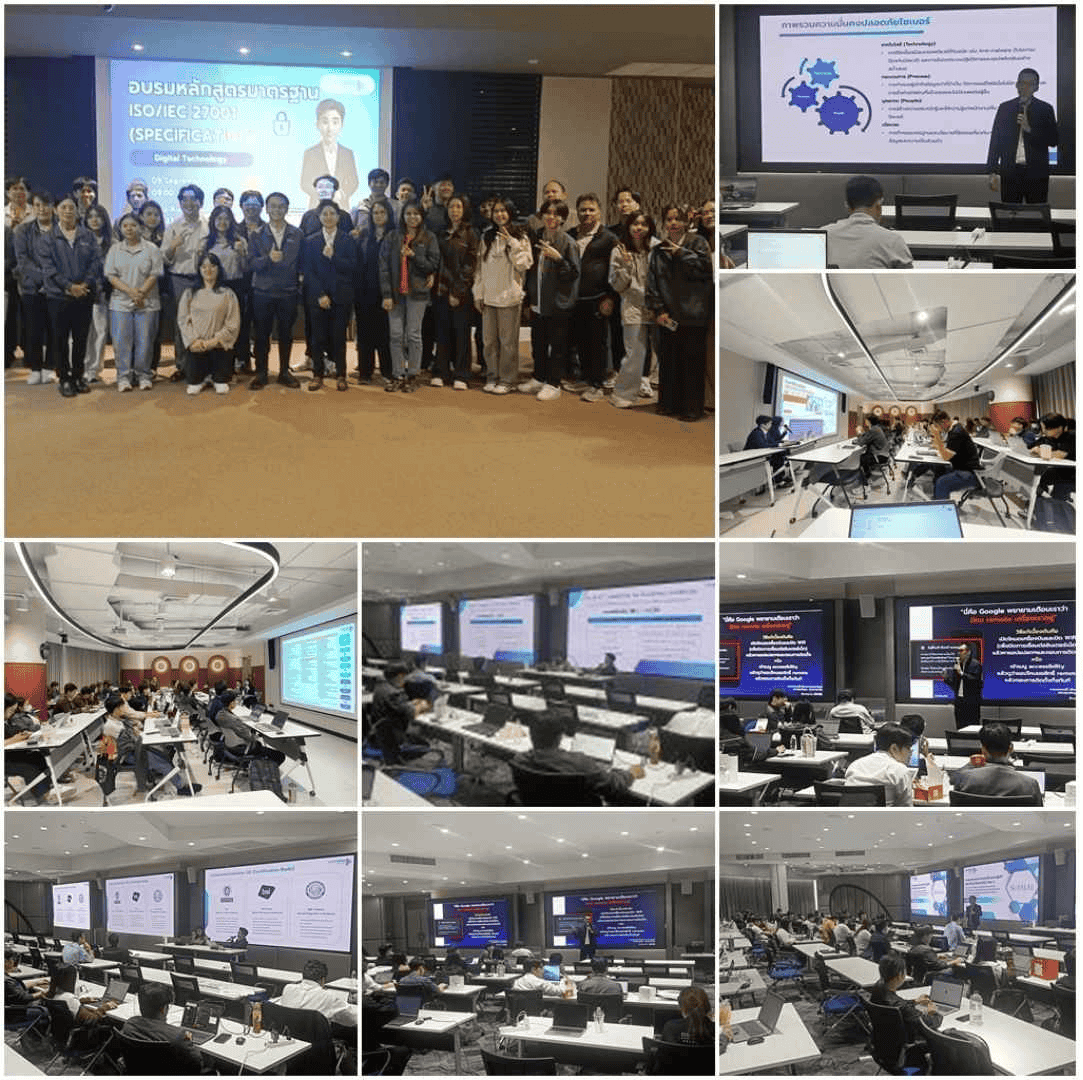
5. Report and monitoring: The Board of Directors assigns the Audit Committee to review the internal control assessment result and monitor the implementation of the resolutions of the Audit Committee by focusing on the efficiency, effectiveness, adequacy, and suitability of business operations to ensure that all assets are maintained and resources used efficiently to prevent possible damage or dishonesty. 6. Regarding Information Technology (IT) Security, the Company recognizes the critical importance of technology integration and has consequently established a comprehensive IT Security Policy. This policy outlines essential measures and guidelines, including the handling of personal data, and has been formally approved by the Board of Directors. To ensure effective implementation, the Company conducts regular training sessions, disseminates updates via internal email communications, and publishes the policy on both the corporate website and the internal intranet. These actions are meticulously aligned with the ISO 27001 Information Security Management Standard, fostering a secure and compliant technological environment. 6.1 Information Security Management in Accordance with International Standards (ISO/IEC 27001:2022) In 2025, the Company elevated its information security management standards, striving towards ISO/IEC 27001:2022 certification. The key operational achievements are as follows:
6.2 Data Privacy Management The Company highly values the privacy of its customers, service users, and all stakeholders who interact with the Company and its official website. Consequently, a Personal Data Protection Policy has been established to ensure that the management of personal data is conducted securely and appropriately. The Company has appointed a Data Protection Officer (DPO) with the authority and responsibility to oversee operations in strict accordance with the Personal Data Protection Act (PDPA). Furthermore, the Company has implemented a personal data storage system equipped with appropriate mechanisms and technical measures. This includes restricted access to the personal information of customers, service users, and stakeholders by directors, executives, staff, employees, and corporate agents. These protections extend to all services accessed via the Company's website, aiming to prevent unauthorized use, disclosure, destruction, or access to personal data. To ensure transparency and support, the Company provides dedicated communication channels for consultations covering the following key areas:
6.3 Monitoring Compliance with Cybersecurity Policies
The Company focuses on maintaining the security of its information technology infrastructure in alignment with international standards by establishing Key Performance Indicators (KPIs) and continuously monitoring performance as follows:
Key Activities in 2025:
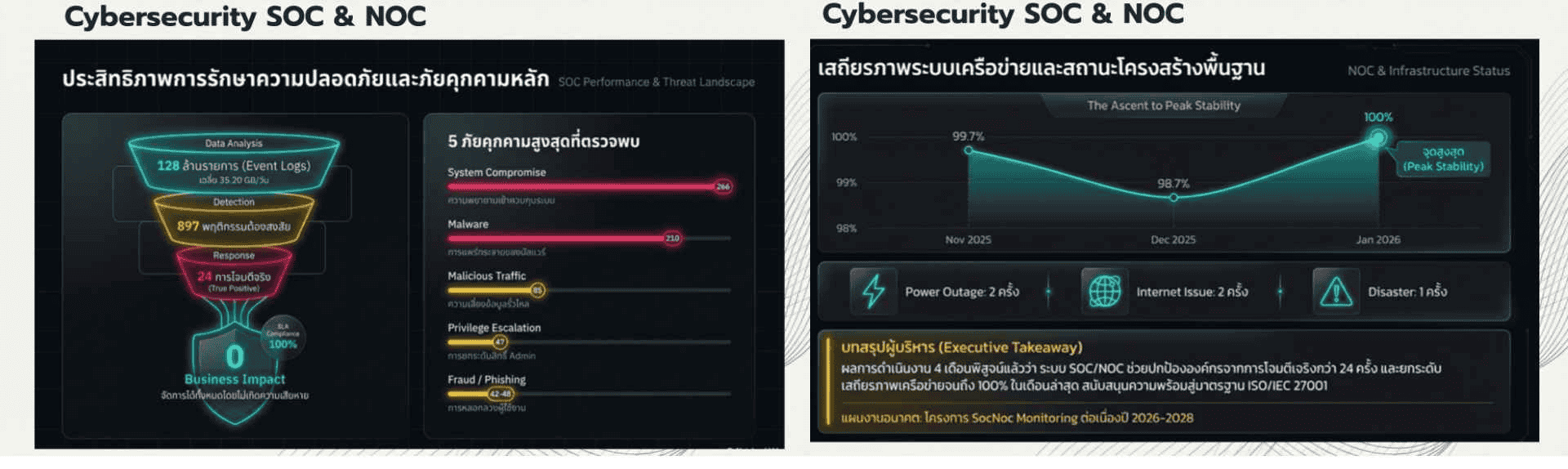
The Company has implemented a project to outsource a Security Operations Center and Network Operations Center (SOC/NOC Monitoring). This initiative focuses on the surveillance and forensic identification of cyber threats, enabling real-time threat detection and response to effectively intercept and mitigate any anomalies.
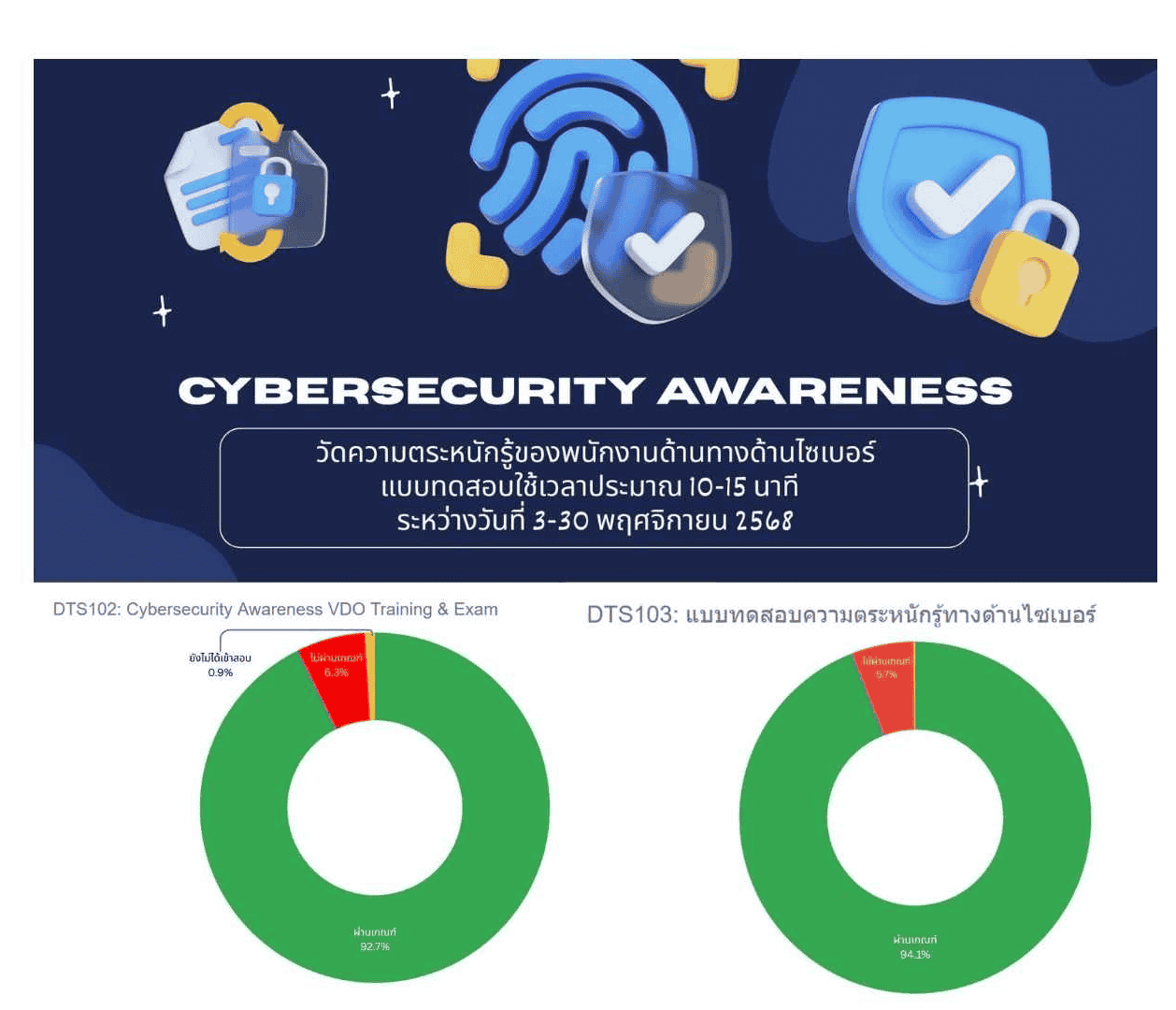
The Company prioritizes the cultivation of an information security culture, focusing on ensuring that personnel at all levels possess the knowledge and understanding required to protect corporate and customer data in the digital age. The comparative performance results are as follows:
The Company conducts annual assessments of personnel's knowledge and understanding of information security to evaluate the effectiveness of internal communications and training programs.
The Company remains committed to information security principles in accordance with international standards. We maintain 24/7 monitoring and anomaly detection systems (SOC/NOC Monitoring) to effectively prevent and deter threats. The summary of incidents over the past three years is detailed below:
Cybersecurity Strategic Direction and Objectives for 2026 To elevate information security to international standards and ensure continuous confidence, the Company has established the following strategic objectives for 2026. 1. Enhancing Secure Software Development and Infrastructure (Secure by Design) Focus on strengthening specialized skills for digital and information technology personnel in Secure Software Development Life Cycle (Secure SDLC) and Secure Infrastructure Architecture to mitigate system vulnerabilities from the initial stages. 2. Scaling Organization-wide Security Awareness Set a target for at least 85% of all employees across all levels to complete intensive cybersecurity training courses to cultivate an effective "Human Firewall" network. 3. Proactive Testing and Evaluation against
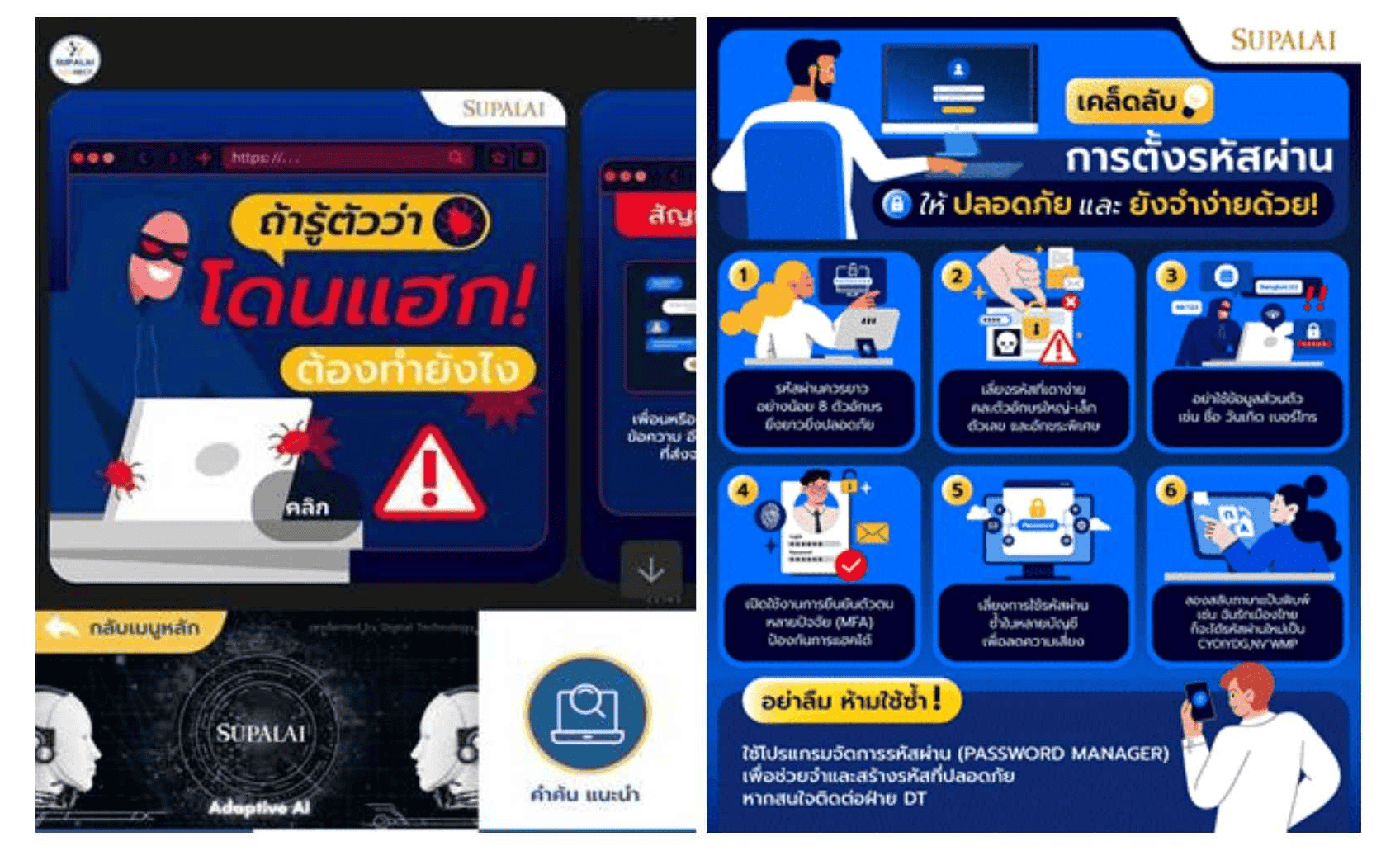
4. Send Company e-mails to raise awareness on fraud prevention and various online threats To ensure that information security policies and guidelines are communicated to all employees comprehensively and consistently, the Company has established various communication channels under the core concept: 'Security is Everyone’s Responsibility.
6.4 Cyber Threat Response The Company applies cloud computing to systems that are important to its businesses to reduce risks and ensure business continuity. In addition, the Company also focuses on cybersecurity by planning and installing devices to prevent threats in several channels, such as the use of Virtual Private Network (VPN), access right review, assigning access to a website with a firewall, logs, phishing attack tracking, anti-virus for personal computers and endpoints, and including the implementation of Multi-Factor Authentication (MFA) for certain critical systems. Furthermore, the Board of Directors and the Audit Committee receive regular reports regarding Cybersecurity risks and relevant control measures. This ensures robust and appropriate IT risk governance and oversight across the organization. 6.4.1 Risk Supervision and Detection
6.4.2 Handling with Damage and Rehabilitation A Disaster Recovery Plan (DRP) system is established to support situations where there is damage to the system or data. This causes the system to resume its operation within a short period of time 2 hours by recovering from existing data. There are backups in place according to the backup plan to prevent business disruption, including regular backup drills and recovery, to be prepared at all times, and to perform operations efficiently. | ||||||||||||||||||||||||||||||||||||||||||||||||||||

Internal Control Deficiencies
Number of Deficiencies
| Metric | Current Year | Previous Year | Two Years Ago |
|---|---|---|---|
| Total number of internal control system deficiencies (cases) | 0 | 0 | 0 |
Audit Committee & Auditor Observations
Introduction
Throughout 2025, no material weaknesses or significant deficiencies in the internal control systems were identified
Audit Committee's Opinion Differs from the Board's
No
Auditor Has Observations on Internal Control
No
Opinion on the Head of Internal Audit
Head of Internal Audit
3159
Audit Committee's Opinion on the Head of Internal Audit
The Company’s Board of Directors has prescribed the establishment of the Internal Audit Section. At present, Miss Toopthong Hirunyanulak has been appointed as the Chief of Internal Audit. With 18 years of experience in internal audit and in-depth expertise and understanding of the Company’s business, she is considered highly qualified for the role.
At the Audit Committee Meeting No. 8/2008, held on September 9, 2008, Ms. Toopthong Hirunyanulak has been appointed to be the supervisor of the internal auditor since August 18, 2008, as she has knowledge and good business understanding, including skills, qualifications, and experiences in performing internal audit work, corruption detection, assessment of internal control systems, and risk management in accordance with COSO ERM guidelines. As a result, she is suitable for performing such duties adequately and appropriately. Roles, duties, and responsibilities are as follows:
Perform duties as "Internal Auditor," responsible for assignments in accordance with the Audit Committee Charter approved by the Audit Committee.
Act as the "Secretary of the Audit Committee" by organizing meetings, preparing meeting documents, and taking note of the minutes of the Audit Committee meetings.
Appointment, Discharge & Transfer of the Head of Internal Audit
Requires Audit Committee Approval
Yes
Description
The consideration and approval of appointment, removal and performance assessment of the Chief of Internal Audit of the Company must be approved by the Audit Committee according to the Audit Committee Charter.
Related Party Transactions
Has Related Party Transactions
Yes
Counterparties & Transactions
Monetary Unit
1000000
Counterparties with Potential Conflicts
| Name | Person / Juristic Person | Type of Business | Nature of Relationship | As of Date (YYYY-MM-DD) |
|---|---|---|---|---|
| Duraflor Co.,Ltd. | Juristic Person | Distribution of wallpaper and Durafloor floor coverings. | The Company shares a common director with SPALI, namely Dr. Prateep Tangmatitham. | 2025-12-31T00:00 |
Transactions by Counterparty
| Transactions |
|---|
| 115.0 · Necessity: Such transaction included commercial terms in the same manner as an ordinary person would agree with any general counterparty under similar circumstances at normal prices and terms that the seller offers to regular customers with trade bargaining power without the interference power resulted from the status of directors, executives or related persons. · Description: Purchase of construction materials (Wallpaper and Durafloor) based on specified models determined by SPALI. · As of yesteryear: 158.0 · Nature of transaction: Purchase of construction materials. · Audit committee opinion: Based on the Audit Committee's assessment, the purchase price of the aforementioned materials is considered fair and reasonable, and is in the ordinary course of business. · As of year before yesteryear: 175.0 |
Policy & Future Trends
Policy, Measures & Approval Process
Measures or Procedures for Approval of Connected Transactions
According to Section 89/12 of the Securities and Exchange Act (No. 4) B.E. 2551, stipulating that “Directors, executives or related persons may enter into any transaction with the company or subsidiary only after obtaining approval from the shareholders’ meeting of the company, unless such transaction is the commercial terms in the same manner as an ordinary person would agree with any general counterparty under similar circumstances with trade bargaining power without the interference power resulted from the status of directors, executives or related persons, as the case may be, provided further that the said commercial terms have been approved by the board of directors or in compliance with the principle approved by the board of directors”.
According to the above requirements, the Board of Directors therefore determined that if the Company and its subsidiaries wish to engage in transactions with directors, executives or related persons, those transactions are subject to general commercial terms or such transaction is the commercial terms in the same manner as an ordinary person would agree with any general counterparty under similar circumstances with trade bargaining power without the interference power resulted from the status of directors, executives or related persons (as the case may be) under reasonable and traceable conditions and without a transfer of benefits, provided further that the said commercial terms have been approved by the board of directors. In addition, the Company will prepare a summary report of transactions exceeding 20 million Baht to be reported at each Board of Directors’ Meeting.
The Board of Directors established the policy, regulations, processes of transaction consideration and approval, and the disclosure of information to be in accordance with the rules set forth by supervising government agencies. The Company or its subsidiaries may enter into connected transactions with persons who may have conflicts of interest only upon the approval of the Audit Committee or the Independent Directors and the approval of the Board of Directors and / or the Shareholders' Meeting prior to the transaction. However, it depends on the size of the transaction as specified by the Stock Exchange of Thailand. Regarding the transactions that any directors or persons may have conflicts, interests or other conflicts of interest with the Company, the director who has an interest in such matter shall be entitled to cast a vote or vote on such matter. Such implementation shall not be a delegation of power which allows the authorized person to approve the transaction that he/she or the person who may have conflicts has interests or other conflicts of interest in any other manners with the Company or its subsidiaries.
Future Trends in Related Party Transactions
Policy or Tendency of Future Transactions
The Company has the policy on current and future connected transactions within the framework of good corporate governance. Terms and conditions are established in accordance with the nature of normal course of business and it is the market price which can be compared with the price incurred to any third parties. In this regard, the Company allows the Audit Committee to consider the fairness and reasonableness of connected transactions as well.
Regarding connected transactions possibly occurred in the future, the Board of Directors shall comply with the laws on securities and exchange and regulations, notifications, orders or requirements of the Office of the Securities and Exchange Commission, the Capital Market Supervisory Board, and the Stock Exchange of Thailand, including abide by the requirements on disclosure of information on connected transactions and the acquisition or disposition of important assets of the Company or its subsidiaries.
However, if there is a connected transaction of the Company or its subsidiaries with a person who may have a conflict of interest, interests, or future conflicts of interest, the Company will allow the Audit Committee to give opinions on the necessity and appropriateness of such transactions. In the event that the Audit Committee does not have expertise in considering possible connected transactions, the Company will allow an independent expert or the Company's auditor to provide opinions on such transactions in order to be used in decision-making of the Board of Directors or shareholders as the case may be. The Company shall disclose transactions in the Notes to Financial Statements audited by the Company's auditor.
Regarding the provision of financial assistance to subsidiaries in the future, the Company will consider its financial position, operating results, and solvency. However, to provide financial assistance to these subsidiaries, the Company considers both advantages and disadvantages that if the Company does not provide assistance, these subsidiaries will not be able to continue their businesses. Moreover, The Company also takes into account being a major shareholder and having the authority to control the management in order to meet the objectives of the Company. The Company will not provide financial assistance to other companies other than its subsidiaries.