

Sustainability · 2025
In this section52 topics
- Sustainability Policy3 items
- Sustainability Goals & UN SDGs3 items
- Policy Review3 items
- Business Value Chain1 item
- Stakeholder Analysis2 items
- Environmental Policy & Guidelines4 items
- Environmental Policy Review3 items
- Energy — Plan & Guidelines2 items
- Energy — Electricity Consumption1 item
- Energy — Fuel Consumption1 item
- Energy — Targets2 items
- Energy — Performance & Outcomes2 items
- Water — Plan & Guidelines2 items
- Water — Withdrawal, Discharge & Consumption1 item
- Water — Targets2 items
- Water — Performance & Outcomes2 items
- Waste — Plan & Guidelines2 items
- Waste — Generation, Disposal & Recycling1 item
- Waste — Targets2 items
- Waste — Performance & Outcomes2 items
- GHG — Plan & Guidelines2 items
- GHG — Emissions1 item
- GHG — Emissions Verification4 items
- GHG — Principles & Standards1 item
- GHG — Targets1 item
- GHG Targets — Carbon Neutrality1 item
- GHG Targets — Other Targets1 item
- GHG — Performance & Outcomes2 items
- Environmental Legal Incidents2 items
- Other Environmental Management1 item
- Social Policy & Guidelines4 items
- Social Policy Review3 items
- Social — Principles & Standards Practised1 item
- Human Rights Due Diligence3 items
- Employees — Plan & Guidelines3 items
- Employees — Workforce1 item
- Employees — Remuneration & Provident Fund1 item
- Employees — Training & Development1 item
- Employees — Occupational Health & Safety1 item
- Employees — Labour Relations1 item
- Employees — Employee Representation2 items
- Employees — Targets2 items
- Employees — Performance & Outcomes2 items
- Customers — Plan & Guidelines3 items
- Customers — Satisfaction Results2 items
- Customers — Targets2 items
- Customers — Performance & Outcomes2 items
- Community & Social — Plan & Guidelines3 items
- Community & Social — Targets2 items
- Community & Social — Performance & Outcomes2 items
- Other Social Management1 item
- Law Violation Incidents1 item
Sustainability Policy
Has a Sustainability Policy
Yes
Policy Description
Sustainability Policy and Operational Framework
The Company has established “Sustainable Development Policy” To serve as principles and operational guidelines for responsible business growth and the management of impacts and risks covering economic, social, environmental, and governance dimensions, including appropriately addressing the needs of all stakeholder groups. This aligns with international sustainability practices and standards, such as the 10 principles of the UN Global Compact (human rights, labor, environment, and anti-corruption), which are among the UN Sustainable Development Goals (UN SDGs), the OECD Due Diligence Guidance for Responsible Business Conduct, the United Nations Guiding Principles on Business and Human Rights (UNGPs), and the ISO 9001:2015 international quality management system.
The Company is committed to and prioritizes conducting business in accordance with sustainable development practices, covering economic, social, environmental aspects, and operating under good corporate governance principles. This includes considering all relevant stakeholders, both in project areas and society as a whole, to create lasting benefits for communities, society, and the environment. The practices are as follows:
Economic Dimension
Committed to continuously adhering to good governance principles, anti-corruption, and anti-unfair competition. It also concretely develops policies, processes, and monitoring systems for these practices to ensure transparency and fairness for all stakeholders.
Social Dimension
Committed to developing human resources both within and outside the organization from the perspective of sustainable business operations, as the Company believes that human resources are a crucial factor for long-term sustainability. The Company focuses on five key issues: human rights, equality, safety, health, and working environment, by "creating" good products for consumers through various innovations, "promoting" the development of knowledge and capabilities of personnel within the organization, including manufacturers and service providers, and "responding" to the needs of stakeholders by listening to feedback from all sectors.
Environmental Dimension
Committed to improving and transforming business processes throughout the supply chain to reduce negative impacts such as climate change, pollution, and biodiversity depletion, through accurate, clear, and verifiable management.
For more information on the policy, please refer to  Policy on Corporate Sustainability Management
The Company defines “Sustainable Development Framework” To serve as a framework for managing significant issues in each dimension. The operations for all issues must be based on good corporate governance, compliance with laws and regulations, effective risk management, respect for human rights throughout the supply chain, innovation management, and economic benefits. Establishing a sustainability operational framework enables the Company to clearly define goals in each area and formulate appropriate strategies and action plans to support long-term business growth, while creating value for local communities and stakeholders in line with the Company's objectives and vision. Details are as follows:
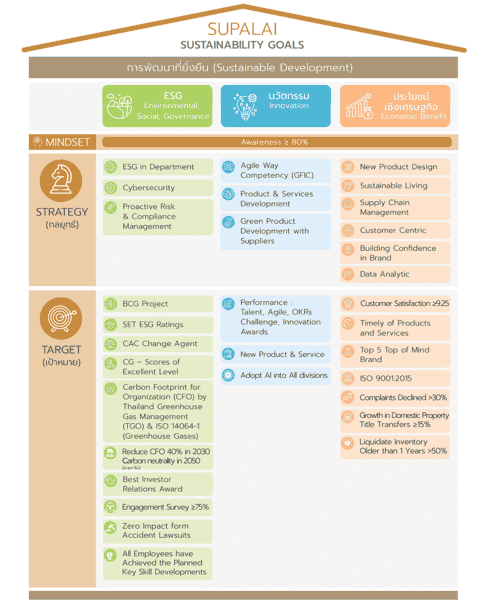
ESG Aspects Committed to conducting business ethically and in compliance with laws, by integrating business operations that consider E: environmental, S: social, and G: governance factors, as well as prioritizing stakeholders throughout the supply chain.
Innovation Aspect Committed to enhancing personnel potential development to prepare for future growth and driven by data for accurate and rapid decision-making, leading to business innovation development to create a good quality of life for everyone in the organization, including society, in terms of economy, environmentally friendly products, education, health, and safety, to reduce operational risks and create competitive advantages.
Economic Benefits Committed to creating products that meet all needs and paying attention to details in every step of construction and quality delivery under ISO standards to ensure satisfaction for important customers, while collaborating with partners and within the ecosystem to expand business and increase value.
Sustainability Governance Structure
The Company drives sustainability operations by focusing on the participation of all sectors within the organization, from the Board of Directors and executives to operational staff. Therefore, a comprehensive governance structure for sustainability operations and development has been established across all dimensions economic, social, and environmental to ensure policy implementation and enhance the efficiency of related operations, with annual reviews. It is the responsibility of all employees, at every level, to be accountable for and adhere to this policy, under the supervision of key stakeholders, as follows:
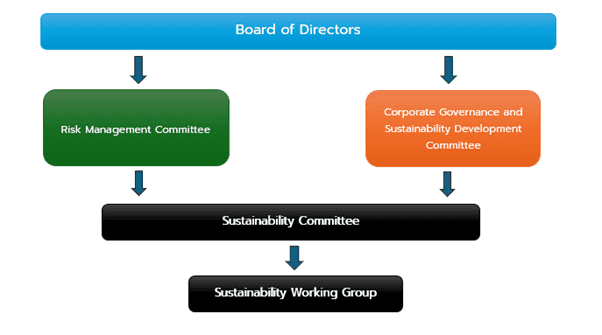
The roles and responsibilities of committee
The Company has appointed Sustainability Committee Comprises the Managing Director, who is a senior executive, with Mr. Tritecha Tangmatitham, the Managing Director, serving as the Chairman of the Sustainability Committee. The Sustainability Working Group consists of representatives from department heads across all company divisions to ensure faster and more efficient management of sustainability issues in all dimensions. The roles and responsibilities of each committee and working group are as follows:
Board of Directors
Responsible for overseeing and approving policies, setting strategic directions, and assigning the Corporate Governance and Sustainable Development Committee, in conjunction with the Risk Management Committee, to formulate strategies and practices, as well as to supervise and monitor performance annually.
Corporate Governance and Sustainable Development Committee
Responsible for establishing policies, strategies, and frameworks for sustainability operations, covering economic, social, environmental, and governance aspects. It monitors progress and performance in sustainability, and provides appropriate advice and operational guidelines to align with the organization's goals and direction.
Risk Management Committee
Responsible for establishing policies, strategies, and frameworks for enterprise-wide risk management. It monitors the progress and performance of risk management, covering environmental, social, and governance (ESG Risks), and provides recommendations for appropriate risk management measures.
Sustainability Committee
The ESG Sustainable Development Committee plays a vital role in overseeing practices to ensure they align with the organization's vision and mission, as well as the Company's policies, direction, strategies, and operational goals for environmental, social, and governance matters. Furthermore, it promotes the integration of ESG operations as a part of the business processes throughout the supply chain to foster sustainable growth and report sustainability performance to the Chairman and the Board of Directors.
Sustainability Working Group
Has a crucial role and responsibility in supporting and driving the Company's environmental, social, and governance operations to align with the organization's sustainability policies, strategies, and goals. This involves systematically and continuously analyzing, planning, managing data, and monitoring ESG performance to create shared value among the organization, society, and the environment, while enhancing the Company's competitiveness and sustainable growth.
Policy Document Link
https://www.supalai.com/en/about/governance/sustainable-development
Sustainability Goals & UN SDGs
Has Sustainability Goals
Yes
Goals Description
Material Sustainability Issues (GRI: 2-1, 2-2, 2-3, 2-4)
Supalai Public Company Limited recognizes the importance of conducting business with consideration for the environment, social, and governance. Therefore, it has prepared sustainability business driving information to present management approaches and performance results on key sustainability issues to all stakeholder groups, covering economic, social, environmental, and governance dimensions. The information is presented from January 1 to December 31, 2025.
The company has reviewed material sustainability issues based on the principles of GRI Standards 2021 GRI 3: Material Topics 2021, which assesses material sustainability issues based on significant impacts on stakeholders, society, and the environment (Impact materiality) and significant impacts on the company. This includes a process for identifying material sustainability issues and linking data on driving sustainable business, analyzing and collecting data from all departments within the company to ensure consistency with the reporting guidelines of the GRI Sustainability Reporting Standards (GRI Standards), an international sustainability reporting standard, at the Core Option level and the United Nations Sustainable Development Goals (UNSDGs), to reflect factors affecting the organization's sustainable business operations in economic, social, and environmental dimensions, as well as responsibility towards all stakeholders. The company reviews changes annually.
1. Analyze the context of the company and the industry. | Study and analyze activities within the supply chain conducted by the company and its business partners. Study external factors, global changes, economic, environmental, human rights, and social challenges at local, regional, and global levels related to the company and its business relationships. |
2. Identify impacts throughout the supply chain. | Identify actual and potential impacts on the economy, environment, and society, including impacts. Impact on human rights, arising from both company activities and business relationships, identifying both negative and positive impacts, short-term and long-term impacts, through brainstorming sessions, in-depth interviews, survey results, and complaints, as well as performance statistics. |
3. Assess the significance level of economic impact, environment, and society, including human rights. | Assess the significance level of impact by executives and experts in each field from internal departments, along with feedback from internal and external stakeholders through various channels, considering the severity of impact, nature of impact, and scope of impact. impact, likelihood, and ability to mitigate impacts, assessed separately for negative and positive impacts. |
4. Assess the significance level of impact on the company. | Group impacts on the economy, environment, and society, including human rights, into sustainability issues and consider likely material sustainability issues to assess their impact on the company. This is done by senior management, considering the likelihood and severity of the organization's sustainability impacts. |
5. Prioritize material sustainability issues. | Prioritize issues by setting cut-off points or criteria to determine which sustainability issues are highly material, high, medium, low, and very low. |
6. Review and Approval of Material Sustainability Issues | Verify the prioritization and accuracy of the process by the Risk Management Committee and external sustainability experts, and approve key sustainability issues by the Corporate Governance and Sustainable Development Committee and the Board of Directors, respectively. |
The company assigns the risk management department to continuously present material sustainability issues to the Risk Management Committee for consideration according to the scheduled meeting plan. The committee has resolved to summarize material sustainability issues as follows:
1. Identification of Material Issues
Economy | Environment | Society | Governance |
1. Supply Chain 2. Tax-related Operations 3. Business and Social Innovation | 4. Biodiversity and Ecosystem Conservation 5. Resource Utilization 6. Climate Action | 7. Consumers Responsibility 8. Community and Social Development 9. Respect for Human Rights and Fair Treatment of labour 10. Capacity Enhancement for Employees and Workers in Work and Daily Life 11. Safety, Occupational Health, and Working Environment | 12. Corporate Governance 13. Risk Management 14. Anti-Corruption |
2. Identify impacts throughout the supply chain.
Sustainability Dimension | Sustainability Issues | Impact on Stakeholders | |||||
Customers | Employees | Supplier / Contractor | Shareholders | Community | Government Agencies | ||
Economy | 1. Supply Chain | • | • | • | • | • | |
2. Tax-related Operations | • | • | • | ||||
3. Business and Social Innovation | • | • | • | • | • | ||
Environment | 4. Biodiversity and Ecosystem Conservation | • | • | • | • | • | • |
5. Resource Utilization | • | • | • | • | • | • | |
6. Climate Action | • | • | • | • | • | • | |
Society | 7. Consumers Responsibility | • | • | • | • | • | |
8. Community and Social Development | • | • | • | • | • | • | |
9. Respect for Human Rights and Fair Treatment of Labour | • | • | • | • | • | ||
10. Capacity Enhancement for Employees and Workers in Work and Daily Life | • | • | • | • | |||
11. Safety, Occupational Health, and Working Environment | • | • | • | • | • | • | |
Governance | 12. Corporate Governance | • | • | • | • | • | • |
13. Risk Management | • | • | • | • | • | • | |
14. Anti-Corruption | • | • | • | • | • | ||
3. Assess the significance level of impact on the company.
The company has a total of 14 material sustainability issues, with their materiality ranked using a Materiality Matrix. There are 6 issues identified as highly material. Details of the management of all 14 material sustainability issues are disclosed in this 56-1 e-One report for 2025.
4. Prioritization of Material Sustainability Issues (GRI: 3-1, 3-2, 3-3)
The company presents the identified material sustainability issues in the Materiality Matrix as follows:
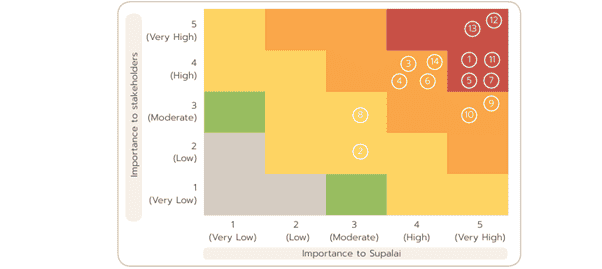
Highly Material Issues | High Materiality Issues | Medium Materiality Issues |
1. Supply Chain 5. Resource Utilization 7. Consumers Responsibility 11.Safety, Occupational Health, and Working Environment 12. Corporate Governance 13. Risk Management | 3. Business and Social Innovation 4. Biodiversity Conservation 6. Climate Action 9. Respect for Human Rights and Fair Treatment of Labour 10.Capacity Enhancement for Employees and Workers in Work and Daily Life 14. Anti-Corruption | 2. Tax-related Operations 8. Community and Social Development |
5. Management of Material Sustainability Issues
Defining ESG sustainability goals.
1.Supply Chain
| |||
Governance Risk Management Committee
Corporate Governance and Sustainable Development Committee
| |||
Goals/Indicators 2025 | Strategy/Approach Operations | Risks and Opportunities | |
Business | Stakeholders | ||
Maintain capable suppliers and contractors to ensure customer contract cancellations due to substandard products and services do not exceed 0.5% of total sales contracts. Operational Outcome Achieved target; customer contract cancellations due to substandard products and services remained below 0.5% |
| Key Risk Supply chain disruption and loss of bargaining power due to reliance on a limited number of key suppliers or distributors. Risk Appetite: Shortage of skilled labor. Risk Appetite Opportunity
| Opportunity Sustainable supply chain practices deliver long-term benefits to customers and stakeholders in terms of product quality, pricing, and after-sales services, supporting continuous sustainability. |
2. Tax-related Operations
| |||
Governance Board of Directors
| |||
Goals/Indicators 2025 | Strategy/Approach Operations | Risks and Opportunities | |
Business | Stakeholders | ||
No fines are incurred from tax errors or careless tax operations. Operational Outcome No tax penalties incurred from errors or non-compliance. |
| Key Risk Potential inaccuracies or incomplete tax filings. Risk Appetite Opportunity Strengthening a culture of transparency in alignment with good corporate governance principles. | Opportunity |
3. Business and Social Innovation
| |||
Governance Executive Committee
| |||
Goals/Indicators 2025 | Strategy/Approach Operations | Risks and Opportunities | |
Business | Stakeholders | ||
1. At least 50% of award-winning innovations are practically implemented. 2. Increased use of environmentally friendly materials and innovations to reduce waste and environmental impacts. 3. Continuous recognition through external awards. Operational Outcome
| Environmental
Social
Business
| Key Risk Insufficient monitoring and execution in implementing award-winning innovations by responsible functions. Risk Appetite Opportunity
| Opportunity
|
4. Biodiversity and Ecosystem Conservation
| |||
Governance Corporate Governance and Sustainable Development Committee
| |||
Goals/Indicators 2025 | Strategy/Approach Operations | Risks and Opportunities | |
Business | Stakeholders | ||
Operational Outcome
|
| Opportunity | Key Risk Potential impacts from construction activities on ecosystems and the environment, leading to biodiversity loss. Risk Appetite |
5. Resource Utilization and Waste Management
| |||
Governance Corporate Governance and Sustainable Development Committee
| |||
Goals/Indicators 2025 | Strategy/Approach Operations | Risks and Opportunities | |
Business | Stakeholders | ||
1. Continuously reduce resource consumption at the Company’s headquarters 2. Promote waste segregation through the “Waste Separation” campaign and Recycle Day at headquarters, contributing to carbon reduction of at least 10 TonCO2e per year. Operational Outcome 1. Reduced resource consumption at the Company’s headquarters as follows:
2. “Sort more, benefit more” waste segregation project at the headquarters building, in collaboration with Recycle Day. 2024: A total of 787.90kg of waste was separated, reducing carbon emissions by 2.61 TonCO2e, equivalent to 275 trees planted. 2025: A total of 2,764.15 kg of waste was separated, reducing carbon emissions by 15.33 TonCO2e, equivalent to 1,487 large trees planted. | Resource Utilization
Waste Management
| Key Risk Employees may lack consistent and sustainable implementation of efficient resource utilization, energy conservation, and waste management practices in their daily lives. Risk Appetite Opportunity Planning resource utilization, including the adoption of innovations in production processes, to enhance resource efficiency and reduce impacts on the climate, which may otherwise lead to natural changes that could adversely affect overall business operations. | Opportunity Promoting efficient resource utilization habits among employees, extending to their families and society. |
6. Climate Action
| |||
Governance Corporate Governance and Sustainable Development Committee
| |||
Goals/Indicators 2025 | Strategy/Approach Operations | Risks and Opportunities | |
Business | Stakeholders | ||
Operational Outcome
|
Operational Outcome
| Key Risk 1. Misalignment of initiatives or activities by responsible functions with the Company’s GHG emissions reduction targets. Risk Appetite 2. Insufficient knowledge and understanding among designated coordinators (Centers) responsible for data collection, communication with consultants, and internal knowledge transfer. Risk Appetite Opportunity | Impact |
7. Consumers Responsibility
| |||
Governance Corporate Governance and Sustainable Development Committee
Quality System Review and Improvement Committee
| |||
Goals/Indicators 2025 | Strategy/Approach Operations | Risks and Opportunities | |
Business | Stakeholders | ||
No final court rulings indicating intentional unfair treatment of consumers. Operational Outcome In 2025, there were no final court rulings indicating intentional unfair treatment of consumers. |
| Key Risk Risk Appetite Opportunity
| Opportunity |
8. Community and Social Development
| |||
Governance Corporate Governance and Sustainable Development Committee
| |||
Goals/Indicators 2025 | Strategy/Approach Operations | Risks and Opportunities | |
Business | Stakeholders | ||
Conduct at least 15 social and community development activities per year. Operational Outcome In 2025, more than 19 social and community development activities were conducted. | Community and Social Support Activities
Job Creation for Communities and Society.
| Key Risk Community and social development activities may lack continuity in implementation. Risk Appetite Opportunity
| Opportunity
|
9. Respect for Human Rights and Fair Treatment of Workers
| |||
Governance Nomination and Remuneration Committee
| |||
Goals/Indicators 2025 | Strategy/Approach Operations | Risks and Opportunities | |
Business | Stakeholders | ||
Operational Outcome
|
| Key Risk Potential unfair labor practices or discrimination, leading to reduced employee well-being and safety, possible legal actions, and reputational damage. Risk Appetite Failure to integrate Diversity & Inclusion (D&I) principles into internal processes (e.g., recruitment, training, compensation, and benefits), which may result in discrimination based on gender, age, religion, or ethnicity and adversely affect corporate reputation. Risk Appetite Opportunity
| Opportunity
|
10. Capacity Enhancement for Employees and Workers in Work and Daily Life
| |||
Governance Nomination and Remuneration Committee
| |||
Goals/Indicators 2025 | Strategy/Approach Operations | Risks and Opportunities | |
Business | Stakeholders | ||
Target (2030) 100% of employees are assessed on the skills required for both current and future roles and participate in the Company’s employee development programs (starting in 2026). Operational Outcome
| Training and Employee Development.
Activities and Benefits Supporting Employee Development.
| Key Risk Employee development may not fully align with the competencies required for each position, resulting in insufficient skills and knowledge necessary for job performance and daily work. Risk Appetite Supervisors may lack clear guidelines for developing employees in alignment with required competencies. Risk Appetite [2] : Low Opportunity:
| Opportunity
|
11. Safety, Occupational Health, and Working Environment
| |||
Governance Corporate Governance and Sustainable Development Committee
| |||
Goals/Indicators 2025 | Strategy/Approach Operations | Risks and Opportunities | |
Business | Stakeholders | ||
Operational Outcome In 2025, there were no work-related accidents resulting in severe injury, permanent disability, or fatalities among employees. |
| Key Risk Employees may fail to comply with safety regulations, requirements, or safety manuals. Risk Appetite [1] : Very Low Unsafe working conditions, work procedures, and inadequate supervision, where supervisors may not sufficiently establish safe work practices and ensure a safe working environment. Risk Appetite Opportunity Continuous improvement in safety risk management, strengthening the Company’s safety performance and corporate reputation. | Opportunity
|
12. Corporate Governance
| |||
Governance Corporate Governance and Sustainable Development Committee
| |||
Goals/Indicators 2025 | Strategy/Approach Operations | Risks and Opportunities | |
Business | Stakeholders | ||
1. Received a 5-Star CG Rating. 2. Received the ASEAN Asset Class PLCs Award under the ASEAN CG Scorecard. 3.Received the Outstanding Ethics Award from the Thai Chamber of Commerce. Operational Outcome 1. Received a 5-Star CG Rating (“Excellent” Category)in 2025, for the 13th consecutive year. 2. Received the ASEAN Asset Class PLCs Award under the ASEAN CG Scorecard for 2024, with the results announced in July 2025. 3. Received the Outstanding Ethics Award from the Thai Chamber of Commerce (23rd year), in 2025.
|
| Key Risk Operations may not comply with the requirements of the Stock Exchange of Thailand and external regulatory authorities. Risk Appetite Opportunity Establishing a strong foundation for sustainable business operations. | Opportunity
|
13. Risk Management
| |||
Governance Risk Management Committee
| |||
Goals/Indicators 2025 | Strategy/Approach Operations | Risks and Opportunities | |
Business | Stakeholders | ||
Assessment and establishment of risk management plans for key enterprise risks and sustainability-related risks of the Company, achieving a SET ESG Ratings score of 95 in the Risk and Crisis Management category from the Stock Exchange of Thailand (SET). Operational Outcome The sustainability assessment result in risk management from the Stock Exchange of Thailand in 2025 scored 89 points in the Risk and Crisis Management category. |
| Key Risk The Company’s risk assessment may not fully cover all significant risks arising within the organization. Risk Appetite Opportunity
| Opportunity Stakeholders receive both direct and indirect benefits from the Company’s risk management practices across social, environmental, and economic aspects. |
14. Anti-Corruption
| |||
Governance Audit Committee
Corporate Governance and Sustainable Development Committee
Board of Directors
| |||
Goals/Indicators 2025 | Strategy/Approach Operations | Risks and Opportunities | |
Business | Stakeholders | ||
Long-term Plan (2028).
Operational Outcome
|
| Key Risk Operations may not comply with the criteria of the Thai Private Sector Collective Action Against Corruption (CAC). Risk Appetite) [2]: Low Opportunity
| Opportunity
|




UN Sustainable Development Goals
| SDG Goal |
|---|
| Goal 1 No Poverty |
| Goal 3 Good Health and Well-being |
| Goal 4 Quality Education |
| Goal 5 Gender Equality |
| Goal 6 Clean Water and Sanitation |
| Goal 7 Affordable and Clean Energy |
| Goal 8 Decent Work and Economic Growth |
| Goal 9 Industry, Innovation and Infrastructure |
| Goal 10 Reduce Inequalities |
| Goal 11 Sustainable Cities and Communities |
| Goal 12 Responsible Consumption and Production |
| Goal 13 Climate Action |
| Goal 15 Life on Land |
| Goal 16 Peace, Justice and Strong Institutions |
| Goal 17 Partnerships for the Goals |
Policy Review
Policy Reviewed This Year
No
Policy Changed This Year
Yes
Review Details
The company is committed to driving the organization towards achieving its sustainability vision, recognizing the importance of responding to stakeholder needs in all dimensions, including environmental, social, and governance aspects, while balancing economic considerations to ensure stable business growth and deliver shared value to society.
However, conducting business amidst current global changes is fraught with challenges, including climate change, stricter regulations, economic volatility, and increasing expectations from consumers and society. Therefore, the company prioritizes risk management, anticipating emerging opportunities, and developing comprehensive strategies that address these situations.
On the other hand, these challenges also reflect opportunities for adaptation and differentiation by adopting innovation, technology, and business approaches that consider environmental and social aspects, in order to enhance product and service quality, build trust with stakeholders, and sustainably increase competitive potential.
With a clear vision and organizational commitment, the company is ready to overcome all challenges and transform them into a driving force for stable and sustainable growth, delivering value to stakeholders, society, and the environment in the long term. This is achieved through a framework and operational strategies for sustainable development, integrating sustainable development into corporate strategy, business decisions, and the Enterprise Risk Management (ERM) process, considering both the organization's impact on the economy, society, and environment (Impact Materiality) and the risks and opportunities that sustainability issues pose to the company's financial performance (Financial Materiality) to support long-term sustainable growth.
By 2025, the company aims for sustainability goals with operational strategies focused on Being a Multi-National Company as follows
Products and Services Developing affordable low rise projects targeting the 3-5 million baht price segment, with new house designs, increased investment in large land plots to create residential communities in Bangkok, its vicinity, and regional areas. The company is also committed to selecting quality materials and extending warranty periods. For high rise projects, the structural warranty has been extended from 5 years to 10 years, and the fixtures warranty from 2 years to 3 years. For low rise projects, the fixtures warranty has been extended from 1 year to 3 years. The company has piloted this initiative at high rise projects: Supalai Park Ekkamai-Pattanakarn, Supalai Sense Srinakarin, and the horizontal project Supalai Essence Bangna-Suvarnabhumi, to enhance confidence in living in Supalai projects.
Marketing AI and technology are utilized to drive marketing strategies by analyzing data to provide an easy, convenient, and responsive home-buying experience for all customer segments.
Digital Innovation Integrating innovation for sustainable living with the Smart Village concept to enhance residents' quality of life.
Environmental Aspect Aiming for sustainability in building partnerships with suppliers by collecting carbon emission data for materials used in all business processes, and by 2025, targeting the procurement of Green Procurement.
Social Responsibility Committed to improving the quality of life for society and stakeholders with transparency and ethics, while complying with laws and climate business ethics.
Monitoring, verification, and assurance of information
The company monitors, verifies, and assures sustainability data through internal control systems, internal audit units, and internal assessment systems by the IQA team within the ISO system (Internal Quality Audit) to ensure that disclosed information is accurate, traceable, and compliant with international disclosure standards.
GRI Contents Index
Supalai's Key Sustainability Issues | GRI Topic Disclosure | Chapters Reported |
4. Biodiversity and Ecosystem Conservation | 101-1 Policies to halt and reverse biodiversity loss 101-2 Management of biodiversity impacts 101-4 Identification of biodiversity impacts The organization 101-5 Locations with biodiversity impacts The organization 101-8 Ecosystem services | Biodiversity |
2. Climate Action | 201-2 Financial implications and other risks and opportunities due to climate change 102-1 Transition plan for climate change mitigation 102-2 Climate change adaptation plan 102-4 GHG emissions reduction targets and progress 102-5 Scope 1 GHG emissions 102-6 Scope 2 GHG emissions 102-7 Scope 3 GHG emissions 102-8 GHG emissions intensity 102-9 GHG removals in the value chain | Climate Action |
5. Resource Utilization | 3-3 Management of material topics 305-7 Nitrogen oxides (NOx), sulfur oxides (SOx), and other significant air emissions | Pollution & Resources |
5. Resource Utilization | 3-3 Management of material topics 103-1 Energy policies and commitments 103-5 Reduction in energy consumption 302-1 Energy consumption within the organization | Energy Management |
5. Resource Utilization | 3-3 Management of material topics 306-1 Waste generation and significant waste-related impacts 306-2 Management of significant waste-related impacts 306-3 Waste generated 306-4 Waste diverted from disposal 306-5 Waste directed to disposal | Waste Management |
5. Resource Utilization | 3-3 Management of material topics 303-1 Interactions with water as a shared resource 303-2 Management of water discharge-related impacts 303-3 Water withdrawal 303-4 Water discharge 303-5 Water consumption | Water Management and Security |
7. Consumers Responsibility | 3-3 Management of material topics 416-1 Assessment of the health and safety impacts of product and service categories 416-2 Incidents of non-compliance concerning the health and safety impacts of products and services 417-1 Requirements for product and service information and labeling 417-2 Incidents of non-compliance concerning product and service information and labeling 418-1 Substantiated complaints concerning breaches of customer privacy and losses of customer data | Customer Responsibility Cyber and Data Security |
9. Respect for Human Rights and Fair Treatment of Labour | 405-1 Diversity of governance bodies and employees 405-2 Ratio of basic salary and remuneration of women to men 406-1 Incidents of discrimination and corrective actions taken 408-1 Operations and suppliers at significant risk for incidents of child labor 409-1 Operations and suppliers at significant risk for incidents of forced or compulsory labor 412-1 Operations that have been subject to human rights reviews or impact assessments | Human Rights Labour Standards |
10. Capacity Enhancement for Employees and Workers in Work and Daily Life | 401-1 New employee hires and employee turnover 401-2 Benefits provided to full-time employees that are not provided to temporary or part-time employees 401-3 Parental leave 404-1 Average hours of training per year per employee 404-2 Programs for upgrading employee skills and transition assistance programs 404-3 Percentage of employees receiving regular performance and career development reviews | Human Resource Management Employee Training and Development Labour Standards |
11. Safety, Occupational Health, and Working Environment | 3-3 Management of material topics 403-1 Occupational health and safety management system 403-2 Hazard identification, risk assessment, and incident investigation 403-3 Occupational health services 403-4 Worker participation, consultation, and communication on occupational health and safety 403-5 Worker training on occupational health and safety 403-6 Promotion of worker health 403-7 Prevention and mitigation of occupational health and safety impacts directly linked by business relationships 403-8 Workers covered by an occupational health and safety 403-9 Work-related injuries 403-10 Work-related ill health | Health and Safety Labour Standards |
8. Community and Social Development | 413-1 Operations with local community engagement, impact assessments, and development programs 413-2 Operations with significant actual and potential negative impacts on local communities | Creating Value for Communities and Society |
1. Supply Chain | 3-3 Management of material topics 204-1 Proportion of spending on local suppliers 308-1 New suppliers that were screened using environmental criteria 414-1 New suppliers that were screened using social criteria | Sustainable Supply Chain Management |
12. Corporate Governance | 3-3 Management of material topics 2-27 Compliance with laws and regulations | Corporate Governance |
14. Anti-Corruption | 205-1 Operations assessed for risks related to corruption 205-2 Communication and training about anti-corruption policies and procedures | Anti-corruption Action and Whistleblowing |
13. Risk Management | 3-3 Management of material topics 205-1 Operations assessed for risks related to corruption | Risk Management |
Business Value Chain
Value Chain Description
Value Chain Management (GRI: 3-1, 3-2, 3-3)
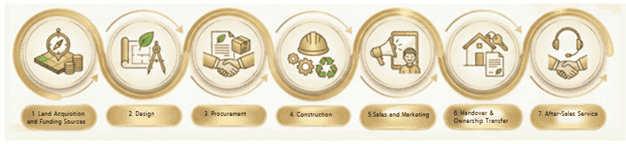
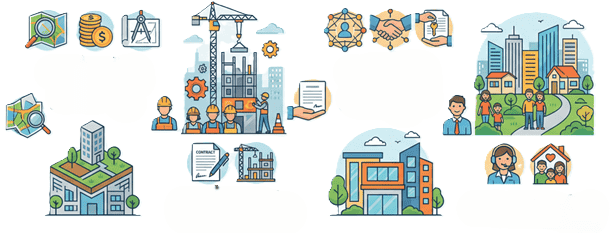
The Company has adopted supply chain management processes as a key business strategy to foster business sustainability and enhance efficiency across all operational processes, from upstream, midstream, to downstream, throughout the value chain, with the utmost consideration for the benefits of all stakeholder groups, as follows:
Value Chain | Process | Stakeholders |
1. Land Acquisition and Funding Sources The upstream process begins with a project feasibility study and location potential analysis, considering factors such as supply-demand, economic trends, urban growth, infrastructure, and consumer behavior, along with legal and urban planning risk assessment, before carefully acquiring land through due diligence and transparent land valuation processes. |
|
|
2. Design After land acquisition, the project design and planning phase begins, integrating sustainable development concepts from the outset, such as energy-efficient building design, selection of environmentally friendly materials, green space planning, and efficient water management. This also includes preparing Environmental Impact Assessment (EIA) reports and soliciting feedback from community stakeholders to ensure the project develops in balance with society. |
|
|
3. Procurement Establishing procurement criteria aligned with sustainability goals, such as selecting materials with environmental labels or certifications, and setting partner selection criteria based on ESG factors like raw material sources, clean energy use, labor management, and business ethics, to create a transparent supply chain, as well as developing work processes and innovations in collaboration with partners. |
|
|
4. Construction The midstream phase is the core of business operations, covering construction processes, project management, contractor management, labor, and efficient construction timelines. It involves controlling costs and work quality according to specified standards, while also prioritizing occupational health and safety for workers and minimizing environmental impacts, such as controlling dust, noise, and construction waste. |
|
|
5. Sales and Marketing Operating transparently, providing accurate information to customers, and promoting products that meet sustainable living needs, such as energy-efficient buildings or projects with access to public transportation, as well as protecting personal data. |
|
|
6. Handover & Ownership Transfer The downstream process begins with delivery and ownership transfer to customers, including product warranties and after-sales service. |
|
|
7. After-Sales Service To ensure confidence in product and service quality, the Company provides product warranties to customers for both components and structures. Furthermore, it focuses on and prioritizes maintaining high standards of after-sales service quality, including operations that align with ESG criteria, such as efficient management of energy, water, and waste. Customer satisfaction surveys are also conducted to gather feedback for improving product and service quality. |
|
|
Stakeholders in the value chain
The Company recognizes that both internal and external stakeholders are crucial for sustainable business operations, as they are affected or may be affected by the Company's operations, or can create an impact or influence business operations. Therefore, the Company prioritizes stakeholder engagement throughout the value chain, with the following processes for engaging with stakeholders:
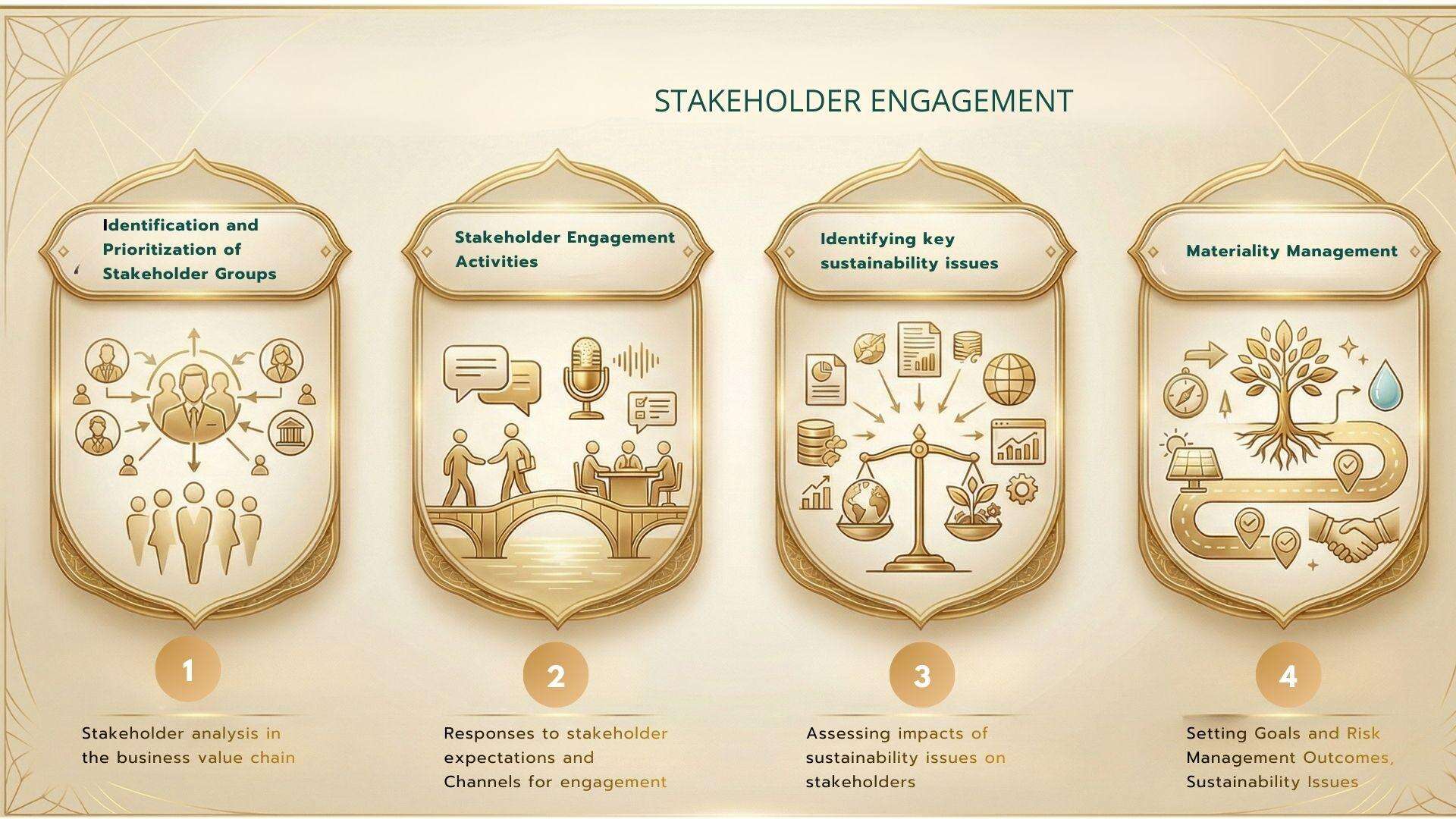
Stakeholder Analysis
Introduction
Identification and Prioritization of Stakeholder Groups (GRI: 2-6, 2-16)
The Company categorizes stakeholder groups in its value chain into 11 groups: 1) Employees, 2) Customers, 3) Shareholders/Investors, 4) Communities/Society, 5) Suppliers/Retailers, 6) Contractors/Vendor, 7) Government Agencies, 8) External Regulatory bodies, 9) Banks, 10) Media, and 11) Industry competitors. The Company's internal stakeholders include employees, while external stakeholders include customers, shareholders/investors, communities/society, suppliers/retailers, contractors/vendor, government agencies, external regulatory bodies, banks, media, and competitors in the same industry. The prioritization of stakeholders is determined by considering the level of the Company's impact on each stakeholder group across economic, social, environmental, and human rights dimensions, combined with the level of impact or influence from each stakeholder group on the Company. This approach helps define strategies for building connections and fostering stakeholder engagement, as well as planning appropriate operations for each stakeholder group.
Prioritizing Stakeholders The Company has established the following stakeholder management strategies:
Strategic Management: Build strong relationships and foster collaboration to align stakeholders' needs and expectations with the organization's goals, leading to mutual benefits and long-term success.
Keeping Satisfaction: Address significant stakeholder needs and concerns to maintain their support.
Providing Information continuously: Provide accurate information and communicate transparently and consistently to keep stakeholders updated on progress and build trust and confidence.
Monitoring: Observe and assess stakeholders' interests and operations that may impact on the Company.
Stakeholder Engagement Activities
The Company assigns departments responsible for each stakeholder group to systematically survey their needs and expectations through various communication channels at least once a year, under the supervision of the Sustainability Committee. This is to foster stakeholder engagement and assess the impacts that each stakeholder group has experienced or may experience in the future, as well as other concerns and expectations from stakeholders. The Company collects significant stakeholder needs, expectations, concerns, and feedback relevant to its business operations to analyze key sustainability issues (Materiality) and establish appropriate management approaches to address them. In 2025, the Company engaged and operated with stakeholders as follows:
Stakeholder Analysis
| Stakeholder Type | Stakeholders | Stakeholder Expectations | Response to Expectations | Communication Activities |
|---|---|---|---|---|
| Internal stakeholders | 2921 · Description: Employees | 1. Fair compensation and benefits
2. Transparency and fairness in performance evaluation
3. Treatment of employees with respect for their dignity, honor, and human rights principles
4. Job security and career advancement
5. Occupational health and safety
6. Open communication and receptiveness to feedback | 1. Fair Compensation and Benefits
1.1 Survey and establish appropriate salary structures for each level, paying wages based on performance in operational roles.
1.2 Link performance evaluations to various forms of compensation fairly and appropriately, based on each employee's knowledge, abilities, experience, job position, responsibilities, and performance.
1.3 Improve additional benefits by considering the company's business performance and the economic and social environment.
1.4 Increase benefits appropriate to roles and responsibilities, such as discounts on home and condominium purchases, funeral assistance, get-well baskets, group life and accident insurance, provident fund, uniforms, travel and accommodation expenses for off-site work, etc.
1.5 Provide appropriate welfare and benefits, benchmarked against other companies in similar or related businesses, and in compliance with legal requirements.
2. Transparency and Fairness in Performance Evaluation
2.1 Implement a transparent performance evaluation process using clear evaluation criteria.
2.2 Provide opportunities for employees to be informed of their evaluation results and seek clarification from their supervisors.
3. Respect for Employee Dignity, Honor, and Human Rights Principles
3.1 Promote knowledge of human rights and fundamental labor practices for management and employees at all levels.
3.2 Support the employment of persons with disabilities in the same positions as able-bodied individuals.
3.3 Support diversity and inclusion, such as employing LGBTQ+ individuals.
4. Job Security and Career Advancement
4.1 Conduct Competency Evaluations once a year and use them to develop Individual Development Plans (IDPs).
4.2 Clearly define career paths for various positions within the company.
4.3 Encourage employees to enhance their skills and knowledge and provide opportunities to demonstrate their abilities through online platforms such as Supalai Skill / Supalai Life.
4.4 Develop skills and knowledge in products and services, technology, and project management.
5. Occupational Health and Safety
5.1 Establish risk assessment processes, due diligences, and preventive, corrective, and remedial measures.
5.2 Maintain a working environment that meets standards and promotes good health, such as providing lactation rooms, prayer rooms, Thai massage rooms for employees, and first-aid rooms.
5.3 Promote workplace safety by assessing risk factors, improving equipment and working environments, conducting workplace safety training, and providing adequate PPE to employees according to their job nature.
5.4 Organize activities to promote employees' physical and mental well-being, such as vaccination against epidemics.
6. Open Communication and Feedback
6.1 Prepare manuals, records, or documents announcing policies and significant changes through various communication channels such as intranet.supalai.com, public announcement boards, internal email, Line Open Chat, and short video clips, to communicate in an easy-to-understand, clear, and transparent manner.
6.2 Develop a systematic, clear, and easily accessible process for managing complaints and suggestions, and communicate the outcomes to employees.
6.3 Provide complaint channels through Supalai Contact Center 1720 and a channel for reporting corruption
via e-mail: anti-corruption@supalai.com | 2941 · Description: Online Communication · 2942 · Description: Internal Meeting · 2943 · Description: External Meeting · 2945 · Description: Complaint Reception · 2946 · Description: Employee Engagement Survey · 2947 · Description: Satisfaction Survey · 2948 · Description: Training / Seminar · 2949 · Other name: 1) Executive committee meetings, and monthly sub-meetings for each department. · Description: Others · 2949 · Other name: 2) Quarterly Welfare Committee Meetings · Description: Others · 2949 · Other name: 3) Annual Employee Engagement Survey · Description: Others · 2949 · Other name: 4) Monthly Safety Committee Meeting · Description: Others · 2949 · Other name: 5) Monthly Risk Working Group Meeting · Description: Others · 2949 · Other name: 6) Communication via online media, intranet, and email · Description: Others · 2949 · Other name: 7) Complaint and Whistleblowing Channels via Email and Complaint and Feedback Box within the Company · Description: Others |
| External stakeholders | 2923 · Description: Customers | 1. Quality houses and condominiums that meet standards and requirements, such as construction quality, quality of materials used in the property, or safety systems for residents.
2. High-quality, efficient, and prompt service.
3. Compliance with sales agreements.
4. Personal data protection (PDPA).
5. Building good relationships with customers. | 1. Houses and condominiums of standard quality and meeting requirements, such as construction quality, quality of materials used in the property, or safety systems for residents. 1.1 Allow customers to visit sample housing projects to inspect and build confidence in the construction process and quality.
1.2 Design and develop innovations and services that meet customer needs and expectations.
1.3 Delivery of houses / condominium units to customers by preparing a resident's manual and after-sales service information to be provided to customers after ownership transfer.
1.4 Disclose operational information transparently.
2. Quality, efficient, and prompt services.
2.1 Develop the skills and capabilities of the customer service team comprehensively in all aspects, with care and responsibility towards customers.
2.2 Communicate/provide information or respond to customer inquiries quickly and accurately.
2.3 Improve communication channels and complaint management processes to respond to customer complaints efficiently.
2.4 Supalai Contact Center 1720 is the primary channel for reporting repairs, filing complaints, receiving suggestions/feedback, and providing information on the company's products/projects.
2.5 Provide convenient and diverse communication channels, both offline and online.
3. Compliance with sales agreements.
3.1 Comply with sales agreements. Ownership transfer is carried out within the period specified in the contract.
4. Personal Data Protection (PDPA).
4.1 Strictly adhere to the company's business ethics and policies.
4.2 Communicate the code of conduct for maintaining customer confidentiality throughout the organization.
5. Building good relationships with customers. 5.1 Survey needs, listen to feedback and suggestions to improve and develop products and services.
5.2 Develop features in the Supalai SABAI Application for reporting repairs, filing complaints, and receiving information.
5.3 Organize CRM activities with residents. | 2938 · Description: Visit · 2941 · Description: Online Communication · 2945 · Description: Complaint Reception · 2947 · Description: Satisfaction Survey · 2949 · Other name: 1) Project Sales Office · Description: Others · 2949 · Other name: 2) Monthly Customer Satisfaction Survey · Description: Others · 2949 · Other name: 3) Organization of Customer Relations Activities / Marketing Activities · Description: Others · 2949 · Other name: 4) Communication via online media, email, and telephone · Description: Others · 2949 · Other name: 5) Company's Whistleblowing/Complaint Channels · Description: Others |
| External stakeholders | 2904 · Description: Investors or investment institutions · 2913 · Description: Shareholders | 1. Disclosure of accurate and transparent operating results, in compliance with the regulations of the Stock Exchange of Thailand and disclosure criteria.
2. Maintaining the company's financial stability and security.
3. Equitable treatment of shareholders.
4. Business growth and good operating performance, along with good dividends or returns.
5. Good corporate governance. | 1. Accurate and transparent disclosure of operating results, in accordance with the regulations of the Stock Exchange of Thailand and disclosure criteria.
1.1 Disclose information required to be reported according to accounting periods (Periodic Reports), such as quarterly and annual financial statements, Management's Discussion and Analysis (MD&A), summary of operating results of the company and its subsidiaries (Form F45), and Form 56-1 One Report, etc.
1.2 Prepare and disclose business operations, operating results, and financial status transparently.
2. Maintaining the company's financial stability and security.
2.1 Conducting business prudently and in line with financial objectives.
2.2 Carefully and closely monitoring and overseeing the company's financial status.
3. Equitable treatment of shareholders.
3.1 Disclose information on overall operating results and business growth to shareholders through channels accessible to all shareholders.
4. Business growth and good operating performance, and good dividends or returns.
4.1 Develop the business to have competitive costs and operational efficiency.
4.2 Enhance competitiveness with innovative products and new businesses to generate continuous revenue.
4.3 Seeking and co-investing with business partners to expand investment opportunities and create business flexibility.
5. Good corporate governance.
5.1 Strictly comply with laws and regulations.
5.2 Conduct business transparently and participate with anti-corruption organizations.
5.3 Develop corporate governance structure and risk management systems to be more efficient. | 2938 · Description: Visit · 2939 · Description: Press Release · 2944 · Description: Annual General Meeting (AGM) · 2945 · Description: Complaint Reception · 2949 · Other name: 1) Annual General Meeting of Shareholders and Extraordinary General Meeting of Shareholders · Description: Others · 2949 · Other name: 2) Quarterly joint meetings with securities analysts and fund managers (Analyst Meeting). · Description: Others · 2949 · Other name: 3) Participate in the Stock Exchange of Thailand's Opportunities Day events twice a year · Description: Others · 2949 · Other name: 4) Investor meetings at least once a year · Description: Others · 2949 · Other name: 5) Domestic and International Road show · Description: Others · 2949 · Other name: 6) Disclosure of Information in Form 56-1 e-One Report and the Company's Website · Description: Others · 2949 · Other name: 7) Channels for Reporting Information and Receiving Complaints · Description: Others |
| External stakeholders | 2902 · Description: Community · 2928 · Description: Society | 1. Environmental operations in compliance with laws and regulations
2. Job creation and career opportunities for local communities
3. Occupational safety and health
4. Community relations activities | 1. Environmental operations in compliance with laws and regulations
1.1 Surveying impacts on communities around the project every time a new project is developed or an existing project's construction is expanded
1.2 Controlling and monitoring environmental pollution measurement results to comply with legal requirements
1.3 Strictly adhering to environmental laws, regulations, and operational procedures
2. Job and career creation for local communities
2.1 Supporting the employment of local people to work with the company
2.2 Promoting and providing opportunities for local communities to access education and skill development to enhance their capabilities 2.3 Providing knowledge on utilizing by-products to create livelihoods for people in the community
3. Occupational safety and health
3.1 Establishing construction measures to ensure the safety of lives and property of people in the community
3.2 Posting safety warning signs for the community and the company's stakeholders
4. Community relations activities
4.1 Developing and supporting projects that improve the quality of life and economy of communities around the project
4.2 Organizing activities/projects to provide support during disasters or other social activities, such as donations for traditional community events
4.3 Building networks of cooperation with other stakeholder groups to jointly develop local communities and society as a whole | 2940 · Description: Social Event · 2941 · Description: Online Communication · 2945 · Description: Complaint Reception · 2947 · Description: Satisfaction Survey · 2949 · Other name: 1) Communication via online media, email, and Supalai Contact Center 1720 · Description: Others · 2949 · Other name: 2) Opinion Survey using Questionnaires · Description: Others · 2949 · Other name: 3) Public consultation to gather feedback from the community · Description: Others · 2949 · Other name: 4) Community Satisfaction and Engagement Survey · Description: Others · 2949 · Other name: 5) Company's Whistleblowing/Complaint Channels · Description: Others |
| External stakeholders | 2899 · Description: Suppliers · 2936 · Other name: Retailers · Description: Others | 1. Transparent and fair procurement process
2. Compliance with laws and agreements
3. Timely and complete payment
4. Developing partner capabilities and knowledge | 1. Transparent and Fair Procurement Process 1.1 Establish criteria, measures, and operational procedures for procurement that are open, transparent, and auditable.
1.2 Conduct procurement transparently and implement an anti-corruption policy to ensure fairness for all parties.
1.3 Develop a bidding system for construction material procurement, establishing equitable, transparent, and auditable criteria for both large and small suppliers.
2. Compliance with Laws and Agreements
2.1 Comply with relevant laws and regulations, as well as procurement guidelines, and procurement contracts or mutual agreements.
3. Timely and Complete Payment
3.1 Make payments according to installments or credit terms specified in the contract conditions, adhering to principles of accuracy, transparency, and promptness.
4. Supplier Capacity and Knowledge Development
4.1 Organize knowledge-sharing programs on key human rights quality development and new regulations affecting the real estate development business. | 2938 · Description: Visit · 2943 · Description: External Meeting · 2949 · Other name: 1) Monthly meetings with partners and retailers · Description: Others · 2949 · Other name: 2) Annual visits to partner establishments. · Description: Others · 2949 · Other name: 3) Communication via online media, email, and Supalai Contact Center 1720 · Description: Others · 2949 · Other name: 4) Channels for Reporting Information and Receiving Complaints · Description: Others |
| External stakeholders | 2918 · Description: Contractors · 2936 · Other name: Vendor · Description: Others | 1. Continuous employment
2. Compliance with laws and agreements
3. Occupational safety, health, and working environment
4. Timely and complete payment
5. Development of potential and knowledge for contractors or suppliers | 1. Continuous Employment
1.1 Establish transparent, verifiable, and publicly accessible criteria, measures, and procedures for procurement and Terms of Reference (TOR).
1.2 Conduct procurement under TOR with transparency and an anti-corruption policy to ensure fairness for all parties.
1.3 Establish fair and verifiable standard prices and criteria for both large and small contractors.
2. Compliance with Laws and Agreements
2.1 Comply with relevant laws and regulations, as well as procurement guidelines in TOR and construction contracts.
3. Occupational Safety, Health, and Working Environment
3.1 Collaborate with contractors to provide PPE and basic first-aid kits for horizontal and high-rise projects.
3.2 Provide occupational safety and health training to contractors, suppliers, and construction workers.
3.3 Provide worker accommodation areas that meet good hygiene standards.
3.4 Implement HRDD assessment processes and ESG criteria audits, including preventive, corrective, and remedial measures.
4. Timely and Complete Payments
4.1 Make installment payments to contractors and suppliers via e-Payment for convenience and speed, adhering to principles of accuracy, transparency, and promptness.
5. Capacity and Knowledge Development for Contractors or Suppliers
5.1 Provide construction standard training in collaboration with partners, such as masonry, plastering, and painting work.
5.2 Develop knowledge-sharing programs on core human rights quality development and new regulations affecting the real estate development business. | 2941 · Description: Online Communication · 2942 · Description: Internal Meeting · 2943 · Description: External Meeting · 2945 · Description: Complaint Reception · 2948 · Description: Training / Seminar · 2949 · Other name: 1) Monthly work plan meeting with contractors/suppliers · Description: Others · 2949 · Other name: 2) Annual assessment of contractors · Description: Others · 2949 · Other name: 3) Morning Talk for all projects · Description: Others · 2949 · Other name: 4) Communication via online media, email, and Supalai Contact Center 1720 · Description: Others · 2949 · Other name: 5) Whistleblowing and Complaint Channels · Description: Others |
| External stakeholders | 2936 · Other name: Government agencies · Description: Others | 1. Compliance with laws and regulations
2. Environmental management and safety management
3. Cooperation with and support for government agencies
4. Good corporate governance
5. Disclosure of company performance | 1. Compliance with Laws and Regulations
1.1 Strictly comply with laws, regulations, and rules related to the industry.
1.2 Comply with relevant laws, regulations, and rules of the local municipality where the company develops projects.
1.3 Timely payment of taxes.
2. Environmental Management and Safety Management
2.1 Analyze, assess, and control environmental quality beyond legal requirements.
2.2 Implement safety practices and establish an occupational health and safety committee. 2.3 Prepare emergency response measures.
3. Cooperation with and Support for Government Agencies
3.1 Participate in meetings, seminars, or various government projects that benefit the company, customers, and investors.
3.2 Build relationships with government agencies through projects or activities to develop society and the environment.
4. Good Corporate Governance
4.1 Monitor operations in all departments to ensure accuracy, transparency, and auditability.
5. Disclosure of Company Performance
5.1 Prepare accurate performance reports and disclose them to the public within specified periods, or submit information as requested by government agencies. | 2938 · Description: Visit · 2948 · Description: Training / Seminar · 2949 · Other name: 1) Prepare operational performance reports in accordance with laws and regulations. · Description: Others · 2949 · Other name: 2) Participation in government-organized seminars and conferences related to the industry. · Description: Others · 2949 · Other name: 3) Disclosure of Information in the 56-1 e-One Report and the Company's Website · Description: Others |
| External stakeholders | 2936 · Other name: External regulatory bodies such as the Thai Institute of Directors Association (IOD), the Stock Exchange of Thailand, the Thai Investors Association, ISO international standard certification bodies from which the company seeks certification, etc. · Description: Others | 1. Compliance with criteria or requirements according to international standards
2. Management of economic, social, and environmental impacts
3. Cooperation with and support for external regulatory bodies
4. Disclosure of company performance | 1. Compliance with Criteria or International Standards
1.1 Oversight and monitoring of operations in all departments to ensure accuracy, transparency, and auditability.
1.2 Participation in ESG performance assessments, such as FTSE Russell ESG Scores. 1.3 Preparation of performance reports according to accurate and complete criteria, and public disclosure.
2. Management of Economic, Social, and Environmental Impacts
2.1 Quality control processes and submission of reports to relevant regulatory bodies.
2.2 Preparation of emergency response measures.
3. Collaboration with and Support for External Regulatory Bodies
3.1 Participation in meetings, seminars, or various projects beneficial to the company, customers, and investors.
3.2 Building relationships with external regulatory bodies through various projects or activities to jointly develop society and the environment.
4. Disclosure of Company Performance
4.1 Preparation of accurate performance reports and public disclosure according to specified timelines, or submission of information as requested by external regulatory bodies. | 2938 · Description: Visit · 2949 · Other name: 1) Prepare a report on operational performance in accordance with international standards. · Description: Others · 2949 · Other name: 2) Partner Business Visit Activities · Description: Others · 2949 · Other name: 3) Information Disclosure in Financial Statements, Annual Report Form 56-1 e-One Report · Description: Others · 2949 · Other name: 4) Disclosure of Sustainability Information on the Company's Website · Description: Others |
| External stakeholders | 2936 · Other name: Bank · Description: Others | 1. Effective risk management
2. Compliance with agreed loan and debenture covenants/ Timely debt repayment according to terms | 1. Effective Risk Management
1.1 Manage risks to cover economic, social, environmental, and human rights risks that may affect the company's finances.
1.2 Implement policies and key internal control measures regarding loan applications and customer borrowing.
1.3 Manage capital to have an appropriate structure to support the company's business operations and maintain creditor confidence. 1.4 Communicate and disclose accurate and clear operational performance data.
2. Compliance with agreed loan and debenture terms and conditions / Timely debt repayment
2.1 Strictly comply with contracts and conditions, adhering to principles of accuracy, transparency, and timeliness.
2.2 Committed to maintaining sustainable relationships with banks and fostering mutual trust. | 2938 · Description: Visit · 2943 · Description: External Meeting · 2949 · Other name: 1) Meeting with the bank · Description: Others · 2949 · Other name: 2) Business Visit Activities · Description: Others · 2949 · Other name: 3) Communication via online media, email, and Supalai Contact Center 1720 · Description: Others · 2949 · Other name: 4) Channels for Reporting Information and Receiving Complaints · Description: Others |
| External stakeholders | 2929 · Description: Media | 1. Accurate and complete information or operational results | 1.1 Providing accurate, prompt, concise, and reliable information and news.
1.2 Communicating information with consideration for ethics, accuracy, and social and environmental responsibility. | 2938 · Description: Visit · 2939 · Description: Press Release · 2941 · Description: Online Communication · 2949 · Other name: 1) Hold a press conference at least once a year. · Description: Others · 2949 · Other name: 2) Business Visit Activities · Description: Others · 2949 · Other name: 3) Media Engagement · Description: Others |
| External stakeholders | 2936 · Other name: Industry competitors · Description: Others | 1. Fair competition | 1.1 Conduct business ethically.
1.2 Treat competitors within the framework of good and fair competition. | 2949 · Other name: 1) Meetings and joint sessions organized by industry-related organizations or agencies · Description: Others |
Environmental Policy & Guidelines
Has an Environmental Policy
Yes
Policy Description
Supalai Public Company Limited and its subsidiaries are committed to becoming a business leader through innovation and sustainable development. Recognizing that effective environmental management is a crucial factor driving long-term business growth, the company has established an environmental policy to serve as a framework for effective operations in line with international standards. This policy covers business operations throughout the value chain, from procuring environmentally friendly materials, developing and delivering products, marketing and sales, after-sales services, supply chain management, to waste management. It aims to reduce environmental impacts, promote efficient resource utilization, conserve biodiversity, and manage climate change in alignment with the company's greenhouse gas emission reduction targets.
The Company integrates an environmental management system as part of its business operations, emphasizing the assessment of material issues. The Company conducts a "Double Materiality Assessment," covering both the impact of business activities on the environment (Impact Materiality) and environmental risks/opportunities that may affect financial position, cash flow, and enterprise value (Financial Materiality), in accordance with ESRS, IFRS S1, and TNFD guidelines. This is reviewed and reported to the Board of Directors annually to ensure that environmental management is genuinely linked to business strategy.
Concurrently, the Company is committed to continuous development and evaluation. The results of these materiality assessments are used to define concrete strategies, targets, and environmental and climate indicators, as well as to promote knowledge and awareness among employees, customers, partners, and stakeholders, to embed environmental operations as a sustainable part of the organizational values.
For more information, please visit: Environmental Policies and Guidelines
Efficient Resource Utilization and Environmental Conservation
The Company recognizes the importance of conserving natural resources, which are continuously declining. Therefore, it aims to instill a sense of value in resource utilization among all employees to achieve maximum resource efficiency, foster sustainable behavior, and apply it in daily life, which will lead to positive long-term impacts on society and the environment. It also promotes valuable resource utilization through communication and activities under the 3Rs concept (Reduce, Reuse, Recycle) to enhance resource efficiency, reduce waste, minimize pollution, and decrease greenhouse gas emissions. Furthermore, it supports the design, research, and development of products that consider energy and environmental conservation, including the application of the polluter pays principle in accordance with environmental governance.
The Company has established policies and guidelines for efficient resource utilization, covering energy, water, office supplies, transportation, and waste management, to ensure that all directors, executives, and employees, including subsidiaries, operate in a tangible and unified manner.
For more information, please visit: Policy on Efficient use of Resources
Resource and Waste Management
The Company recognizes the importance of sustainable business operations, considering environmental and social impacts. Efficient resource and waste management is therefore an integral part of good corporate governance. A policy for resource and waste management has been established to serve as a framework for overseeing resource utilization, waste management, and pollution from business operations in an efficient, transparent, and auditable manner, aiming to enhance understanding and participation among personnel at all levels.
This policy covers inbound material management, waste management, pollution management, water management, and support for research and development to reduce environmental impacts throughout the value chain. It also includes data collection, target setting, and performance monitoring in accordance with GRI Standards (Global Reporting Initiative) for sustainability reporting, specifically GRI 103: Energy 2025,GRI 302: Energy 2016, GRI 303: Water and Effluent, GRI 305: Emissions, and GRI 306: Waste. Operations under this policy enable the Company to utilize resources efficiently, reduce environmental impacts, and enhance long-term business sustainability.
For more information, please visit: Policy on Resource and Waste Management
Environmental Policy | Guidelines |
1. Electricity Management Policy | The Company adheres to the principle of operating a business that is friendly to the environment, focusing on tangible improvements in the energy efficiency of electricity consumption within the organization. This is achieved through a comprehensive resource management approaches covering lighting systems, air conditioning systems, and smart use of office equipment, to reduce unnecessary energy consumption and support long-term greenhouse gas emission reduction targets. In terms of lighting systems, the Company promotes maximum utilization of natural light by arranging workspaces connected to external light sources, coupled with switching to energy-saving light bulbs that meet industrial product standards. A segmented switch control system is implemented to allow activation only in necessary areas. Furthermore, regular measurement of light intensity and equipment maintenance are mandated to ensure optimal lighting efficiency and operational safety for employees. The Company has set a standard for air conditioning temperature at no less than 25 degrees Celsius, while also controlling the environment to reduce the workload of air conditioners. This includes regularly checking for refrigerant leaks, managing spaces to reduce heat sources, and continuously cleaning air filters, which significantly improves air circulation efficiency and saves energy. Furthermore, it aims to foster an organizational culture through employee participation in office equipment management, promoting the practice of "switching off and unplugging" when not in use for a specified period. This also includes selecting high-efficiency energy-saving computer technology and peripherals, as well as utilizing network systems to reduce redundant equipment. All these efforts are to ensure that the Company's electricity management is maximally efficient, aligns with international sustainability standards, and reflects a sustainable responsibility towards natural resources. For more information, please visit: Policy on Efficient use of Resources |
2. Fuel Energy Management Policy (GRI: 103-1) | The Company focuses on efficient fuel energy consumption to reduce environmental impacts and control operational costs. Measures are implemented to maintain vehicles in optimal condition, including regular engine inspections and oil changes according to specified intervals. Emphasis is also placed on monthly tire pressure checks and wheel alignment to reduce friction and enhance fuel combustion efficiency. Employees are encouraged to drive correctly at legal speeds, avoid aggressive acceleration or revving the engine in neutral, and are mandated to switch off engines when idling or loading/unloading goods. Additionally, in-car air conditioning systems are controlled at appropriate levels to reduce engine workload and minimize atmospheric pollution. Furthermore, it promotes proactive travel planning through the use of shortcuts and carpooling systems. It also leverages technological innovations to replace travel, such as video conferencing and online document submission, to reduce vehicle usage frequency and move towards the overall goal of sustainable fuel energy savings for the organization. For more information, please visit: Policy on Efficient use of Resources |
3. Water Resource and Water Quality Management Policy | Environmental ISO 14001:2015 strictly. Furthermore, in some areas where the Company operates, which are water-stressed areas, the Company has assessed water resource risks using the Aqueduct Water Risk Atlas from the World Resources Institute (WRI), an internationally recognized tool. Measures for water risk management have been defined, such as reducing water consumption (Reduce), treating wastewater to meet standards or for reuse, and water for recycle, as well as supporting equitable access to water sources with communities. The Company has verified and established a resource and waste management policy, including a water management plan to reduce water usage and improve water use efficiency for maximum benefit. It also promotes awareness among employees and communities around projects regarding the importance of and adherence to environmental policies and practices to foster environmental sustainability. For more information, please visit: Policy on Resource and Waste Management |
4. Waste Management Policy | The Company is committed to systematically and comprehensively elevating waste management standards to reduce environmental impacts and drive the organization towards a Circular Economy. It has established guidelines emphasizing data integration and transparent verification. By managing data through digital systems and verification processes, waste management becomes efficient. Relevant key departments are mandated to collect data on inbound materials, general waste, and hazardous waste via a specially designed digital platform for accurate recording and reporting of ledger data in each fiscal year. Additionally, independent external agencies are engaged to verify the accuracy of waste generation data, including reused waste, recycled waste, and hazardous waste, to build confidence in data management standards among stakeholders. Proactive targets and monitoring are set for reducing or avoiding waste generation at the source. Relevant departments are required to develop operational plans and set clear quantitative targets within specified timelines, and to continuously report progress to compare actual performance against targets. This approaches enables the Company to assess process effectiveness and appropriately improve waste management methods, both those implemented by the Company and through external agencies. To affirm environmental responsibility, key departments are encouraged to consider evaluating the management system standards. Environmental ISO 14001, an international standard certification from external assessors. Such operations reflect the commitment of the Company's efforts to develop highly efficient waste management systems to minimize ecological impacts and promote valuable resource utilization. For more information, please visit: Policy on Resource and Waste Management |
5. Biodiversity Management Policy | The Company has integrated collaboration among various internal departments to jointly establish criteria for assessing biodiversity risks and opportunities for new and significant projects. Our goal is to achieve a net positive impact on biodiversity or to offset unavoidable impacts. This involves preparing reports on biodiversity habitats, both within and near project areas, and developing a Biodiversity Action Plan (BAP), which is strictly audited by the sustainability department. Furthermore, we coordinate with external agencies, including government, private sector, and non-profit organizations (NGOs), to collectively reduce biodiversity loss in all areas related to our operations. The Company believes that accurate and transparent biodiversity management will be a crucial foundation for passing on a rich natural heritage to future generations, alongside stable business growth. To achieve truly sustainable outcomes, the Company prioritizes building a knowledge base and developing personnel and partners in terms of biodiversity continuously, to foster understanding and correct implementation. It also mandates transparent data disclosure through reporting aligned with TNFD (Taskforce on Nature-related Financial Disclosures) recommendations and other international standards. For more information, please visit: Policy on Biodiversity Management |
6. Climate Change Management Policy | The Company recognizes the urgency of the situation regarding global warming. Therefore, guidelines have been established under the Climate Change Management Policy to elevate operations in line with international standards and concretely move towards becoming a low-carbon organization. By assessing risks and defining climate strategies, the Company monitors and analyzes risk factors and opportunities that may arise from climate change in the short, medium, and long term, to integrate them into the organization's main risk management plan. Additionally, a Climate Scenario plan is developed, and sub-projects are defined to promote adaptation to climate fluctuations. sustainable climate. Greenhouse gas inventories and reporting are conducted to ascertain the true status of greenhouse gas emissions. The Company mandates the collection and reporting of internal greenhouse gas emissions (Scope 1 and 2), covering key activities such as construction processes, operations in the Company's assets, and open space management. This is further extended to reporting external greenhouse gas emissions from upstream and downstream partners (Scope 3). Additionally, the carbon intensity per unit of production is calculated to serve as an indicator for measuring operational efficiency. This includes setting clear quantitative targets for greenhouse gas emission reduction to control both the process and the volume of emissions. Financial mechanisms are also adopted, such as implementing an Internal Carbon Price and disclosing financial information in accordance with TCFD guidelines in the annual report, to ensure transparency for stakeholders. stakeholders. To build confidence in operational data, the Company also mandates the engagement of independent verifiers from internationally certified external agencies to regularly audit greenhouse gas emission data, alongside measures to reduce investment in high-carbon assets or products, thereby reflecting the organization's clear stance on mitigating climate change. For more information, please visit: Policy on Climate Change Management |
7. Air Quality Management Policy | The Company is committed to systematic air pollution management to enhance quality of life and the environment. It has established comprehensive guidelines covering empirical data collection and setting impact reduction targets in a tangible manner, by mandating relevant key departments to implement collects and reports significant pollution generation data via a specially designed digital platform. Ledger entries are created for all operational activities throughout each fiscal year, providing the Company with an accurate database for efficient pollution analysis and management planning. Relevant departments are tasked with jointly setting clear quantitative targets and timelines for each process to reduce or avoid pollution from organizational activities. Progress reports are continuously prepared to compare actual performance against set targets, ensuring transparency and allowing for adjustments to operational guidelines to align with the Company's sustainability goals. Furthermore, it emphasizes controlling emissions that affect air quality by mandating the implementation of pollution management methods, both through self-operation and by engaging specialized external agencies. These measures include monitoring and collecting emission data. significant air pollutants, including Nitrogen Oxides (NOx), Sulfur Oxide (SOx), and Volatile Organic Compounds (VOCs) continuously, to ensure that the Company's operations comply with relevant standards and regulations, and to contribute to maintaining air quality and the well-being of surrounding communities. For more information, please visit: Policy on Resource and Waste Management |
Governance Structure
The Company has a governance structure related to environmental matters and efficient resource utilization to ensure continuous policy compliance and operational effectiveness. This includes regular review and improvement of guidelines, with all levels of employees mandated to strictly adhere to them, under the supervision of key stakeholders as follows:
Board of Directors is responsible for overseeing and approving policies, setting strategic directions, and annually reviewing the effectiveness of environmental management systems and efficient resource utilization.
Sustainability Committee comprising the management committee and representatives from the sustainability working group, is responsible for developing policies and strategies, overseeing, and regularly monitoring environmental performance and efficient resource utilization to align with organizational goals and direction.
Sustainability Working Group comprising representatives and department heads, is responsible for overseeing, monitoring, reporting, and establishing environmental and efficient resource utilization guidelines in accordance with laws and the Company's policies. Monthly meetings are held to communicate policies, discuss with key internal and external stakeholders, share perspectives or initiatives for improving environmental management systems and efficient resource utilization, and promote cooperation and awareness among employees, contractors, partners, regulatory bodies, and other relevant stakeholders.
Policy Document Link
https://www.supalai.com/en/about/governance/employee-environment
Environmental Guidelines
| Guideline |
|---|
| Electricity Management |
| Fuel Management |
| Renewable/Clean Energy Management |
| Water Management |
| Waste Management |
| Biodiversity Management |
| Greenhouse Gas and Climate Change Management |
| Air Quality Management |
| Noise Pollution Management |
Environmental Policy Review
Policy Reviewed This Year
Yes
Review Details
In 2025, the Company reviewed its environmental policies and practices related to its operational processes to align with laws, international standards, and sustainability goals. Key issues reviewed included greenhouse gas emission reduction, energy management, water management, waste management, pollution control, and biodiversity. The Board of Directors and the Sustainability Committee are primarily responsible for establishing guidelines, approving, and monitoring operational performance. Reviews are conducted to update these guidelines and to consistently comply with environmental social responsibility standards.
Policies & Guidelines Changed
| Change |
|---|
| Electricity Management |
| Fuel Management |
| Renewable/Clean Energy Management |
| Water Management |
| Waste Management |
| Biodiversity Management |
| Greenhouse Gas and Climate Change Management |
| Air Quality Management |
| Noise Pollution Management |
Energy — Plan & Guidelines
Has an Energy Management Plan
Yes
Plan Description
Energy Management (GRI: 302-1, 302-3)
Details | Goals for 2030 | Performance in 2025 |
Reduce electricity purchases in controllable areas | > 15% compared to Base Year 2024 | 10% |
100% of the company's fleet vehicles are electric vehicles. | 100% | 33% |
100% of inverter air conditioner installation projects with Energy Label No. 5 | 100% | 100% |
100% of Low Rise Projects sales offices are equipped with solar panels. | 100% | 100% |
Strategies and Management Approaches
The Company places great importance on designing and developing projects with energy efficiency in mind at every stage, from project planning, building design, material selection, to the installation of various systems within the building, to ensure that projects can concretely reduce energy consumption. The organization has adopted Green Building design principles according to international standards, such as LEED, as a key guideline in design, covering aspects of efficient energy use, resource management, and creating an environment conducive to the well-being of residents.
Furthermore, in building construction and decoration, the Company prioritizes the installation of energy-saving systems and equipment, such as high-efficiency air conditioning units that reduce energy consumption, air conditioning systems that can appropriately control energy usage according to the actual needs of each area, and LED lights that consume less energy but provide high brightness. The Company also selects construction materials that help reduce heat accumulation and improve ventilation, such as thermal insulation materials, energy-saving glass, and heat-reflective materials, to enable occupants to use energy most efficiently, reduce cooling loads, decrease reliance on fossil fuels, and increase the production and use of energy from renewable sources, as well as promote and support partners in efficient energy management to reduce greenhouse gas emissions throughout the supply chain.
The Company has established policies and guidelines for efficient resource utilization, covering various company policies such as electricity and lighting usage policy, office equipment usage policy, air conditioning and ventilation fan usage policy, to ensure that all directors, executives, and employees, including subsidiaries, operate in a concrete and unified manner.
For more information, please visit : Policy on Efficient use of Resources
Energy — Electricity Consumption
Electricity Consumption
| Metric | Current Year | Previous Year | Two Years Ago |
|---|---|---|---|
| Total electricity consumption within the organization (Kilowatt-Hours) | 21,308,277.66 | 21,854,091.18 | 18,173,146.29 |
| Electricity purchased for consumption from non-renewable energy sources (Kilowatt-Hours) | 21,308,277.66 | 21,854,091.18 | 18,173,146.29 |
| Electricity purchased or generated for consumption from renewable energy sources (Kilowatt-Hours) | 0 | 0 | 0 |
Energy — Fuel Consumption
Fuel Consumption
| Metric | Current Year | Previous Year | Two Years Ago |
|---|---|---|---|
| Crude oil (Barrels) | |||
| Coal (Metric tonnes) | |||
| Jet fuel (Litres) | |||
| Diesel (Litres) | 156,775.15 | 155,679.53 | 90,986.69 |
| Gasoline (Litres) | 291,830.32 | 276,527.62 | 322,891.12 |
| Fuel oil (Litres) | |||
| Natural gas (Standard cubic feet) | |||
| LPG (Kilograms) | |||
| Steam (Metric tonnes) |
Energy — Targets
Has Set Targets
Yes
Targets
| Target | Base Year | Target Year | Target Change (%) | Unit |
|---|---|---|---|---|
| Reduction of electricity purchased for consumption | 2,024 | 2,030 | 15 | Kilowatt-hour |
Energy — Performance & Outcomes
Has Performance Results
Yes
Performance Description
1. House design and selection of energy-saving materials
1.1 Smart Energy-Saving Homes
The Company is committed to developing sustainable residential projects. Every component of each home is designed to be environmentally friendly and support future technologies, reflecting the concept of "Smart Living for Sustainable Future," which integrates intelligent living with energy and environmental conservation for long-term sustainability. The Company has designed smart energy-saving home projects, such as Supalai Tuscany Rama 2–Wongwaen, which received efficiency certification with an honorary shield for cooperation in promoting sustainable energy conservation from the EGAT No. 5 House and Building Project by the Electricity Generating Authority of Thailand (EGAT).
The Company received the EGAT No. 5 House and Building Project Award, emphasizing enhanced energy efficiency. Homes must achieve a total score of no less than 85% or a combined score of 100-125 points from energy efficiency criteria such as walls, roofs, lighting, air conditioning, and nature-dependent design innovations. In 2025, all 7 house types, namely MONTANA, ROSSELLA, GROSSO, JASMINE, GRANDINO, REGINA, and RICCO, received the award.
Energy Efficiency Criteria | Innovation and Nature-Dependent Design Criteria | Evaluation Result | Selection of Renewable Energy |
1. Building envelope system for walls | 1. Passive Design (Designed to reduce heat) | Meets criteria | 1. Home system installation Automation & Security reduces electricity consumption and enhances convenience and safety within the home. |
2. Building envelope system for roofs | 2. Electricity Generation (Self-generated electricity, e.g., solar cells) | Meets criteria | 2. Installation of Solar Cell systems to help save electricity. |
3. Lighting System | 3. Smart control system | Meets criteria | 3. Installation of EV Chargers to support the continuous growth of electric vehicle usage. |
4. Air Conditioners | 4. Active Ventilation System | Meets criteria | - |
- | 5. Energy Saving Innovation and other | Meets criteria | - |
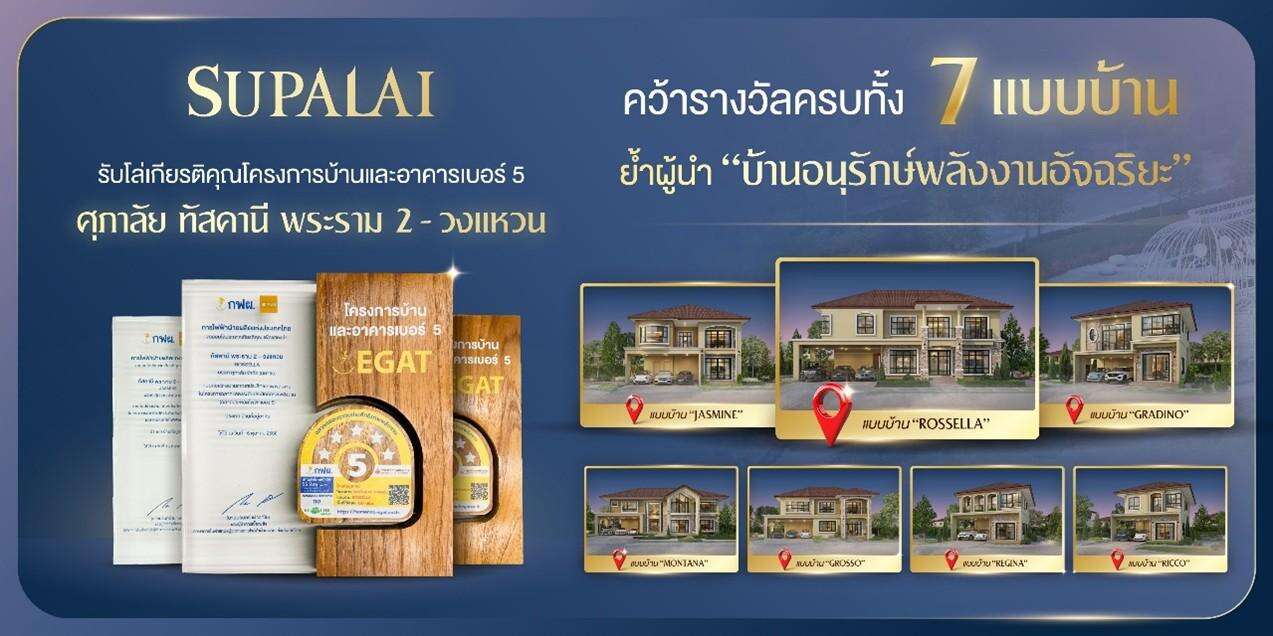
2. Enhancing Energy Efficiency
2.1 Use of Renewable Energy
The Company promotes the use of renewable energy by installing solar power generation systems (Solar Cells) within its projects to integrate clean energy into its operations and enhance energy efficiency. This also helps reduce reliance on fossil fuels, lower greenhouse gas emissions, and mitigate environmental impacts. Furthermore, the Company has incorporated the concept of clean energy into its design and marketing communications to add value to its products, encourage energy saving among residents, and foster participation in environmental care, aligning with long-term climate change goals and sustainable development.
In 2025, the Supalai Primo Anusawari Phuket project was developed, featuring a project layout and wind direction design, as well as the selection of construction materials that help reduce global warming, such as lightweight bricks and insulation to cool down indoor temperatures, leading to electricity savings. Renewable energy is also utilized through the installation of a 3.3 kW solar power generation system per house, reducing greenhouse gas emissions by 3.0 tCO2e and saving electricity costs* of 22,000 Baht/year.
(*Referencing the calculation results for greenhouse gas emission reduction and annual electricity generation in residential homes by the Thailand Greenhouse Gas Management Organization: TGO)
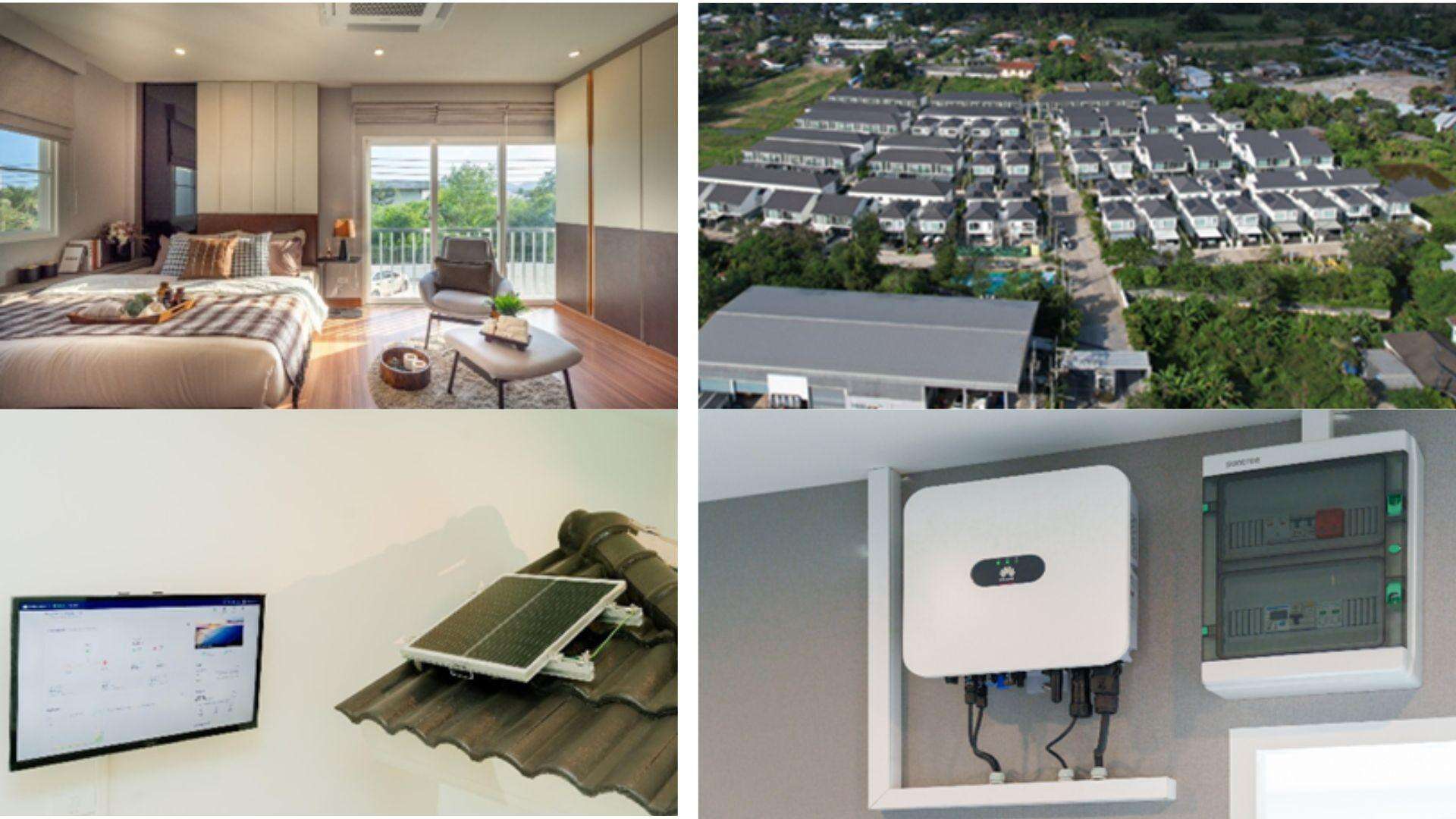
2.2 Reducing reliance on fossil fuel energy sources
Transition to Electric Vehicles (EVs)
The Company is committed to sustainable business operations, supporting efficient energy use, and transitioning to a low-carbon economy in the long term. By 2025, it promotes the adoption of Electric Vehicles (EVs) to replace fossil fuel-powered vehicles in its operations, aiming to enhance energy efficiency and reduce environmental impacts from transportation activities, which are significant sources of greenhouse gas emissions. This helps reduce fuel consumption, carbon dioxide emissions, air pollution, and noise from vehicle use.
Department | Original quantity (Units) | Increased quantity (Units) | Total (Units) |
1. Headquarters | 3 | 1 | 4 |
2. Project Department | 1 | 2 | 3 |
Total | 4 | 3 | 7 |
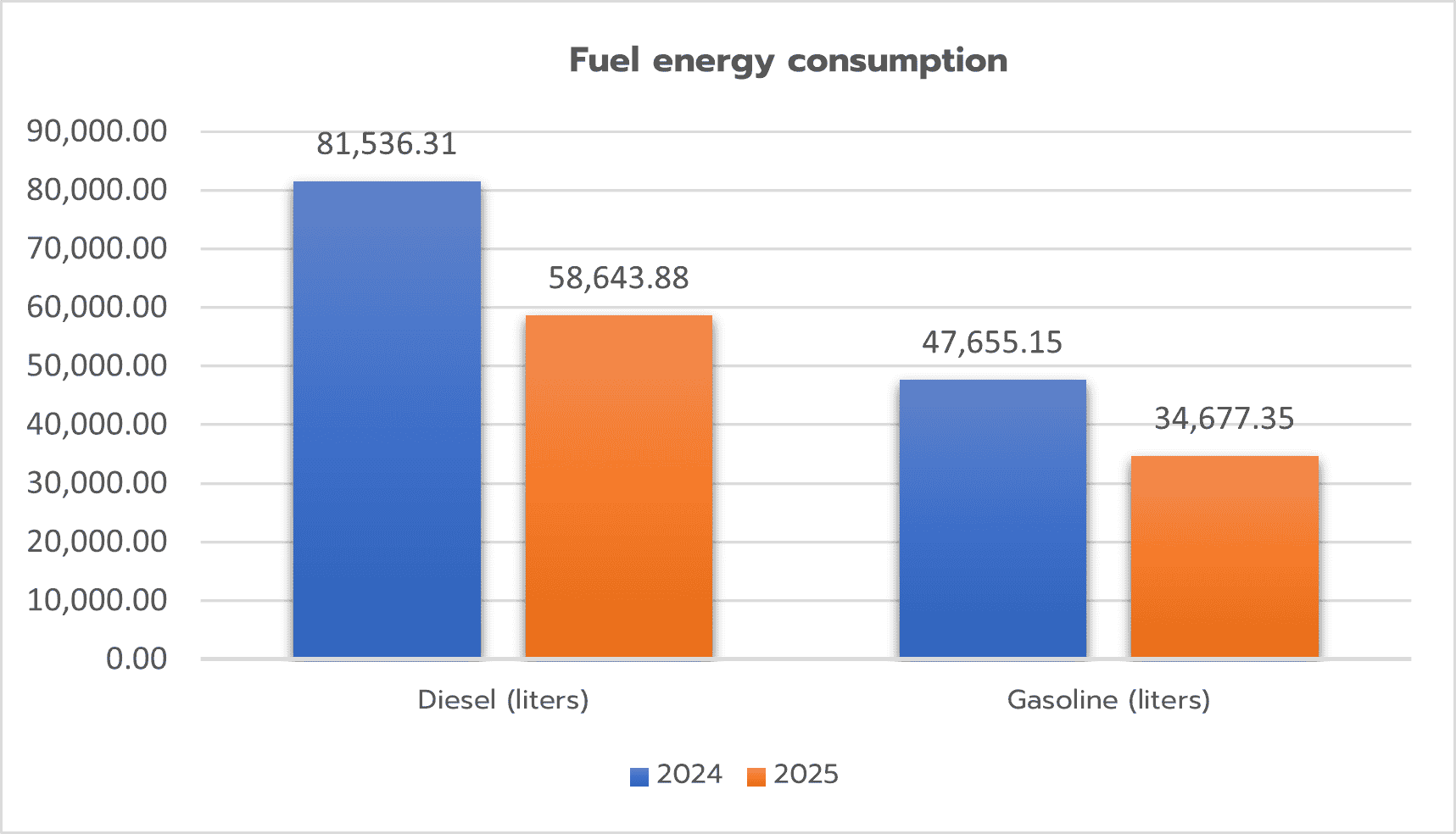
Budget / Investment Proportion | 1,094,170 Baht |
Benefits to the Company | Reduces long-term fuel and maintenance costs. |
Reduction of direct greenhouse gas emissions from transportation activities (Scope 1) 91.33 tCO2e | |
Benefits to the community and environment | Reduces environmental impact, air pollution (PM2.5, NOx) |
Promoting the use of fuel-efficient vehicles for security operations.
The Company encourages partners to reduce fuel consumption from oil use to support sustainable development and minimize environmental impact, while also focusing on reducing noise and air pollution. by using bicycles 3 units and Electric Motorcycles 34 units A total of 37 units are used for security operations in projects, such as tracking external contacts and patrolling within the project area, which aligns with sustainable development guidelines.
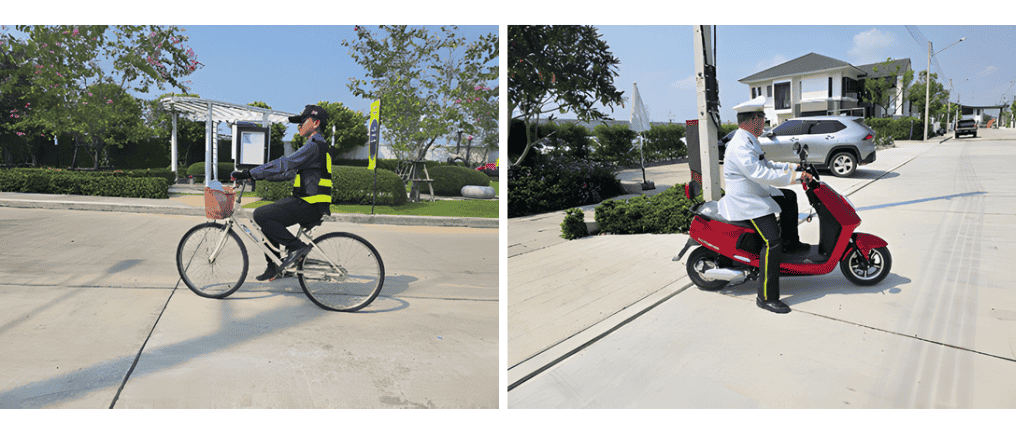
Number of projects implemented | 37 Projects |
Benefits to the Company | Building relationships and collaborations with security system partners: 12 Suppliers |
Benefits to the community and environment |
|
2.3 Energy Conservation in Office Buildings and Rental Properties
The Company promotes efficient electricity use by selecting standard and energy-saving light bulbs, such as LED bulbs, to conserve energy in common areas and restrooms of Supalai Grand Tower, replacing older, less efficient bulbs. Additionally, light intensity is regularly measured to ensure appropriate lighting levels for work, and light bulbs are checked for cleanliness to reduce unnecessary energy consumption, aiming for energy savings, reduced organizational costs, and fostering a culture of efficient and sustainable energy use.
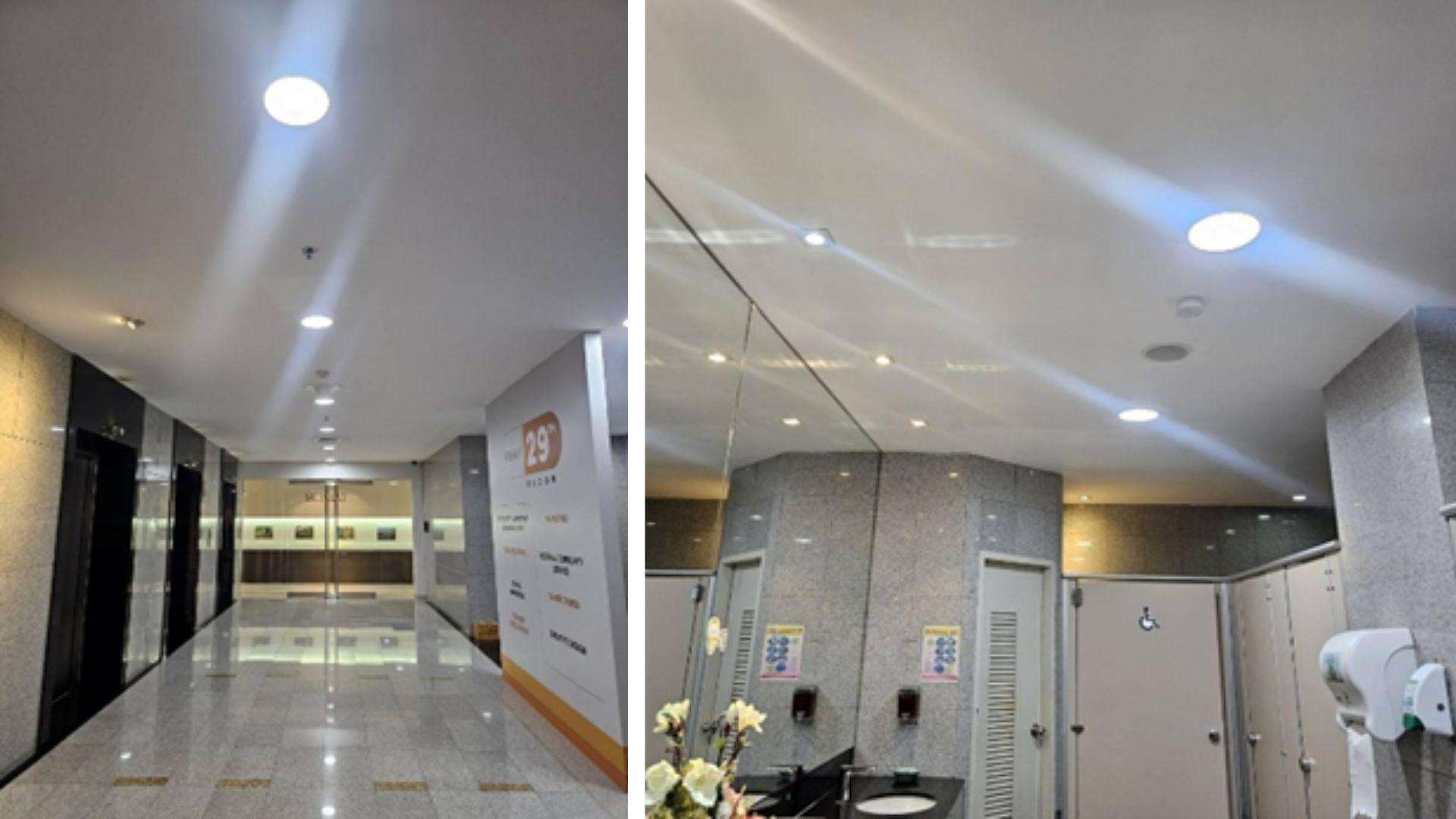
Water — Plan & Guidelines
Has a Water Management Plan
Yes
Plan Description
Water Management and Water Security
Key, Sustainability Issues | Impacts, Risks, and Opportunities |
Resource Utilization Water Management Water Consumption Effluent Discharge Management | The Company has conducted a Double Materiality assessment of its water-related issues, considering both (1) the organization's impact on water resources and ecosystems (Impact Materiality) and (2) the financial risks and opportunities arising from water-related risks such as drought, flooding, water quality limitations, and regulatory changes (Financial Materiality), which may affect construction costs, business continuity, asset value, and stakeholder confidence. The assessment results were integrated into the Enterprise Risk Management (ERM) process and long-term strategic planning to align with TCFD, IFRS S1/S2, and ESRS E3 Water and Marine Resources. The company demonstrates a clear commitment to managing water usage and wastewater through a comprehensive environmental policy that encompasses various aspects of its business operations, particularly the wise and sustainable use of water. An example reflecting this commitment is the Supalai Grand Tower headquarters building. This initiative reuses condensed water from the air conditioning system, both in split-system units and for watering plants within the project area. This practice not only reduces water usage from natural sources but also serves as a model for resource management that considers long-term environmental impact. However, despite the establishment of policies and pilot projects reflecting a commitment to water management, expanding this approaches to other company projects still faces limitations and challenges in several dimensions. These include technical aspects, budget, and the infrastructure of water systems in each project, which may vary depending on the characteristics of the buildings and residents. Furthermore, cultivating a culture of water conservation and promoting the reuse of wastewater remains a challenge, requiring continuous communication, stakeholder participation at the project level, and the development of effective tools and monitoring systems. While challenging, these contexts also present opportunities for the company to enhance its water management practices, setting an example for the real estate sector. In particular, developing innovative water reuse, rainwater harvesting, and installing real-time water usage measurement systems can be expanded from pilot projects to cover more projects in the future. Furthermore, these initiatives are crucial in reinforcing the company's image as a leading real estate developer committed to sustainable development and meeting the needs of today's environmentally conscious consumers. These actions directly align with the United Nations' Sustainable Development Goals, especially SDG 6, which focuses on access to clean water, wastewater treatment, and integrated water management. Expanding collaboration with the government or external organizations to bring technology or funding to support water management at the project or community level will further empower the company to drive its environmental strategy towards true sustainability. |
FTSE Russell EGS Theme: Water Security Supporting SDGs goals
| |
Details | Goals for 2030 | Performance in 2025 |
Recycled Water Ratio | More than 15% of total water consumption | Data collection in progress |
Water Intensity per sqm. | No less than 25 % from the 2025 baseline | Data collection in progress |
Reduce wastewater discharge compared to the 2024 baseline* | 20% | 17% |
*Only water used in Supalai Grand Tower Rama 3 building
Policy and Commitment
The Company is committed to caring for and protecting water resources throughout its supply chain, as well as reducing impacts and systematically managing water-related risks. This includes strict adherence to the wastewater discharge standards of the Pollution Control Department and guidelines of ISO 14001:2015 environmental standards, and transparent disclosure of water and effluent sustainability reports GRI 303: Water and Effluents according to international GRI Standards (Global Reporting Initiative). Furthermore, in some of the Company's areas, which are high water-stress areas, the Company has conducted water resource risk assessments using the internationally recognized Aqueduct Water Risk Atlas tool from the World Resources Institute (WRI). Measures for water risk management have been defined, such as reducing water consumption (Reduce), treating wastewater to meet standards or for reuse and recycling water for new use, as well as supporting equitable access to water sources with communities. The Company has verified and established a resource and waste management policy, with water management plans to reduce water consumption and improve water use efficiency for maximum benefit. It also promotes awareness among employees and communities around projects about the importance of and adherence to environmental policies and practices to foster environmental sustainability.
The Company recognizes that clean water and sanitation are fundamental human rights in accordance with the UN Guiding Principles on Business and Human Rights (UNGP) and relevant ILO standards. Therefore, the Company has established measures to prevent business operations from affecting the access to water for surrounding communities, and has implemented a transparent, accessible, and effective Grievance Mechanism for issues related to water quality and usage.
For more information, please visit: Policy on Resource and Waste Management
Governance Structure
The Company has established a Sustainability Working Group, comprising representatives from the Corporate Governance and Quality Systems Department, Construction Department, Building Management Department, and Human Resources Department. This group is responsible for assessing and analyzing water situation trends, evaluating risks related to water management, developing work plans and operational plans, and monitoring water-related performance efficiently and for maximum benefit, in alignment with organizational goals. It also procures water sources and expands areas for water reserves for the Company's use during normal and crisis situations, and communicates to raise awareness among employees about efficient water use. The group reports directly to the Chairman of the Sustainability Committee and submits performance reports to the Executive Committee annually.
Water Management
Strategies and Management Approaches (GRI: 303-1, 303-2)
The Company conducts basin-level risk assessments for project areas located in Water Stress areas, using the Aqueduct Water Risk Atlas tool and climate scenario data SSP2-4.5 to assess physical risk and transition risk.
The assessment results are used to define risk reduction measures, project design, and allocation of backup water sources, in line with the TNFD framework (LEAP Approaches: Locate, Evaluate, Assess, Prepare )
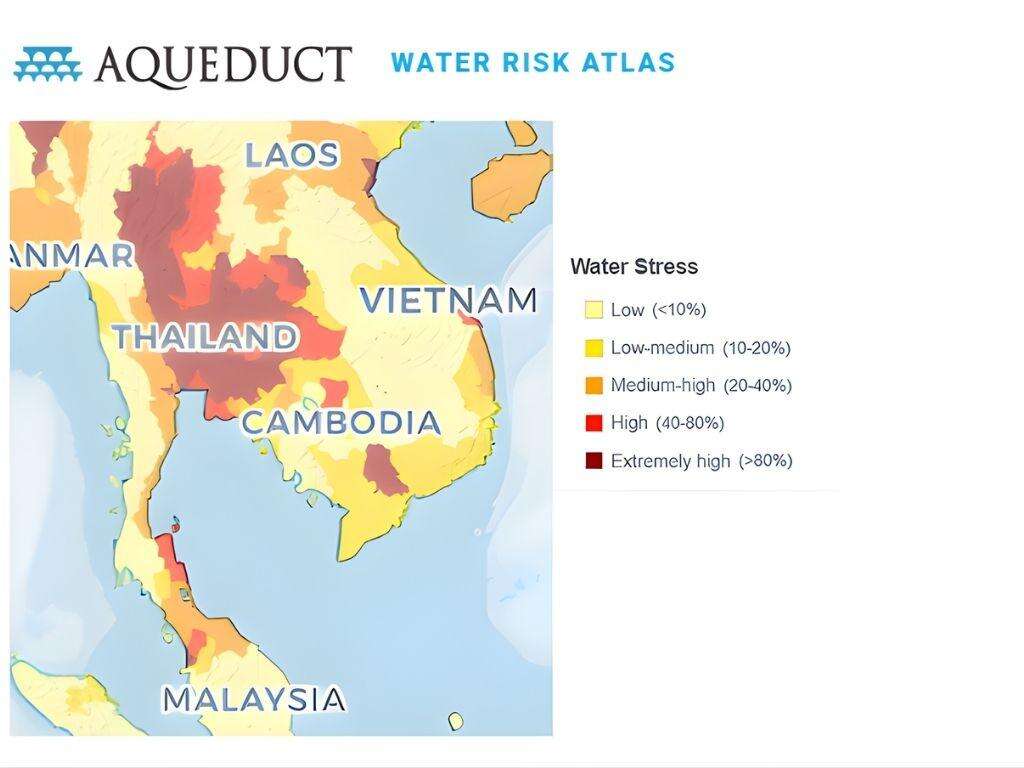
From the assessment of all projects within the Company's operational areas, it was found that risks are concentrated in economically strategic regions, namely the Central region, with over 41 projects facing extremely high water stress risks. In the Eastern region, most projects fall into the high-risk category, totaling 23 projects, due to the area's sensitivity to uncertain rainfall and competition for water resources between industrial and agricultural sectors. Therefore, the organization prioritizes increasing water use efficiency and water recycling to reduce the burden of drawing water from natural sources. In the Northern and Northeastern regions, although the overall risk level is distributed, major provinces such as Chiang Mai, Khon Kaen, and Nakhon Ratchasima still have projects in the extremely high-risk group, necessitating systematic backup water management plans during the dry season. Conversely, the Southern and Western regions generally maintain low to moderate risk levels, indicating relatively high water resource security. Nevertheless, the organization continues to adhere to water-saving practices to prevent potential risks arising from future climate change conditions.
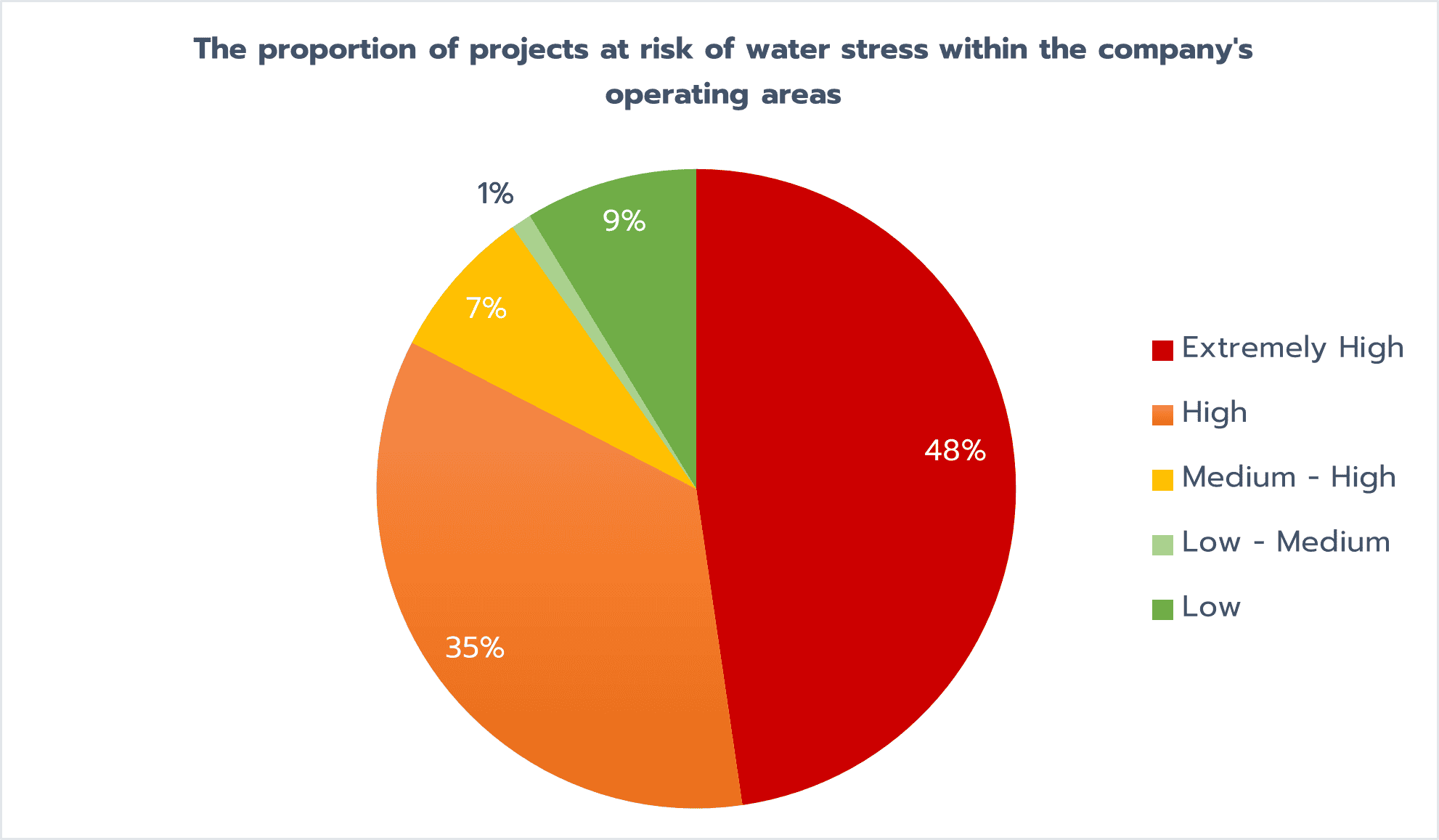
The Company has established short-term and long-term operational plans to reduce water consumption and to mitigate potential impacts from climate change. The operational plans are as follows:
1) Establish processes to identify opportunities for reducing water consumption without impacting construction processes and surrounding communities.
2) Monitor and develop new technologies and innovations to enhance water use efficiency.
3) Regularly review and evaluate water conservation areas.
Furthermore, the Company has enhanced water use efficiency in its production processes by recycling water through projects to improve water systems within construction sites, such as wastewater quality monitoring projects and the excavation of retention ponds to collect rainwater for use during droughts.
Drought and Water Scarcity Preparedness: The Company manages water by monitoring situations, planning and implementing various measures, and managing water crises. There are two key approaches to water management, which are expected to reduce water consumption costs through water reduction plans and ensure sufficient water for production processes.
Water Management Task Force | |
Reduce Water Consumption | The Company evaluates the entire production process to identify opportunities for reducing water consumption without affecting construction quality. It applies technology and innovation to enhance production efficiency, reduce water usage, and recycle water within construction sites to ensure sufficient water for business operations. Additionally, the Company regularly reviews its operations and develops new knowledge to continuously improve its water conservation capabilities. |
Monitor water situations to reduce risks and impacts of water scarcity. | The Company systematically monitors water situations, including both internal and external factors, continuously assessing potential risks and impacts such as relevant regulations, water quantity, water quality, and national and local water policies. It also collaborates closely with government agencies, local authorities, and stakeholders in managing water demand and supply to promote sustainable water resource management throughout the supply chain. Furthermore, the Company has expanded its water risk assessment to the supply chain, evaluating contractors and key material suppliers, especially in Water Stress Areas, to prevent risks of construction material disruptions. It also establishes guidelines for efficient water use for key partners and transparently and regularly communicates its water management performance and progress to stakeholders. |
Effluent discharge management (GRI: 303-1, 303-2, 303-5)
Strategies and Management Approaches
The Company has a wastewater management process, providing specific wastewater treatment systems within projects before discharge into public areas. The discharge must meet quality criteria according to the Ministry of Natural Resources and Environment's announcements, and wastewater volume and quality values are reported as per legal requirements. Both low Rise Projects and high Rise Projects undergo wastewater quality inspections before public discharge. Control and inspection of wastewater quality from construction activities are performed before discharge into public water sources.
Water — Withdrawal, Discharge & Consumption
Water Withdrawal, Discharge & Consumption
| Metric | Current Year | Previous Year | Two Years Ago |
|---|---|---|---|
| Total water withdrawal (Cubic meters) | 1,307,508.31 | 1,368,977.4 | 1,023,042.05 |
| Total water withdrawal by third-party water (Cubic meters) | 1,307,508.31 | 1,368,977.4 | 1,023,042.05 |
| Total water withdrawal by surface water (Cubic meters) | 0 | 0 | 0 |
| Total water withdrawal by groundwater (Cubic meters) | 0 | 0 | 0 |
| Total water withdrawal by seawater (Cubic meters) | 0 | 0 | 0 |
| Total water withdrawal by produced water (Cubic meters) | 0 | 0 | 0 |
| Percentage of wastewater treated before discharge (%) | 100 | 100 | 100 |
| Total water discharge (Cubic meters) | 71,934.96 | 86,332.96 | 83,554.96 |
| Total water discharge to third-party water (Cubic meters) | |||
| Total water discharge to surface water (Cubic meters) | |||
| Total water discharge to groundwater (Cubic meters) | |||
| Total water discharge to seawater (Cubic meters) | |||
| Total water consumption (Cubic meters) | 1,235,573.35 | 1,282,644.44 | 939,487.09 |
| Recycled water (Cubic meters) | 1,320 | 0 | 0 |
Water — Targets
Has Set Targets
Yes
Targets
| Target | Base Year | Target Year | Target Change (%) | Unit |
|---|---|---|---|---|
| Increase of recycled water for consumption | 2,024 | 2,030 | 15 | Cubic meters |
Water — Performance & Outcomes
Has Performance Results
Yes
Performance Description
Performance Results 2025 (GRI: 303-1, 303-2)
In 2025, the company received no complaints from the community or government agencies regarding wastewater or causing nuisance to the community and environment.
1. Water Security
The company recognizes the significant water usage in construction processes, which poses a risk of water scarcity if climate conditions change severely. Therefore, it has established backup water sources within the company's area to ensure operations do not rely on external water sources. A retention pond has been constructed to temporarily store large volumes of rainwater during heavy rainfall, slowing down water flow to prevent simultaneous discharge into public drainage systems beyond their capacity. This helps prevent flash floods in the project area and reduces impacts on adjacent areas, as well as storing water for use during the dry season.
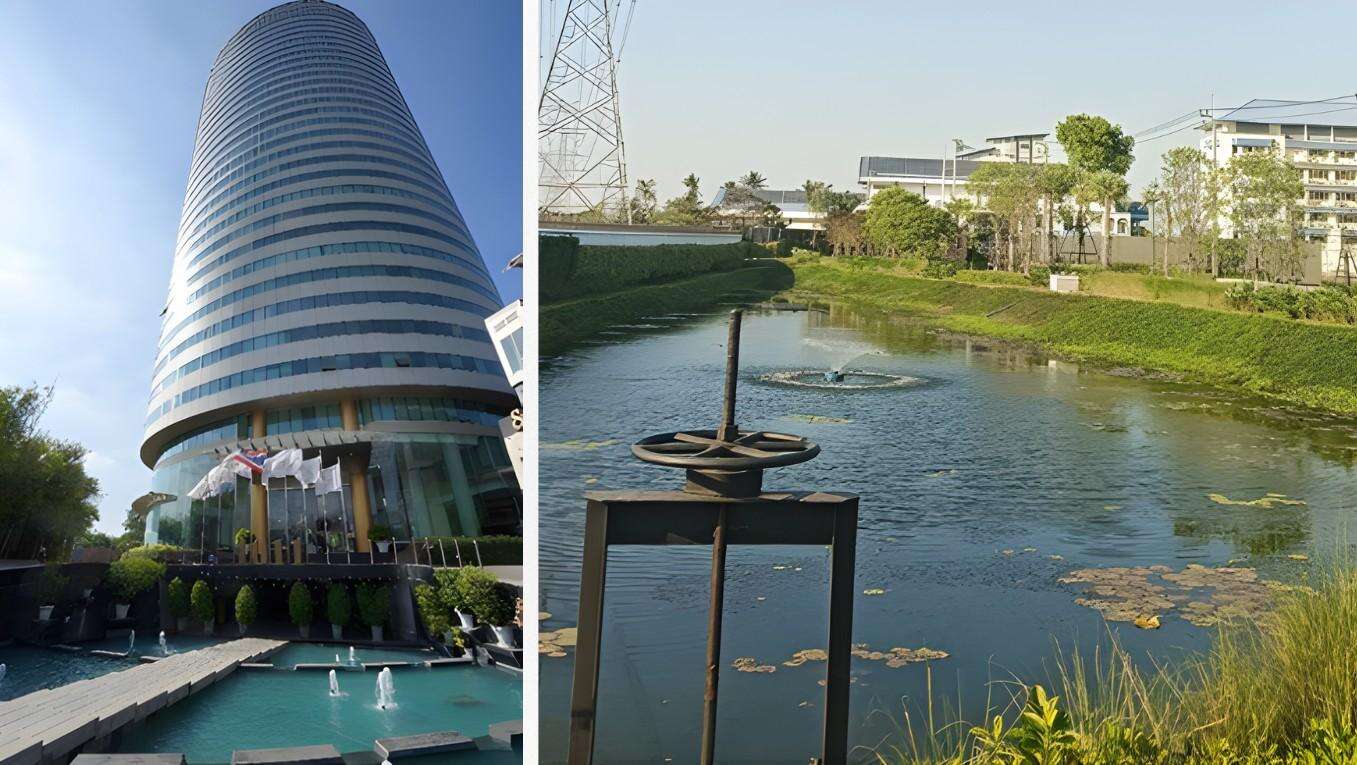
2. Engagement with Stakeholder of Water-Stressed Areas
The company recognizes the importance of water resource management in collaboration with stakeholders, community groups, and schools, especially in Chonburi province, where allocated projects under the management of affiliated legal entities are located. This area experiences water stress and has physical limitations due to being a brackish water area, which negatively impacts agriculture as water salinity is a significant problem preventing most horticultural crops from growing normally. Therefore, the company initiated a collaborative approaches with stakeholders, including surrounding communities and educational institutions, to integrate resource utilization efficiently and reduce the rate of water extraction from public sources. This is carried out through the "Good Eating Vegetable Garden Project," which applies hydroponics agricultural innovation to the area. This system is a closed-loop plant cultivation process that facilitates the recycling of water resources and nutrient solutions, resulting in a reduction of water usage by up to 90%* compared to traditional soil-based agriculture.
The achievements from project implementation not only involve managing water resource risks with the community but also enhance the quality of life for community members through promoting food security. This reflects the company's commitment to driving the organization according to the principles of maximizing resource utilization and fostering sustainable growth alongside the community.
(*Reference data from Service Center, Thailand Department of Agricultural Extension)
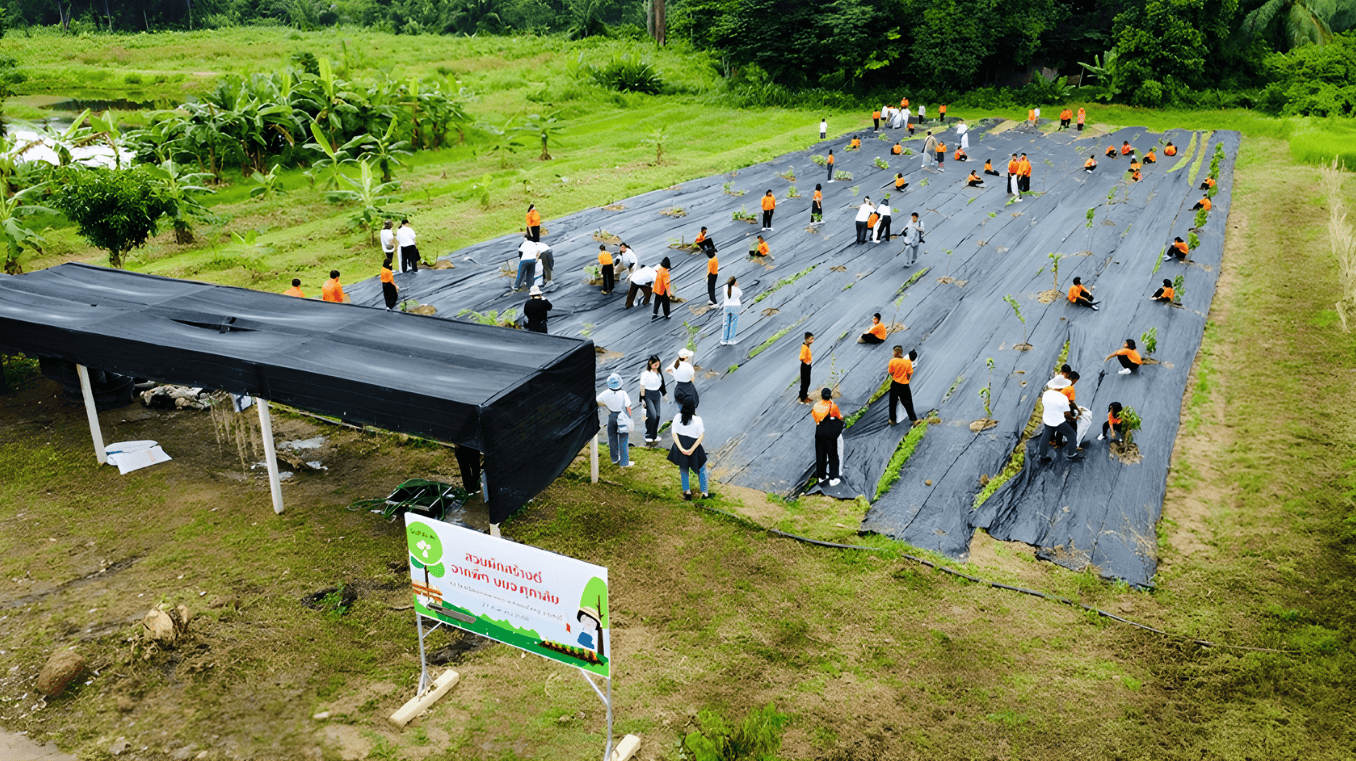
The Company engage with its stakeholders at water stressed sites
3. Wastewater Management and Recycling
The company recognizes environmental and community risks, thus it has developed a water management plan and implements wastewater management from organizational consumption, including all construction processes, to properly and efficiently manage wastewater as follows:
3.1 Wastewater Treatment
The company has established a drainage system from all areas generating wastewater within the company. The installation of an efficient wastewater treatment system helps reduce pollutant discharge into public water sources, prevents water and soil contamination, reduces impacts on ecosystems and surrounding communities, and promotes responsible water resource management.
Supalai Grand Tower uses both aerobic and anaerobic wastewater treatment systems to achieve maximum efficiency in wastewater treatment. All 5 cubic meters per day of treated water (100%) is sent to a treated water reservoir for reuse in production processes and for watering green areas, with no discharge into public water sources, adhering to the principle of Zero Water Discharge.
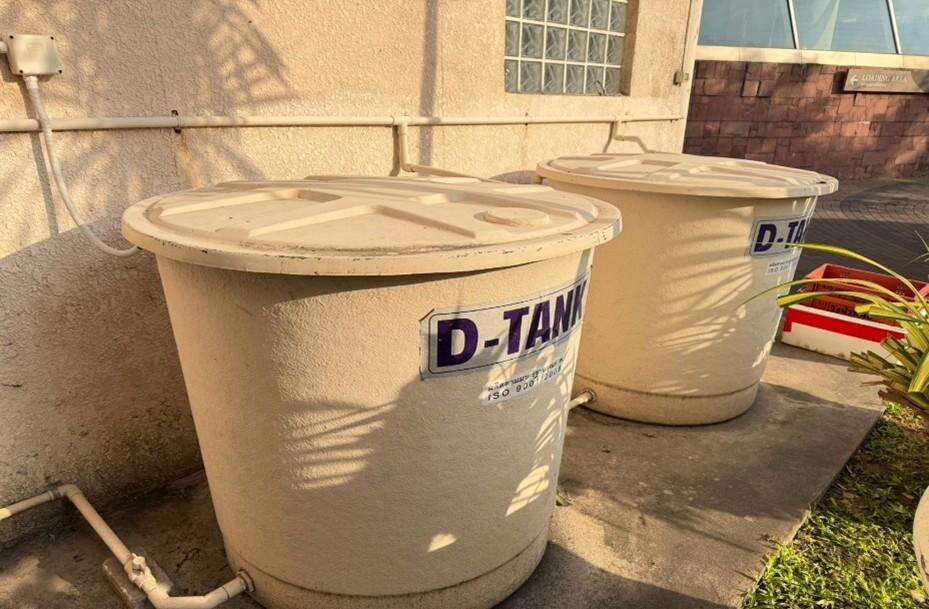
Construction projects have a management plan and wastewater treatment process starting from households. Wastewater undergoes preliminary treatment in individual household septic tanks. The treated water then flows to the project's central wastewater treatment plant for further treatment and quality control to meet standards before being discharged into public water sources.
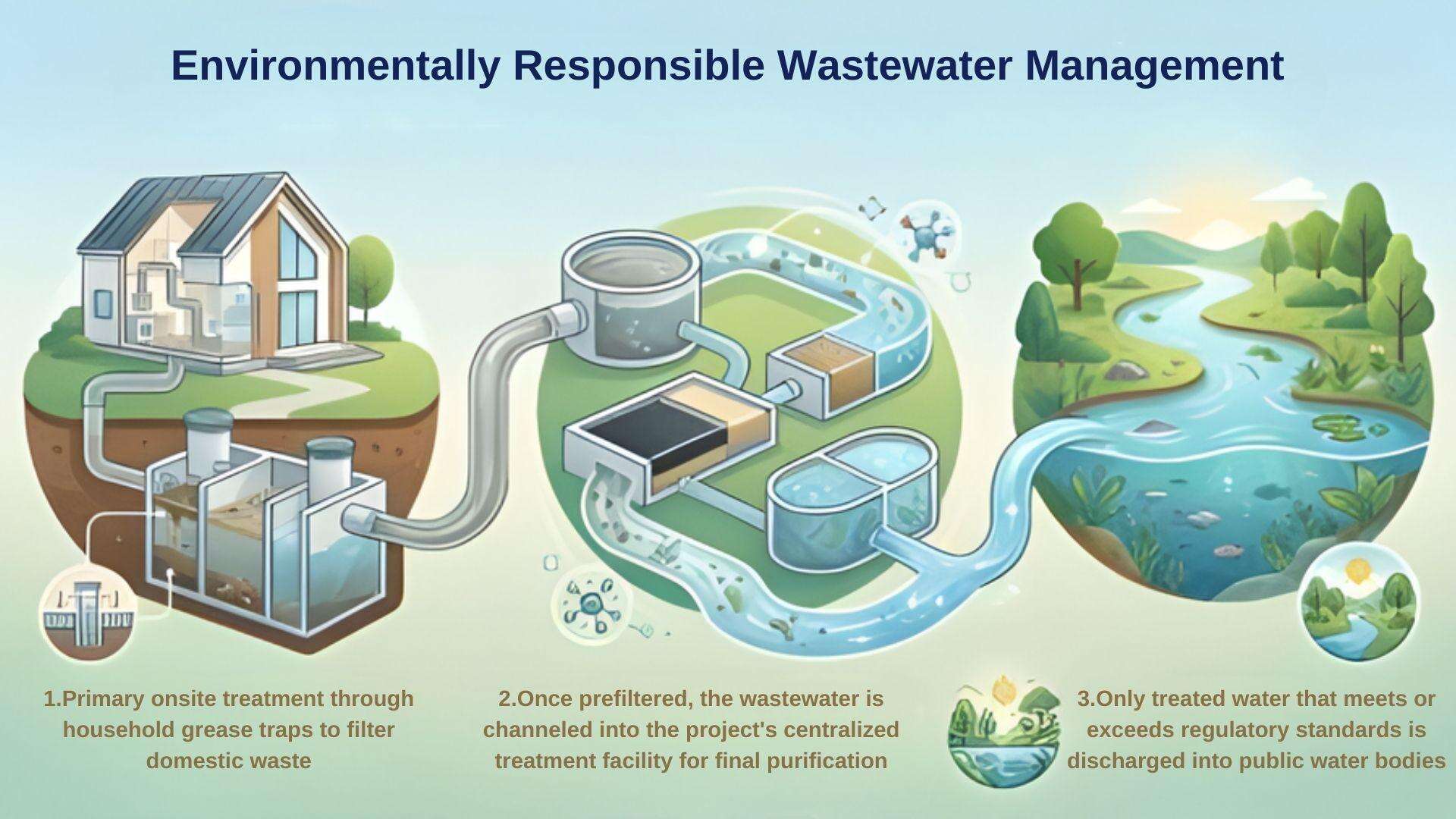
4. Reducing Water Usage and Loss in the Organization
4.1 Water Resource Management at Supalai Grand Tower
The company aims to reduce water consumption at Supalai Grand Tower and has developed a water management plan to reduce water usage, improve water efficiency, and encourage all employees to participate in water resource conservation and efficient water use in all activities. The building management team controls and monitors the progress of various project activities as follows:
The project involves collecting wastewater from the Chiller system, which is still of suitable quality, for reuse in watering plants and maintaining green areas. This helps reduce tap water consumption, increases resource efficiency, and supports sustainable water resource conservation.
Improving water efficiency of equipment and sanitary ware. The company selects water-saving sanitary ware and installs sensor-activated faucets to reduce excessive water usage. This helps control water consumption efficiently and reduces water loss.
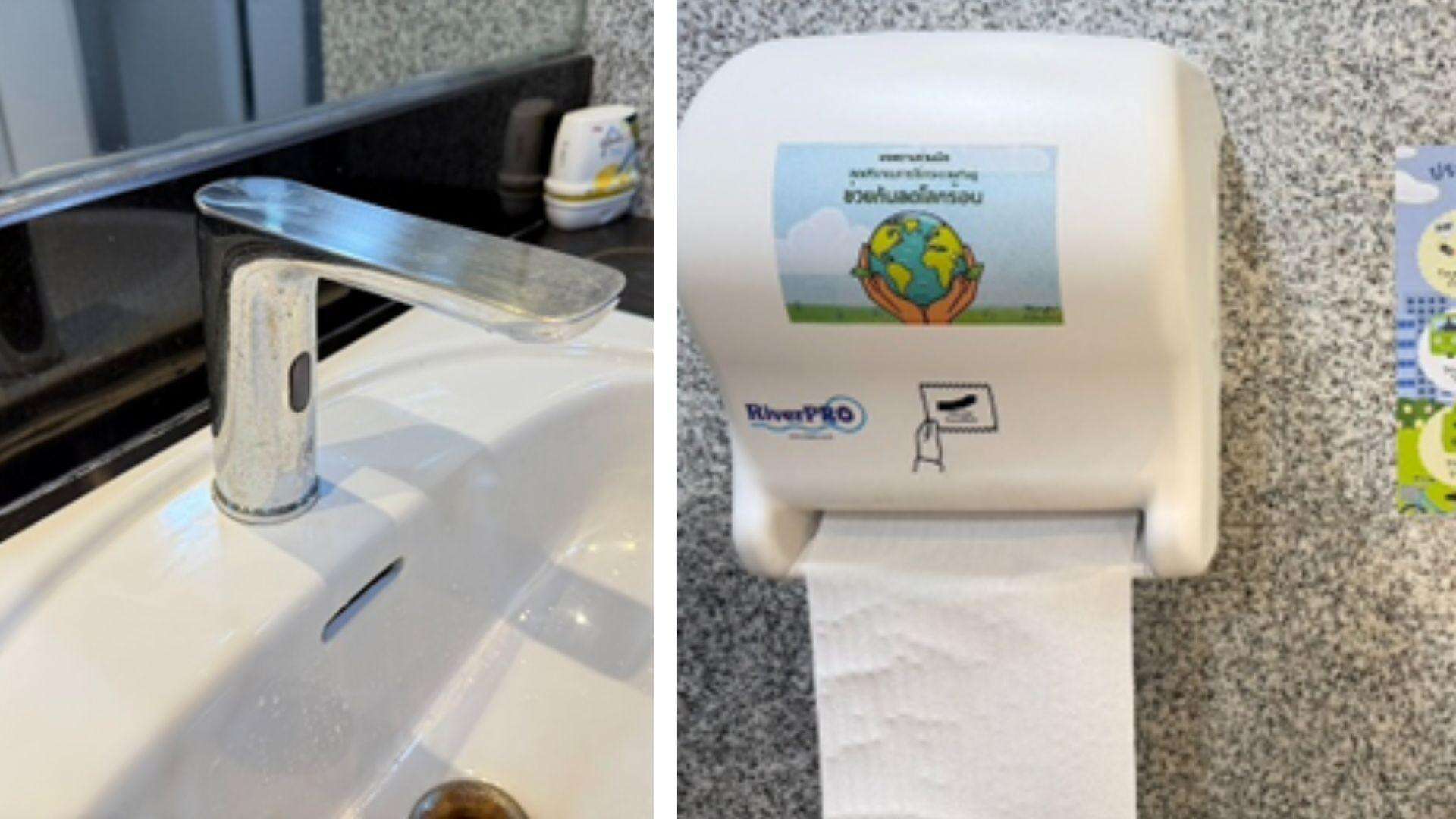
Inspection and repair of water leaks in equipment and piping systems. The company regularly inspects equipment and piping systems weekly and encourages all employees to participate in monitoring and reporting repairs for immediate action if any water leaks are observed within the company, such as dripping faucets or sanitary ware in restrooms.
Educating and raising awareness among employees about water usage and conservation in all offices. Campaign signs are created and publicized to remind employees to turn off water whenever not in use and to regularly check for water leaks to reduce unnecessary water loss.
Water Management Performance and Results 3 years retrospective (GRI: 303-3, 303-4, 303-5)
Detailed of action taken to reduce water withdrawal/consumption: to specific for Supalai Grand Tower
Water consumption volume
Unit
2023
2024
2025
Total water used
Cubic meters
108,750
111,528
96,610
Tap water or water from other organizations
Cubic meters
108,750
111,528
96,610
Surface water
Cubic meters
0
0
0
Groundwater
Cubic meters
0
0
0
Recycled water
Cubic meters
0
0
1,320
Water consumption per unit area
Cubic meters/square meter
1.17
1.20
1.04
Percentage of treated wastewater
%
100
100
100
Total wastewater volume
Cubic meters
83,554.96
86,332.96
71,934.96
4.2 Water Recycling in Construction Projects (Water Reuse)
Maintaining the cleanliness of public roads is crucial. All trucks leaving the project must undergo wheel washing to prevent soil debris or dust from spreading outside. Without proper management, this process can lead to significant water wastage from road cleaning and accumulate wastewater in construction projects. Therefore, a wheel wash pond with a preliminary treatment system has been designed within the project. This system allows soil particles to settle and separates debris, after which the settled water is recycled for washing subsequent truck wheels, instead of using tap water and discharging it as wastewater. This method significantly reduces new water consumption. Furthermore, the settled soil is managed beneficially; soil debris and sediment separated from the recycled water pond are collected for management with other waste materials in the project, such as mixing with concrete scraps to form a road subbase or for site improvement.
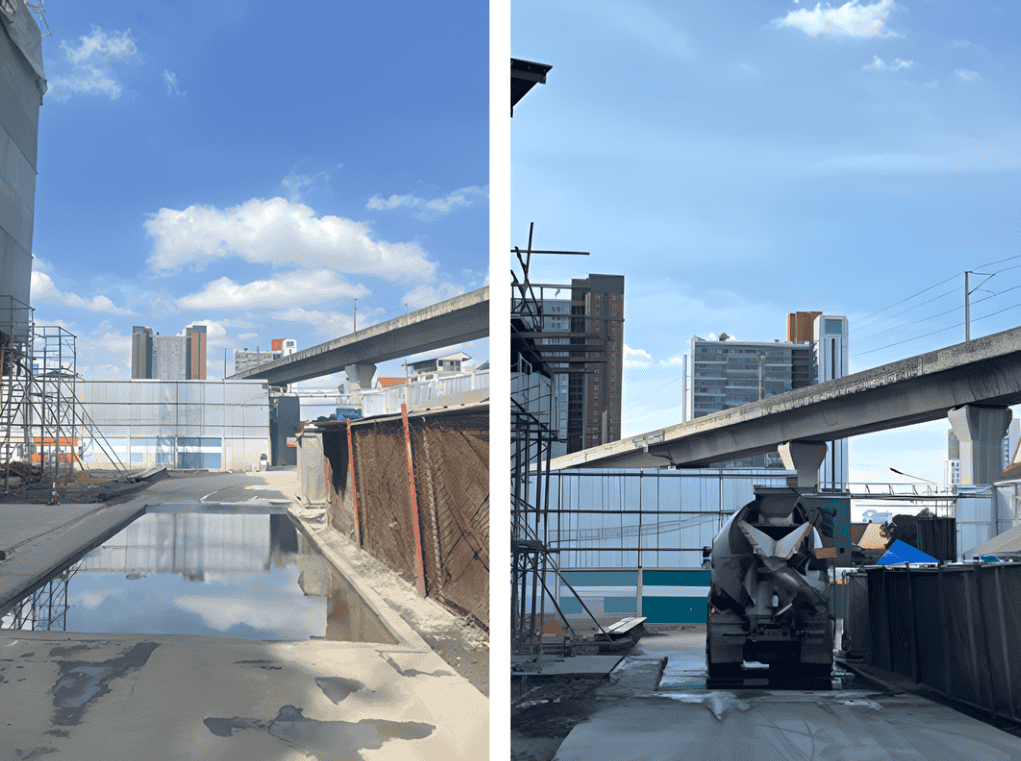
5. Water Quality Control Discharge D
The company monitors and analyzes effluent water quality to control it before public discharge and to ensure water values comply with legal standards. Water samples are collected correctly and sent to reliable laboratories to ensure no toxic substances contaminate natural water sources and ecosystems. This also helps determine the composition and efficiency of the treatment system for targeted problem-solving, reducing health risks to the community and environment.
Supalai Grand Tower requires effluent water quality to be measured as legally mandated before leaving the building, twice a year. Results are reported electronically on the 15th of every month, in accordance with ministerial regulations issued under Section 80, to the local official, Pollution Control Department, Ministry of Natural Resources and Environment.
The company sets a goal and investment in R&D Investment in R&D to mitigate water-related risks for all Low Rise Projects and High Rise Projects to establish guidelines for controlling effluent water quality. This includes installing equipment, checking, and maintaining treatment systems before discharging wastewater into public water sources. Additionally, there are preventive maintenance plans and systematic repair plans to comply with legal requirements, ensuring that effluent water quality measurement results meet standard criteria.
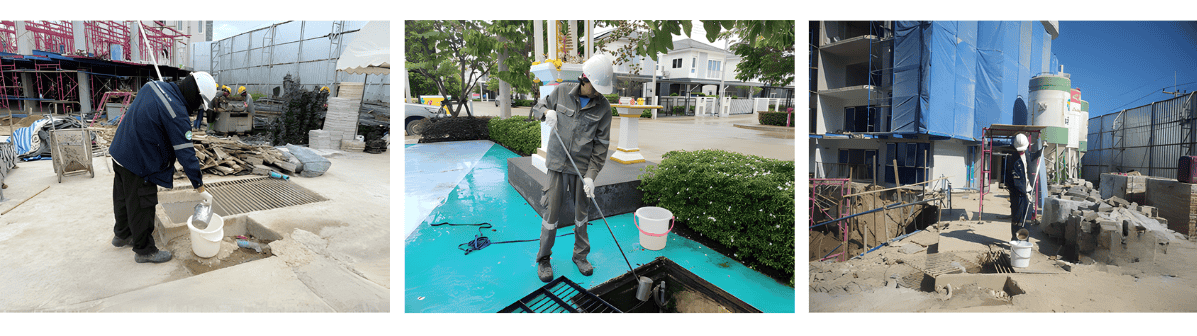
6. Wastewater Management (GRI: 303-1, 303-2, 303-5)
6.1 Quality Measurement Project
The company closely monitors water quality to prevent potential water quality issues and nuisances to the environment or surrounding communities. It has an efficient wastewater management system that complies with the environmental regulations of the Pollution Control Department, Ministry of Natural Resources and Environment. The wastewater treatment process begins at the household level, passing through each house's septic tank before collecting wastewater into the project's central wastewater treatment system. It is treated to meet legal quality standards before being discharged into the public system. Treated wastewater samples are collected before public discharge and submitted to the local Environmental and Pollution Control Office annually to report data according to effluent quality standards, ensuring continuous water quality, transparency, and compliance with environmental laws.
6.2 Establishing measures for preventing and mitigating environmental impacts related to wastewater management
The company has established measures to prevent and mitigate environmental impacts and wastewater management for High Rise Projects and Low Rise Projects, categorized by priority and activity characteristics at each project stage, as follows:
1) Project Construction Phase
During the construction phase, the main measures will focus on managing contaminated water from construction activities and worker accommodation to prevent impacts on natural water sources around the project area.
Provide restrooms within the worker's accommodation, positioned away from adjacent buildings, with separate restrooms for male and female workers. The wastewater treatment system includes a septic tank, an anaerobic filter, and aeration, sized to accommodate the expected wastewater before discharge into the public drainage system, and sludge is pumped out of the septic tank annually.
A foreman or supervisor is assigned to ensure workers regularly maintain restroom cleanliness to prevent foul odors and the breeding of germs.
After construction, the project must properly dismantle the construction-phase utility systems for workers according to standards. This involves pumping all sludge from the septic and filter tanks, disinfecting with lime before permanent backfilling.
Provide drainage channels around the construction area and a sediment trap with a trash screen before discharging to public areas.
Sediment/cement/mud trap pond to capture sediment/cement/mud before discharging only water out of the project area into the public drainage system.
Prepare an area for washing truck wheels before leaving the project site, using a high-pressure water jet to remove soil debris from the truck wheels, and provide a rubber squeegee to direct the wash water back into the project area, preventing it from flowing into the public drainage system outside the project.
Clean the work area to prevent soil, cement, and construction debris from clogging or obstructing water flow and public drainage systems.
2) Project Operation Phase
When the project becomes operational, measures will focus on the continuity and stability of the treatment system to accommodate wastewater from building operations.
Provide a centralized activated sludge wastewater treatment system (Conventional type) with aeration, sized to accommodate the expected wastewater. It is buried underground within the project's internal roads. The treated water will meet the Ministry of Natural Resources and Environment's effluent quality standards before being discharged into the public drainage system.
Regularly inspect the amount of fat in the grease trap monthly and pump out fat waste from the grease trap according to the scheduled time.
Regularly inspect the volume of sewage monthly. Pump sewage from the septic tank according to the scheduled time.
Regularly pump accumulated sludge from the sludge tank monthly or when the sludge tank is full. Authorized private companies are contracted to collect and dispose of it.
Eliminate methane gas generated from the wastewater treatment system and treat wastewater aerosols from the aeration pond using the Soil Bed method.
Two points are designated for measuring pre-treatment effluent water quality and one point for post-treatment effluent water quality. Measurements are taken once a month for one year to record comparative data of water quality before and after entering the centralized wastewater treatment system. After one year, measurements of treated effluent water quality will be taken at one point, with parameters conforming to the Ministry of Natural Resources and Environment's announcement.
Water Management Performance and Results 3 years retrospective (GRI: 303-3, 303-4, 303-5)
Detailed of action taken to effluent Discharge: to specific for Construction project in Phuket Province
Construction project in Phuket Province | Unit | 2023 | 2024 | 2025 |
Total water used | Cubic meters | 29,213 | 46,927 | 46,284 |
Volume of tap water or water from other organizations | Cubic meters | 29,213 | 46,927 | 46,284 |
Percentage of treated effluent discharge (%) | % | 100 | 100 | 100 |
Total effluent discharge volume | Cubic meters | 5000 | 6600 | 6600 |
Waste — Plan & Guidelines
Has a Waste Management Plan
Yes
Plan Description
Waste Management (GRI: 306-1, 306-2, 306-3, 306-4, 306-5)
Details | Goals for 2030 | Performance in 2025 |
Reduce construction waste generation (Calculated based on 5 ongoing high-rise construction projects) | 30% compared to the standard value | 4.23% |
Increase the proportion of waste diverted from landfills, compared to the 2025 baseline year | 75 % | Data collection in progress |
100% of projects use eco-friendly concrete | 100% | 100% |
Strategies and Management Approaches
The Company is a member of the Circular Economy in Construction Industry (CECI) in Thailand and has applied the concept of Circular Economy in its operational processes. This involves focusing on waste design and management to promote the most efficient use of resources, including reuse, recycling back into production processes, and reducing pollution, in line with the 3Rs principles (Reduce–Reuse–Recycle) and the Supalai Self-Proved design concept. The Company is committed to continuously implementing these practices, especially in environmental aspects, where it operates diligently at every step to reduce waste volume through innovative construction and good management planning. This aims to minimize resource loss, reduce waste volume, and mitigate long-term environmental impacts. The Company has adopted circular economy principles in its planning and operational processes, such as increasing the proportion of renewable energy from renewable sources, reducing the use of new raw materials, extending the lifespan of equipment, repurposing waste, and exploring collaborative approaches for efficient resource utilization.

Waste — Generation, Disposal & Recycling
Waste Generation, Disposal & Recycling
| Metric | Current Year | Previous Year | Two Years Ago |
|---|---|---|---|
| Total waste generated (Kilograms) | |||
| Non-hazardous waste (Kilograms) | |||
| Non-hazardous waste - Landfilling (Kilograms) | 27,903.55 | 137,891.04 | 39,000 |
| Non-hazardous waste - Incineration (with energy recovery) (Kilograms) | |||
| Non-hazardous waste - Incineration (without energy recovery) (Kilograms) | |||
| Non-hazardous waste - Other disposal operations (Kilograms) | |||
| Hazardous waste (Kilograms) | |||
| Hazardous waste - Landfilling (Kilograms) | |||
| Hazardous waste - Incineration (with energy recovery) (Kilograms) | |||
| Hazardous waste - Incineration (without energy recovery) (Kilograms) | |||
| Hazardous waste - Other disposal operations (Kilograms) | |||
| Total reused/recycled waste (Kilograms) | 2,764.15 | 787.9 | 295.6 |
| Reused/Recycled non-hazardous waste (Kilograms) | 2,764.15 | 787.9 | 295.6 |
| Reused non-hazardous waste (Kilograms) | |||
| Recycled non-hazardous waste (Kilograms) | |||
| Reused/Recycled hazardous waste (Kilograms) | |||
| Reused hazardous waste (Kilograms) | |||
| Recycled hazardous waste (Kilograms) |
Waste — Targets
Has Set Targets
Yes
Targets
| Waste Type | Disposal Approach | Target | Base Year | Target Year | Target Change (%) | Unit |
|---|---|---|---|---|---|---|
| Non-hazardous waste and hazardous waste | 2758 · Description: Reuse · 2759 · Description: Recycle | Reduce waste volume | 2,025 | 2,030 | 30 | Tonne |
Waste — Performance & Outcomes
Has Performance Results
Yes
Performance Description
1. Waste management in construction projects
1.1 Project Supalai Self-Proved
The Company is implementing the "Supalai Self-Proved" project for its third year, innovating to reduce waste and waste materials by maximizing the reuse of construction waste and circular resources through the construction process. The main objectives are:
To manage construction waste through various processes such as recycling, reuse, etc.
To reduce the amount of waste sent to landfills
To help reduce costs associated with construction waste disposal
To minimize impacts on society and the external environment of the organization
Innovation Development and Business Partnerships
In 2025, 5 high-rise construction projects will be implemented, incorporating eco-friendly construction concepts at the project sites. This includes waste and waste materials management processes from source to landfill, as well as promoting collaboration among stakeholders throughout the supply chain to foster knowledge and understanding of waste management processes, collection, segregation, and recycling, thereby promoting operational sustainability in accordance with Circular Economy principles, as follows:
Reduce
1) Reducing waste at the source by changing the size of concrete cube molds, which helps reduce the amount of concrete needed for testing and decreases concrete waste by up to 70%
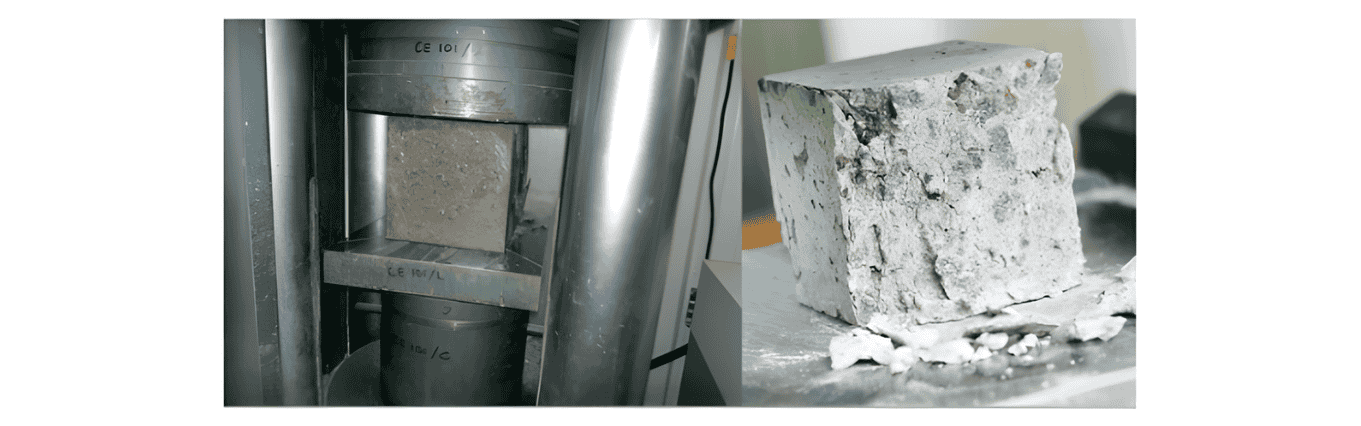
2) PIPE FITTING Innovation: Inventing and developing an innovative method for installing steel fire pipes, moving away from the traditional method that required numerous joints and metal welding at every connection point. This new technique involves connecting pipes without using joints. This method not only increases work efficiency but also reduces resource consumption, such as welding wire, and decreases pollution generated from the metal welding process. Currently, this innovation has been further applied to three additional projects: Supalai Sense Srinakarin, Supalai Blu Sathorn Ratchaphruek, and Supalai Tyme Charoen Nakhon.
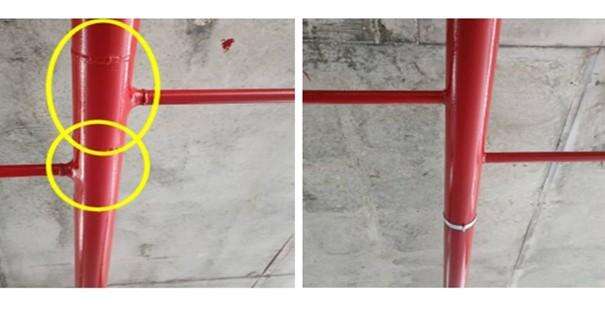
3) Use of saddle clamps for PPR (Polypropylene Random Copolymer) pipe connections by Using saddle clamps instead of tee joints to reduce pipe connections PPR, also reducing the chance of leaks and saving working time.
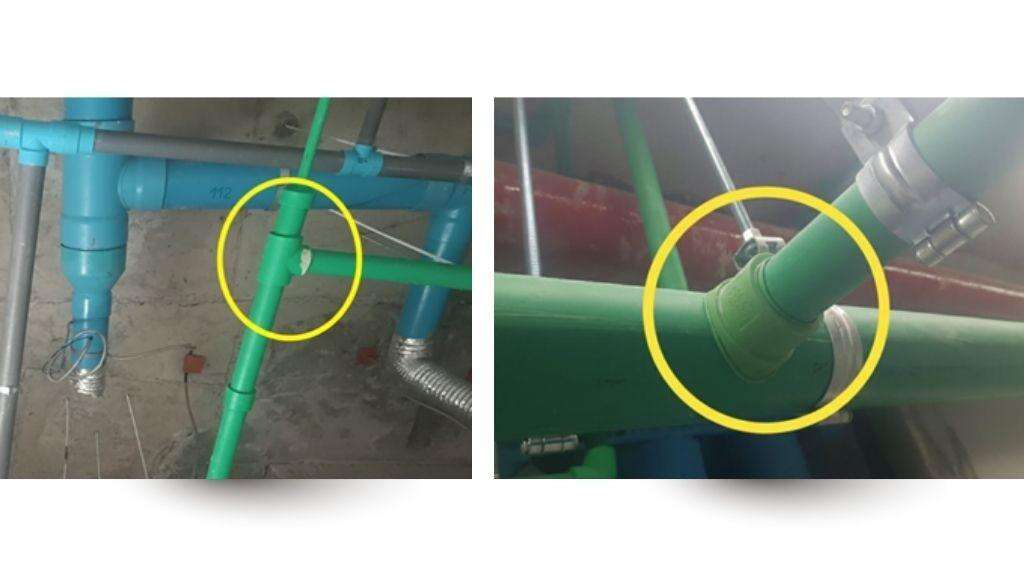
Reuse
1) Creating a road subbase layer from concrete waste
Transforming concrete waste from construction into valuable materials by utilizing concrete scraps from three main sources: concrete waste from flushing sediment from drilled pile holes, concrete waste from cleaning concrete mixer trucks, and scraps from concrete cubes and slump test work, which often contain soil mixtures. All resulting waste is adapted into "Soil Cement" to form a reinforced subbase layer and protect the subgrade of road works. This technique not only reduces waste volume but also lowers the cost of purchasing crushed rock and decreases the number of trips required to transport waste off-site. Furthermore, it strengthens the soil in the area, reducing problems of road cracking due to soil subsidence.
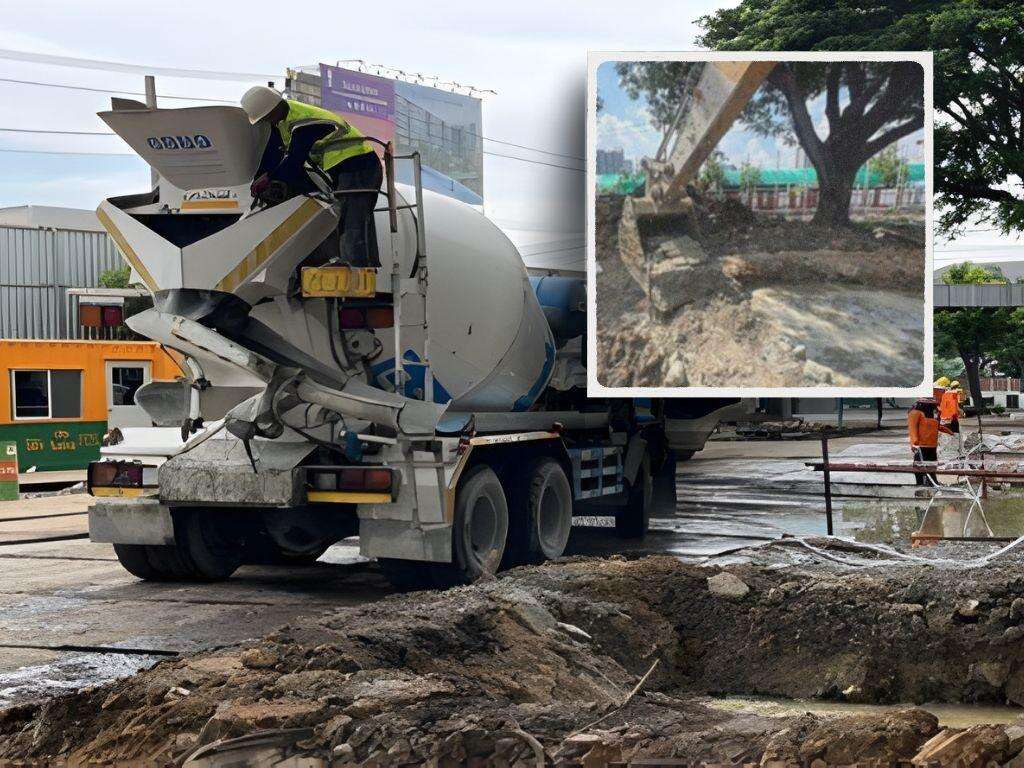
2) Pouring concrete to flush out sediment from the bottom of drilled pile holes
During drilled piling, concrete is poured to overflow from the steel casing to flush out sediment and soil remaining at the bottom of the hole, preventing it from mixing with the main concrete body of the pile. This technique thus reduces the amount of concrete waste that needs to be transported off-site by up to 120 cubic meters, equivalent to 8 truckloads for off-site disposal.
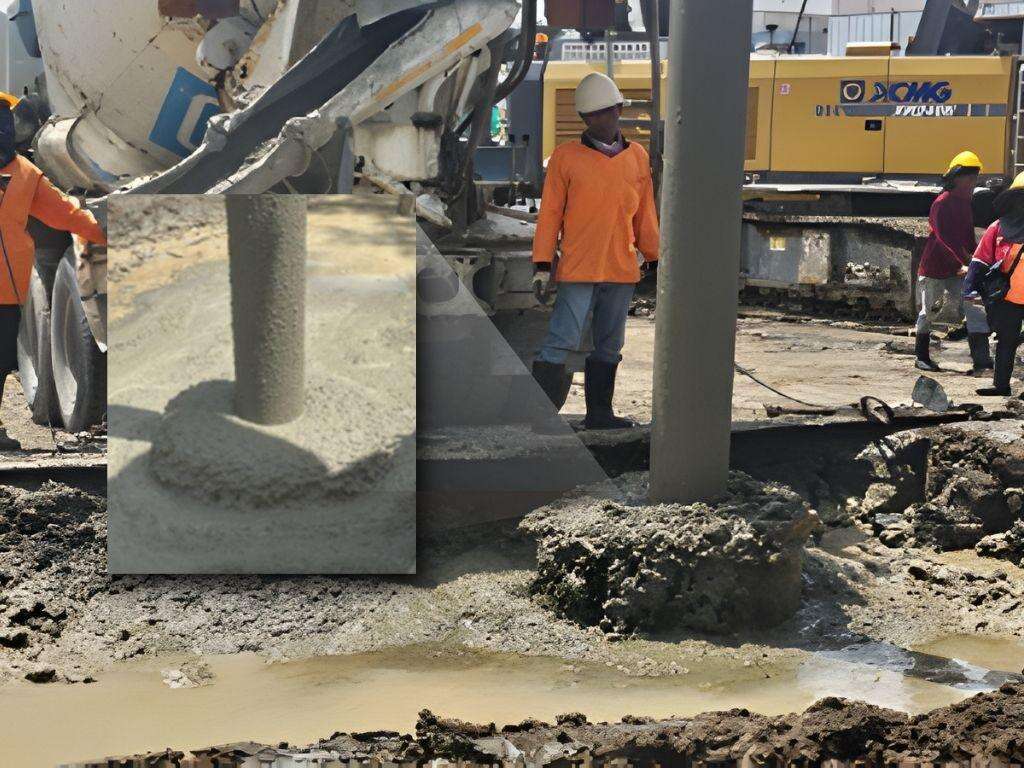
3) PVC pipe scrap management process
PVC pipe scraps are often generated in large quantities from cutting pipes to the required sizes in plumbing and sanitary systems. These short pipe scraps are often considered valueless waste that must be landfilled or disposed of. To elevate waste management according to Circular Economy principles, the project has adopted the concept of Repurpose, applying it to various sizes. All sizes of pipe scraps, whether small or large, can be reused by adapting them into equipment for other tasks as appropriate for the worksite. This reduces the import of new materials and minimizes waste generation from the source, for example, by using pipe scraps to make sleeves for phones or other devices, thereby transforming waste materials into functional support equipment.
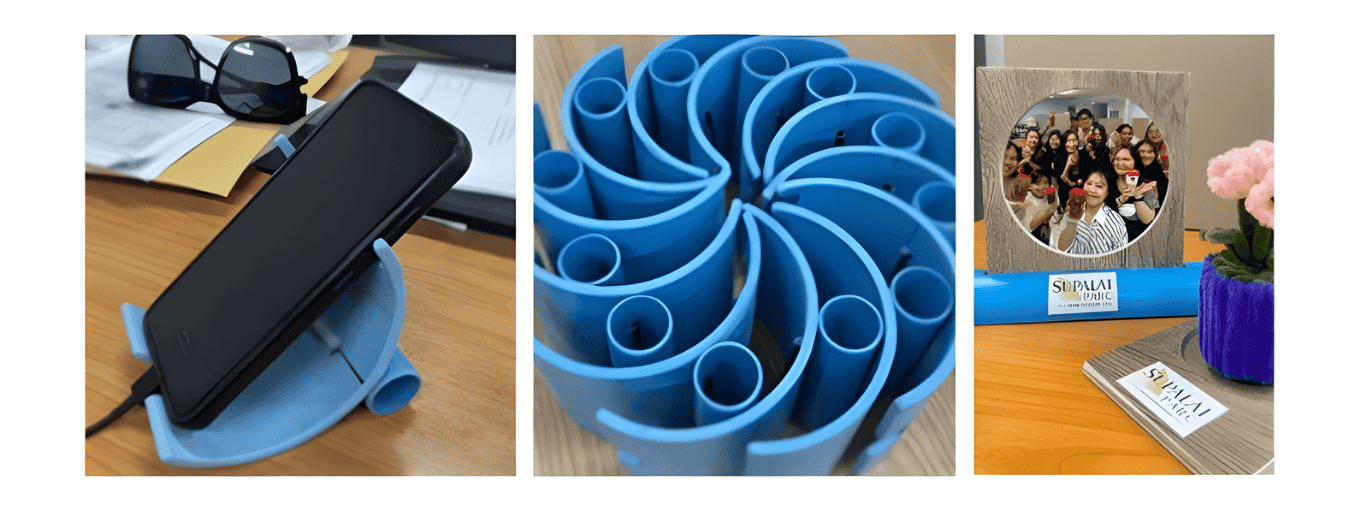
4) Reusing plastic pallets in transportation and construction processes
Plastic pallets are used to replace wooden pallets in material transportation, serving as supports for materials throughout the project, such as lightweight bricks, floor tiles, wall tiles, and other construction materials. This allows for multiple reuses. Additionally, plastic pallets are used as primary material supports for the entire project, covering both architectural and structural works, leading to an efficient material management system. Once materials on a pallet are used up, the pallet is stored and immediately returned for new materials. As of 2025, this has been implemented in 10 projects.
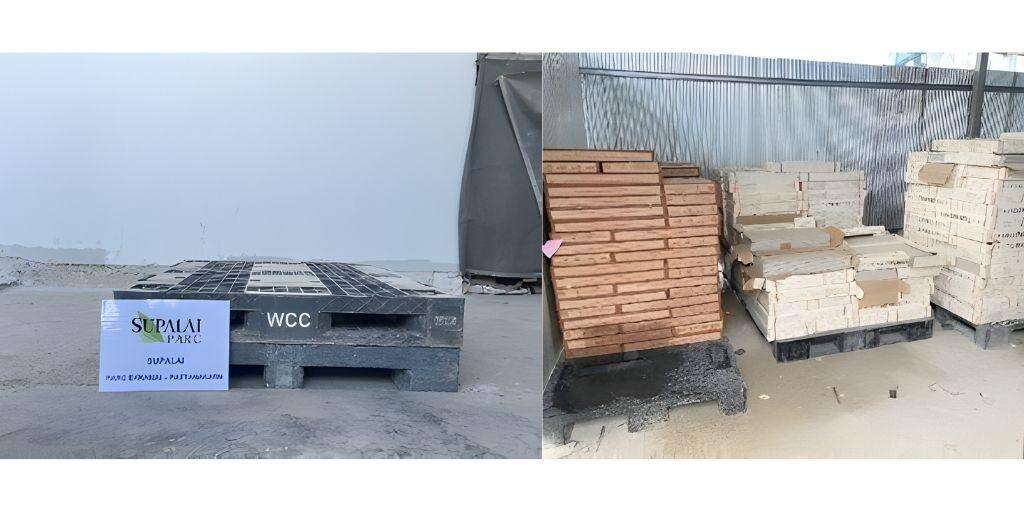
For construction materials whose packaging cannot yet be switched from wooden pallets to plastic pallets, the Company has repurposed wooden pallets into multi-purpose trays to extend their lifespan and maximize the utility of waste materials.
Recycle
1) Reprocessing concrete waste into new products
In addition to using concrete waste for temporary roads to reduce waste disposal from testing processes, the Company has repurposed excess concrete from compression strength test samples into new functional and decorative products. These are utilized and distributed to internal and external communities, such as plant pots, office supply boxes, and paving slabs for public works.
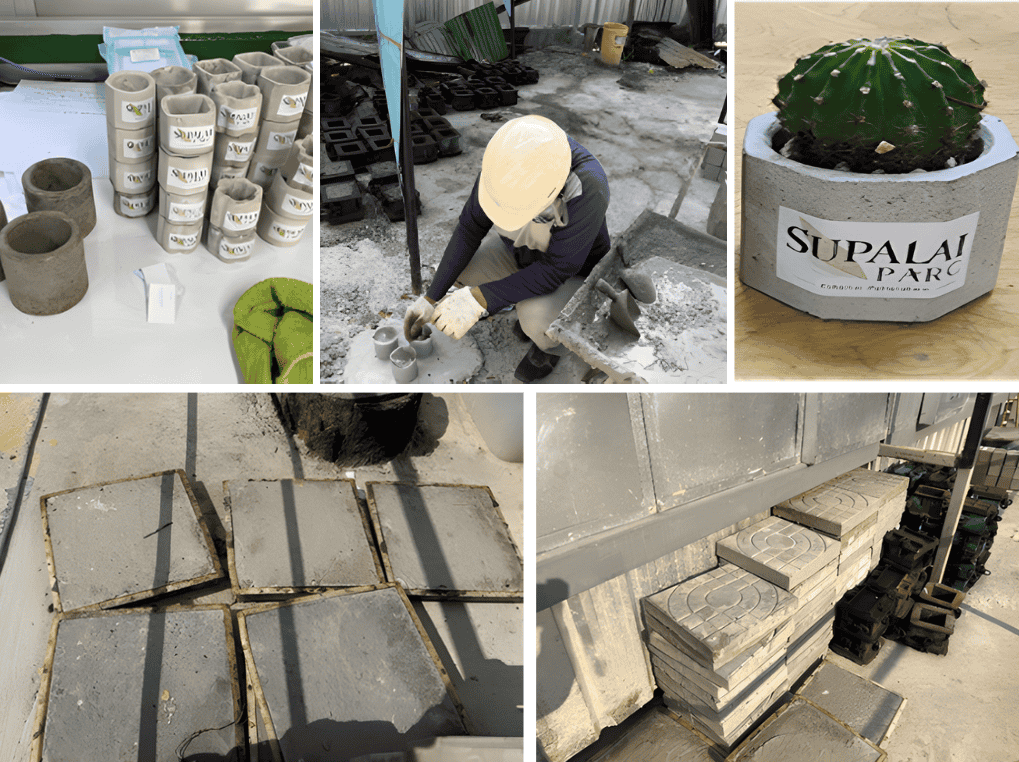
Small brick scraps that cannot be made into products are processed through crushing to be used as a component in potting soil. Due to their lightweight and high porosity, when mixed with soil, lightweight bricks help improve soil structure, making it airy, loose, and well-draining. pH measurements of the soil have shown it to be more suitable for cultivation.
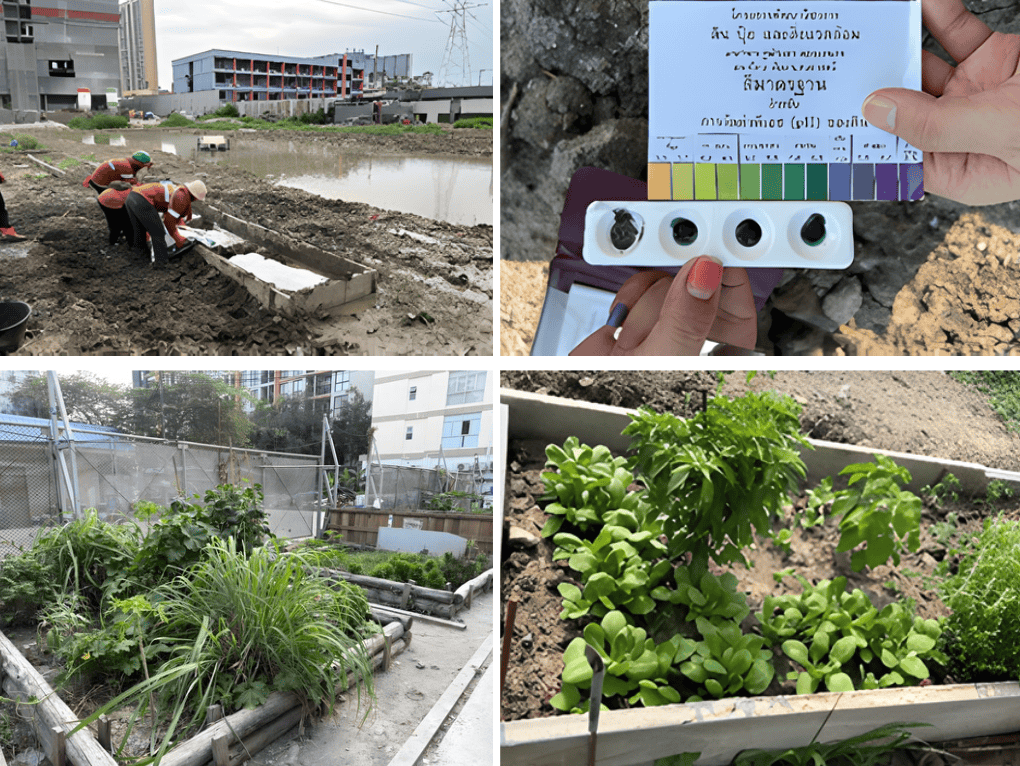
Renewable
1) Management of excess soil from condominium construction projects
The Company manages excess soil from high rise projects by utilizing it in low rise projects to reduce waste volume, minimize the need for soil disposal, and promote efficient resource circulation. This helps reduce the need to source soil from external suppliers for nearby low rise projects, decreases transportation, saves costs, and reduces pollution from fuel for long-distance transportation. It also represents sustainable excess soil management and efficient resource utilization, reducing environmental impact.
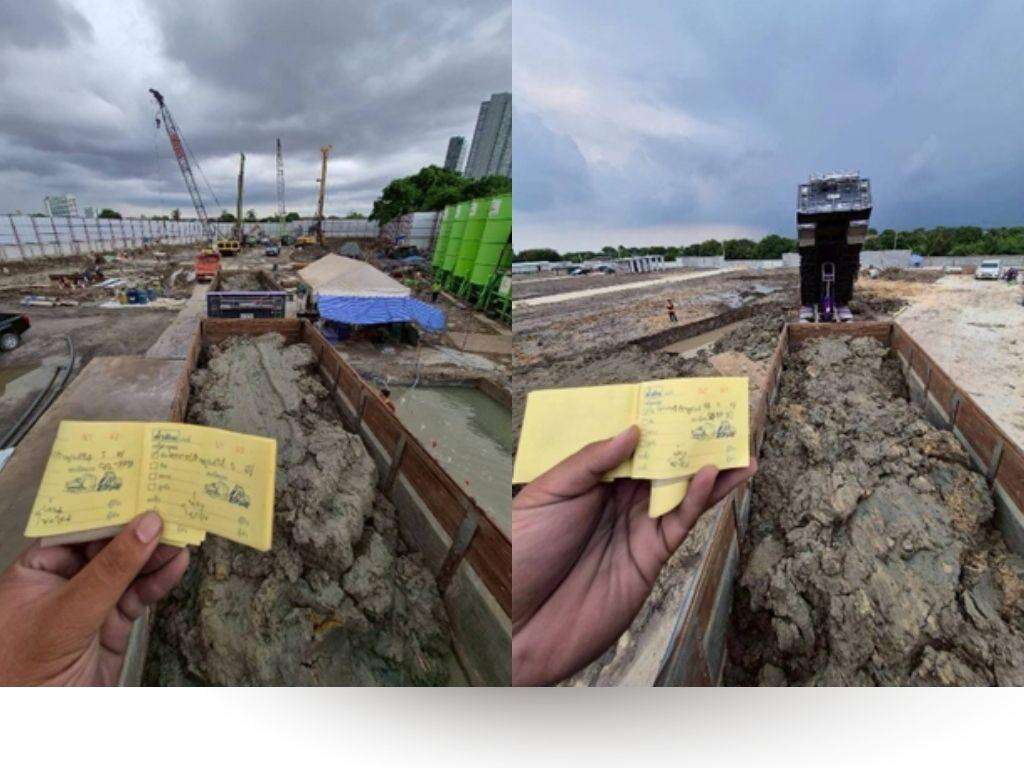
*Image of excess soil delivery between projects
2) Management of drilled pile head waste
In the condominium construction process, the drilled piling stage generates excess concrete waste (pile heads) that is extracted, crushed, and transported off-site, representing both a loss of resources and increased management costs. The project therefore developed the "Life of Pile" innovation, transforming pile head waste into valuable material. This was tested by arranging all pile head scraps to form a retaining wall around Victoria Pond, replacing the need to construct an entirely new retaining wall. This also reduced the work process from the original 57 days for crushing, transporting, and rebuilding. Through this innovative use of circular resources in the project, the work time was reduced to 26 days. Furthermore, it reduced waste management costs and the construction of retaining walls using the traditional system, which would have cost approximately 2 million baht, to only hundreds of thousands of baht. This resulted in efficient waste management, reduced pollution from transportation, and decreased the amount of waste sent to landfills.
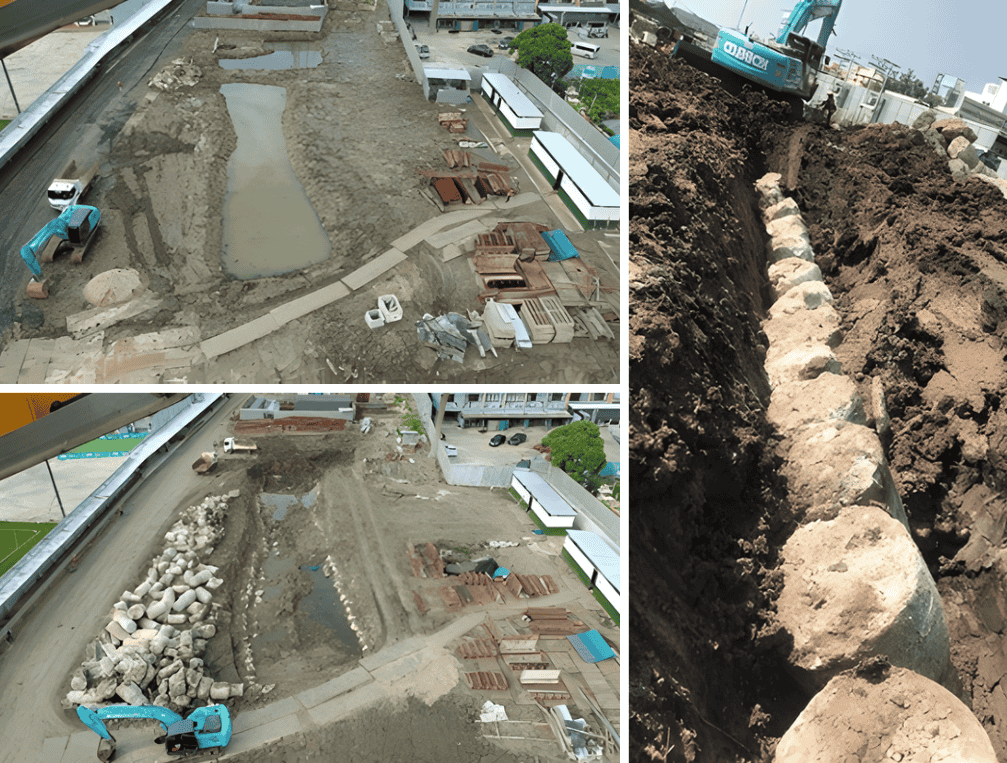
Management of non-hazardous waste and debris
1) Waste management in construction projects
The Company systematically manages waste within the project, with designated waste bins for each waste type, totaling 8 bins with labels clearly defined waste types to support proper waste segregation and management behavior for employees, workers, and contractors. Each waste bin type includes food waste, plastic, plastic bottle caps, glass bottles, foam, paper, cans, and hazardous waste. This enhances waste management efficiency, reduces waste contamination, and promotes greater utilization of waste.
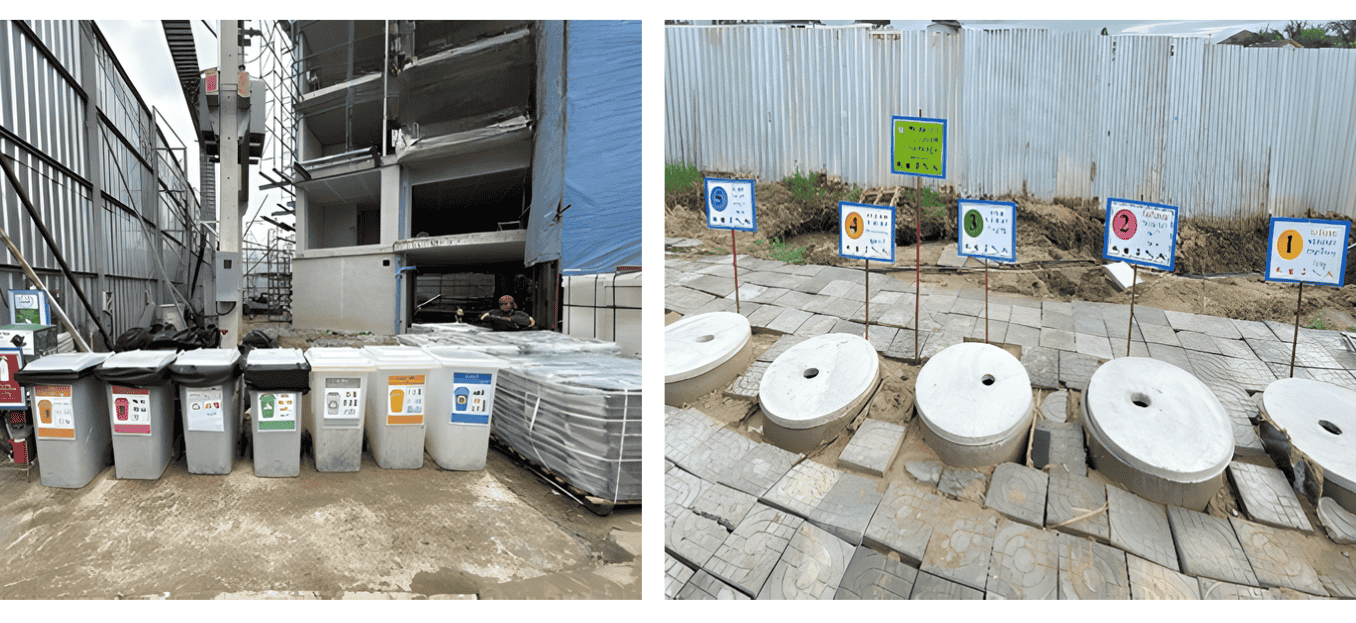
2) Segregation of construction material waste
The Company prioritizes the segregation of construction material waste generated from construction work, aiming to minimize waste sent to landfills. This is achieved through systematic segregation by type, categorizing materials that can be reused, materials that can be recycled (e.g., scrap metal, formwork, PVC pipes, and various packaging), and construction materials that cannot be reprocessed within the project, such as those used to produce alternative fuels, which are then sent to certified buyers or disposal companies for appropriate management.
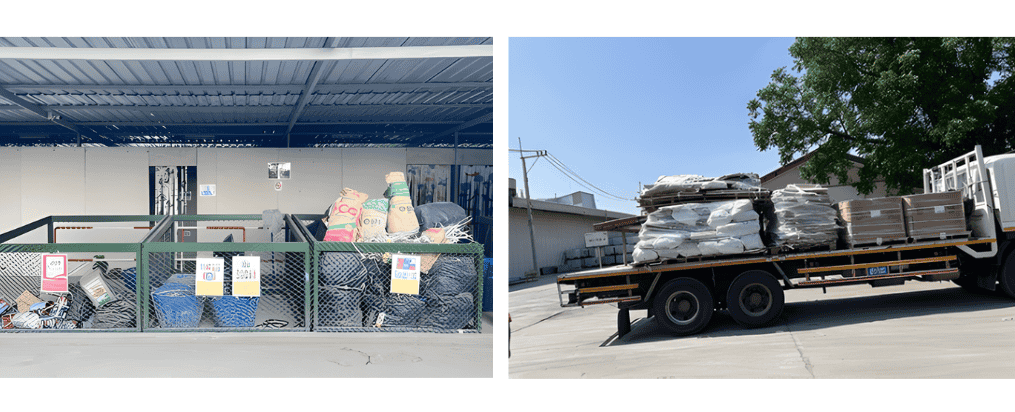
3) Food waste management
The Company encourages employees and construction workers to digest and compost food waste from construction sites and worker camps into fertilizer to reduce the amount of waste that needs to be disposed of outside the project. This is done by adapting used paint buckets from within the project into food waste composting bins. This process yields compost used to nourish and improve soil quality within the project area, which also supports a space for growing vegetables for the workers.
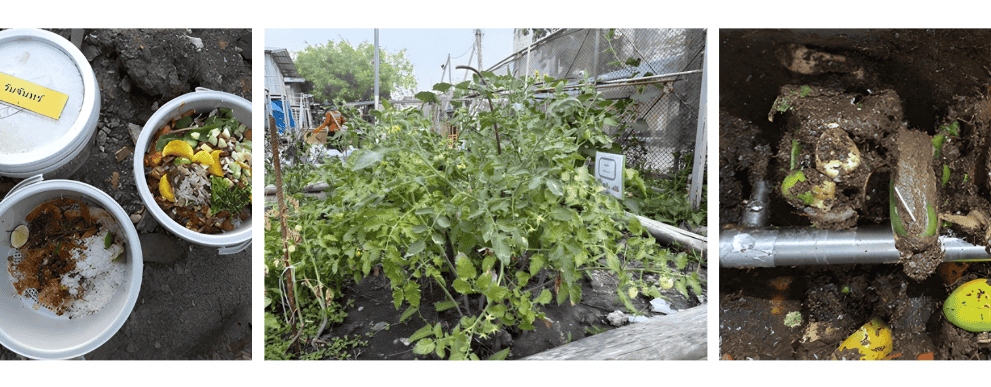
Hazardous waste and debris management
The Company manages hazardous waste with Terms of Reference (TOR) to serve as guidelines for social and environmental contractors throughout the construction supply chain, aiming to reduce risks and negative impacts on environment. There is a proper hazardous waste management plan, including items like thinner cans, silicone tubes, and the use of PVC to replace foam for filling anchorage heads. This reduces the use of foam materials and pollution generated from melting foam with gasoline. Furthermore, these materials can be reused in subsequent work, and this has already been implemented in 3 condominium construction projects.
In 2025, the amount of hazardous waste was 343.50 kilograms.
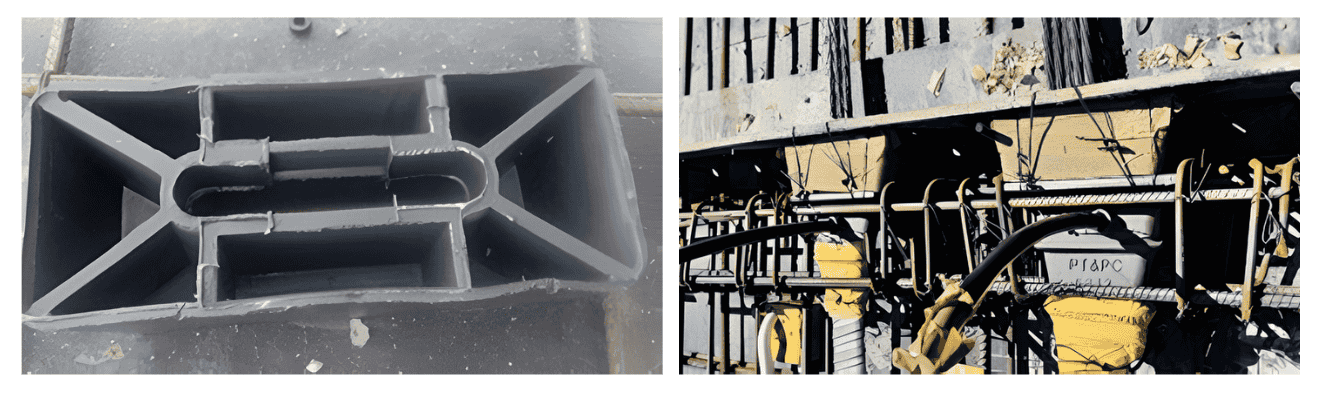
Summary of waste statistics
Waste and garbage volume for 5 projects | Unit | 2023 | 2024 | 2025 |
Amount of non-hazardous waste and garbage from construction work | Ton | N/A | N/A | 144.53 |
Amount of hazardous waste and garbage construction work | Ton | N/A | N/A | 0.34 |
Amount of waste and garbage reused / recycled in the construction process | Ton | N/A | N/A | 139.58 |
Proportion of recycled waste and garbage to total construction area used in the production process | % | N/A | N/A | 30 |
Collaboration with business partners to reduce waste
1) Gypsum board waste management in collaboration with TOA Paint (Thailand) Co., Ltd.
The project manages gypsum board waste through two main strategies in collaboration with its partner, TOA Paint (Thailand) Public Company Limited, 1) Waste Reduction by ordering custom-sized gypsum boards to fit actual usage areas instead of standard sizes, coupled with 2) Recycling by segregating waste materials from the construction site and returning them to the factory to minimize gypsum board waste. This reduces the amount of gypsum board waste, allowing it to be reused. It addresses the problem of gypsum, which is a construction waste with a high volume of up to 3,950 kg, helping to reduce waste materials by 37.5%. It also reduces joints and working time by 20%, enabling the circulation of over 15.14 tons of material. This is considered an environmental impact reduction and an increase in economic efficiency by lowering material and time costs, and fostering social and environmental responsibility collaboration for sustainable, eco-friendly business operations.
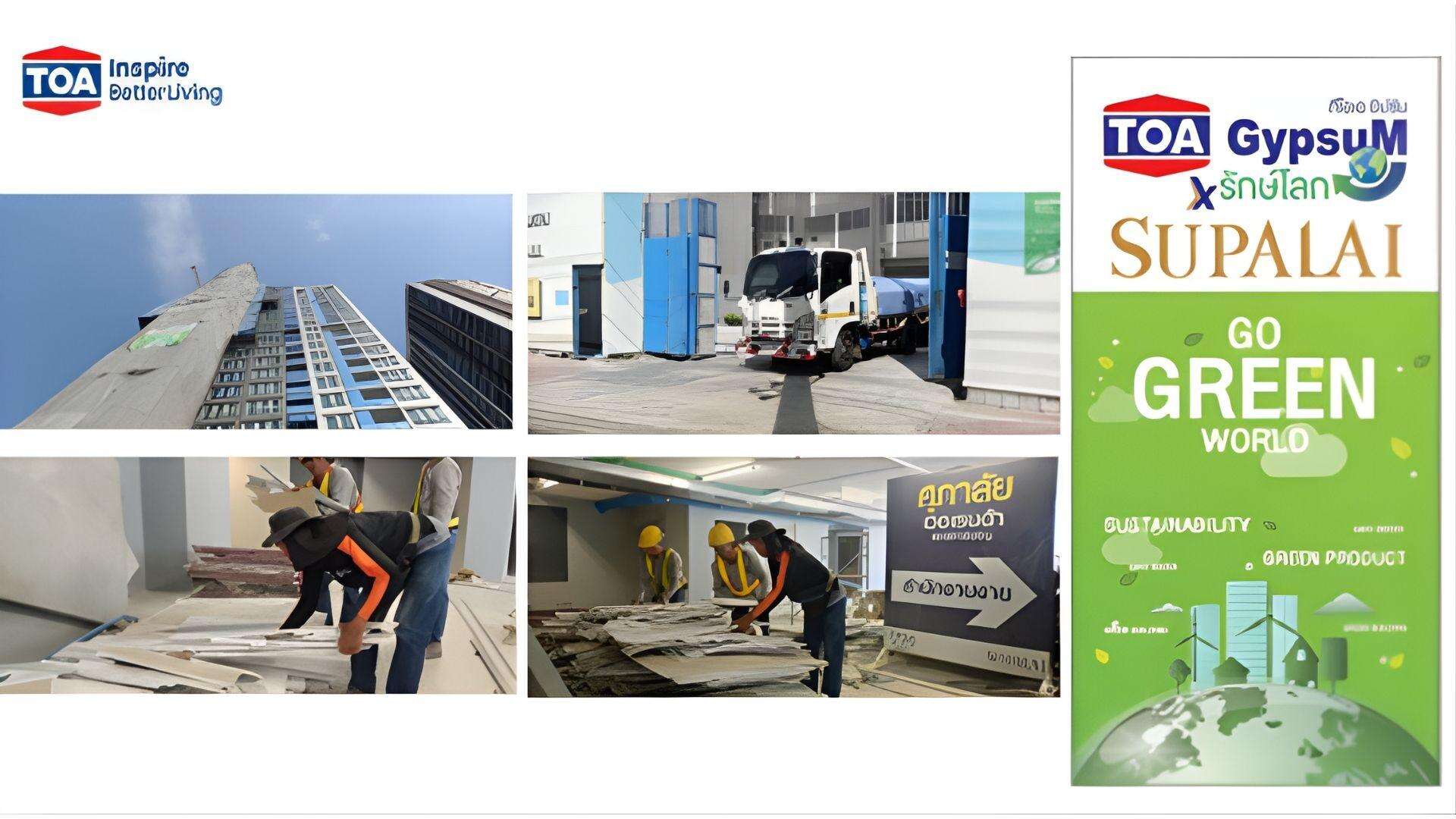
2) Waste Bank Project: Waste management in collaboration with contractors and construction workers
The Company recognized the problem of waste accumulation in construction projects, which not only pollutes the environment but also affects cleanliness, orderliness, and incurs transportation costs. Therefore, the "Waste Bank" project was initiated, focusing on reducing construction material loss and creating a waste management system that can add value to waste materials. A key feature of this project is exchanging waste for food ingredients to incentivize construction workers to voluntarily participate in waste segregation. This includes establishing waste segregation points. clearly defined types, including glass bottles, plastic bottles, cans, and construction waste (e.g., cement bags, lightweight brick scraps, cardboard boxes). Workers who dispose of waste according to the specified types receive a stamp on a loyalty card. Cement sacks are used as standard containers for waste to be exchanged for items based on accumulated points, such as rice, instant noodles, canned fish, cooking oil, etc. This helps reduce living expenses and boosts morale for cooperating workers, and also reduces the cost of hiring trucks to transport waste off-site, as most waste is segregated for recycling or systematically managed.
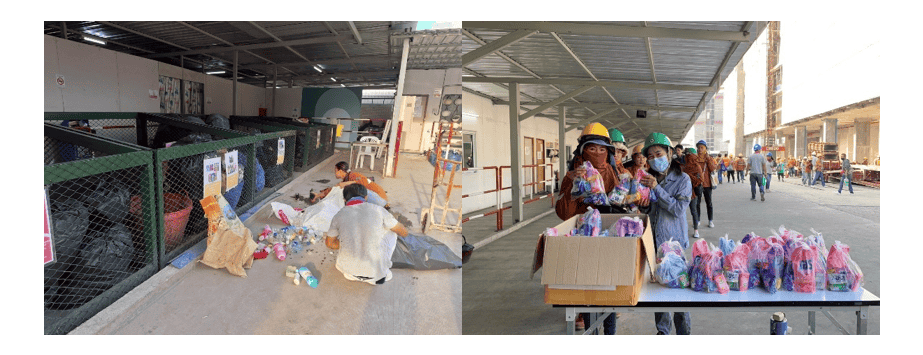
Summary of waste volume by waste type and management
Waste type | Number of projects | Waste volume | Total quantity | Rate of Recycle | ||||
Recycled | Landfill | |||||||
(kg) | (ton) | (kg) | (ton) | (kg) | (ton) | (%) | ||
Construction waste | 5 | 139,581 | 139.58 | 5,001 | 5.00 | 144,582 | 144.58 | 96.54% |
Consumer waste | 5 | 15,068 | 15.07 * | 56 | 0.06 | 15,124 | 15.12 | 99.68% |
Total | 154,649 | 154.65 | 5,057 | 5.06 | 159,706 | 159.70 | 96.83% | |
* Recycled consumer waste includes glass bottles, plastic bottles, and aluminum cans.
2. Waste and garbage management in the office
2.1 Activities “SUPALAI: The More You Segregate, The More You Gain”
Social and environmental responsibility promotion activities: The Company communicates and educates employees and tenants in Supalai Grand Tower to participate in transforming waste into value. This includes establishing Recycling Stations and managing waste collection in collaboration with Recycle Day Thailand, a comprehensive waste management startup focused on changing waste segregation behavior at the source through an application to channel waste into the recycling process, thereby reducing waste sent to landfills.
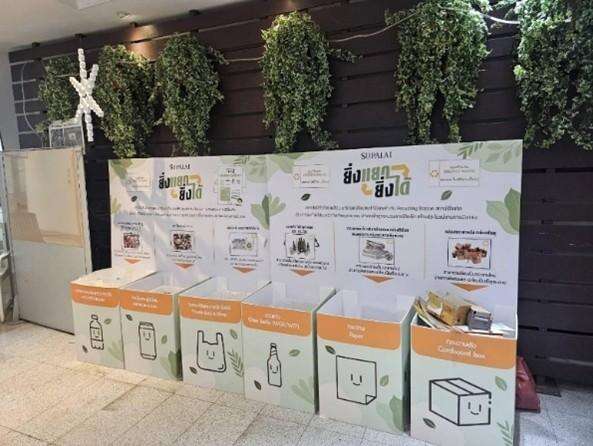
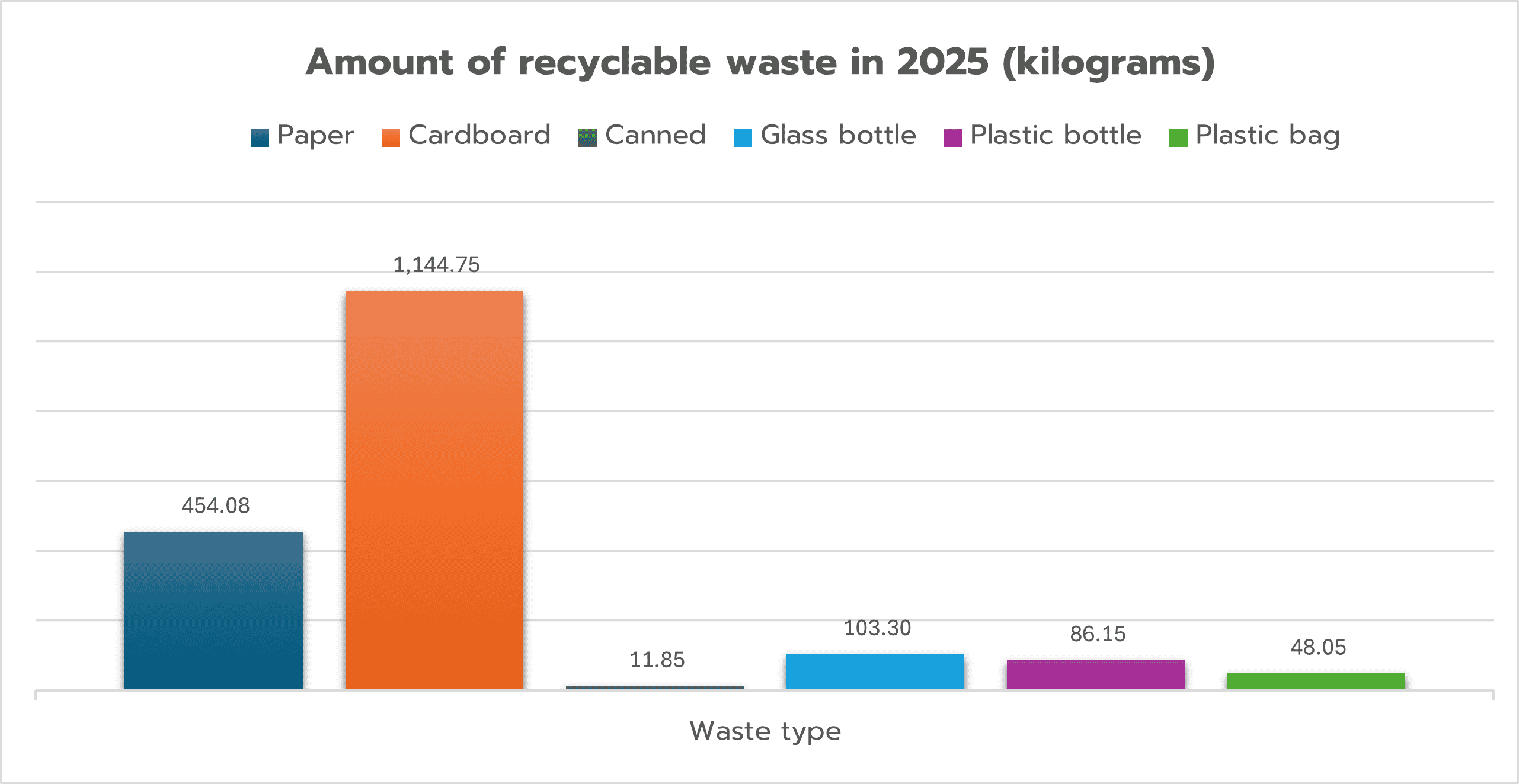
2.2 Collaboration with local authorities in waste management
The Company, in collaboration with Pak Nakhon Sub-district Administrative Organization and Tha Sak Sub-district Administrative Organization (Government Agencies), Mueang District, Nakhon Si Thammarat Province, surveyed and jointly addressed the problem of overflowing waste and foul odors. It supported waste management from the source through key activities, starting with providing space for local authorities to educate residents on waste segregation. Recycling collection points (for paper, plastic, glass) were established, and dedicated wet waste bins were provided for better hygiene. Recyclable waste was transformed into a "Bridge of Merit" by collecting waste from employees and residents and delivering it to the "Waste Bank for Merit" to generate income for purchasing supplies to care for bedridden patients in the community. This collaboration has resulted in the Supalai Ville Nakhon Si Thammarat project and the Supalai project.
Park ville Nakhon Si Thammarat received an award as a model village for waste management, demonstrating its commitment and dedication to sustainable solid waste management within the village.
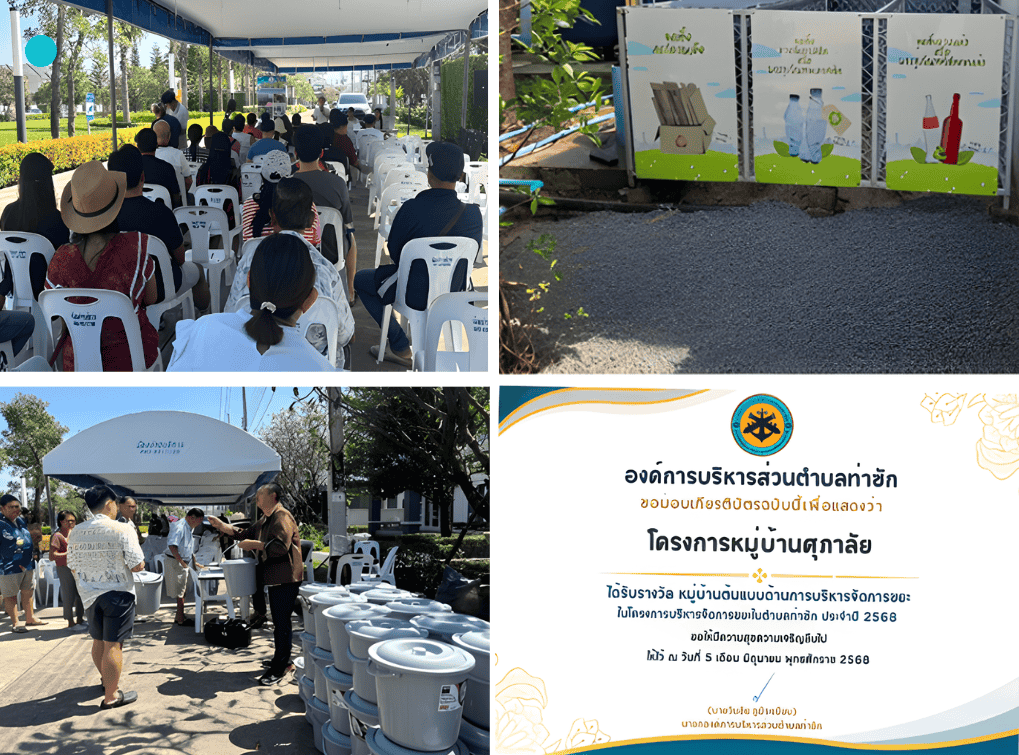
2.3 Waste Segregation Promotion Project Supalai Green Village
The Company prioritizes business development alongside sustainable environmental and social responsibility, implementing the "Supalai Green Village" project to promote waste segregation in the Company's residential communities, including Supalai Palm Springs Rama 2, Supalai Tuscany Rama 2, Supalai Pride Wongwaen Rama 2, and Supalai Park ville Ramkhamhaeng 174. The objective of this project is to encourage residents to recognize the importance of proper waste segregation, reduce the amount of waste impacting the environment, and support the valuable reuse of resources. The Company has established waste segregation points by type and disseminated guidelines for proper waste management to the community to instill sustainable environmentally friendly behaviors.
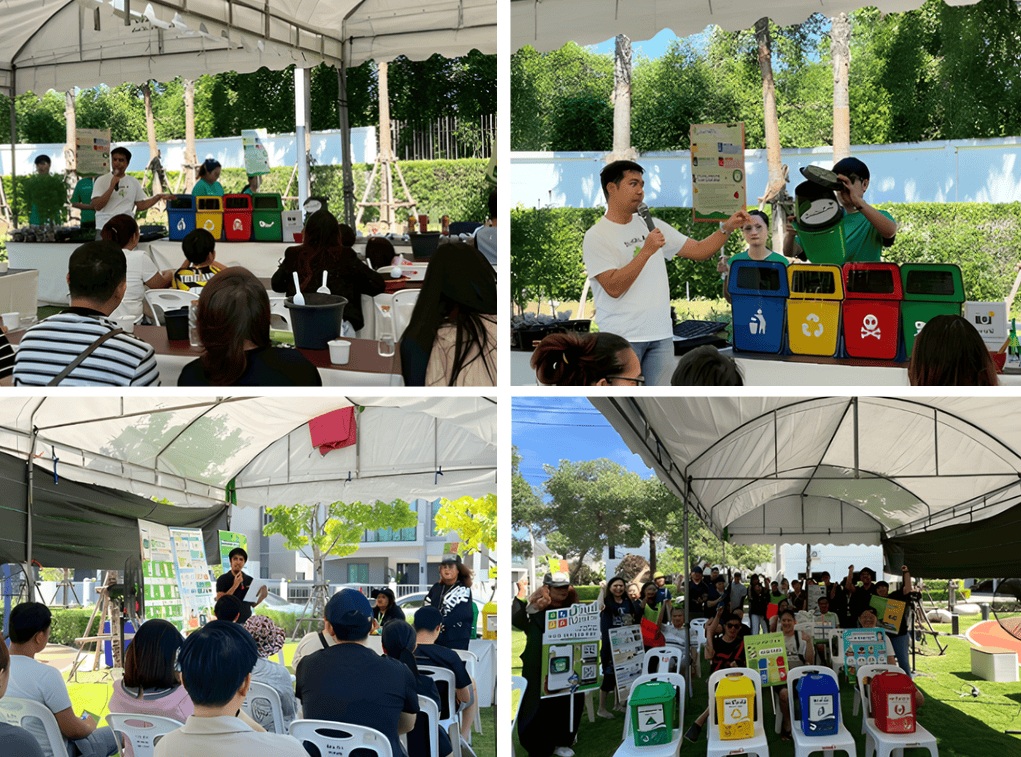
2.4 Promoting waste reduction and efficient resource utilization with employees
Support data usage via E-Documents, shifting from paper-based publicity to online communication platforms like APP SUPALAI SABAI, thereby reducing paper, ink, and printing consumption.
Communicate and publicize to employees within the organization to reduce food waste and snacks from meetings by changing the format of snack arrangements from individually packaged items to "communal snacks" served in reusable containers, thereby reducing plastic waste and single-use packaging.

Encourage employees to participate in proposing and submitting ideas for beneficial uses of construction waste materials to promote an organizational culture of valuable resource utilization, create incentives, and foster sustainable development.
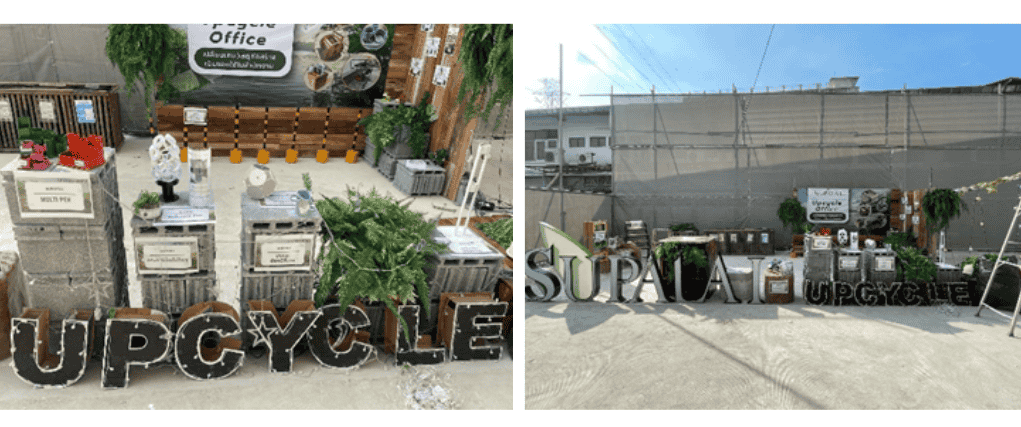
2.5 Collaboration with partners, Project E-Waste in collaboration with AIS
The Company collaborates with digital and telecommunications service providers, namely Advanced Info Service Public Company Limited (AIS), by establishing a Drop-off Point at Supalai Grand Tower. Employees and tenants are invited to bring unused or expired electronic waste, such as phones and charging cables, for segregation of small devices to be properly recycled according to international standards and to extract valuable minerals for reuse. This is combined with the use of blockchain technology via the AIS E-Waste+ application to create transparency in tracking waste status and calculating Carbon Score, thereby concretely changing consumer behavior to participate in reducing greenhouse gas emissions and pollution. In 2025, the project will help reduce electronic waste (E-Waste) by up to 24 kilograms per year. This collaboration represents the creation of a strong network for sustainable joint environmental management.
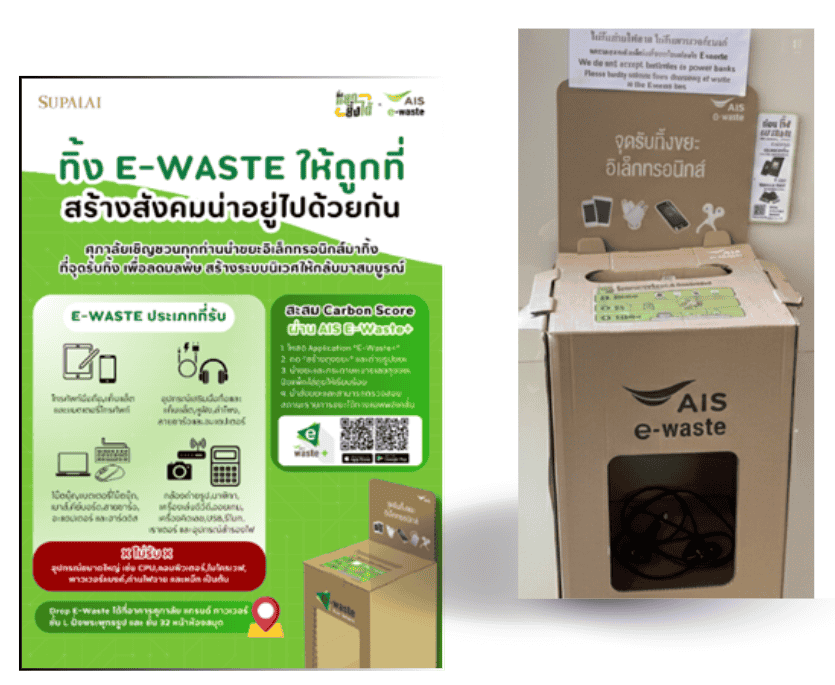
GHG — Plan & Guidelines
Has a GHG Management Plan
Yes
Plan Description
Policy and Commitment
The Company recognizes climate change as a significant strategic risk for the real estate business. Therefore, it is committed to supporting climate change mitigation by establishing a "Climate Change Management Policy" that aligns with international standards and Thai regulations. It also continuously supports operations consistent with national climate policies and directions, aiming to contribute to driving impact reduction and fostering sustainability at the industry and overall economic levels.
Climate Change Management Policy
This policy establishes guidelines for the Company and its personnel to manage climate change and global warming factors arising from operational processes, ensuring compliance with Company regulations and international standards. It focuses on creating transparent and verifiable work processes and fostering understanding among all levels of personnel to sustainably reduce environmental impacts. The sub-policies are divided into two main parts as follows:
1. Energy Management (GRI: 103-1)
The Company focuses on enhancing energy efficiency at every stage of the business value chain, from construction processes and managing company-owned buildings to overseeing energy use in open spaces. Energy consumption data is continuously collected and reported for analysis, leading to strict guidelines for reducing energy use in products and operational processes. Additionally, independent external verifiers are engaged to certify data accuracy in accordance with international standards.
2. Greenhouse Gas Management
To achieve its goal of becoming a low-carbon organization, the Company has implemented a comprehensive greenhouse gas management system, as follows:
Risk Management and Strategy A committee has been established to specifically define strategies and manage sustainability. The risk management department is tasked with analyzing opportunities and impacts from climate change across various timeframes to integrate them into the Company's overall risk management plan.
Data Assessment and Analysis The Company prepares reports on both direct and indirect greenhouse gas emissions (Scope 1, 2, and 3), and calculates the carbon intensity per revenue to monitor operational efficiency.
Target Setting and Innovation Simulating potential future events or scenarios to assess how climate change will impact the business or organization, and setting clear quantitative targets, divided into medium-term targets by 2030 and long-term targets by 2050. Additionally, it promotes research and development of environmentally friendly products and considers using financial instruments such as Internal Carbon Price to incentivize carbon emission reduction.
Information Disclosure and Collaboration The Company focuses on disclosing climate-related financial information in its annual report, following international standards (TCFD). It also fosters collaboration with external organizations and implements the "Supalai Sang Dee" project to enhance its capacity for sustainable adaptation to climate change.
In addition, the Company emphasizes participation in business networks related to sustainable urban development and climate change to support the development of industry standards and public policies concerning Climate Change. The Company is a member of business organizations and professional networks such as the Thai Real Estate Association, the Thai Condominium Association, the Thai Chamber of Commerce and Board of Trade of Thailand, and FIABCI-Thai (International Real Estate Federation).
Such participation promotes the exchange of knowledge in sustainable real estate development and supports the establishment of industry-level standards for energy-efficient building design and greenhouse gas emission reduction.
For more information, please visit: Policy on Climate Change Management
Governance Structure
Board Oversight of Climate Change
The Company aims to enhance ESG transparency by establishing a clear governance structure under the Board of Directors, ensuring accurate, reliable, and internationally compliant data disclosure. The sustainability governance structure is organized into three levels: Board Level, Management Level, and Operational Level.
Board Level
The Board of Directors has approved the charters for the sub-committees involved in Climate Change management, as follows:
Audit Committee Oversee the accuracy, transparency, and reliability of ESG data before disclosure to stakeholders, and ensure internal audits cover ESG issues.
Corporate Governance and Sustainable Development Committee Set direction, strategy, and monitor the organization's ESG operations.
Risk Management Committee Analyze Climate Risk and Nature-related Risks, and oversee risk assessment according to TCFD guidelines.
Management Level
Sustainability Committee appointed by the Managing Director which plays a crucial role in setting strategic direction and overseeing the organization's climate change management in alignment with the vision, policies, and business objectives defined by the Board of Directors. It also implements improvements to work processes based on the recommendations of the Risk Management Committee and the Corporate Governance and Sustainable Development Committee, ensuring consistency with their views. It integrates Climate Change issues into ESG operations, risk management, and organizational decision-making processes, while monitoring, evaluating, and providing recommendations on impact reduction and adaptation to climate risks. continuous climate
Operational Level
Sustainability Working Group Appointed by the Managing Director, playing a crucial role in driving climate change operations. the organization's climate at the operational level. It is responsible for analyzing, planning, and systematically integrating Climate Change issues into the work processes of each department. The working group collects and manages data on greenhouse gas emissions, climate risks and opportunities, and monitors performance in climate change mitigation and adaptation to align with the organization's sustainability policies and goals. Furthermore, it plays a role in continuously reporting progress, risk issues, and policy recommendations to management and the Sustainability Committee, serving as a crucial mechanism to enhance the organization's readiness for climate change and support long-term sustainable growth.
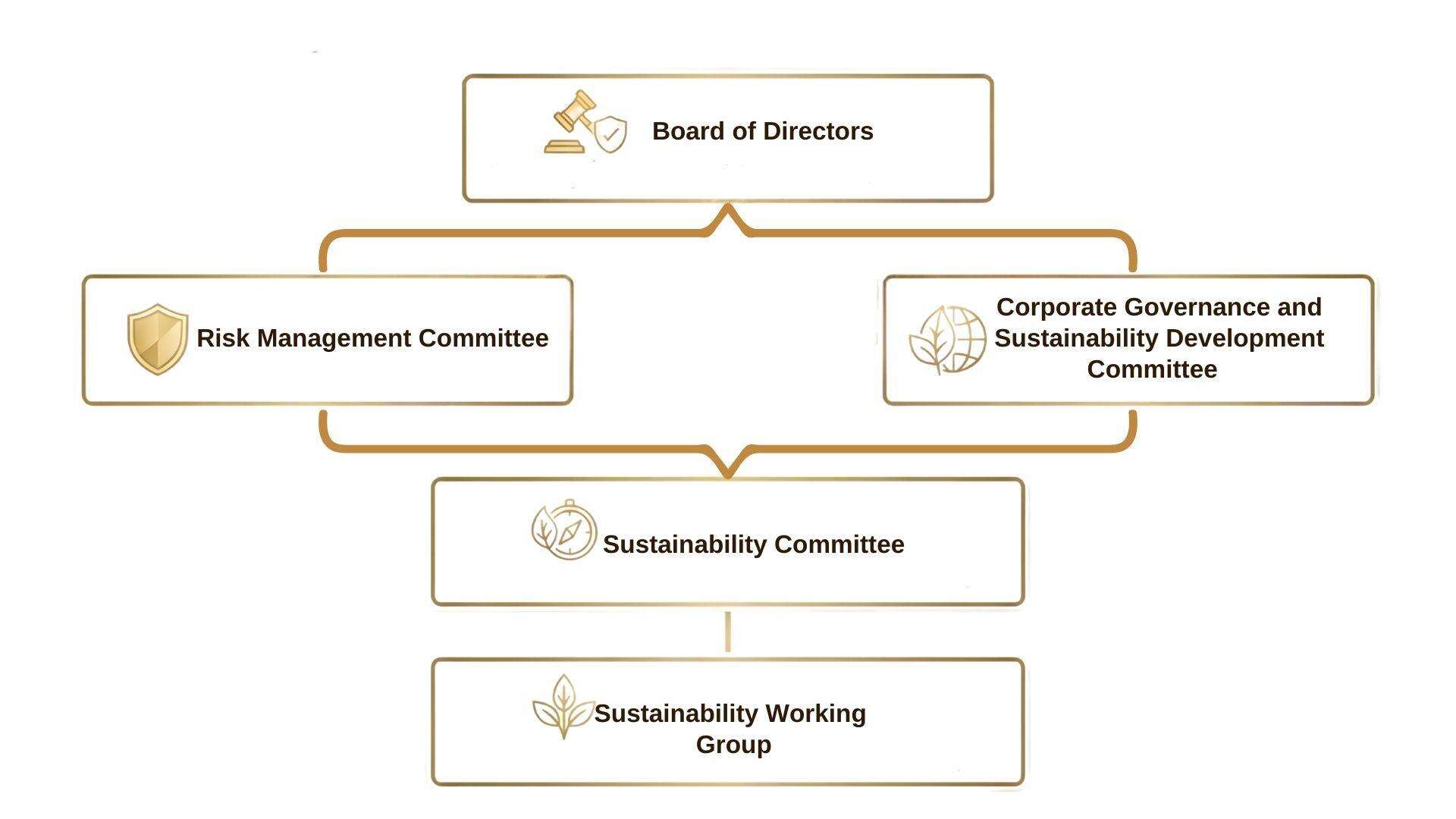
Strategies and Management Approaches (GRI 102-1)
The Company has a systematic climate change governance structure, integrating climate change risk management within the framework of the Task Force on Climate-related Financial Disclosures (TCFD). This covers both Physical Risk and Transition Risk, enabling comprehensive identification, prevention, and response to impacts. Define Risk Appetite to control risk exposure within manageable limits and emphasize proactive prevention. Furthermore, it identifies development opportunities such as designing and constructing with Green & Sustainable Design concepts, utilizing energy-saving technologies, increasing green spaces in projects, and developing products that meet the demands of environmentally conscious consumers. These initiatives will create competitive differentiation and enhance long-term sustainable value.
Risk Assessment and Climate Adaptation & Mitigation
The Company integrates climate risk assessment into its overall organizational risk management process. In 2025, real estate development projects continue to expand nationwide, with projects already developed in over 29 provinces. The Company has assessed severe climate change risks and opportunities, managing them according to the principles of the Task Force on Climate-related Financial Disclosures (TCFD), as follows:
Physical Risk
Risk Factors
Impacts/Opportunities and Risk Management Measures
Acute Risks
Flash Floods
Severe Typhoons
Impact
Flash floods can disrupt operations, or storms may damage construction project areas, directly leading to loss of company revenue, as well as impacting personnel safety and infrastructure.
Opportunities
Development of safety technology and innovations. Alert systems build confidence and attract safety-conscious customers.
Adaptation & Mitigation
Develop emergency response plans for flash floods and severe typhoons, such as evacuating employees and those in high-risk areas to safety.
Shut down electrical systems and potentially hazardous equipment. Contact relevant authorities such as rescue units and hospitals.
Business continuity plan to manage construction disruptions with minimal impact, such as practicing evacuation plans and simulated responses, and purchasing insurance to mitigate natural disaster risks.
Earthquakes
Impact
Structural damage can halt construction work. Buildings and structures may be damaged, incurring high repair costs.
Opportunities
Project development, designing homes and buildings to withstand vibrations, reducing repair costs in crises.
Collaboration with contractors or partners to develop innovative construction materials resistant to vibrations, leading to increased revenue.
Adaptation & Mitigation
Design and construct according to earthquake-resistant standards.
Install early warning systems
Develop emergency plans and conduct evacuation drills in simulated scenarios.
Purchase property insurance to protect asset value.
Chronic Risks
Water Risk (Water Stress / Drought)
Impact
Construction projects require water for various processes such as concrete mixing, cleaning, and dust control. In the event of severe drought and water scarcity, operations will be delayed, and water procurement costs will increase.
Opportunities
Development of innovative water management projects, reducing water consumption and promoting water reuse. Revenue from environmentally conscious customer base.
Adaptation & Mitigation
Design water conservation to reduce usage and loss in the system.
Utilization of treated water
Utilize weather forecasting technology and data analysis for climate change risk assessment.
Rising Sea Levels
Impact
Properties located in coastal or low-lying areas face increased flood risk, which may lead to a decrease in property value and higher insurance costs.
Opportunities
Develop sustainable projects with natural disaster-resistant designs and create green spaces for water retention, meeting the demands of customers seeking new potential locations.
Adaptation & Mitigation
Designing protective infrastructure such as natural buffers, seawalls, and selecting sustainable construction materials, as well as planning project layouts to limit development in high-risk areas.
Employee Health and Occupational Hygiene (Waves Heat)
Impact
Rising average temperatures and accumulated heat pose health risks to outdoor workers, making them susceptible to heat-related illnesses such as heatstroke.
Opportunities
Adoption of robots to replace human labor, reducing labor costs and operational expenses.
Adaptation & Mitigation
Well-ventilated rest areas
Provide clean drinking water stations, at least 2-3 liters per person per day.
Attire and equipment, such as safety helmets with sun-protective brims.
First Aid Training
Transition Risk to a Low-Carbon Economy (GRI 102-1)
The Company has a plan to address Transition Risks associated with the shift to a low-carbon economy, arising from changes in policies, laws e.g., carbon taxes or green building standards enforcement, technology, evolving customer demands e.g., demand for energy-efficient homes or the transition to environmentally friendly construction technologies, and reputation, should the Company fail to adapt promptly to societal trends.
Scenario Analysis
The Company has assessed the potential financial impacts of climate change risks and opportunities through Scenario Analysis, in accordance with TCFD (Task Force on Climate-related Financial Disclosures) standards. This assessment references data from scientific teams who conducted studies using models to forecast impacts with RCP 2.6 and RCP 4.5 (RCP: Representative Concentration Pathways, which are models of future greenhouse gas emissions between 2006 – 2300) to predict impacts in 2050, as follows:
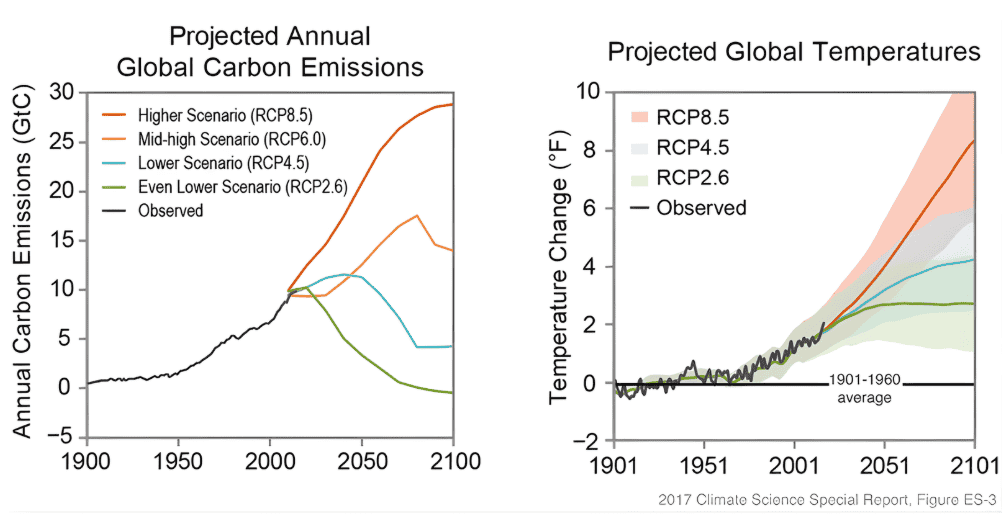
(left) Hypothetical pathways of carbon emissions ("representative concentration pathways," or RCPs) throughout the twenty-first century based on different possible energy policies and economic growth patterns. (right) Projected temperature increase relative to the 1901-1960 average depending on which RCP we eventually follow. Image by Katharine Hayhoe, from the 2017 Climate Science Special Report by the U.S. Global Change Research Program.
1. RCP 2.6 Model (Best-case scenario):
Governments and businesses worldwide collaborate intensively to reduce greenhouse gas emissions, aiming to limit global temperature rise to no more than 1.5-2.0 degrees Celsius.
Impacts on the transition to a low-carbon economy: | Opportunities: |
Physical risks will decrease, but the Company will face transition risks to meet evolving customer demands and stricter government regulations. The Company anticipates increased investment to ensure business sustainability and compliance with more stringent standards, Adaptation & Mitigation as follows:
| The Company has opportunities to gain competitive advantages through
|
2. RCP 4.5 Model (Moderate scenario):
Under the RCP 4.5 scenario, which represents moderate greenhouse gas reduction policies, the global average temperature is projected to increase by approximately 2.0 to 3.0 degrees Celsius by 2100 (B.E. 2643). This level exceeds the Paris Agreement's goal of limiting temperature rise to no more than 2 degrees Celsius. This scenario will lead to more severe and frequent weather variability, as well as an anticipated average sea level rise of approximately 0.35 to 0.70 meters, directly impacting ecosystems and the adaptive capacity of living organisms.
The Company has adopted Scenario Analysis, following the RCP 4.5 approaches, to assess Physical Risks in each geographical area. This assessment references data from Thailand's climate change projections, as outlined in the National Adaptation Plan (NAP) dated April 2024, with key details as follows:
Settlement and Human Security Risks: The Company focuses on assessing areas highly vulnerable to heat, floods, and droughts by analyzing data from Thailand's risk map for the period 2016 - 2035 (B.E. 2559 - 2578). This information is integrated into project site selection, climate-resilient architectural design, and engineering system planning to enhance the long-term resilience of residential projects.
Historically, human settlements have been determined by geographical advantages and favorable climates. However, current global warming is transforming these factors into new, more complex, and severe challenges. Climate change risk is therefore not merely an environmental issue but a critical variable for the stability of settlements and the long-term value of real estate.
The Company recognizes the urgent need to elevate decision-making criteria from traditional residential development planning to Climate-Informed Development Planning. This aims to ensure the safety and well-being of residents, based on national climate model analysis under the RCP 4.5 scenario by the Office of Natural Resources and Environmental Policy and Planning (ONEP), which identifies strategic areas vulnerable to heat stress, drought, and floods, particularly in the 10 provinces with the highest risk index, as detailed in the accompanying risk map.
Table showing provinces with high climate change risk Top 10
Human Settlement and Security Sector, during 2016 - 2035 (B.E. 2559 - 2578)
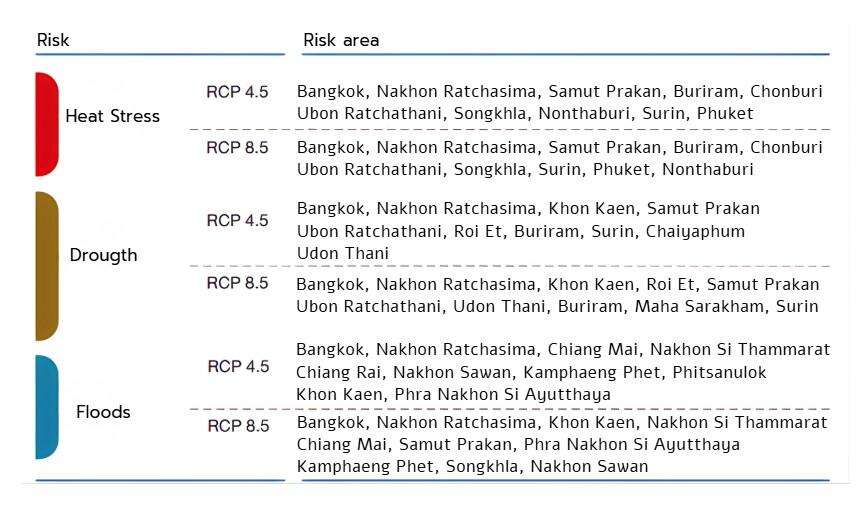
Image showing the risk map for human settlement and security sector
Under the scenario RCP 4.5, focusing on areas at risk from heat, floods, and droughts.
shown on the map for the period B.E. 2016 – 2035, with darker shades indicating areas expected to be highly impacted.
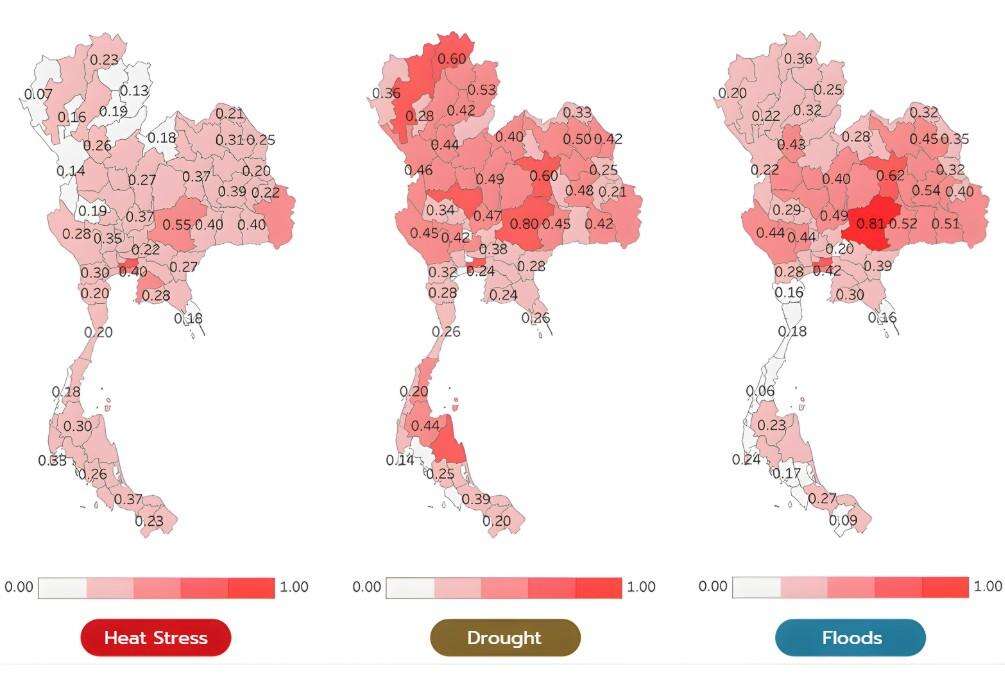
Source: Office of Natural Resources and Environmental Policy and Planning (2021)
Table showing project development risk areas due to climate change
Supalai Public Company Limited
Region | Physical Risk | Transition Risk | ||||||||||
Floods | Severe Storms | Land | Waves | PM 2.5 Dust | Shortage | Rising sea levels / Saltwater intrusion | Policy | Technology | Market | Reputation | ||
BKK/Perimeter | VH | M | M | M | H | M | H | H | L | H | M | |
Medium | VH | M | L | M | L | L | H | |||||
Strategies to reduce emissions and enhance greenhouse gas absorption
Climate-related risk management procedures:
Strategy | Scope | Operational Guidelines | ||
1 | 2 | 3 | ||
Increase the proportion of renewable energy use. | Increase the installation of solar energy systems, such as Solar Rooftop / Solar Carport, to generate electricity for self-consumption within buildings or sales office projects. | |||
Increase electrical energy efficiency in project design and development processes. | Design energy-efficient buildings, reduce energy loss, inspect and improve systems to enhance electrical energy efficiency. | |||
Efficient resource and waste management | Efficient resource utilization, waste reduction at the source, promotion of recycling and resource circulation, and effective waste management, reducing landfill disposal. | |||
Promote supply chain collaboration | Participate as a member and support partners in reducing greenhouse gas emissions throughout the supply chain, from upstream to downstream activities. | |||
Restore and conserve natural resources | Restore forest integrity by supporting tree planting in areas to serve as carbon sinks. | |||
GHG — Emissions
GHG Emissions
| Metric | Current Year | Previous Year | Two Years Ago |
|---|---|---|---|
| Total GHG emissions (Metric tonnes of carbon dioxide equivalent) | 69,751 | 95,889 | 143,980 |
| Total greenhouse gas emissions 1 (Metric tonnes of carbon dioxide equivalent) | 1,452 | 1,167 | 1,145 |
| Total greenhouse gas emissions 2 (Metric tonnes of carbon dioxide equivalent) | 10,122 | 10,925 | 9,085 |
| Total greenhouse gas emissions 3 (Metric tonnes of carbon dioxide equivalent) | 58,177 | 83,797 | 133,750 |
GHG — Emissions Verification
Emissions Verified by a Third Party
Yes
Verifying Body
2656
Verifying Body — Please Specify
Bureau Veritas Certification (Thailand) Limited
Verification Document Link
https://eonemedia.setlink.set.or.th/report/0371/2025/1774062449061.pdf
GHG — Principles & Standards
Principles & Standards Applied
| Standard |
|---|
| 2671 |
| 2672 |
| 2677 |
GHG — Targets
Has Set GHG Targets
Yes
GHG Targets — Carbon Neutrality
Carbon Neutrality Targets
| Emission Scope | Carbon Neutrality Certified | Certifying Body | Base Year | Target Year | Unit | Per Unit (Intensity) | Per Unit — Please Specify |
|---|---|---|---|---|---|---|---|
| 2715 | Y | Thailand Greenhouse Gas Management Organization | 2,024 | 2,050 | Metric tonnes of carbon dioxide equivalent | Baht | Baht |
GHG Targets — Other Targets
Other GHG Targets
| Emission Scope | Base Year | Base Year Emissions | Near-term Target Year | Near-term Target Change (%) | Target Year | Target Change (%) | Unit | Per Unit (Intensity) | Per Unit — Please Specify |
|---|---|---|---|---|---|---|---|---|---|
| 2715 | 2,024 | 11,574 | 2,030 | 40 | 2,030 | 40 | Metric tonnes of carbon dioxide equivalent | Baht | Baht |
GHG — Performance & Outcomes
Has Performance Results
Yes
Performance Description
1. House Design and Building Standards for Energy Efficiency and Carbon Reduction
The company has applied climate change-related risks and opportunities in its business operations.
and emphasizes addressing climate change by adopting energy-efficient and environmentally friendly home and building design concepts from the planning and development stages. Homes and condominiums are designed to be consistent with and adaptable to climate change, reducing long-term energy consumption and greenhouse gas emissions throughout the product lifecycle. The design approaches focuses on sustainable energy efficiency.
1.1 House Design and Project Layout
Design layout and wind direction to receive appropriate natural light and ventilation.
Design main living areas such as bedrooms, reception rooms, and living rooms to receive sufficient natural light, with a glass area to room area ratio of not less than 15%, which helps reduce electricity consumption for lighting during the day.
Design by specifying and selecting products that reduce greenhouse gas emissions, such as lightweight brick materials and house wall paints that help reduce heat accumulation, making homes cooler and reducing electricity consumption.
Design incorporating innovation for energy saving, such as Motion Sensors or smart control systems, capable of setting on/off times to reduce electricity consumption.
Design and install Solar Roof using renewable energy to manage energy in sales offices, construction offices, show homes, ready-to-sell homes, and temporary customer parking.
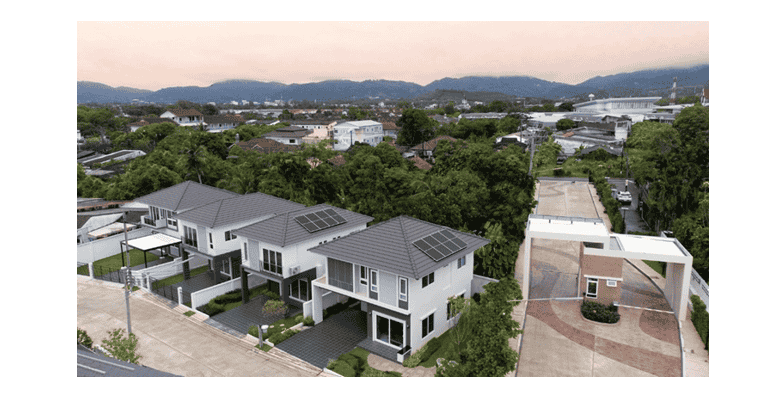
1.2 Building Design and Selection of Energy-Saving Materials for High-Rise Projects
Project design by orienting buildings north-south, considering wind direction, and designing balconies to shade the building from direct sunlight, resulting in cooler buildings and reduced energy consumption.
Layout of buildings to avoid the west direction and design of opening sizes (Window-to-Wall Ratio) to be consistent with actual use, to receive natural light and ventilation.
Design by selecting energy-saving technologies and equipment.
Selection of low-carbon materials: choosing construction materials with environmentally friendly production processes to reduce embodied carbon in the construction process, such as using fiberglass insulation, which is Green Label certified, meaning its raw materials and production process have minimal environmental impact and are safe. Installed above the second-floor ceiling, it reduces heat from the attic area, addressing rising climate change.
Selection of building paints with heat and light reflective properties to reduce heat absorption in walls, combined with the use of high thermal insulation materials such as lightweight bricks and fiberglass insulation (Green Label) installed above the ceiling, along with vinyl soffit with heat vents, to reduce heat accumulation under the roof.
Environmentally friendly materials such as Inverter air conditioners, energy-saving label No. 5.
Utilizing innovative hydro-powered faucets that generate electricity from water pressure to reduce reliance on grid electricity.
Solar cell post-top lights use 100% solar energy, reducing electricity consumption. As they are outdoor post-top lights, they must use UV-resistant and weather-resistant materials with a long lifespan, which helps reduce the frequency of material replacement and long-term waste.
Energy-saving glass No. 5, where the gap between the glass acts as a highly efficient insulator, reducing heat transfer from outside to inside, helping to reduce electricity consumption.
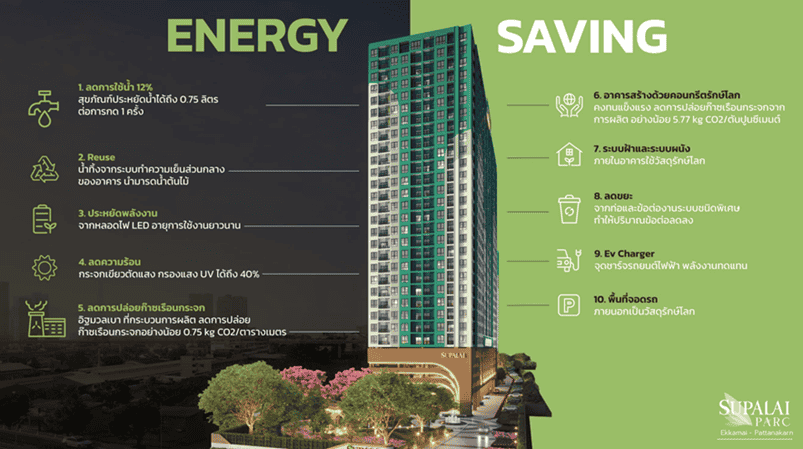
1.3 House and Building Design to Cope with Climate Change
The company develops house and building designs to cope with climate change, enabling structures to withstand and function continuously under severe and erratic climate change impacts such as rising heatwaves, floods, severe storms, droughts, and helping to reduce building greenhouse gas emissions.
Structural design to reduce the risk of damage to buildings from natural disasters, such as designing structures to withstand earthquake forces in high-risk areas and designing to accommodate ground subsidence.
Designing long eaves to provide sun or rain protection helps the building adapt well to heatwaves, reducing residents' reliance on excessive electricity. It also serves as a design to cope with erratic rainfall, protecting walls, window frames, and balconies from heavy and severe rain.
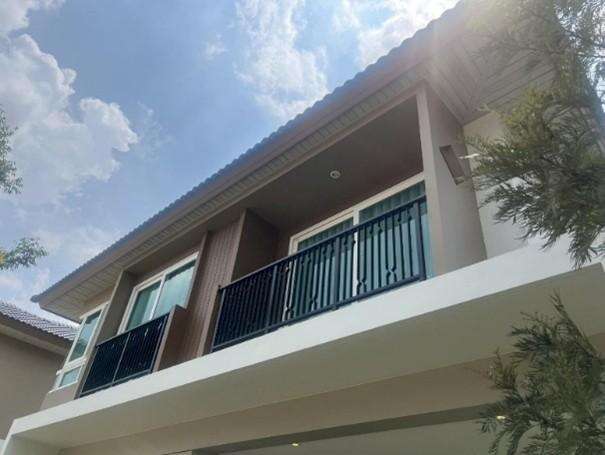
2. Activities for Efficient Greenhouse Gas Reduction (GRI 102-9)
The company recognizes that the real estate business plays a crucial role in contributing to the reduction of global greenhouse gas emissions. Therefore, it has established operational guidelines to address climate change, elevating climate change management as one of the core pillars of its sustainable business strategy. The adaptation processes to climate change are as follows:
2.1 Reduction of direct and indirect greenhouse gas emissions from energy consumption
1) Transition to clean energy vehicles
The company has a policy to procure 100% Battery Electric Vehicles (BEV), which have zero tailpipe emissions during operation, and Hybrid Electric Vehicles (HEV), which significantly improve fuel efficiency and reduce carbon dioxide emissions compared to conventional fuel vehicles. This transition to clean energy vehicles reflects efficient resource management in line with Environmental, Social, and Governance (ESG) frameworks, aiming to reduce the organization's carbon footprint across the entire operational chain, from central operations to project level. In 2025, the company allocated a total of 15 alternative energy vehicles into its operational system, divided into: 4 electric vehicles and 4 hybrid vehicles for head office, and 3 electric vehicles and 4 hybrid vehicles for project operations. This resulted in a reduction of 91.33 tCO2eq greenhouse gases and a reduction in fuel energy costs of 49,000 baht.
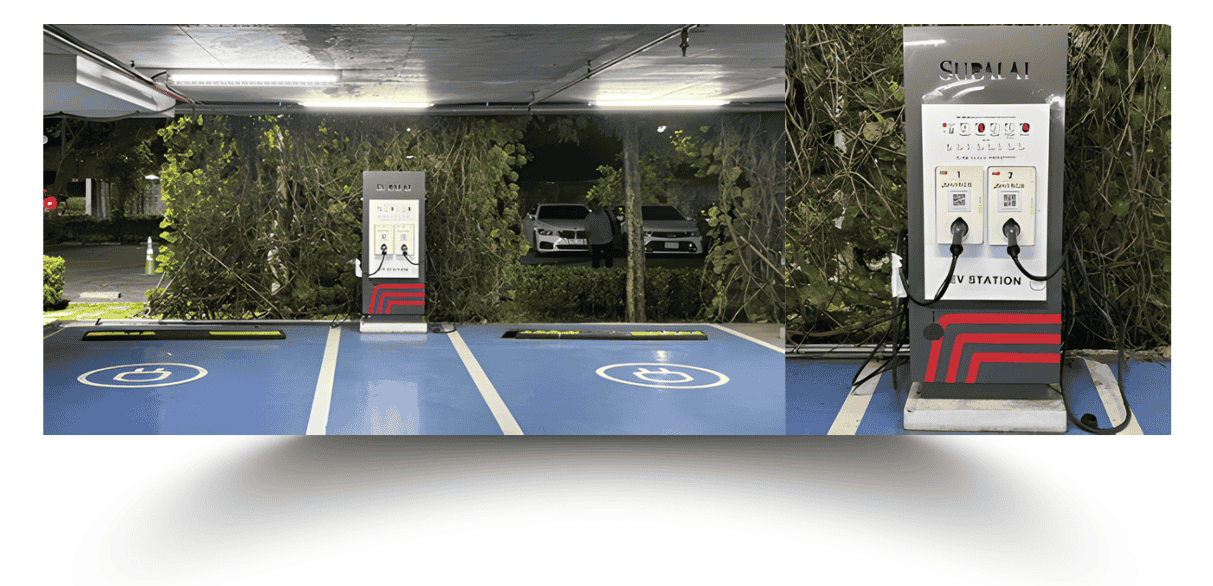
2) Energy Management of Supalai Grand Tower Building to reduce greenhouse gas emissions. In 2025, electricity consumption was reduced by 873,000 kWh/sq.m. and percent reduction in greenhouse gas emissions 436.5 tCO2eq from the following operations:
Install Lift Regenerative Drive System, an energy-saving technology that converts kinetic energy from elevator movement during braking e.g., descending with a heavy load or ascending with a light load into electrical energy, which is then fed back into the building's power supply system instead of being dissipated as heat, saving approximately 20-75% of energy. When the elevator moves down with a heavy load or up with a light load (light car weight than counterweights) the motor acts as a generator The inverter or Regenerative Drive unit receives the generated alternating current, converts it to direct current (DC), and then converts it back to stable alternating current to feed back into the building's electrical system.
Improve the Chiller system by installing Chiller Plant System Management (CPMS) equipment, which is a system used to control and manage the cooling system to monitor the real-time status of various equipment such as temperature, pumps, cooling towers, and Chiller operation, controlling the on-off of equipment to suit the usage load for analysis and improvement of operation to minimize energy consumption, which can help reduce energy costs.
Replace LED lights in common corridors and adjust the lighting system to operate from 10:00 PM to 6:00 AM to help reduce electricity consumption by 1,191,035 units.
Year | Electricity consumption (kWh) | Electricity consumption (MWh) |
2023 | 6,403,000 | 6,403 |
2024 | 5,706,000 | 5,706 |
2025 | 4,869,000 | 4,869 |
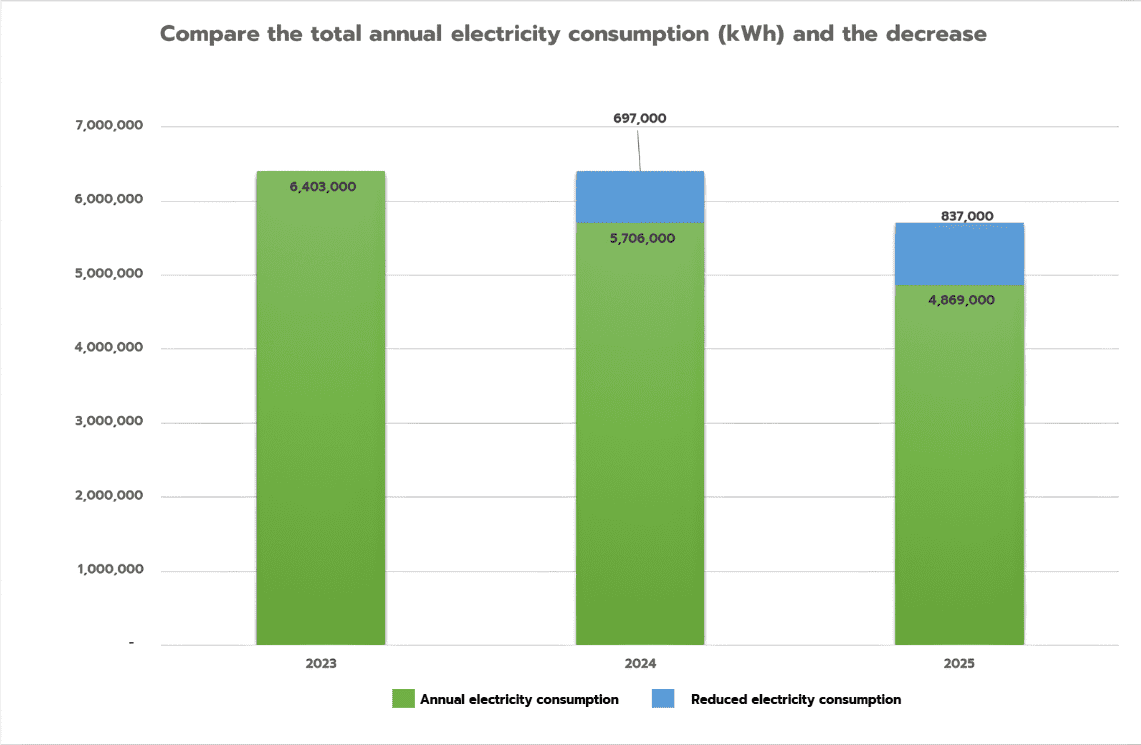
3) Convert gardening equipment and tools to those using alternative and renewable energy. By using solar energy through the Solar Cell system installed in the project, reducing reliance on fossil fuels from traditional energy sources, reducing pollution, and long-term environmental impact.
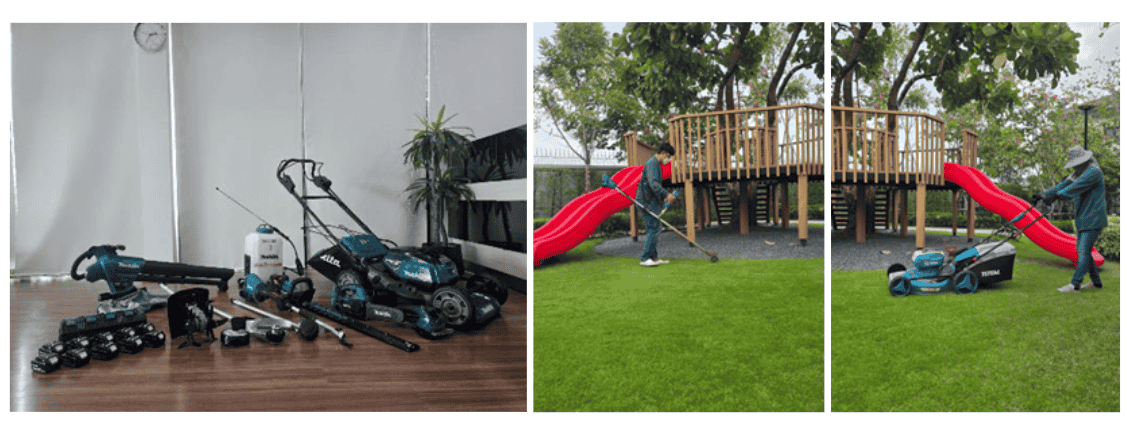
Year | Fuel consumption for gardening tools (liters) |
2024 | 16,117.208 |
2025 | 14,054.61 |
4) Campaign activities and cooperation with employees to save electricity in the office.
Campaign to turn off lights and electrical appliances when not in use: encourage employees to turn off lights, computers, photocopiers, and office equipment every time after use or before leaving meeting rooms.
Adjust air conditioner temperature appropriately: set office air conditioner temperature to an appropriate level, such as 25–26 degrees Celsius, and communicate to employees the impact on energy reduction.
Maximize natural light by encouraging opening curtains or arranging workspaces to receive natural light during the day, to reduce electricity consumption for lighting.
Communicate and post energy-saving warning signs, stickers, or campaign posters near light switches, elevators, and electrical appliances to encourage daily employee participation.
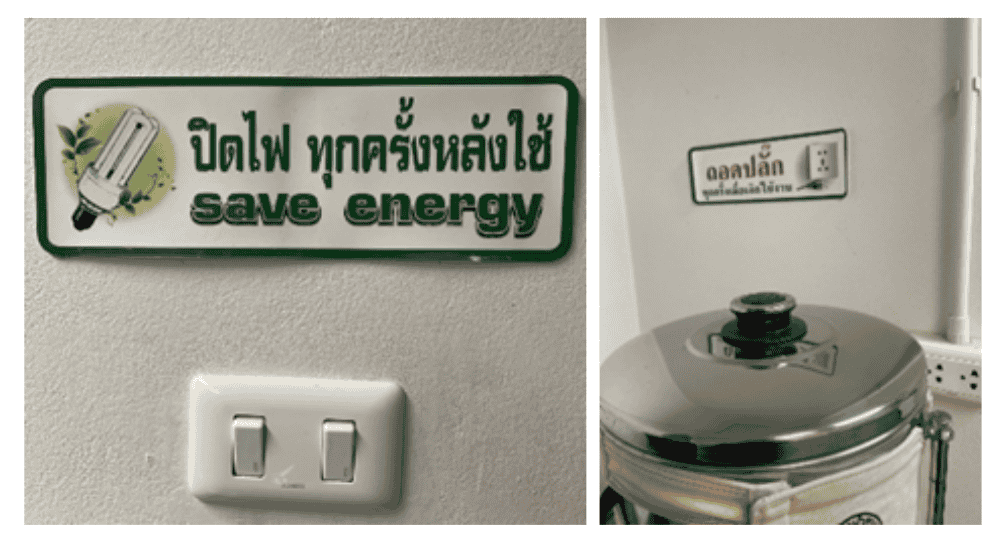
5) Internal carbon offset activities
Reduce greenhouse gases, support waste separation, and produce 97,400 employee uniforms from recycled plastic, reducing carbon by 9.74 tCO2eq and reduce energy from ironing/year, which helps reduce carbon by 25,273 kilograms carbon dioxide equivalent Total carbon reduced 35,013 kilograms carbon dioxide equivalent which is equivalent to planting 3,640 trees.
Transforming leftover lightweight brick scraps into "fragrant stones" generates supplementary income for local communities (Amphan Community Enterprise, Mae Sot District, Tak Province) and reduces carbon dioxide emissions equivalent to 0.002 kgCO2eq /piece
Forest planting and ecosystem restoration project: "Forest for Happiness" activity for the 3rd consecutive year, where Supalai employees jointly planted 6,650 trees on company land, totaling 55 rai (approximately 8.8 hectares). This is expected to reduce greenhouse gas emissions by 665 tCO2eq within 10 years. This year's project focuses on planting Thai economic tree species that provide shade and long-term benefits, including Yang Na, Payung, Phayom, and Mahogany, all of which are fast-growing trees with efficient carbon dioxide absorption potential.
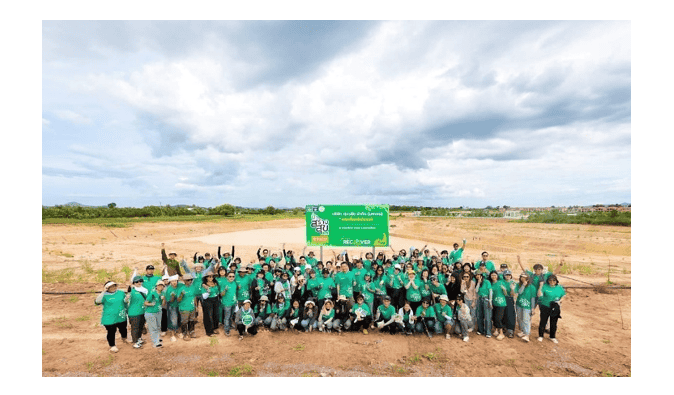
6) The company is a member in the Thailand Carbon Neutral Network (TCNN) Under the operation of the Thailand Greenhouse Gas Management Organization (Public Organization), as 1 of 854 pioneering organizations in greenhouse gas management, to demonstrate its intention and commitment to managing and reducing greenhouse gas emissions. Participation in this network promotes the exchange of knowledge, best practices, and carbon-neutral operational guidelines with public and private sector agencies, as well as supporting the organization in developing effective approaches to reduce and offset greenhouse gas emissions, in line with climate change mitigation goals and sustainable development. The company has joined the Thailand Carbon Neutral Network of the Thailand Greenhouse Gas Management Organization (Public Organization) or TGO.
3. Building Awareness and Engagement within the Organization
The company focuses on building awareness and engagement among employees at all levels in climate change management and greenhouse gas reduction. Therefore, it organizes various internal and external activities and projects to enhance the necessary knowledge and skills for operations to respond to climate change risks, as follows:
3.1 Fostering a culture of energy saving and climate change awareness among employees.
Encourage employees to use company pool cars to reduce carbon and costs, promoting fuel energy saving, and requiring all hybrid pool cars to use E20 fuel to help reduce carbon dioxide emissions and the organization's operational carbon footprint.
Promoting environmental knowledge by publicizing and recommending online training courses to employees.
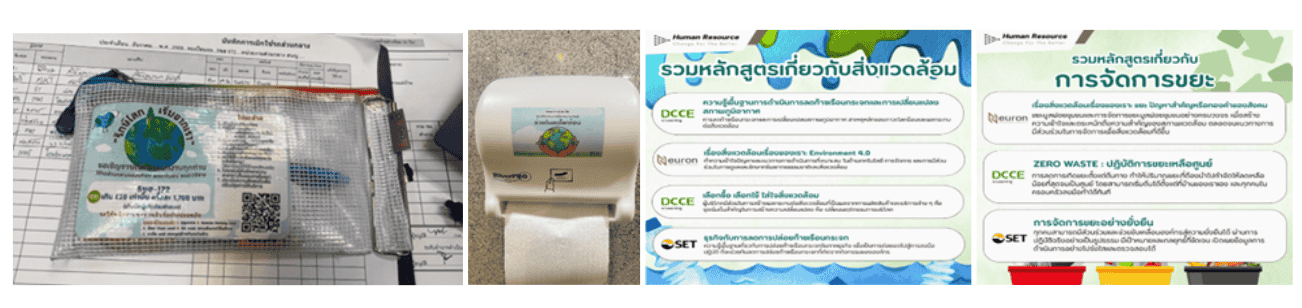
Employee participation in activities to promote climate change mitigation.
Encourage employees to separate waste for the "More Separation, More Gain" project in collaboration with Recycle Day in 2025, reducing greenhouse gases by 11.82 tCO2eq , equivalent to planting 1,228 large trees.
E-Waste project with AIS: total waste of 20 kilograms, equivalent to a carbon footprint reduction of 0.123 tCO2eq, which is equivalent to planting 14 trees.
Implement waste separation systems in the office, especially for waste from design and documentation, to be recycled according to circular economy principles.
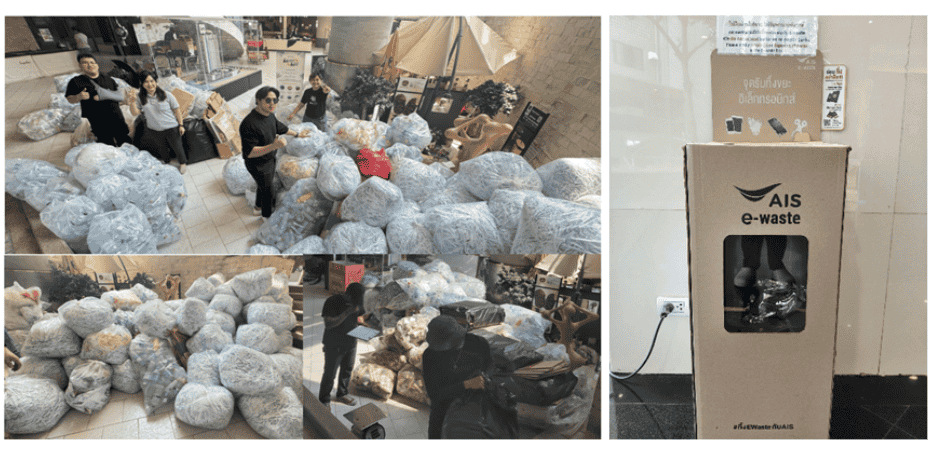
4. Supply Chain Engagement on Climate Change
4.1 Organize ESG Focus Group forums with business partners and allies annually for the 7th consecutive year. with discussions on climate change impacts and environmentally friendly procurement guidelines.
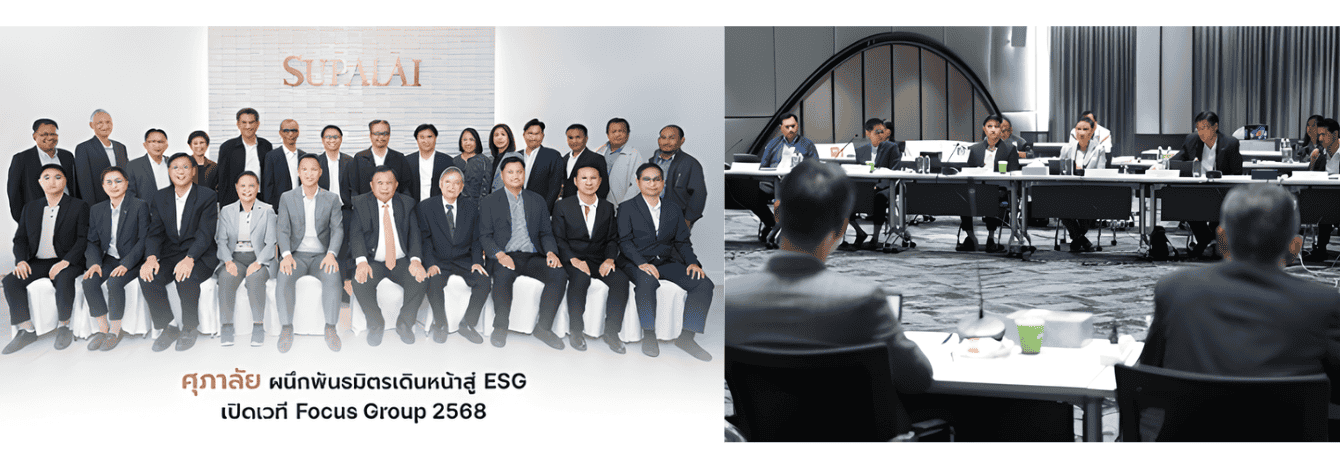
4.2 Organize training on the topic of " The CFO & CFP Advantage: Leveraging Carbon Footprint for Competitive Edge and Sustainable Growth” Support partners in registering for CFO (Carbon Footprint of Organization) and CFP (Carbon Footprint of Products), which will lead to the establishment of effective management guidelines for reducing greenhouse gas emissions at factory, industry, and global levels, and enhance partners' potential and capabilities to jointly build a sustainable supply chain management in line with the organization's sustainable development goals, while considering social and environmental responsibilities. with participating partners. Quantity 105 Supplier
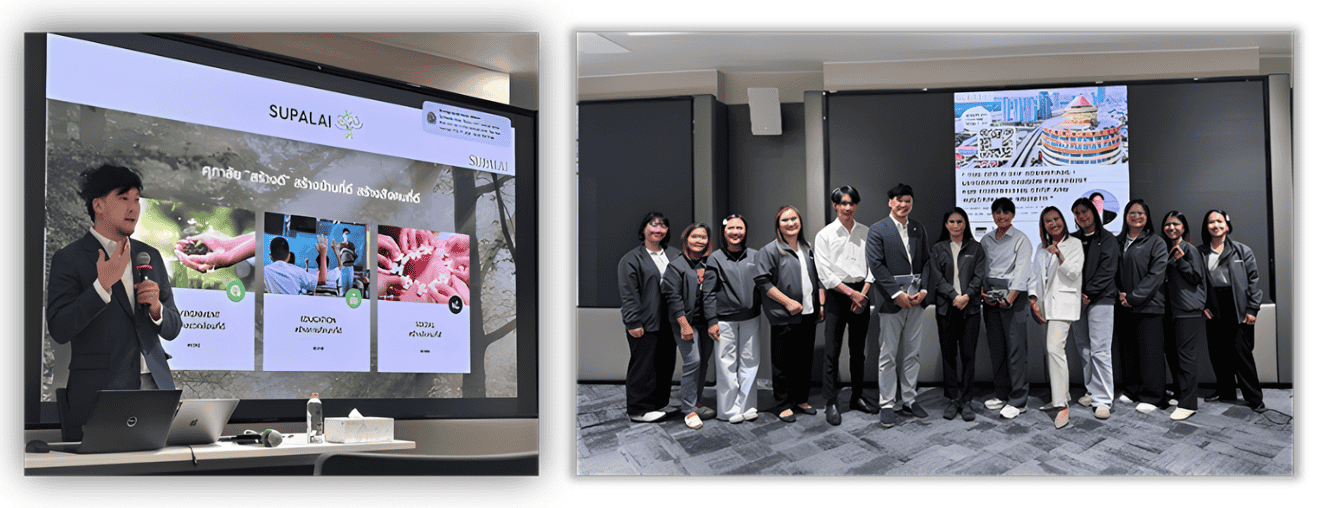
4.3 Collaborate with CPAC business partners in the cement business, Siam Cement Group or SCG Initiating innovation in residential project development, focusing on mutual knowledge and experience exchange to study and present high-quality, environmentally friendly products that can be practically applied in the construction industry. This includes using CPAC High Strength Concrete for the construction of 18 Supalai condominium projects, which reduces climate impact by reducing greenhouse gas emissions by 8,035.32 tCO2eq, or the equivalent of planting 845,812 trees.
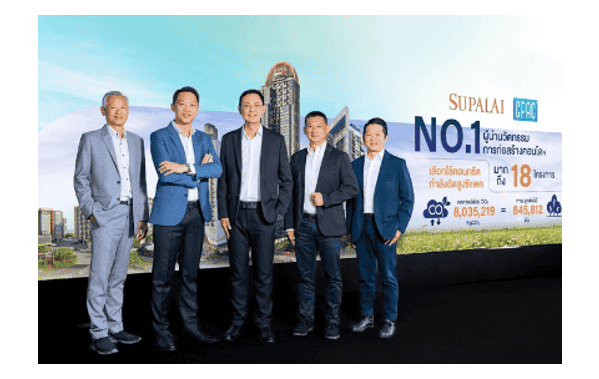
5. Organizational Greenhouse Gas Emission Data (GRI 2-5, GRI 102-4, 102-5, 102-6, 102-7,102-8,102-9)
The company prepares its organizational carbon footprint (Carbon Footprint for Organization: CFO) data once a year, referencing the calculation methodology based on the guidelines for organizational carbon footprint assessment by the Thailand Greenhouse Gas Management Organization (Public Organization), with the reporting scope covering only Supalai Public Company Limited, specifically Supalai Grand Tower, Low- rise, High-rise areas, totaling 233 projects.
In 2025, the company's organizational carbon footprint was registered, with data from January 1 to December 31, 2025. Thailand Greenhouse Gas Management Organization (Public Organization)
The company has prepared its organizational greenhouse gas emission and removal report for the period January 1 to December 31, 2025, certified according to international standard ISO 14064-1-2018, verified. Data by Company Bureau Veritas (Thailand) Ltd. which is a registered verifier.
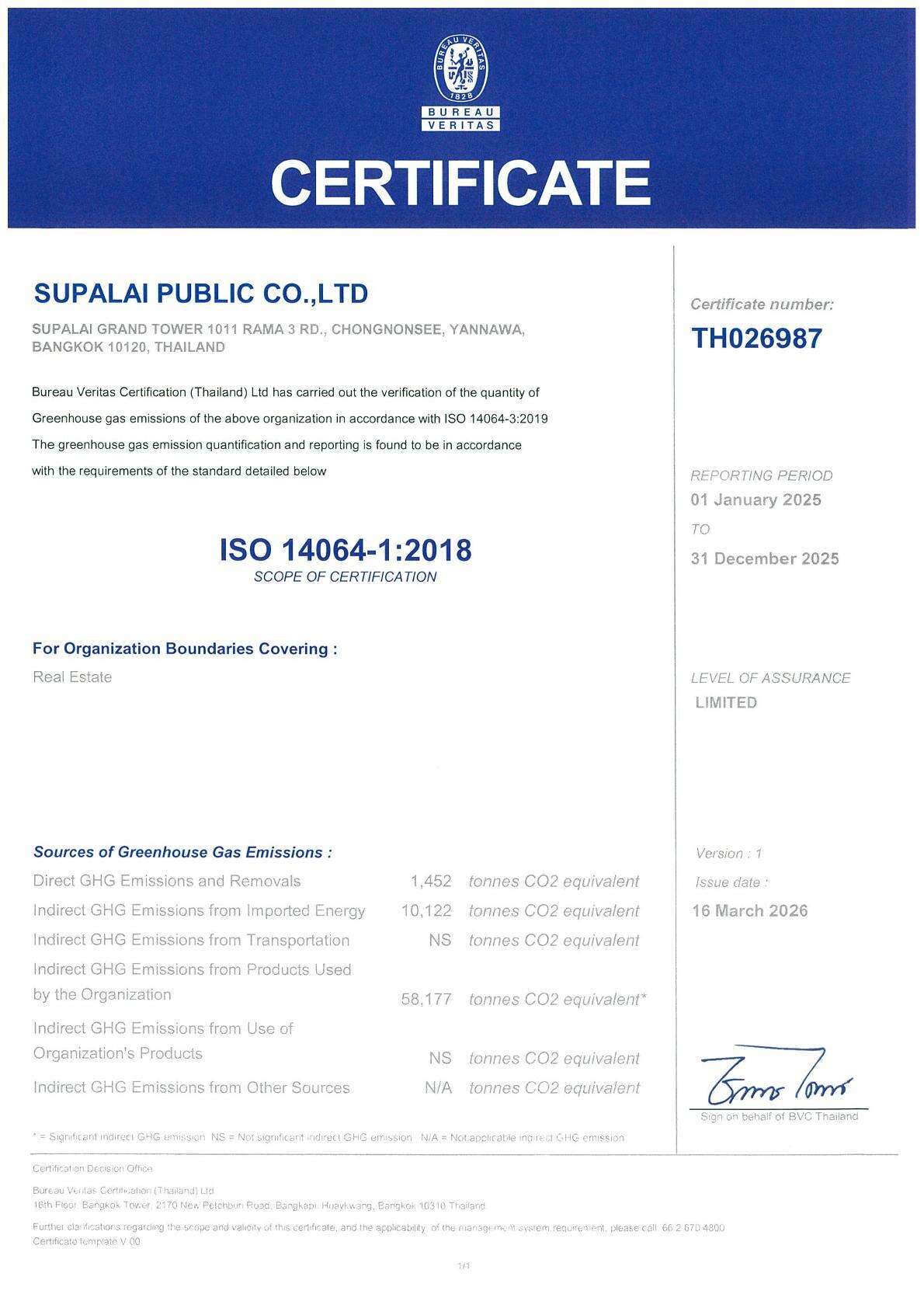
In the year In 2025, the company's total greenhouse gas emissions were 69,751 tCO2eq from operations, categorized as direct greenhouse gas emissions Scope 1 Quantity 1,452 tCO2eq and indirect greenhouse gas emissions from purchased electricity Scope 2 Quantity 10,122 tCO2eq, including direct and indirect greenhouse gas emissions Scope 1 and 2 quantity 11,574 tCO2eq, a decrease of 4.28% compared to the year 2024 This results from maximizing energy efficiency, reducing energy consumption in operational activities, and increasing the use of renewable energy in the organization's operational processes. The company also improved the management process of Supalai Grand Tower building, affecting direct and indirect greenhouse gas emissions Scope 1 and 2 emissions reduced in the year 2025
However, when calculating the ratio of direct and indirect greenhouse gas emissions to total revenue (Combined GHG scope 1&2 Intensity) of the year 2025 found to be equal to 0.4672 tCO2eq per million baht
The company has other indirect greenhouse gas emissions Scope 3 Total quantity 58,177 tCO2eq, a decrease of 30.57% compared to the year 2024
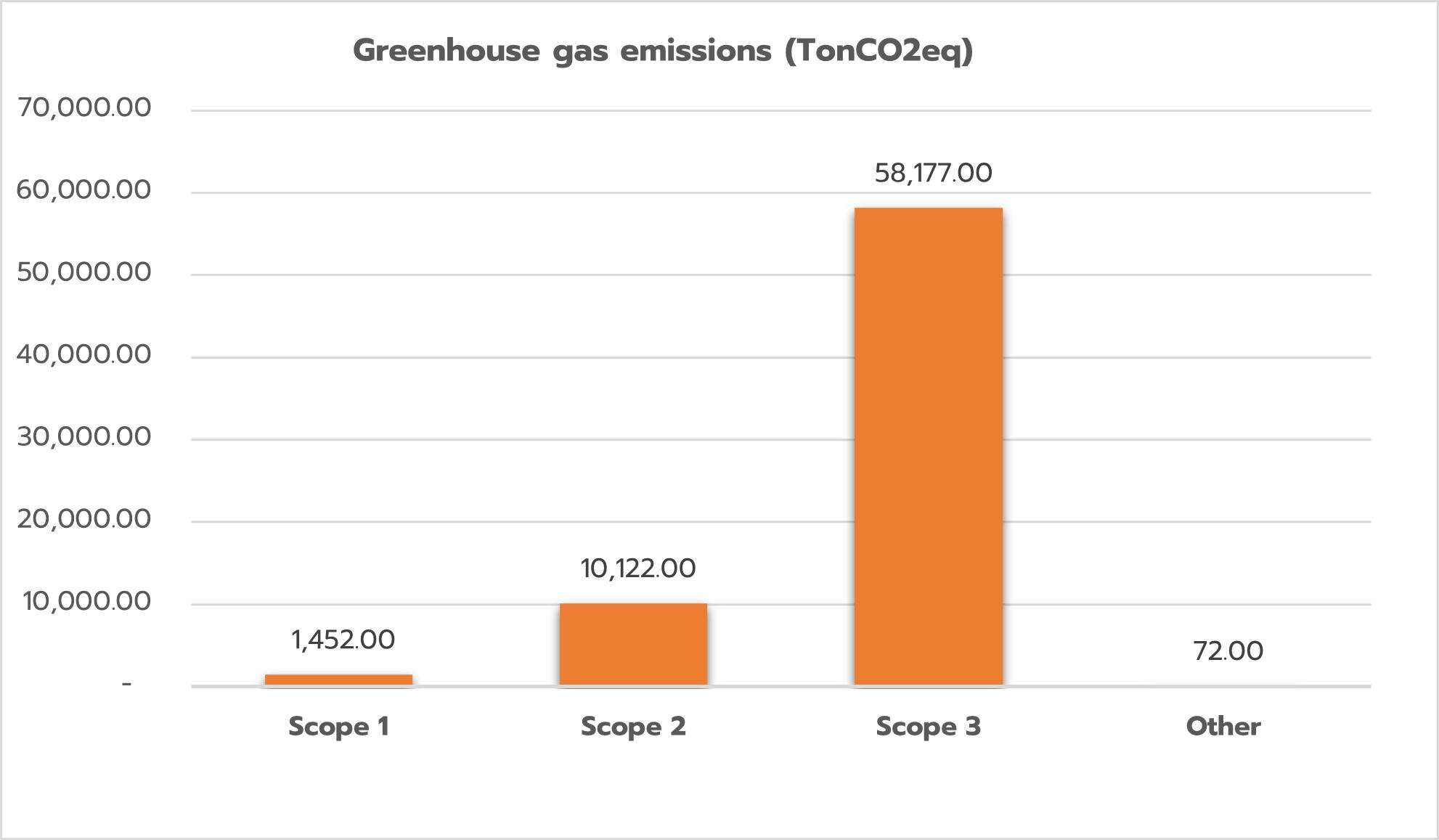
The company found that the top four activities in the supply chain with the highest other indirect greenhouse gas emissions are: Other indirect greenhouse gas emissions Scope 3 Indirect greenhouse gas emissions from purchased electricity Scope 2 and direct greenhouse gas emissions Scope 1 accounting for 83.41%, 14.51%, and 2.08% respectively.
Greenhouse Gas Emission Sources | Unit | Quantity |
Scope 1: Direct greenhouse gas emissions such as fuel, refrigerants, chemical fertilizers, fire extinguishing agents. | tCO2eq | 1,452 |
Scope 2: Electricity consumption | tCO2eq | 10,122 |
Scope 3 Cat.1 purchased goods and services such as construction materials, chemical fertilizers | tCO2eq | 58,177 |
Others (separate report) | tCO2eq | 72 |
Total (Scope 1+2) | tCO2eq | 11,574 |
Total (Scope 1+2+3) | tCO2eq | 69,751 |
Output | million baht | 24,772 |
Carbon Intensity (Scope 1+2) | tCO2eq / million baht | 0.4672 |
Carbon Intensity (Scope 1+2+3) | tCO2eq / million baht | 2.8157 |
Greenhouse Gas Emission Statistics
Operational Data | Unit | 2023 | 2024 | 2025 |
Total greenhouse gas emissions | ||||
Direct greenhouse gas emissions (Scope 1) | tCO2eq | 1,145 | 1,167 | 1,452 |
Indirect greenhouse gas emissions (Scope 2) | tCO2eq | 9,085 | 10,925 | 10,122 |
Other indirect greenhouse gas emissions (Scope 3) | tCO2eq | 133,750 | 83,797 | 58,177 |
Greenhouse gas emissions (Scope 1+2) | tCO2eq | 10,230 | 12,092 | 11,574 |
Greenhouse gas emissions (Scope 1+2+3) | tCO2eq | 143,980 | 95,889 | 69,751 |
Ratio of greenhouse gas emissions to revenue (Scope 1 + 2) | tCO2eq / million baht | 0.3744 | 0.3781 | 0.4672 |
Ratio of greenhouse gas emissions to revenue (Scope 1+2+3) | tCO2eq / million baht | 5.2695 | 2.9980 | 2.8157 |
Environmental Legal Incidents
Introduction
In 2025, the Company and its subsidiaries have not committed any significant violations of environmental laws or regulations, nor have there been any cases where they were accused of causing negative impacts on environmental issues that have become public news, which could potentially affect the Company's business operations, reputation, and assets.
Legal Violation Incidents
| Metric | Current Year | Previous Year | Two Years Ago |
|---|---|---|---|
| Number of cases or incidents of legal violations or negative environmental impact (cases) | 0 | 0 | 0 |
Other Environmental Management
Plan Description
Biodiversity
Policy and Commitment (GRI 101-1)
The Company has established the "Biodiversity Management Policy" and implemented board-level oversight to manage significant sustainability risks, including biodiversity issues. This aligns with the sustainability disclosure principles of IFRS S1. The Risk Management Committee is assigned the responsibility of providing governance oversight on
the following areas:
Material issues, nature-related risks, and opportunities.
Integration of biodiversity into strategies, investment decisions, and project designs.
Risk management processes and internal controls, including Internal Control & Disclosure Readiness.
Metrics, targets, and monitoring of results.
The Committee reviews these matters at least once a year, or upon the occurrence of significant events or changes, and regularly reports to the Board of Directors. Meanwhile, the management team is responsible for driving implementation, allocating resources, and enhancing the capabilities of relevant departments to ensure operations align with the policy.
The Company has integrated biodiversity issues into its Enterprise Risk Management (ERM) and investment decision-making processes. This ensures that Nature-related Risks—both Physical Risks and Transition Risks—are assessed and managed at a strategic level. Furthermore, cross-functional collaboration has been fostered to co-establish biodiversity risk and opportunity assessment criteria for new and significant projects.
The Company has established a strategic commitment to achieving a Net Positive Impact on biodiversity or implementing offsets for unavoidable impacts in high-biodiversity risk areas. The Mitigation Hierarchy (Avoid–Minimize–Restore–Offset) serves as the core operational framework. The Company requires the reporting of Biodiversity Habitats within and adjacent to project sites and the development of a Biodiversity Action Plan (BAP), verified by the Sustainability Department. This process involves establishing baseline biodiversity conditions prior to project development and monitoring changes in Habitat Area, Habitat Condition, and Species Richness Index to evaluate quantitative outcomes, with progress disclosed annually.
Additionally, the Company collaborates with external stakeholders, including government agencies, the private sector, and non-profit organizations, to collectively reduce biodiversity loss across all operational areas.
To achieve authentic sustainability outcomes, the Company prioritizes building a knowledge foundation and continuously developing the capabilities of personnel and business partners regarding biodiversity to ensure accurate understanding and practice. The Company is also committed to transparent disclosure by preparing reports aligned with the recommendations of the Taskforce on Nature-related Financial Disclosures (TNFD) and disclosing sustainability data in accordance with the international GRI Standards (GRI 101: Biodiversity 2024). The Company firmly believes that managing biodiversity with integrity and transparency is a vital foundation for passing on a rich natural heritage to future generations alongside stable business growth.
For more information, please visit: Policy on Biodiversity Management
Strategies and Management Approaches
Green Space and Ecosystem Management through Big Tree Management Techniques (GRI 101-2)
The Company recognizes that large trees are invaluable natural assets, offering immense ecological and economic benefits. Beyond being long-lived flora, these trees serve as the pillars of the ecosystem and are vital to creating lush, resilient landscapes. Consequently, the preservation and professional relocation of large trees generate a net positive impact on biodiversity by providing essential habitats, shelters, and breeding grounds for diverse urban wildlife, thereby maintaining the balance of the urban food chain.
Furthermore, their root systems and expansive canopies play a crucial role in stormwater management by slowing runoff, preventing localized flooding, and mitigating soil erosion. From a business perspective, preserving these natural features enhances real estate value and elevates the long-term quality of life for residents. To safeguard existing trees within project development areas, the Company integrates strategic species selection tailored to functional utility with advanced tree transplanting and relocation techniques, ensuring the continuity of precious natural resources.
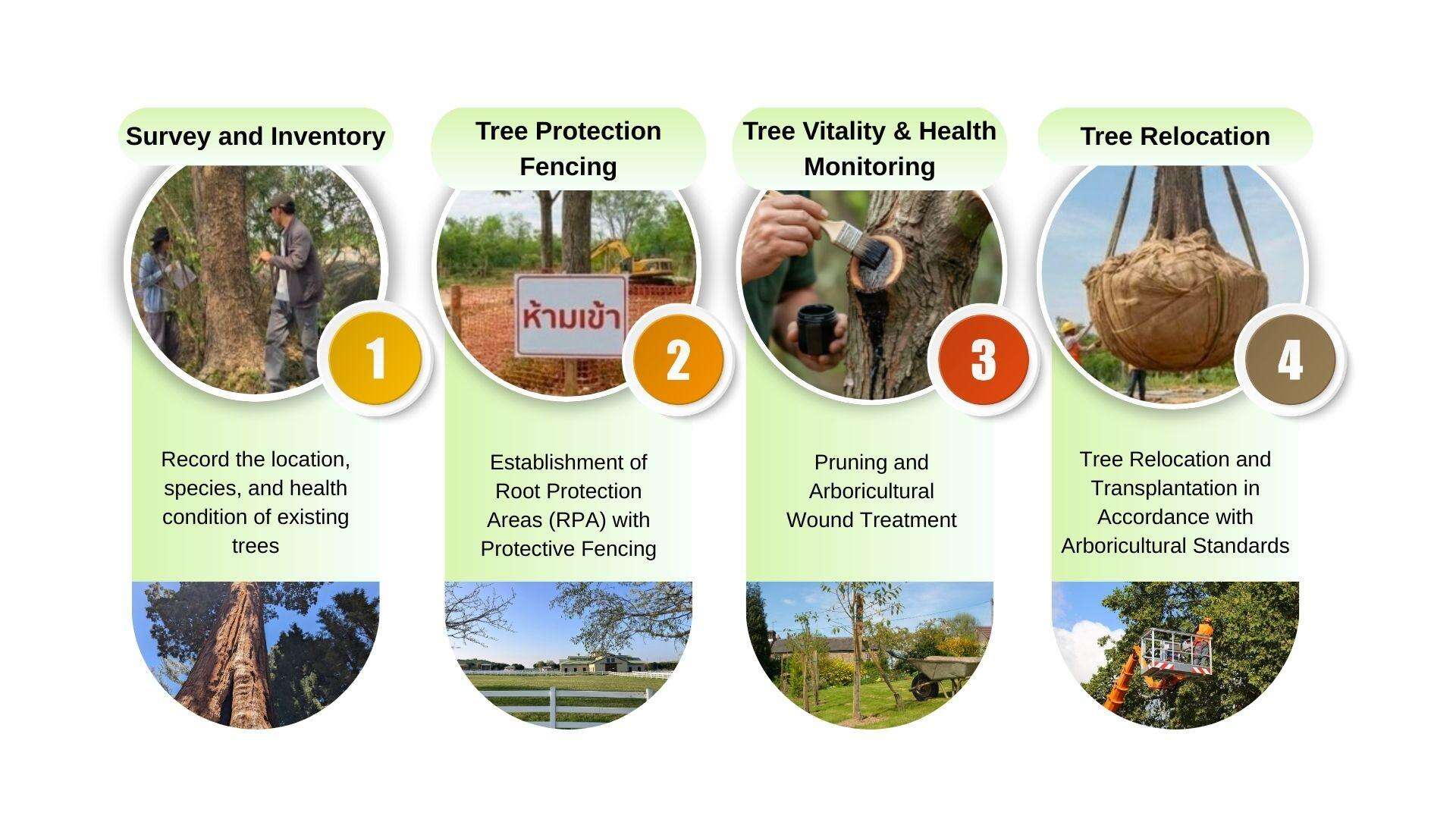
Biodiversity Conservation and Restoration (GRI 101-2, 101-4, 101-5, 101-8)
The Company has established comprehensive guidelines for the conservation and restoration of biodiversity across all current and future development projects. These measures are integrated throughout the entire project lifecycle from land acquisition and construction to post-construction phases—to mitigate potential negative impacts on biodiversity.
Our framework is aligned with the International Union for Conservation of Nature (IUCN) standards regarding Biodiversity Offsets and strictly adheres to the Mitigation Hierarchy. This structured approaches consists of four sequential levels designed to manage environmental impacts effective: Avoidance, Minimization, Restoration, Offsetting
Biodiversity Risk Assessment Process
The Company recognizes that nature and biodiversity are fundamental factors that directly influence the quality of life for our residents and the long-term growth potential of our business. Consequently, we have integrated nature-related risk and opportunity assessments into our corporate strategy. Our approaches is aligned with the international framework of the Taskforce on Nature-related Financial Disclosures (TNFD), ensuring that project development proceeds in harmony with the natural context and meets the evolving expectations of our stakeholders.
The company conducts assessments using the LEAP Approach (Locate, Evaluate, Assess, Prepare), which begins with considering the project's location and its connection to the surrounding ecosystem (Locate); analyzing the dependence on and impacts on natural resources and biodiversity (Evaluate and Assess); and utilizing the assessment results to manage biodiversity risks, coupled with strategic planning to enhance business opportunities and long-term value (Prepare).
The assessment covers the Double Materiality principle, considering both (1) the impact of the Company's activities on nature (Impact Materiality) and (2) the risk or opportunity that degradation of nature may affect the Company's operating results, cash flow, asset value at risk, and cost of capital (Financial Materiality). The analysis is currently in
the process of data collection and uses scenario analysis consistent with the TNFD and IFRS S1 frameworks to assess the resilience of the business model under nature-related transition risks.
The results of these assessments are utilized to analyze Business Model Resilience under various Scenario Analyses. These scenarios specifically focus on ecosystem changes and water-related risks, ensuring that the Company can adapt and maintain operational continuity amidst evolving environmental challenges.
Furthermore, this approaches enables the Company to mitigate operational and environmental transition risks. It also serves as a catalyst for designing and developing residential projects that prioritize green space enhancement, urban ecosystem restoration, and resource efficiency. These initiatives collectively generate added value for our projects, bolster consumer and investor confidence, and drive sustainable business growth while preserving the intrinsic value of nature for the long term.
1. Spatial Connectivity and Natural Value Assessment
The Company prioritizes land selection and project development rooted in the responsibility toward natural resources. We conduct systematic spatial assessments involving nature and biodiversity data to gain a profound understanding of the environmental context and the natural value of a site prior to development. This process is carried out in tandem with identifying design and development opportunities that harmonize with the site’s unique natural characteristics.
The assessment process encompasses a comprehensive review of both national and international reference data. This includes verifying the presence of Reserved and Protected Wildlife as mandated by the Ministry of Natural Resources and Environment (MNRE), as well as identifying rare or endangered flora and fauna listed by the Office of Natural Resources and Environmental Policy and Planning (ONEP) under the Thailand Red List and the IUCN Red List. This rigorous screening supports project planning by proactively identifying legal constraints and enhancing business decision-making clarity from the initial stages.
Furthermore, the Company evaluates the context of water resources by utilizing water risk maps from the United Nations (UN) as a key decision-support tool. This ensures that project developments do not exacerbate water stress in local areas and enables effective long-term water management planning.
Regarding ecosystem structure, the Company prioritizes analyzing the areas surrounding its projects to avoid impacts on protected or sensitive areas. This includes carefully considering migration corridors, foraging grounds, and habitat connectivity to maintain ecological balance alongside urban development.
The Company operates with full respect for the rights of local communities and their traditional use of natural resources. We ensure that access to resources is not restricted without proper engagement and consent, adhering to the principle of Free, Prior, and Informed Participation. Furthermore, the Company provides dedicated channels for environmental and community-related grievances, ensuring a systematic monitoring and resolution process through the Supalai Contact Center 1720.
2. Identification of Dependencies and Impacts on Nature and Biodiversity (GRI 2-6, GRI 3-1 3-3)
The company recognizes that real estate development projects are interconnected with nature in many dimensions, both as a user of resources and as a potential impact on ecosystems. Therefore, the company conducts analyses of the dependencies and impacts of project development activities on nature and biodiversity in order to comprehensively identify business risks and opportunities.
The assessment encompasses dimensions of natural resource utilization, such as water, soil, and ecosystem services, as well as potential impacts from land restructuring, construction, and project operation, including habitat loss, alterations to ecosystem structure, and impacts on the capacity to withstand natural disasters such as floods, storms, or landslides.
Furthermore, the Company prioritizes strict pollution control and rigorous compliance with environmental laws and policies. We also meticulously consider potential reputational risks arising from biodiversity-related issues. These risks are formally integrated into the Enterprise Risk Management (ERM) framework for systematic monitoring and evaluation. The assessment results are utilized to formulate robust prevention and mitigation measures, supported by continuous risk monitoring and review. This ensures that all strategic decision-making and project implementations are deeply rooted in the consideration of nature and biodiversity, fostering long-term resilience and sustainability.
The scope of the Company’s biodiversity management and disclosure encompasses the entire project development lifecycle: from site selection and land acquisition to design, construction, and post-occupancy management. This also extends to material issues within the value chain, including contractors, material suppliers, and the management of green spaces and water resources within the projects. To ensure the accuracy and auditability of its disclosures, the Company employs an evidence-based approaches and utilizes material assumptions tailored to the specific context of each project site. This commitment to data integrity supports transparent reporting and enables stakeholders to verify the Company’s environmental performance effectively.
3. Risk Level Analysis and Biodiversity Action Plan (BAP)
The company systematically analyzes biodiversity risk levels using data from spatial assessments and impact identification, considering key factors such as project location, distance from areas of high natural value, and
the importance of plant and animal species that may be affected.
For projects identified as high-risk, the Company mandates the development of a Biodiversity Action Plan (BAP). This plan establishes comprehensive measures for the prevention, mitigation, and monitoring of impacts throughout
the entire project development lifecycle. Beyond risk management, the BAP serves as a strategic framework that enables the Company to innovate in design and management, ultimately generating added value for both the development site and the surrounding communities.
The operational plan will be based on the mitigation hierarchy principle, prioritizing avoidance as the first priority, followed by reduction, restoration, and compensation, in that order. This ensures that the company's operations do not cause significant loss of biodiversity and are consistent with international best practices in sustainable development.
4. Implementation of the Mitigation Hierarchy for Impact Prevention and Reduction
The Company implements stringent management protocols in areas identified with high biodiversity impacts and risks, strictly adhering to the Mitigation Hierarchy. Our primary objective is to ensure that residential development results in minimal ecological disruption while actively supporting long-term nature restoration. By integrating these protective measures into our operational workflow, we strive to balance urban expansion with the preservation of vital ecosystem functions.
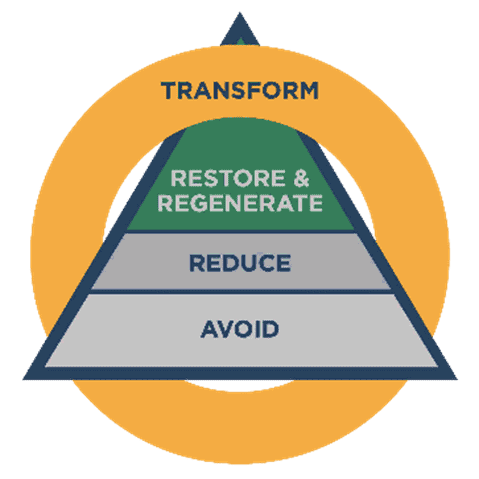
Avoid
The company prioritizes planning from the initial stages of each project, selecting locations and designing project layouts that harmonize with the natural context of the area. This includes preserving existing vegetation and topography as much as possible, avoiding the cutting down of large and valuable trees, and emphasizing the use of innovative construction methods such as low-carbon concrete and precast systems. For High Rise Projects, pile driving techniques are employed to minimize the risk of dust, noise pollution, and environmental contamination.
Minimize
The Company implements rigorous control measures for construction activities and project management to minimize impacts on the environment and surrounding communities. These include systematic management of dust, noise, construction waste, soil, materials, and wastewater. Furthermore, the Company prioritizes the selection of energy-efficient appliances and equipment, reducing resource consumption and mitigating footprints on local ecosystems. In addition to operational controls, the Company promotes sustainability throughout its value chain through Green Procurement. We prioritize the sourcing of eco-friendly building materials and products that minimize natural resource depletion, ensuring that our commitment to environmental stewardship extends to our partners and suppliers.
Restore and Regenerate
The Company designs its green spaces with an ecological-centric approaches, aiming to restore ecosystem functions that support both biological diversity and human well-being in a balanced manner. Our operational framework focuses on creating ecological corridors that integrate seamlessly with the surrounding natural context. This includes the strategic selection of native plant species and vegetation suited to the local environment, which reduces resource consumption and enhances long-term ecosystem resilience.
Offset
The Company is committed to elevating its operations beyond mere impact mitigation toward driving systemic transformation. Our goal is to scale up positive outcomes for nature and biodiversity in the long term by integrating this transformative mindset into every stage of project design, development, and management. By embedding ecological restoration into our core operational fabric, we ensure that our growth contributes meaningfully to the resilience and regeneration of the natural environment.
The Company’s operational approaches extends to active collaboration with diverse stakeholders, including local communities, government agencies, and civil society organizations. This synergy aims to develop and expand ecological green spaces, restore natural habitats, and enhance urban ecosystem connectivity.
Furthermore, the Company fosters innovation in resource and waste management, prioritizing eco-friendly materials throughout the value chain. We also emphasize transparent communication and awareness-building among employees, business partners, contractors, and residents. These collective efforts ensure that our residential developments play
a pivotal role in delivering a Positive Contribution to Nature and supporting long-term sustainable urban development.
5. Regular Monitoring, Evaluation, and Auditing
The Company consistently monitors, measures, and reviews its performance regarding biodiversity and ecosystem services. This ensures that the environmental measures and management guidelines established during the project assessment phase are effectively implemented. By maintaining this rigorous oversight, the Company guarantees that its operational actions remain fully aligned with its overarching corporate sustainability goals, enabling continuous improvement in environmental stewardship.
Covers 100% of projects within the company's environmental assessment scope, verifying the compliance of project development with relevant environmental conditions, measures, and requirements related to land use, green spaces, water resource management, and biodiversity mitigation at least once a year or whenever significant changes occur during the project development phase.
The Company utilizes results from its monitoring and evaluation processes as critical input for reviewing project-level environmental performance. This review serves to confirm total compliance with relevant measures and regulations. Furthermore, these insights act as a primary reference for refining future design and development approaches. By leveraging this feedback loop, the Company aims to enhance operational suitability and focus on preventing and mitigating environmental and biodiversity risks to an acceptable level. This proactive approaches ensures that lesson learned from current developments drive superior environmental outcomes in all future projects.
Audit findings and lessons learned are systematically reviewed to continuously refine future project design and development guidelines. This commitment aims to elevate compliance with environmental measures, minimize risks to nature and biodiversity, and reinforce corporate transparency in sustainable business practices. By institutionalizing these insights, the Company ensures that every new development reflects an evolved standard of environmental stewardship.
Performance and Outcome of Biodiversity
The Company is steadfast in its commitment to conducting business in harmony with the preservation of natural resources. We prioritize comprehensive Environmental Impact Assessments (EIA) at every stage of development to prevent and mitigate potential negative impacts on biodiversity. This process is not merely a protocol for establishing targeted prevention and mitigation measures from the outset; it serves as a critical governance mechanism in the project approval process. By embedding biodiversity considerations into our core decision-making, we ensure that every project contributes to genuine, long-term sustainability.
In 2025, the Company continued to demonstrate full compliance with national environmental regulations. A total of 6 projects successfully received official approval for their Environmental Impact Assessment (EIA) reports from the Office of Natural Resources and Environmental Policy and Planning (ONEP). This milestone ensures that these developments have met rigorous government standards for environmental protection and biodiversity mitigation before commencing construction.
Biodiversity risk assessment (GRI 101-2, 101-4, 101-5, 101-8)
The Company conducted a comprehensive biodiversity due diligence and risk assessment for future project developments, specifically within the Lum Sam Kaeo Forest Park area in Pathum Thani Province. This assessment involved a detailed survey of local species to evaluate their extinction risk levels. The Company utilized the internationally recognized IUCN Red List of Threatened Species as the primary benchmark to categorize the conservation status of all identified flora and fauna. This proactive measure ensures that the Company has a clear scientific baseline to develop appropriate mitigation and conservation strategies prior to any site development, thereby minimizing potential impacts on vulnerable species and their habitats.
EX | Extinct |
EW | Extinct in the wild |
CR | Critically Endangered |
EN | Endangered |
VU | Vulnerable |
NT | Near Threatened |
LC | Least Concerned |
DD | Data Deficient |
NE | Not Evaluated |
Environmental Context and Land Use
The surveyed area is situated in Lum Sam Kaeo Sub-district, Lam Luk Ka District, Pathum Thani Province. The site encompasses a rectangular plot totaling 20 Rai (approximately 3.2 hectares). This land has undergone a significant transformation under the Company’s operations, evolving from an underutilized vacant plot into a dedicated green space designed to enhance the local environment and community well-being. The site’s development incorporates strategic environmental engineering, including the afforestation of perennial trees and the integration of interconnected water channels. These features serve multiple critical functions: providing a sustainable irrigation system for the vegetation, acting as temporary detention basins to manage stormwater runoff during the rainy season, and establishing aquatic sanctuaries for the natural breeding and habitat of local species.
Furthermore, given its strategic location—bordered by residential communities, commercial hubs, agricultural zones, and government offices—this ecological development holds profound significance for the surrounding stakeholders in the following aspects:
Social and Community Benefit
Serves as infrastructure that helps trap PM 2.5 particulate matter and acts as a carbon sink in the city.
Helps reduce the urban heat island effect, lowering the surrounding temperature.
Serves as a recreational area for relaxation, leisure, and exercise for the community, contributing to improved quality of life and mental health for its residents.
Enhancement of Infrastructure and Public Utilities
Water distribution stations and flood protection routes utilize ditches dug in the temporary water storage areas of the Public Republic during periods of high water levels. Problems occurring on roads and access points to surrounding communities can be investigated.
Wastewater treatment using physical and biological methods Channels allow suspended solids to settle, and plants around the channels absorb organic matter, resulting in cleaner water before it is released into natural water sources or public canals.
Maintaining water security is crucial. Storing water for watering plants reduces reliance on public water supplies, ensuring the long-term sustainability of green spaces without depleting public water resources.
Safety and Long-term Sustainability
The survey found that most trees have high structural stability due to their strong root systems and adequate water supply, which reduces the likelihood of causing damage to buildings or community infrastructure during storms.
Well-managed green spaces with organized drainage systems enhance the aesthetics and increase the value of land or residential projects in the surrounding area.
Biodiverse Habitats
Variety of plant species
A survey of understory and herbaceous plants in the Lam Sam Kaeo forest area revealed a total of 5 plant species. These can be classified into 2 main groups based on their cotyledon structure, reflecting the diversity of food sources and shelters for insects and soil organisms, as follows:
The survey identified four species of dicots: Water Dead-and-awake, Black honey shrub, Sensitive Plant, and Coat buttons. These plants play a crucial role in soil cover. They typically have taproot systems that help anchor the soil and prevent erosion, especially Sensitive Plant and Coat buttons, which are highly resistant to environmental conditions and help retain soil moisture.
The biodiversity survey identified 1 key species of monocotyledonous plant: Para Grass (Brachiaria mutica). Despite being a single species, it plays a disproportionately significant role in the project’s ecological balance, particularly within the riparian and wetland zones
No. | Local/Vernacular Names | Scientific name | Plant Habit | Status IUCN | Role in the ecosystem |
1 | Water Dead-and-awake | Neptunia plena (L.) Benth. | Herbaceous Plants | NE | Helps maintain water quality and serves as a food source and habitat for insects and small animals. |
2 | Black honey shrub | Phyllanthus reticulatus Poir. | Small Shrubs | LC | It helps to stabilize the topsoil and protect it from erosion. |
3 | Sensitive Plant | Mimosa pudica L. | Herbaceous Plants | LC | It helps fix nitrogen and improve soil quality. |
4 | Coat buttons | Tridax procumbens L. | Herbaceous Plants | LC | It is an important source of nectar for pollinating insects. |
5 | Para Grass | Brachiaria mutica (Forsk.) Stapf. | Amphibious plants | LC | Protects riverbanks from erosion and provides a hiding place for animals. |
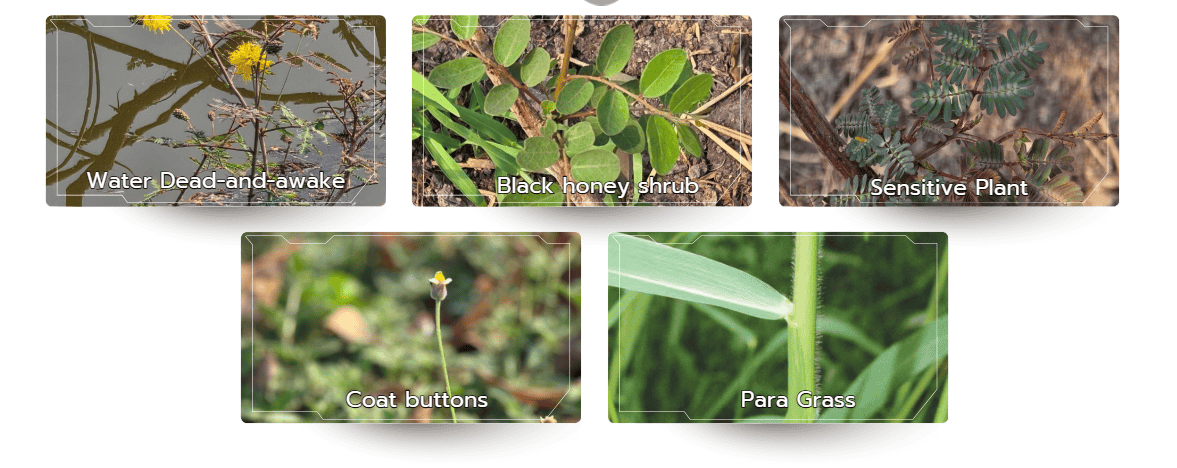
Based on the conservation status assessment of the 5 identified plant species within the project area, the Company has verified that there is currently no immediate risk of species loss. The survey results indicate that the predominant plant species found on-site are categorized as Least Concern (LC). The assessment confirms that all identified species are aligned with IUCN international standards, reflecting their status as robust local flora with high adaptive capacity.
Although classified as Not Evaluated (NE), Water Dead-and-awake is a common plant with a crucial role in ecosystem restoration. These plants are not only secure in terms of conservation status but also serve as vital ecological foundations, supporting insect pollination through the provision of nectar, helping to retain moisture, and preventing soil erosion.
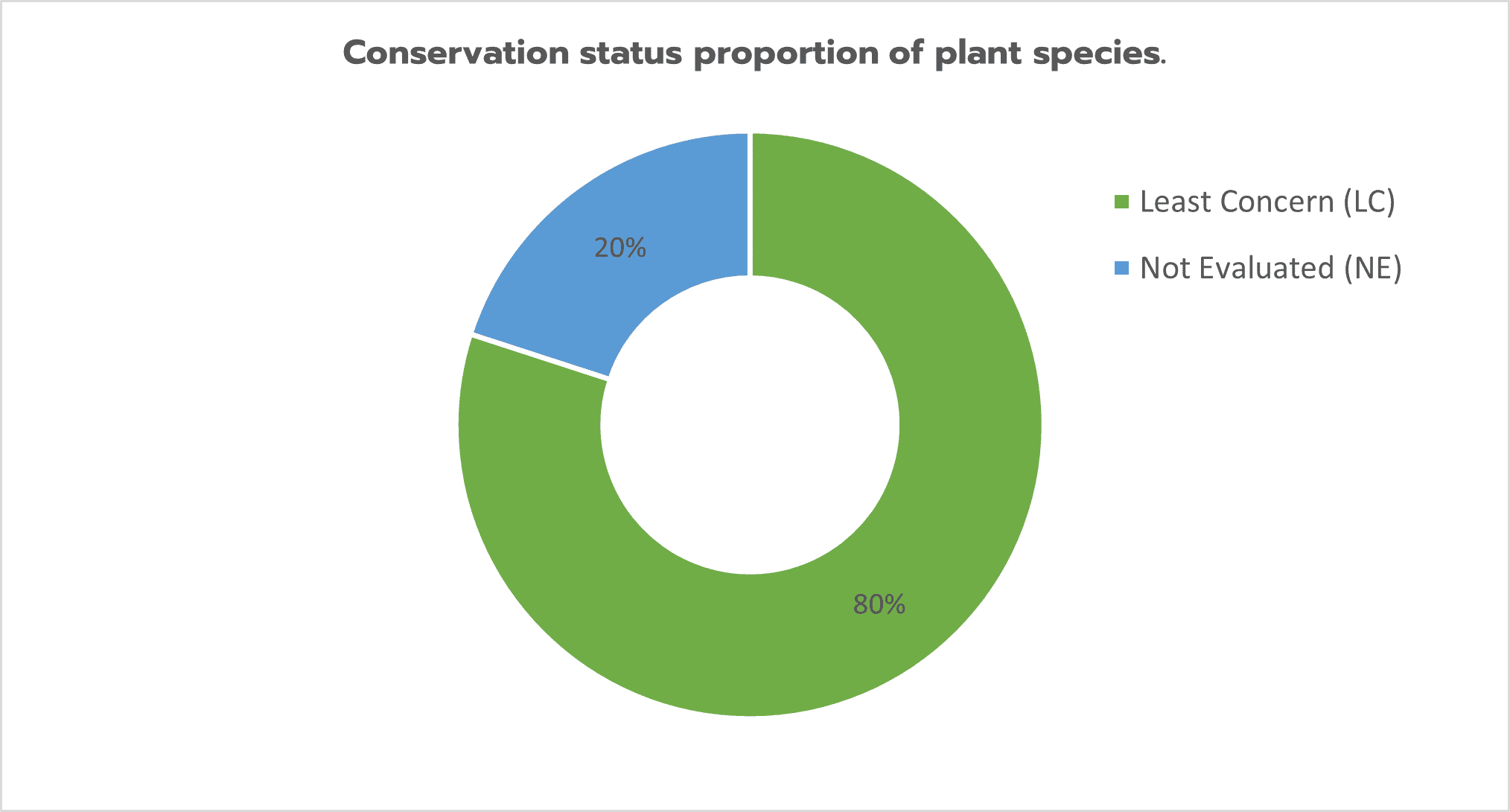
variety of animal species
The biodiversity survey within the project area identified a total of 18 fauna species of ecological significance. These species can be categorized by their populations and specific roles within the food web, reflecting the overall biological richness and ecological health of the site as follows
Group of animals | Species name | Scientific name | Status IUCN | Role in the ecosystem |
Poultry | Common Tailorbird | Orthotomus sutorius | LC | Controls insect populations and helps in the dispersal of plant seeds. |
White-breasted Waterhen | Amaurornis phoenicurus | LC | ||
Rock Pigeon | Columba livia | LC | ||
Eurasian Tree Sparrow | Passer montanus | LC | ||
Aquatic animals | Striped snakehead | Channa striata | LC | It is an indicator of water quality and a component of the food chain. |
Minnow | Rasbora borapetensis | LC | ||
Siamese fighting fish | Betta splendens | DD | ||
Golden Apple Snail | Pomacea canaliculata | LC | ||
Insect | Dragonfly | Pantala flavescens | LC | They function in pollination and act as natural predators, preying on insect pests for food throughout their lives, as well as being decomposers in the ecosystem. |
Damselfl | Pseudagrion microcephalum | LC | ||
Common Parasol | Neurothemis fluctuans | LC | ||
Arboreal Bicolored Ant | Tetraponera rufonigra | NE | ||
Black Garden Ant | Paratrechina longicornis | NE | ||
Lesser Mealworm | Alphitobius diaperinus | NE | ||
Lesser Grass Blue | Zizina otis otis | LC | ||
Reptile | Mekong snail-eating turtle | Malayemys subtrijuga | NT | They help maintain the balance of the ecosystem because they are both consumers and natural food sources for other predators. |
Changeable Lizard | Calotes versicolor | LC | ||
Small aquatic animals | Water Striders | Aquarius remigis | NE | Indicates the cleanliness of the water surface and surface tension. |
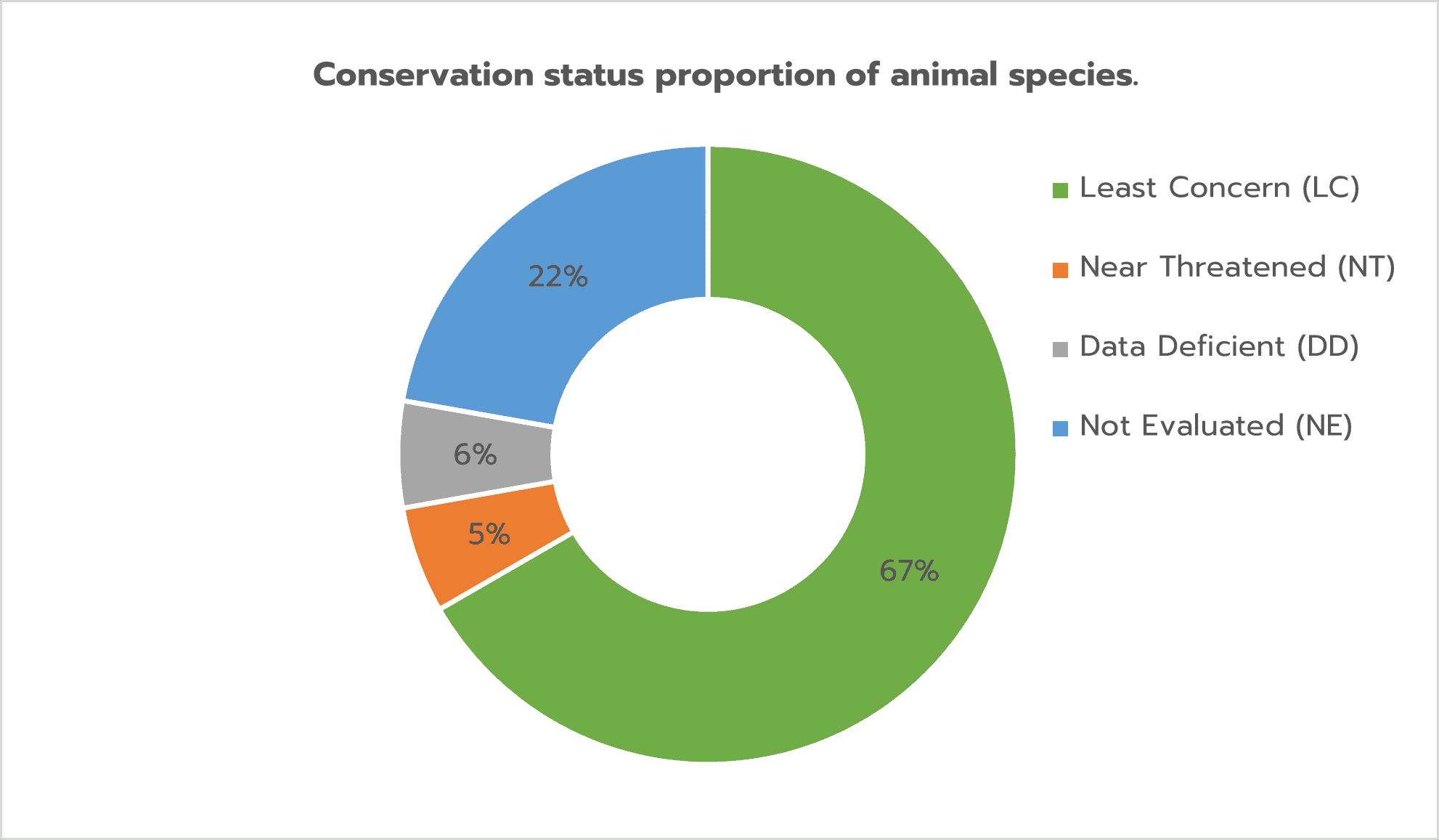
The biodiversity assessment confirms that the project area serves as a safe and thriving habitat for various species. Evaluation based on the IUCN Red List of Threatened Species indicates that the majority of the identified fauna are classified as Least Concern (LC). Key groups include: Common Tailorbird, White-breasted Waterhen, Striped snakehead, Minnow, Siamese fighting fish, and Various groups of dragonflies
In addition, some important organisms were found during the survey: The rice field turtle, which is classified as Near Threatened (NT) This includes the Siamese fighting fish, which, although classified as Data Deficient (DD), is considered an endemic species in the area. Because they may be less common or no longer found in some urbanized areas, their presence indicates the creation of urban ecosystems that can serve as natural refuges, helping to preserve local animal species. In addition, groups of insects and small aquatic animals, although not yet evaluated (Not Evaluated: NE), such as Water striders, were found, which are indicators of water cleanliness in the project area.
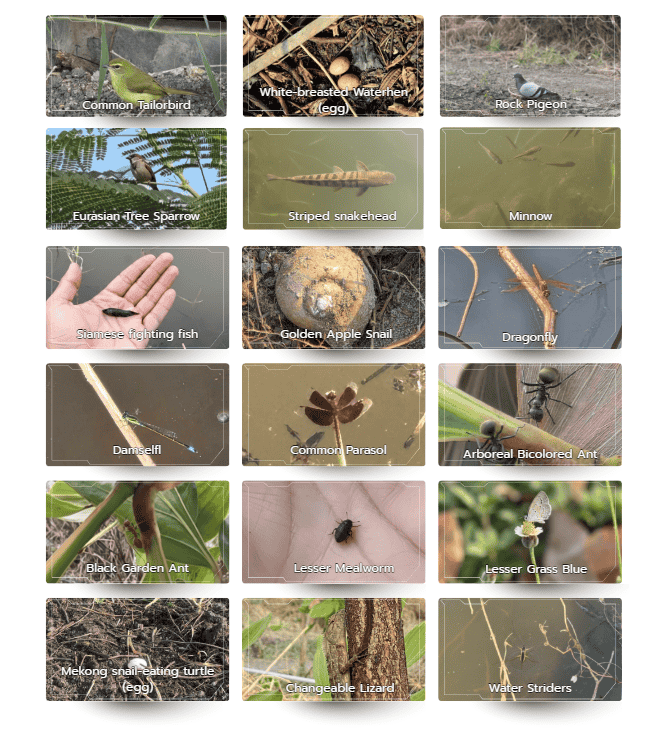
Biodiversity Mitigation Hierarchy: Avoid, Minimize, and Offset
The results of the biodiversity survey in the Lam Sam Kaeo forest area, Pathum Thani Province, were incorporated into an assessment of the extinction risk level of each species found in the area. The company is committed to protecting species diversity by focusing on maintaining ecological balance through the preservation of specific habitats, such as water sources and wetlands, to provide shelter for amphibians and pollinators, as well as monitoring for invasive species that may disrupt the original ecosystem of the area.
Furthermore, the project area has been surveyed and found to contain local animals with a Near Threatened (NT) conservation status, Mekong snail-eating turtle. These animals typically live and forage in stagnant, shallow water sources such as rice fields, ponds, or swamps covered with vegetation, and they are quite sensitive to water quality and changes in their primary food source. To avoid operations that would impact the habitat and food sources of this species, the company relocated Mekong snail-eating turtle to a nearby water source with similar physical characteristics and implemented restoration measures to enhance the area's fertility. This included planting nine tree species in the area to create shelter and food sources that encompass the surveyed animal groups, and digging ditches to maintain the trees and create an ecological link.
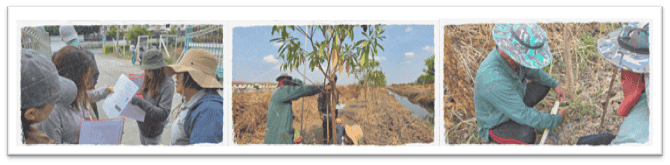
The company monitors the adaptability and growth potential of the planted tree species in the project area by assessing their health and risks using the tree health assessment form from the Forest Research and Development Bureau, Department of Forestry.
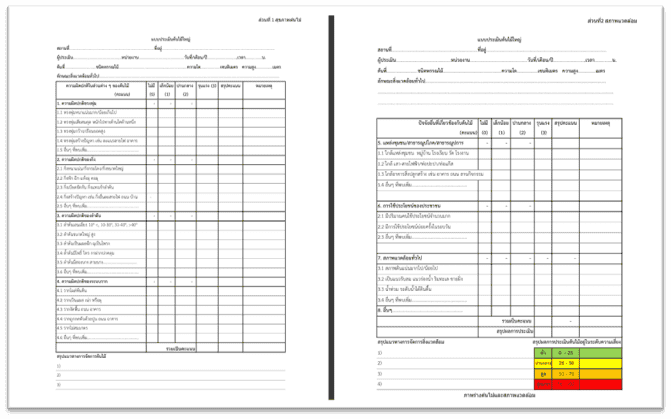
The assessment revealed that all tree species are in excellent and stable condition, safe for both area users and surrounding organisms, and healthy enough to serve as habitats and food sources for the local ecosystem.Due to the low risk of species loss, native plant species found in the area are conserved for use in environmental restoration. For example, Sensitive Plant helps fix nitrogen and improve soil quality, and Water Dead-and-awake helps treat water quality and provides a food source for animals in the area.
No. | Plant species | Health score (0-100) | Risk level |
1 | Royal Poinciana | 18 | Low |
2 | Suicide Tree | 13 | Low |
3 | Mangium Tree | 25 | Low |
4 | Trumpet Tree | 13 | Low |
5 | Burma Padauk | 12 | Low |
6 | Siamese Neem Tree | 22 | Low |
7 | Mahogany | 14 | Low |
8 | East Indian walnut | 19 | Low |
9 | Queen's Crape Myrtle | 14 | Low |
In terms of mitigating impacts through the risk assessment process, the company uses the results of individual tree health assessments as a database for grouping care according to risk levels, especially for tall and large tree species such as: Royal Poinciana and Mangium The structural integrity of the facility will be regularly inspected to prevent the risk of species loss, and management practices will be upgraded to align with international standards, ensuring its sustainable function as both a carbon sink and a biodiversity conservation area.
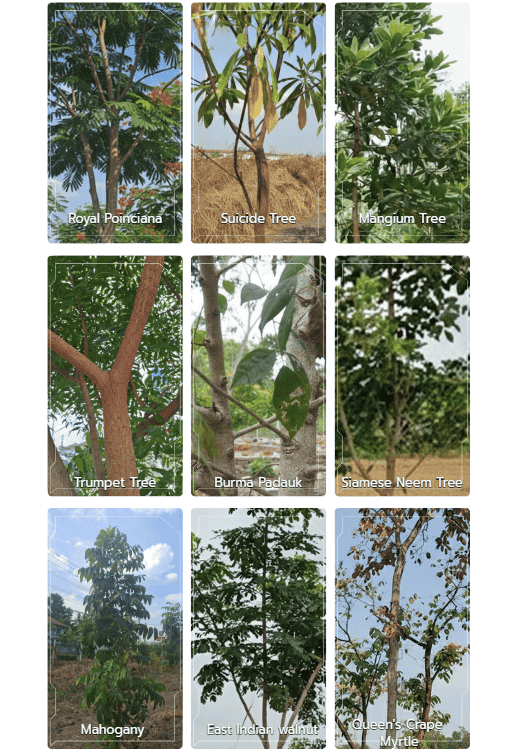
Green space management
The Company manages green spaces across the entire project lifecycle, beginning from the initial stages of site survey, master planning, and residential design that strictly avoids encroachment on forest or wetland areas. Our approaches integrates green spaces, public parks, and 'Green Corridors' to ensure ecological connectivity, while employing construction methods that minimize environmental impact through to final delivery and ongoing maintenance. We recognize that green space management in real estate development transcends mere aesthetics or resident demands; it represents the creation of 'Green Infrastructure' a fundamental element that plays a critical role in environmental sustainability and the long-term quality of life.
Preservation of Existing Trees
Prior to project development, the Company’s specialized Landscape department conducts a comprehensive survey of every tree through Tree Mapping. This process meticulously records coordinates, dimensions, species, age, and health status, alongside an assessment of each tree's ecological and social value to the overall ecosystem. This data serves as the foundation for master planning to avoid felling significant trees, establishing Tree Protection Zones (TPZ), and designing drainage and root protection systems that accommodate natural growth.
Following construction and preservation efforts, the Company consistently monitors success through Key Performance Indicators (KPIs), including the retention rate of existing trees, the number of compensatory plantings, and the survival rate of transplanted trees. In 2025, the Company achieved a milestone by preserving and planting perennial trees covering an average of 35% of the total project area.
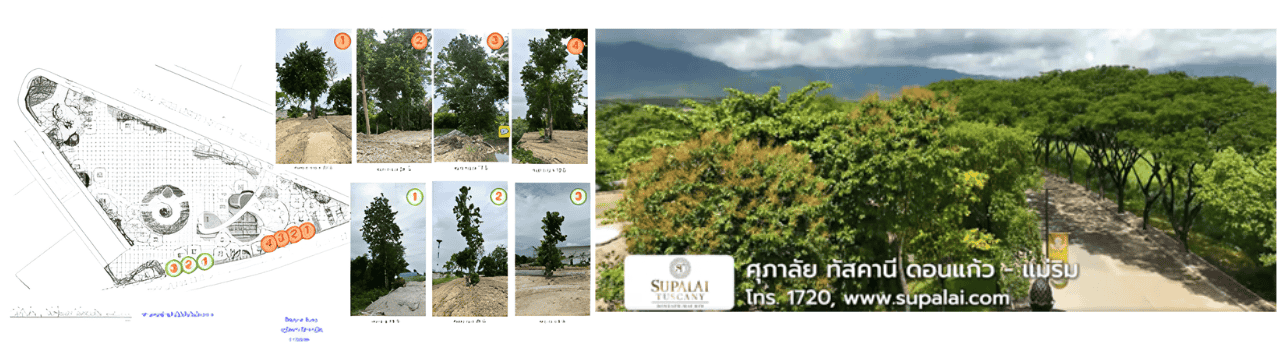
The selection of native plant species
At the Suphawatthanalai Project in Saraburi Province, the strategic selection of native plant species combined with the preservation of existing perennial trees serves as the cornerstone of a self-sustaining ecosystem. These plants have co-evolved with local fauna and insects, acting as primary food sources and habitats that effectively maintain the food chain balance and enhance biodiversity. From a management perspective, native flora exhibits high resilience to local climates, pests, and diseases. This inherent strength leads to significant resource optimization reducing water consumption, minimizing chemical dependency, and lowering long-term maintenance costs. Consequently, these green spaces transcend mere ornamental landscaping; they function as sustainable 'Natural Infrastructure' that ensures a safe and resilient environment for both residents and the surrounding ecology.
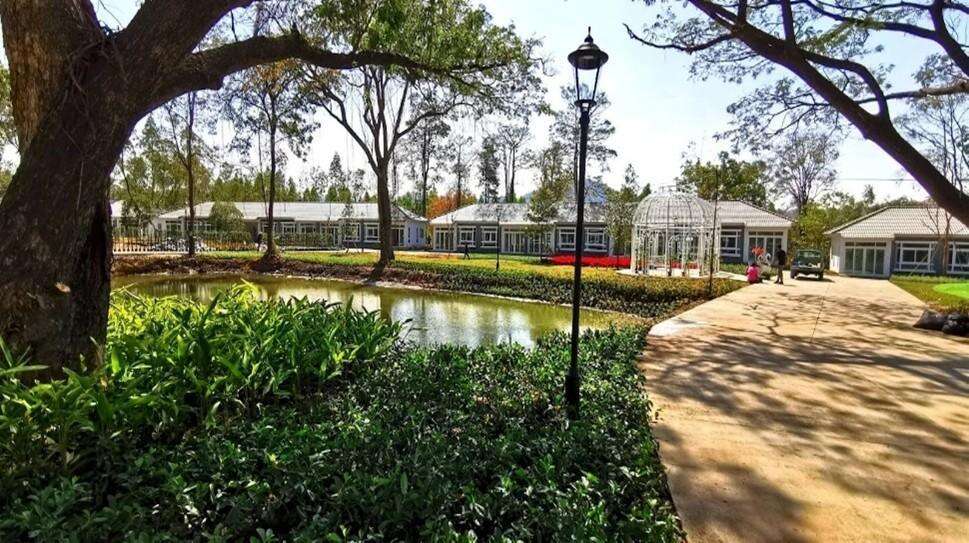
Creating a horizontal ecosystem in areas with limitations
The Palm Ville Bang Khaem (Nakhon Pathom) and Lake Ville Srisaman (Pathum Thani) projects exemplify innovative land management by transforming space-constrained areas into high-functioning ecological corridors. The development of pocket gardens beneath high-voltage power line easements effectively expands green coverage while strictly adhering to safety standards. Furthermore, the integration of ground cover plants around water bodies serves as a 'Natural Riparian Buffer', which stabilizes soil banks, filters pollutants before they reach the water, and provides a vital sanctuary for amphibians. When integrated with perimeter cycling tracks, these elements establish a strategic 'buffer zone' that balances human activity with ecological preservation, minimizing habitat disturbance. This holistic management approaches harmonizes urban infrastructure with biodiversity, fostering a self-sustaining and resilient ecosystem that encourages residents to appreciate the intrinsic value of nature through daily interaction.
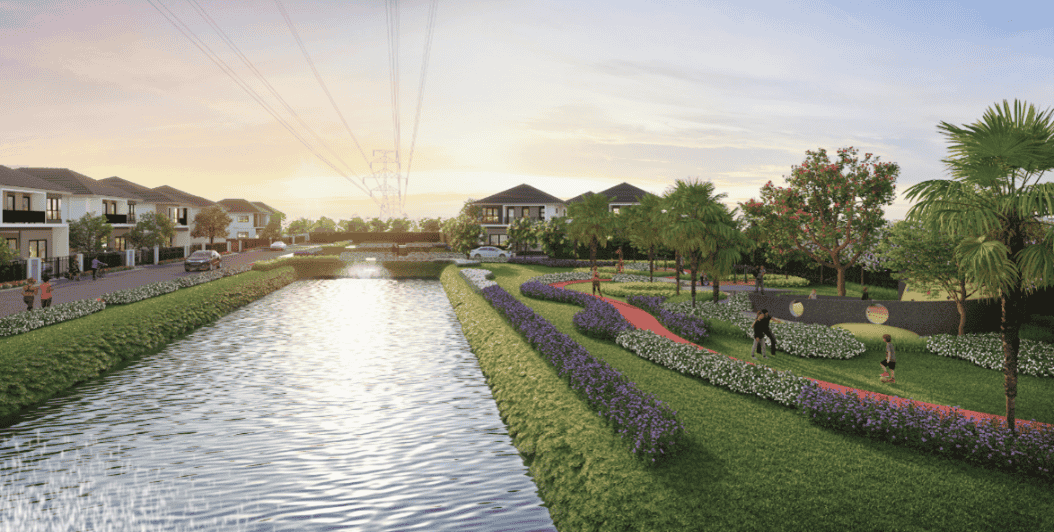
Creating a transitional area between land and water
The Lake Ville Chanthaburi project demonstrates sustainable resource management by repurposing on-site soil from existing excavation for project elevation and landscaping. The development of lush greenery around these water bodies fosters a thriving habitat for diverse species. This strategic planting creates a 'Microclimate' that effectively reduces ambient heat and increases humidity, supporting a healthy biological cycle. Furthermore, the roots of aquatic and riparian plants act as a Natural Filtration System, absorbing residues and maintaining water quality balance. By designating these pond areas as non-allocated zones, the Company ensures the long-term protection of the ecosystem from future disturbance. This approaches transforms the water bodies into vital retention basins and biological sanctuaries serving as a 'pocket forest' that enriches the residential environment with sustainable natural infrastructure.
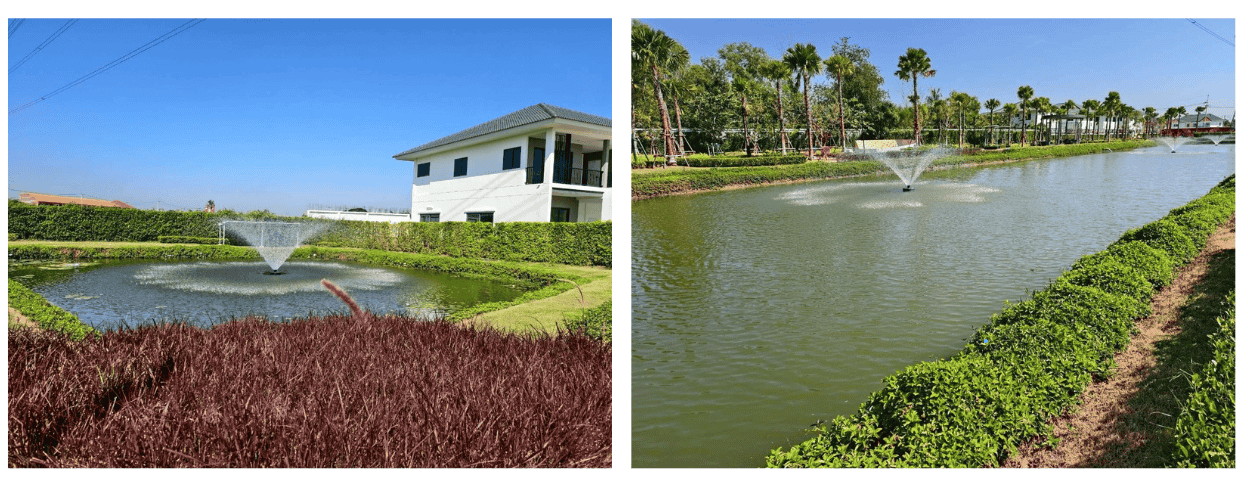
Selecting plant species to prevent soil erosion
The selection of native plant species with deep-root systems and flood-resilient properties serves as a natural reinforcement for the soil structure. These extensive root networks penetrate and bind soil particles, creating both vertical and horizontal mechanical stabilization that prevents soil subsidence and erosion. Furthermore, during the rainy season, these roots act as biological traps for suspended sediments. This process facilitates sedimentation and the gradual accumulation of new nutrient-rich soil layers, ultimately enhancing soil fertility and restoring the ecological equilibrium of riparian areas.
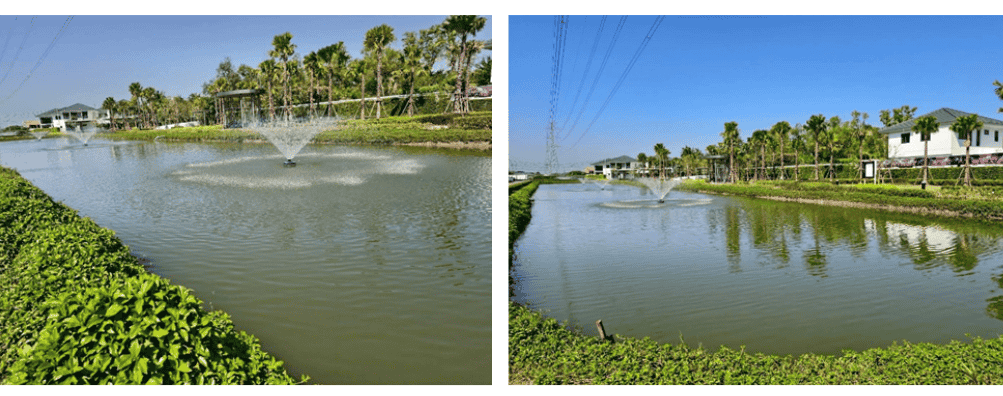
Rooftop space management
At Supalai ICON Sathorn, the rooftop has been transformed into an expansive elevated green space through the strategic integration of perennial trees. These species are meticulously selected based on their high wind resistance, structural integrity, and broad foliage, effectively offsetting the spatial limitations of an urban setting. This rooftop ecosystem serves as a vital sanctuary for small fauna, such as birds and insects, facilitating 'Vertical Ecological Connectivity' across the cityscape. Beyond biodiversity, this elevated greenery acts as a thermal buffer, significantly reducing the building’s heat gain while providing natural stormwater retention to mitigate runoff into the urban drainage system. By converting concrete surfaces into a living landscape, the Company is not merely enhancing aesthetic appeal, but creating a resilient natural network that restores urban biodiversity and effectively alleviates environmental challenges in high-density areas.
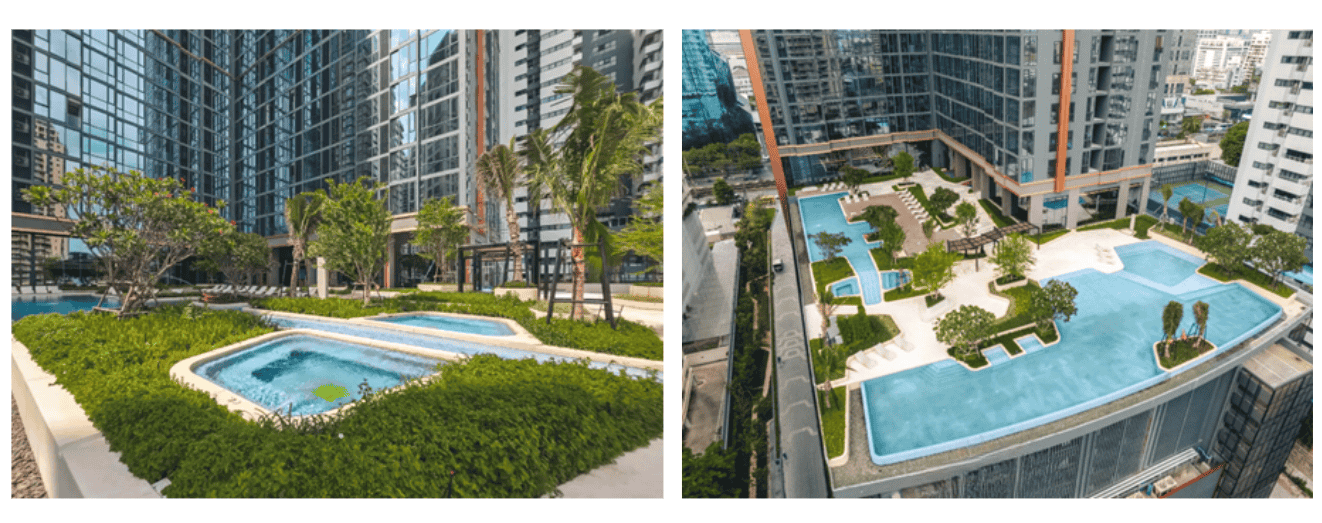
The “Forest for Happiness” Project, Year 3
The Company actively promotes engagement to mitigate biodiversity loss through the 'Forest of Happiness' project, collaborating with both internal and external stakeholders across all development areas. By selecting plant species in accordance with the guidelines of the Royal Forest Department and relevant government agencies, we aim to preserve and enhance the richness of flora and fauna within the local ecosystems. The strategic planting of diverse perennial trees, shrubs, and native flora creates a complex forest structure that serves as a vital food source, habitat, and breeding ground for animals, insects, birds, and microorganisms. This initiative not only restores fresh air for surrounding communities but also fulfills the Company’s core mission to balance urban development with natural resource conservation. Over the past three years, this commitment has driven positive ecological change, resulting in the planting of over 6,650 trees across 55 rai in Pathum Thani and Prachuap Khiri Khan provinces.
Benefits for the restoration of local ecosystems | Benefits to the community |
Community forests play a pivotal role in balancing soil, water, and air quality while effectively reducing soil erosion and enhancing fertility. This restoration of natural resources enables diverse species to return and thrive sustainably. Furthermore, these community forests establish essential 'Habitat Connectivity', serving as vital corridors that link fragmented green spaces and natural forests. By facilitating the movement and genetic exchange of wildlife, these corridors significantly mitigate the long-term risk of species extinction and strengthen the overall resilience of the ecosystem. | Community involvement in the proper care and use of forest resources, such as food plants, medicinal herbs, or wild mushrooms, helps reduce deforestation and maintain species biodiversity. |
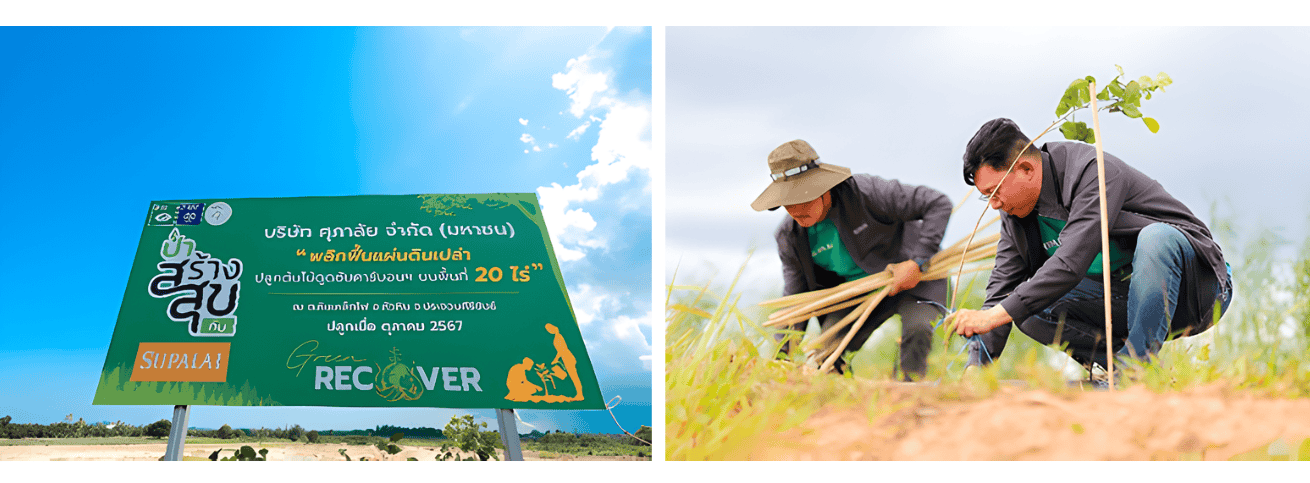
Training and Capacity Building in Biodiversity Management
The Company organized a specialized training session on 'Biodiversity Management and Environmental Impact Valuation for the Real Estate Business' for executives, supervisors, and employees. The session featured Associate Professor Dr. Santi Sanglertsawai from the Department of Agricultural and Resource Economics, Faculty of Economics, Kasetsart University, as the keynote speaker. The primary objective was to foster a profound understanding of biodiversity management and provide insights into responsible natural resource stewardship. This initiative empowers various departments to apply these principles across the entire value chain, reinforcing the Company’s commitment to assessing and mitigating biodiversity impacts. By integrating these considerations, the Company aims to elevate business standards while ensuring sustainable growth and ecological balance. Held on December 19, 2025, the training was conducted in a hybrid format (onsite and online), with a total of 328 participants.
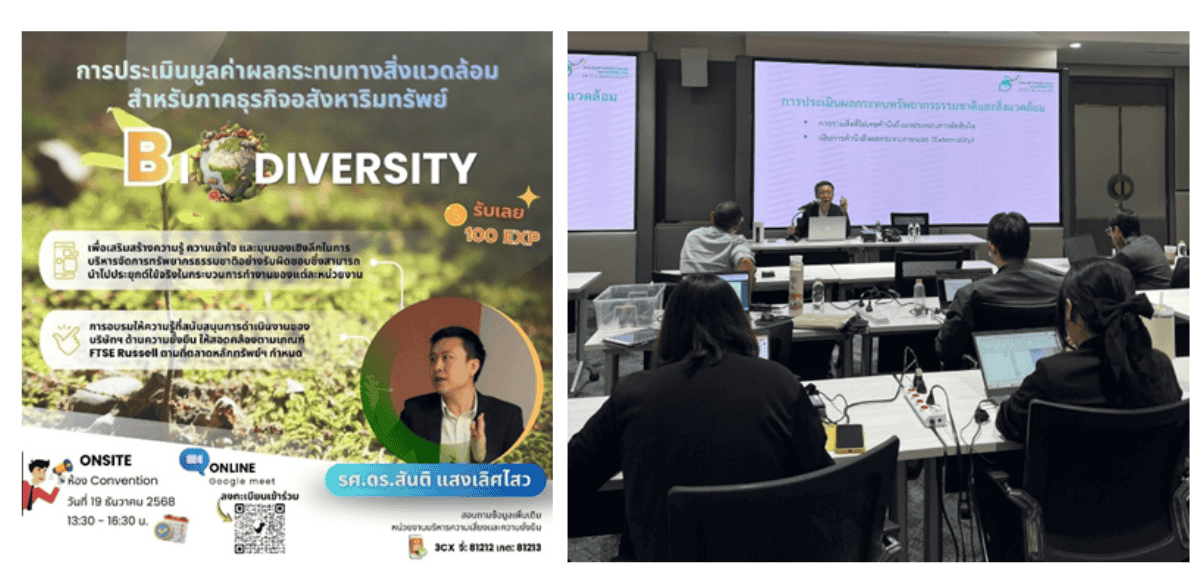
Social Policy & Guidelines
Has a Social Policy
Yes
Policy Description
Human Rights in the Supply Chain
Key Sustainability Issues | Impacts, Risks, and Opportunities |
Respect for Human Rights and Fair Treatment of Labour
Community and Social Development
| The Company recognizes that current real estate business operations, in addition to developing residential projects to meet customer needs and expectations, must also consider the comprehensive impacts on society, the environment, and surrounding communities, to ensure that business operations are truly sustainable. Therefore, key challenges that the organization must address include maintaining a balance between expanding project development to new provinces or areas and conservation, environment, efficient resource management, as well as heightened expectations from consumers, investors, and society regarding responsible, transparent, and auditable business operation standards. On the other hand, these challenges have created strategic opportunities for the Company to create Shared Value by driving environmentally friendly projects and supporting community quality of life, such as developing projects designed according to energy-efficient building criteria and reducing greenhouse gas emissions, and supporting the development of education and vocational skills to enhance youth potential, and engagement with various networks to collectively build strong communities resilient to future changes with this vision and strategic approach, the Company is committed to being an organization that truly drives positive change, alongside stable and sustainable business growth, which will lead to the long-term strength of both the organization and society as a whole, to increase business growth opportunities coupled with sustainable development in all dimensions. The Company expects that its Community and Social Participation initiatives will contribute to its sustainable growth, ensure smooth project operations, and build the Company's image and credibility within communities and society. At the same time, the Company sincerely hopes to help enhance vocational skills for communities, enabling them to generate increased income, and effectively improve basic quality of life and environmental preservation. |
FTSE Russell EGS Theme: Human Right & Community Supporting SDG Goals
|
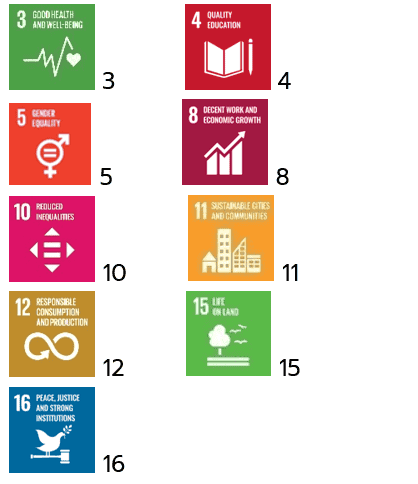
Policy and Commitment
The Company is committed to conducting real estate development business based on comprehensive respect for human rights, establishing it as a policy. proactively to identify and prevent potential risks throughout the value chain, covering key issues such as the non-use of child labour and anti-human trafficking, promoting equality in all dimensions, eliminating discrimination, and preventing all forms of harassment, to create a safe working environment and uphold human dignity in accordance with international GRI Standards, specifically GRI 403: Occupational Health and Safety, GRI 405: Diversity and Equal Opportunity, GRI 408: Child Labor, GRI 412: Human Rights Assessment, and GRI 413: Local Communities.
Furthermore, the Company emphasizes Community and Social Participation as a strategy to create sustainable growth through supporting education and vocational skill development to enhance income and basic quality of life for people in society. This commitment not only helps create strong and resilient communities but also enhances the organization's image and credibility, facilitating smooth and stable business operations, leading to positive change that strengthens both the organization and society as a whole in the long term.
Human Rights Policy
The Company has announced and implemented a Human Rights Policy, based on the principle that all individuals have equal inherent worth and dignity. Therefore, it emphasizes respect for human rights as a fundamental virtue for work and coexistence. Adherence to ethical principles is integrated into the organizational behavior and culture, ensuring that the Company's business operations and employees' work are based on mutual respect for dignity. The Company supports and respects human rights as stipulated in the Universal Declaration of Human Rights (UDHR), the United Nations' Guiding Principles on Business and Human Rights (UNGP), and The International Labour Organization (ILO) Declaration on Fundamental Principles and Rights at Work. The Company has established a framework for implementing the above policies in accordance with laws and international principles, such as comprehensive human rights due diligence processes, and the support, promotion, and protection of human rights. This policy is part of the Company's continuous commitment and efforts to conduct business ethically and responsibly.
Furthermore, the Company has established a comprehensive Human Rights Due Diligence Process to systematically assess human rights risks and impacts, identifying key issues and human rights objectives related to business operations, such as child labour, human trafficking, forced labour, rights and freedoms at work, and compensation, equality, discrimination, and sexual and other forms of harassment, as well as safety and security, to ensure the Company's business operations does not lead to human rights violations.
For more information, please visit: Policy on Human Rights
The Company is committed to conducting business based on equality and human rights principles in accordance with international standards, to foster clear and unified understanding throughout the organization. Labour standard policies are communicated thoroughly to employees for their awareness and effective implementation correctly and uniformly, with an English translation available on the Company's website to ensure stakeholders can access and implement the information accurately and consistently according to the same standards.
Human Rights Guidelines
Human Rights Policy | Guidelines |
1. Employee Treatment Policy | The Company firmly believes that employees at all levels are its most valuable resource and the core of its success, focusing on management based on equality and fairness in all aspects, including compensation, appointments, transfers, and potential development, as well as strictly adhering to labour laws and welfare standards. The Company emphasizes creating a unified work environment that respects human dignity and is non-discriminatory, covering female workers, persons with disabilities, and disadvantaged groups, along with strict health and safety measures, especially protecting the rights of female employees pregnant. Furthermore, the Company promotes employee quality of life and engagement through activities that foster a positive organizational culture and provides confidential mechanisms for feedback or grievances through the Welfare Committee and Supalai Samphan Club, to ensure that employees receive fair treatment, job security, and a good quality of life both personally and for their families, which is a crucial foundation for the organization's development towards sustainable success. For more information, please visit: Policy on Treatment of Employees |
2. Employee Development Policy | Define employee development, using the Competency Based Development system as the primary mechanism to enhance professional, managerial, and creative skills through regular internal and external Annual Training Plans with minimum training hours, supported by appropriate budgets. The Company aims to cultivate employees who are "good and capable," responsible, volunteer-minded, and harmonious, to unlock the full potential of personnel for growth and to drive organizational success together. For more information, please visit: Policy on Employee Development |
3. Remuneration and Welfare Policy | The Company provides fair compensation comparable to similar business sectors and aligned with the Company's performance. In the short term, this depends on annual profitability, free from discrimination based on race, religion, nationality, gender, disability, or any other personal status. Performance evaluations are consistent with a performance appraisal system that has publicly and clearly defined forms and criteria. The focus is on creating a good, safe working environment with excellent welfare for employees, as well as providing new innovations and technologies to support work, in recognition of all employees who work for the Company's utmost benefit. For more information, please visit: Policy on Remuneration and Welfare |
4. Responsible Termination Policy | The Company emphasizes transparent, fair processes that comply with labour laws and international standards, free from discrimination. Every termination must have clear reasons and advance notice to allow employees time to adjust. It also supports fair severance pay and skill development assistance programs to provide opportunities for new employment. Furthermore, the Company provides an appeal mechanism and a review committee to verify accuracy, prevent retaliation, and provide remedies if inappropriate practices are found. Regular oversight and evaluation are conducted to ensure that personnel management strictly adheres to human rights principles. For more information, please visit: Policy on Responsible Termination |
5. Policy and Guidelines for Promoting Gender Equality and Women's Rights | Promote diversity and equality at all levels by creating a work environment that respects the dignity and human rights of all employees. This policy not only reflects the commitment to fostering fairness within the organization but also builds understanding and supports the acceptance of the value of gender equality and women's rights, as well as supporting sustainable growth and creating value for all stakeholder groups, focusing on creating opportunities that equality, capacity building, and comprehensive and concrete protection of women's rights. to ensure that all employees receive fair opportunities, are free from discrimination, and can grow equally in their careers, supporting the sustainability goals of the Company and build confidence for investors and stakeholders, covering employees at all levels and other stakeholders involved in the Company's business. For more information, please visit: Policy and Guidelines on Gender Equality and Women’s Rights |
6. Social Policy and Guidelines | The Company focuses on human resource management based on human rights and ethics, prioritizing fair employment and compensation, free from discrimination, and embracing diversity. It continuously promotes personnel development through training to enhance competitiveness. Furthermore, it adheres to strict occupational health and safety standards, provides comprehensive welfare benefits beyond legal requirements, and establishes transparent grievance mechanisms with whistleblower protection systems, to build confidence, happiness, and well-being for employees, which is the foundation for sustainable growth. For more information, please visit: Policy and Guidelines on Social |
7. Sustainable Social Policy | The Company is committed to treating labour in accordance with international standards (ILO), supporting the freedom of association and the right to collective bargaining for personnel independently within legal frameworks, to foster cooperation and protect employees' rightful benefits. In terms of employment conditions, the Company prioritizes management to ensure that working hours are not excessive. It strictly regulates working hours and overtime in accordance with the law, while also protecting the right to fair wages by setting compensation no lower than the minimum wage and sufficient for living, to promote the long-term quality of life and security of personnel. For more information, please visit: Policy on Sustainable Society |
8. Policy on Migrant Workers Recruitment | The Company emphasizes ethical recruitment to prevent forced labour and human trafficking, by providing employment contracts in a language understood by workers, not confiscating personal documents (e.g., passports), and ensuring that suppliers/contractors adhere to the same standards. Furthermore, the Company provides an accessible Grievance Mechanism with a whistleblower protection system to promote quality of life and create shared value in society sustainably. For more information, please visit: Policy on Migrant Workers Recruitment |
9. Policy on Treatment of Customers | The Company focuses on treating suppliers equally, fairly, and transparently, based on mutual benefit. It has clear, non-discriminatory suppliers selection and evaluation processes, free from conflicts of interest, and strictly adheres to anti-corruption guidelines by not soliciting or paying illicit benefits in any case. The Company emphasizes responsible supply chain management through its Green Procurement policy and screening suppliers who conduct business ethically and do not violate human rights and does not support illegal businesses. Furthermore, it emphasizes strict adherence to commitments, has a management and monitoring system that prevents corruption at every stage, and a policy for timely payments according to fairly agreed commercial credit terms. It also strives to build sustainable relationships by fostering potential and innovation with suppliers, to drive business operations in accordance with sustainable development principles and shared social and environmental responsibility. For more information, please visit: Policy on Treatment of Customers |
10. Policy on Whistleblowing and Complaints | The Company has complied with the whistleblowing or complaint policy by providing channels for reporting tips or complaints regarding illegal acts, ethical breaches, or misconduct that may indicate corruption or malfeasance by individuals within the organization, from both employees and all stakeholder groups. It also has mechanisms to protect whistleblowers and prioritizes keeping complaint information confidential to build trust among complainants. This includes established procedures for factual investigation, conclusion, and measures to protect whistleblowers or those who complainants clearly to prevent distress. Whistleblowing or complaints can be submitted via email to anti-corruption@supalai.com or through the suggestion boxes located near the fire escapes on each floor of Supalai Grand Tower Rama 3, which are reported directly to the independent directors. For more information, please visit: Policy on Whistleblowing and Complaints |
11. Abuse and Harassment Policy | The Company has complied by prioritizing and establishing a policy that all employees must not engage in any acts of sexual harassment, whether towards the Company's employees or external parties conducting business with the Company. This includes sexual abuse, flirtation, harassment, indecency, and possession of obscene images, both verbally and physically. For more information, please visit: Abuse and Harassment Policy |
Human Rights Risk Assessment
The Company prioritizes and has a policy on human rights principles, recognizing the importance of human rights as a fundamental basis for sustainable business operations. The Company publicly commits to respecting and protecting human rights in accordance with the principles enshrined in the Universal Declaration of Human Rights (UDHR), the UN Guiding Principles on Business and Human Rights (UNGPs), and the ILO Core Conventions. This is based on the belief that all human beings have equal dignity and rights. The Company adopts the Human Rights Due Diligence (HRDD) guidelines from the Securities and Exchange Commission (SEC) as a framework for preventing or resolving issues and assessing human rights violation risks of the Company, along with overseeing internal processes to implement policies covering equality and non-discrimination, such as welfare benefits for legally recognized same-sex spouses, promoting fundamental human rights, providing whistleblowing channels for human rights violations, and communicating these matters to suppliers, etc. This also includes concrete implementation, by stipulating that prospective suppliers must certify that they will not violate human rights and agree to allow the Company to use human rights, safety, occupational health, and environmental criteria for selection and evaluation. Furthermore, the Company has a process to inquire about the needs of suppliers' workers/employees to develop a joint well-being plan with suppliers, including on-site monitoring of plan implementation and reporting results to management, as well as fostering and disseminating awareness of human rights respect among internal employees, business partners, and all stakeholder groups.
Grievance and Whistleblowing Mechanism
factual investigation, conclusion, and measures to clearly protect whistleblowers or complainants from distress.
Whistleblowing or complaints can be submitted via email to anti-corruption@supalai.com or through the suggestion boxes located near the fire escapes on each floor of Supalai Grand Tower Rama 3, which are reported directly to the Audit Committee.
The Company monitors the effectiveness of its grievance mechanism through key indicators, including processing time, complaint closure rate, complainant satisfaction level, and non-retaliation. The performance results are reported to senior management and the Board of Directors annually.
In 2025, there were no significant labour disputes, and the performance of the labour grievance mechanism met the Company's targets.
(GRI: 406-1)
Human Rights Performance | 2023 | 2024 | 2025 |
Number of Significant Human Rights Complaints (Cases) | 0 | 0 | 0 |
Significant Human Rights Disputes (Cases) | 0 | 0 | 0 |
Policy Document Link
https://www.supalai.com/en/about/governance/employee-human
Social Guidelines
| Guideline | Other — Please Specify |
|---|---|
| Employee Rights | |
| Migrant Workers | |
| Child Labor | |
| Consumer Rights | |
| Community and Environment Rights | |
| Safety and Occupational Health at Work | |
| Non-discrimination | |
| Business Partner Rights | |
| Other | Policy on Employee Development, Policy on Compensation and Benefits, Policy on Responsible Termination of Employment, Policy and Practices for Promoting Gender Equality and Women's Rights, Social Policy and Practices, Policy on Harassment and Abuse |
Human Rights Due Diligence
Conducts Human Rights Due Diligence
Yes
Due Diligence Description
Governance Structure (GRI 405-1)
Human rights governance structure to ensure policy implementation and enhance the effectiveness of related operations, with regular reviews. It is the duty of all employees, at every level, to be responsible for and comply with this policy, under the supervision of Key stakeholders are as follows:
Board of Directors
is responsible for overseeing and certifying policies, setting strategic directions, and reviewing the effectiveness of the safety management system occupational health and working environment annually.
Corporate Governance and Sustainability Development Committee and Risk Management Committee
Consists of Board of Directors and Management Committee is responsible for developing policies and strategies, overseeing risk management, and being accountable for and monitoring human rights performance to align with organizational goals and direction.
Management Committee and Human Rights Working Group (HRDD Team)
Composed of senior management representatives and employee representatives, responsible for overseeing, monitoring, reporting, and establishing human rights practices to comply with laws and Company policies, and is responsible for ensuring operations meet human rights standards that may arise in all activities throughout the business value chain. Develop prevention plans to reduce potential risks and impacts, and respect human rights of all stakeholders in accordance with international practices, as well as establishing guidelines to raise awareness of rights respect human rights to employees, contractors, suppliers, and other relevant stakeholders.
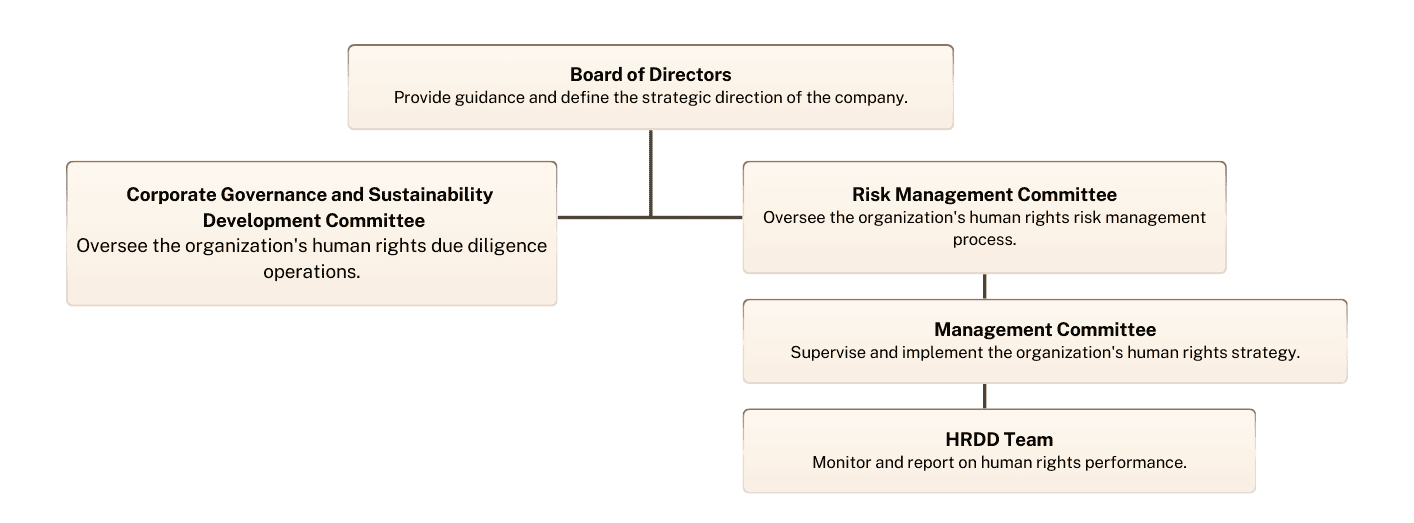
Strategies and Management Approaches.
The Company discloses sustainability reports. Prepared according to The Global Reporting Initiative (GRI Standards) according to criteria regarding Freedom of association and collective bargaining GRI 407: Freedom of Association and Collective Bargaining, child labour GRI 408: Child Labor, Forced Labor GRI 409: and Human Rights Assessment GRI 412: Human Rights Assessment
Comprehensive Human Rights Management Process
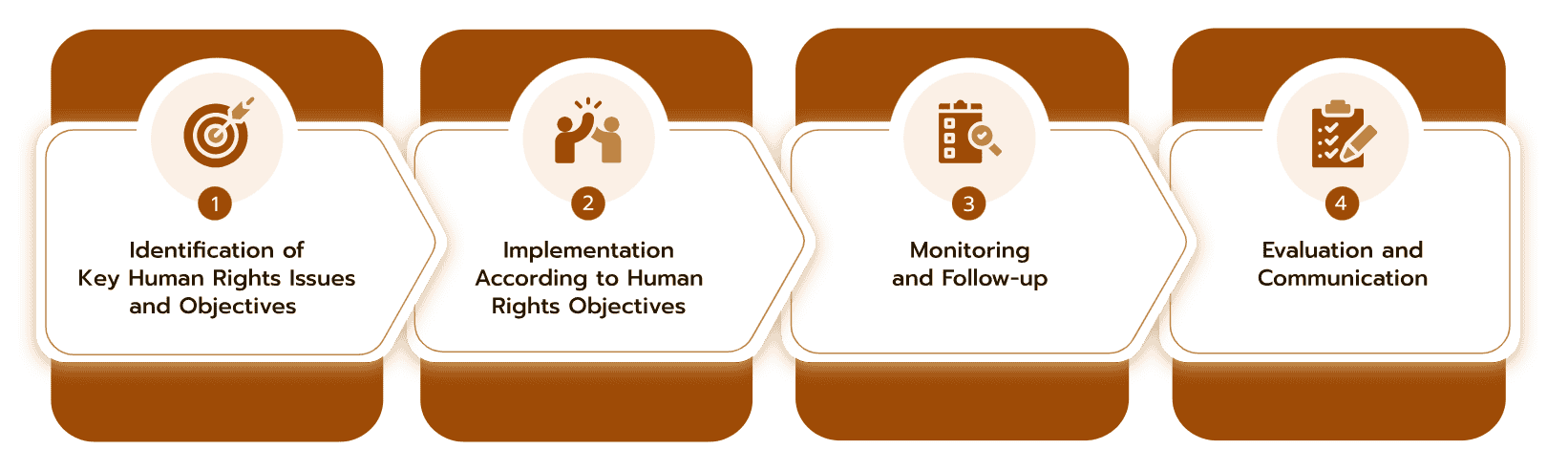
1. Identification of Key Human Rights Issues and Objectives
using the criteria " Impact-based assessment" according to UNGP, considering 3 dimensions:
Scale – Severity of impact on life, health, and human dignity
Scope – Number of affected individuals
Irremediable character – Remediation capacity
2. Implementation of Human Rights Objectives
Implement defined goals through policies, measures, and operational manuals, such as fair compensation and promotion, Safe working environment and equal opportunities for all employees.
3. Monitoring and Follow-up
Progress is monitored and compliance with human rights standards is assessed at both internal departmental and suppliers levels. Risks or violations are investigated to rectify and prevent recurrence.
4. Evaluation and Communication
Evaluate human rights performance both quantitatively and qualitatively, then report results to management and stakeholders, and communicate transparency through reports or various channels to build organizational trust.
Comprehensive Human Rights Risk Assessment Process
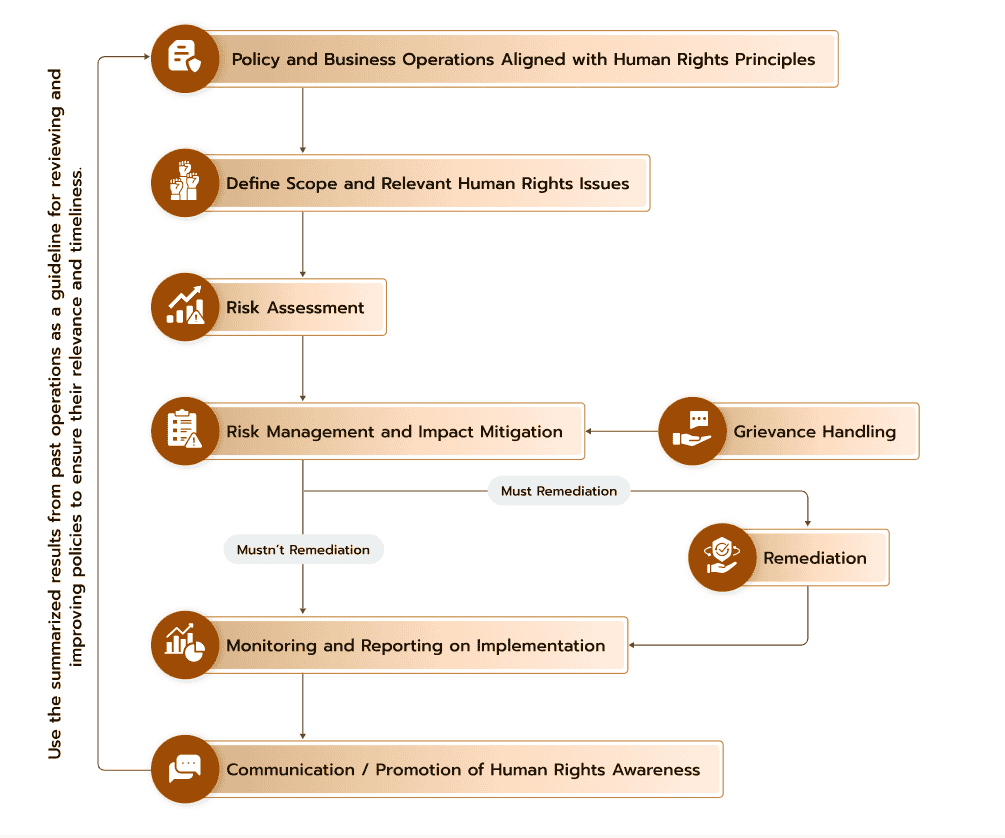
For more information, please visit: Human Rights Due Diligence (HRDD)
Performance results for 2025
Comprehensive human rights due diligence (GRI: 412-1)
In 2025, the Company conducted a Human Rights Risk Assessment (HRRA), which is a crucial part of the Human Rights Due Diligence (HRDD) process, covering 100% of the Company's operational areas. The scope extends to the Company's supply chain and business operations, including suppliers, contractors, and business allies. The Company identified human rights risks, integrating them into other risk assessment processes conducted by each department according to their duties Self-responsibility.
Main objectives to ensure that the Company can appropriately identify, prevent, and mitigate human rights impacts, both potential and actual. Appropriate remedial and risk control measures have been established to cover the Company's operations and value chain.
Human Rights Risk Assessment and Mitigation Process (HRDD Process)
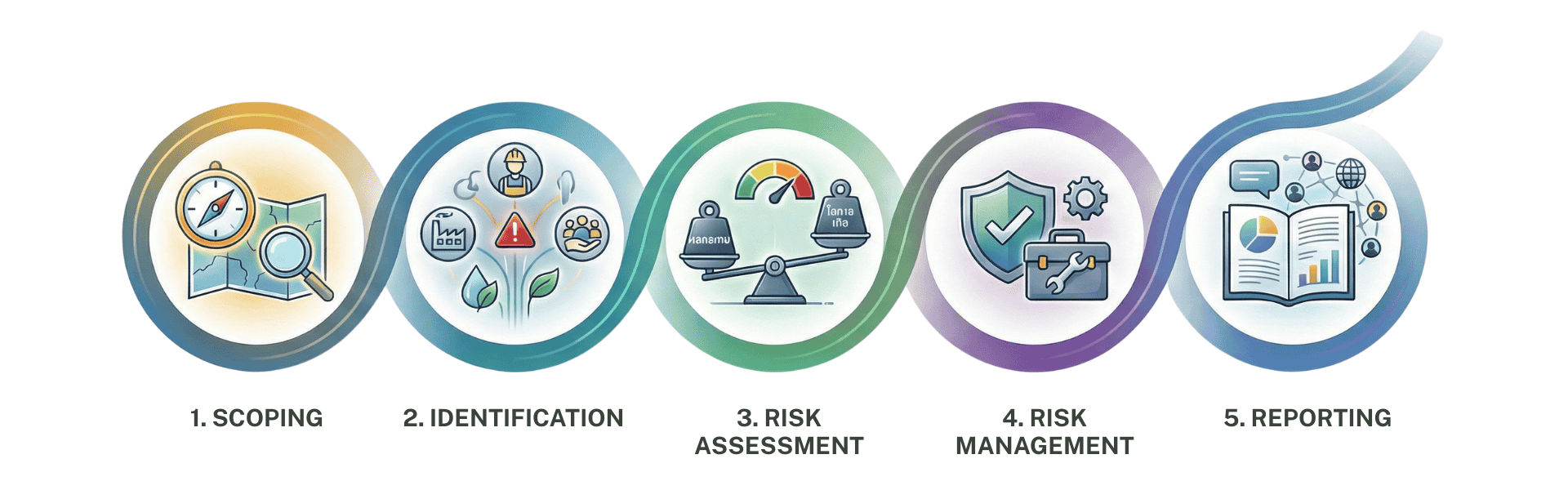
1. Scope of Assessment: covering the core activities of the Company and its subsidiaries, as well as relevant stakeholder groups throughout value chain to ensure the care and protection of the rights of all stakeholder groups, including employees, suppliers/external contractors, customers, and communities. This assessment is conducted annually.
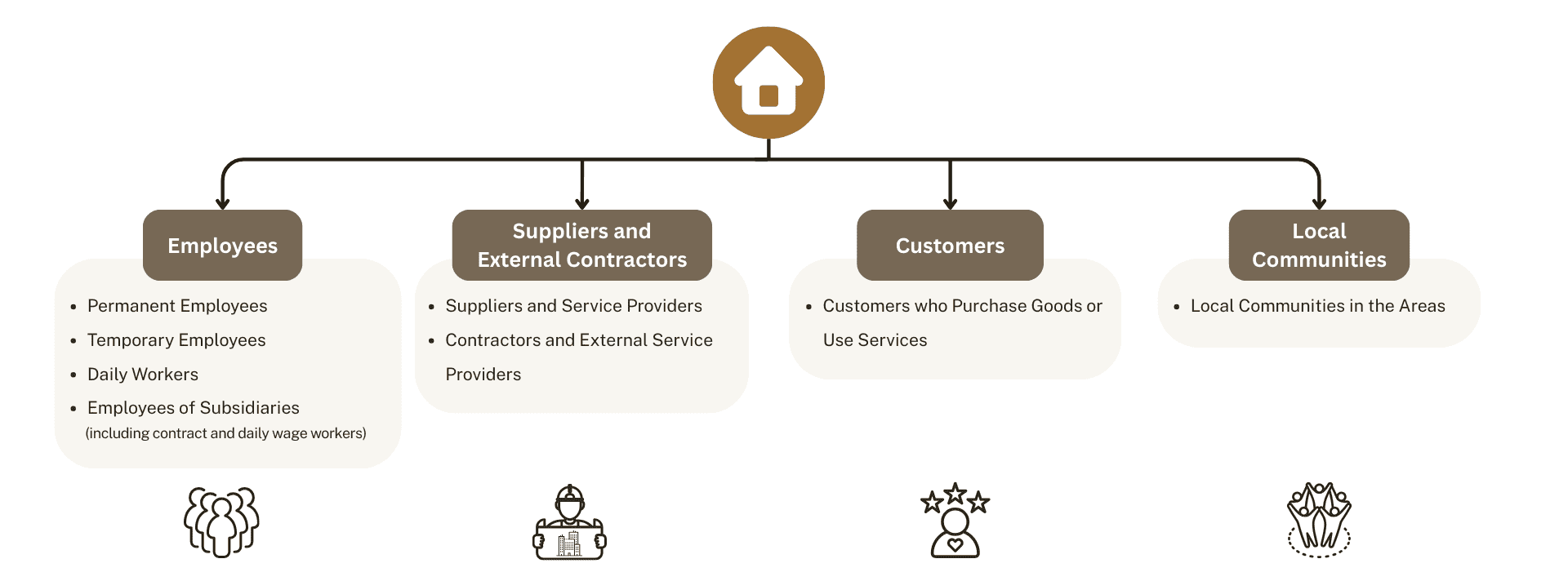
2. Identification of Human Rights Issues
The Company identifies and assesses potential human rights risk issues arising from the activities of the Company, its subsidiaries, suppliers, and external contractors. Human rights risk issues are considered to cover stakeholders, especially impacts on vulnerable groups such as migrant workers, female workers, child labourers, LGBTQ+ individuals, and persons with disabilities, in order to prioritize risks and plan appropriate management. Stakeholders are involved in identifying issues through interviews, focus groups, soliciting opinions and suggestions, combined with future trend research, analysis of the Company's internal data, and comparison with industry best practices nearby The Company has defined "Salient Human Rights (Salient Human Rights) " by prioritizing issues based on "the severity of impact on individuals" in accordance with the UN Guiding Principles on Business and Human Rights, and integrating it into the organizational risk management process.
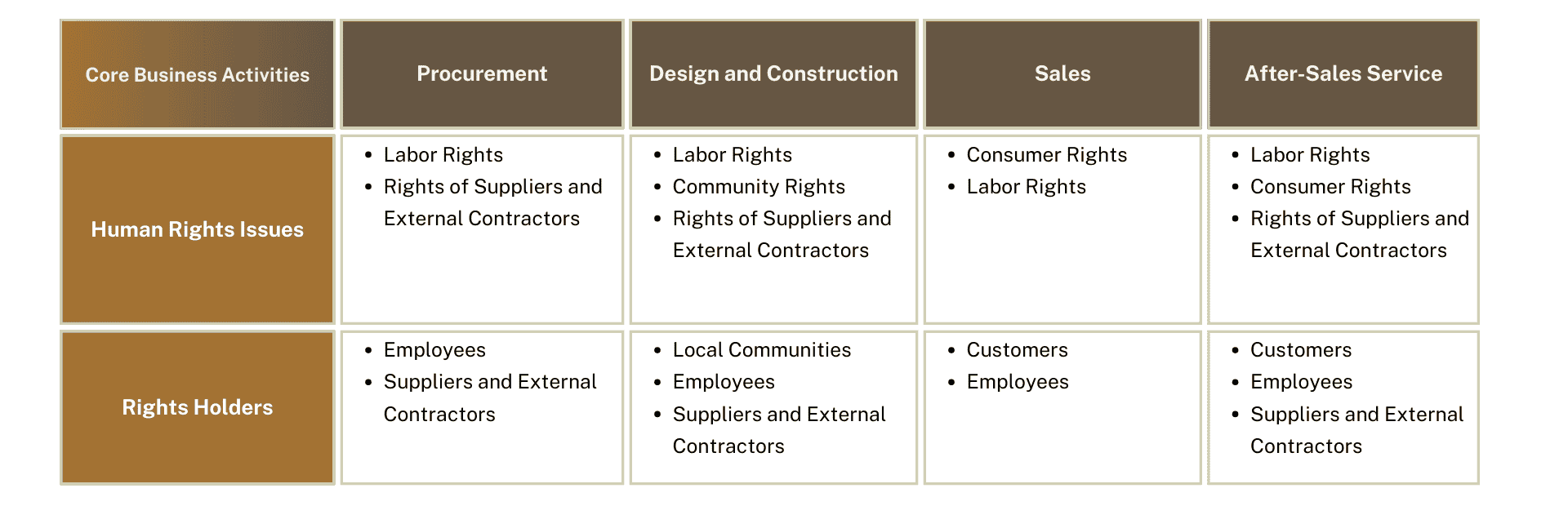
Results from the assessment and prioritization of human rights risks throughout the value chain shown in the table below.
Labour rights | Community rights | Suppliers rights | Customer rights | in the supply chain |
|
|
|
|
|
3. Risk Assessment
The Company assesses human rights risk levels using criteria that evaluate the severity of impact on stakeholders, based on the scale of impact, the number of affected individuals (scope), and the remediable character of the impact, combined with the likelihood of occurrence.
Affected parties | Human Rights Impact Assessment Results |
Operational areas, head office, and construction sites | 100% of operational areas assessed for impact. 100% of areas with human rights risks have implemented prevention and mitigation measures. |
Key suppliers (Tier-1 suppliers) | Key suppliers assessed No have human rights risks. |
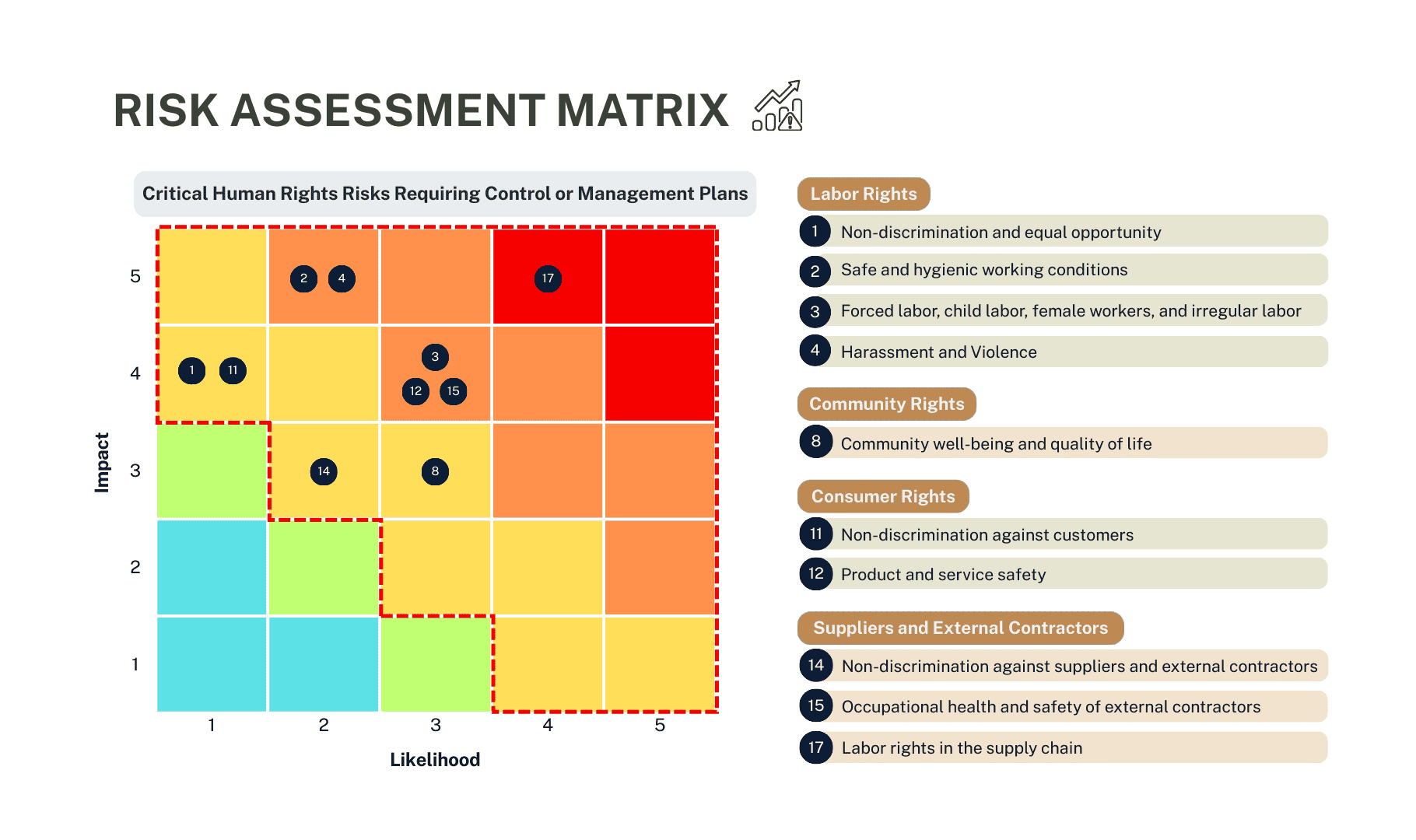
4. Human Rights Risk Management
The Company found one high-level human rights risk issue related to occupational health and safety. Therefore, the Company has established management measures to mitigate impacts and prevent future occurrences, as well as to provide remedies or rehabilitation for those affected by the impact appropriately, in collaboration with affected or potentially directly affected stakeholders such as employees, suppliers, customers, and communities, to define effective, appropriate, and sufficient measures, and has implemented various measures as follows:
Scope | Risk issues significant human rights aspects | Affected stakeholders | Company operations to rectify, prevent, and remedy. |
Activities Company operations | Labour rights | ||
Employees occupational health and safety | Employees |
| |
Activities Operations in the supply chain of suppliers and contractors | Labour rights in the supply chain | ||
Health and safety of suppliers' and contractors' workers | Workers of suppliers and contractors |
| |
Community rights | |||
Community health, hygiene, and safety | Surrounding Communities |
| |
5. Monitoring and Evaluation The Company mandates an annual review of human rights risk issues, as human rights risks related to the Company's business operations may change with different activities and stakeholder groups. Furthermore, the Company monitors and evaluates the implementation of various corrective and preventive risk measures by establishing indicators to track and measure the effectiveness of risk management measures.
Complaint and Whistleblowing Mechanism
The Company places strict importance on preventing and investigating human rights violations. It has established appropriate rehabilitation and remedial measures, including financial assistance and other forms of support, to mitigate potential impacts from the Company's activities. It also provides channels for complaints/whistleblowing, mechanisms for protecting informants, and emphasizes data privacy. Complaints are kept confidential to build trust with complainants. Procedures for handling, fact-finding, concluding results, and measures to protect whistleblowers or complainants from suffering harm are clearly defined. Whistleblowers can report to Supalai Contact Center 1720 or complain via e-mail anti-corruption@supalai.com or through suggestion boxes located near the fire escapes on each floor of Supalai Grand Tower Rama 3, with direct reporting to independent directors.
The Company continuously monitors the effectiveness of human rights remediation and impact management through a comprehensive incident management process (Incident Management and Remediation Process), covering incident identification, resolution, rehabilitation, and recurrence prevention. The effectiveness of this process is monitored through key indicators, including:
- Average incident resolution time
- Incident resolution rate
- Corrective action effectiveness
- Repeat incident rate
- Impact remediation outcome
- Stakeholder satisfaction level after remediation
From human rights operations throughout 2025, the Company found no cases of human rights violations within the organization or in the supply chain, and received no significant complaints related to human rights violations from any stakeholder group.
For more information, please visit: Policy on Whistleblowing and Complaints
Due Diligence Document Link
https://www.supalai.com/document/about/governance/SUPALAI_HRDD_EN.pdf
Employees — Plan & Guidelines
Has an Employee Management Plan
Yes
Plan Description
Human Resource Development and Labour Standards
Key Sustainability Issues | Impacts, Risks, and Opportunities |
Respect for human rights and fair labour practices.
Capacity Enhancement for Employees and Workers in Work and Daily Life.
| The company designates labour standards and human rights issues as an Enterprise Sustainability Risk, which is overseen by the Board of Directors and the Risk Management Committee through the operations of the Sustainability Committee. Concrete implementation is carried out, along with regular reporting of labour, human rights, and employment condition risk assessments, to ensure that these risks are integrated into the Enterprise Risk Management (ERM) process and the company's strategic decision-making. If the company lacks effective oversight mechanisms, especially in supply chains with a large workforce, it could lead to significant human rights violation risks, such as child labour, forced labour, or unequal treatment, which would directly impact reputation, stakeholder trust, and could lead to legal disputes that cause. project operations being disrupted. Furthermore, the risk of skilled labour shortages or the loss of talented personnel due to inadequate care also continuously impacts the quality of construction work and the organization's long-term competitiveness. Focusing on fair treatment of labour will sustainably increase opportunities for the organization's business development and enhance competitiveness. This is because the company maintains a positive image, which positively impacts the recruitment of qualified and suitable personnel to join the company, and serves as a strategy to retain knowledgeable and capable employees within the company. To maintain business competitiveness, as human rights issues are quite sensitive and can be linked to other issues that may have continuous impacts from the company's business operations. Furthermore, employees and stakeholders will benefit from or have opportunities due to the commitment to operate with respect for human rights and fair labour practices. This includes employees and stakeholders being treated fairly without discrimination, and employees of suppliers benefiting from the company's request for cooperation from suppliers on Human Rights Aspect issues |
FTSE Russell EGS Theme: Labour Standards Supporting SDG goals
|
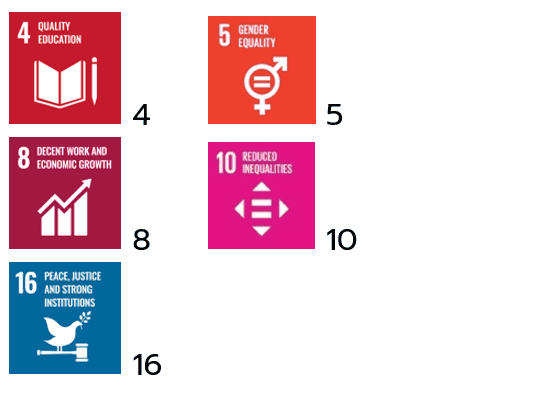
Strategies and Management Approaches
The company recognizes the importance of respecting human rights and fair labour practices in all activities throughout the supply chain. Therefore, it operates with a focus on diversity and equality. The company has a policy on ethical recruitment and employment, prohibiting discrimination or exclusion based on individual diversity, including race, religion, culture, language, skin color, gender, disability, political opinions, or any other matter, with consideration given to the suitability for the duties and responsibilities on a case-by-case basis. Furthermore, there is no use or employment of child labour. The company has a standardized recruitment and selection system for employees, offering equal opportunities to all interested individuals to join the company.
The company discloses sustainability report data according to international GRI Standards, specifically GRI 401: Employment 2016, GRI 403: Occupational Health and Safety 2018, GRI 404: Training and Education 2016, GRI 405: Diversity and Equal Opportunity 2016, GRI 408: Child Labor 2016, and GRI 409: Forced or Compulsory Labor 2016. It conducts business in accordance with international practices related to respecting stakeholders' human rights to promote human rights across the organization and ensure that all employees and stakeholder groups are treated, protected, and have their fundamental rights respected equally and fairly. Concurrently, it aims to promote and support freedom of expression, association, and collective bargaining. Receiving fair compensation, including prioritizing the protection of vulnerable groups, to mitigate risks related to human trafficking, forced labour, and child labour, with a commitment to completely eliminate discrimination and oppose all forms of harassment.
Policy and Commitment
The company recognizes that all individuals possess equal value and dignity. Therefore, it has established a "Human Rights Policy" to serve as a crucial standard for conducting business with respect for human rights, which are fundamental virtues for work and coexistence. This policy is designed to be integrated into the organizational culture and desired behaviors to ensure that the company's business operations and the work practices of employees at all levels, from the Board of Directors to employees and stakeholders throughout the supply chain, are based on the principles of mutual respect for dignity and honor in a sustainable manner.
To align with international standards, the company is committed to conducting business based on human rights principles and labour standards in accordance with the Universal Declaration of Human Rights (. Universal Declaration of Human Rights: UDHR), the United Nations Guiding Principles on Business and Human Rights (UNGP), and the International Labour Organization Declaration on Fundamental Principles and Rights at Work (ILO Declaration). The company integrates these principles into its business processes, organizational policies, and management throughout the value chain to promote respect, protection, and prevention of human rights violations in all business activities.
The company has conducted a comprehensive human rights due diligence process (Human Rights Due Diligence: HRDD) systematically, covering the identification and assessment of human rights risks and impacts, the establishment of prevention and mitigation measures, the monitoring and evaluation of the effectiveness of implemented measures, as well as disclosure of information and the provision of appropriate grievance mechanisms (Identify–Prevent–Mitigate–Track–Communicate–Remedy). This covers employees, construction project workers, migrant workers, as well as the labour of suppliers and contractors in the company's value chain.
This approach reflects the company's commitment to conducting business ethically, transparently, and with social responsibility, while also supporting the creation of fair employment conditions, respecting human dignity, and managing risks related to continuous human rights and labour, which are fundamental to long-term sustainable growth.
For more information, please visit: Policy on Human Rights
Policy | Guidelines |
1. Treatment of Employees |
|
2. Compensation and Benefits |
|
3. Responsible Termination of Employment |
|
4. Gender Equality and Women's Rights (GRI 405-1) |
|
5. Employment |
|
6. Employment of Migrant Workers |
|
7. Freedom of Association and Collective Bargaining |
|
8. Harassment and Abuse |
|
9. Safety, Occupational Health, and Working Environment |
|
Performance results for 2025
Diversity, equality and non-discrimination. (GRI 405-1)
Project Design and Development
The company implements measures to address diversity, equality, and non-discrimination based on race, religion, gender, age, nationality, and disability. This begins with the design process and the development of high rise projects and low rise projects that utilize Universal Design (UD) principles, or accessible design, to create environments that everyone can access, understand, and use equally, considering gender, age, abilities, or disabilities, including young children, pregnant women, the elderly, and general users, as well as designing for good well-being throughout the value chain.
The company conducts accessibility assessments in buildings, considering key elements such as ramps, elevators, and restrooms for persons with disabilities, parking, and internal building circulation paths, as well as common areas such as gardens and walkways, to comply with relevant laws and standards. These actions reflect the company's commitment to respecting human rights, non-discrimination, and creating an environment that everyone can access and utilize equally.
Universal Design: Designing common areas to be accessible for all ages.
Disabled persons access: Design considering persons with disabilities. Building Accessibility for Persons with Disabilities and Physical Limitations.
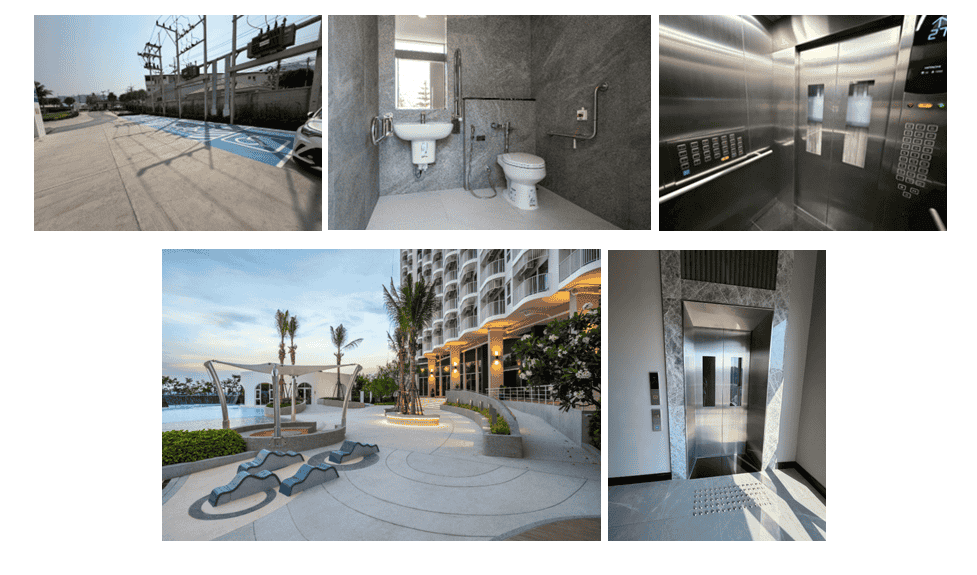
Community: Creating common areas that promote physical and mental well-being, such as gardens, swimming pools, fitness centers, and co-working spaces.
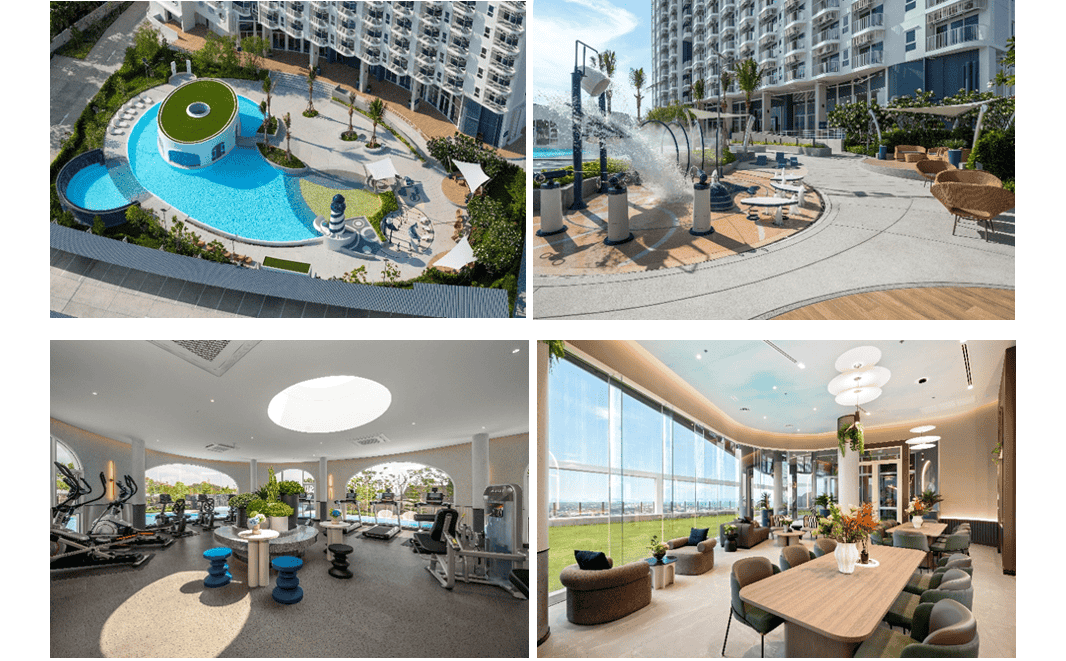
Consideration of access via public transport: Public transportation access in the project design and development phase.
The company prioritizes site selection, design, and project development with appropriate consideration for public transportation access to support convenient, safe, and environmentally friendly travel. The company has integrated consideration of these issues during the project feasibility study and master plan design phases, such as evaluating the distance from main public transportation systems, convenience of pedestrian connections, and allocating pick-up/drop-off areas within the project to reduce reliance on private vehicles, promote residents' quality of life, and support sustainable urban development.
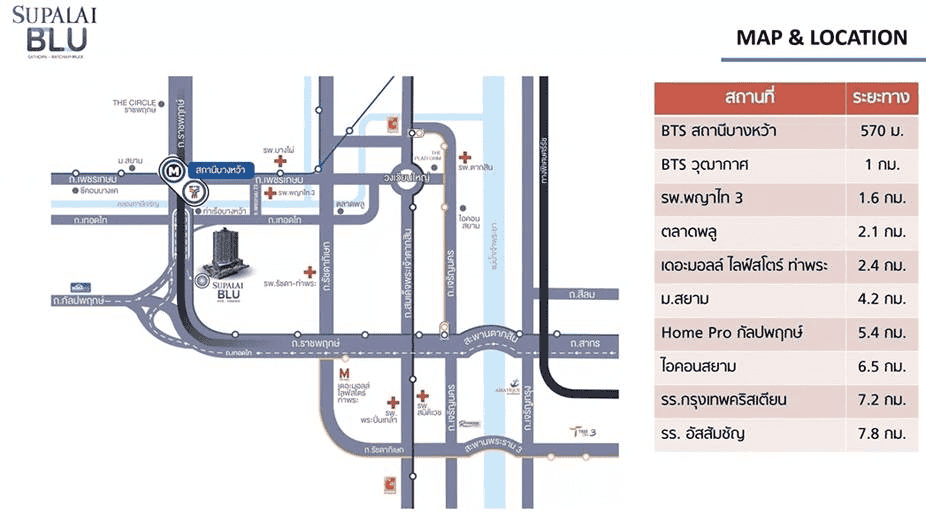
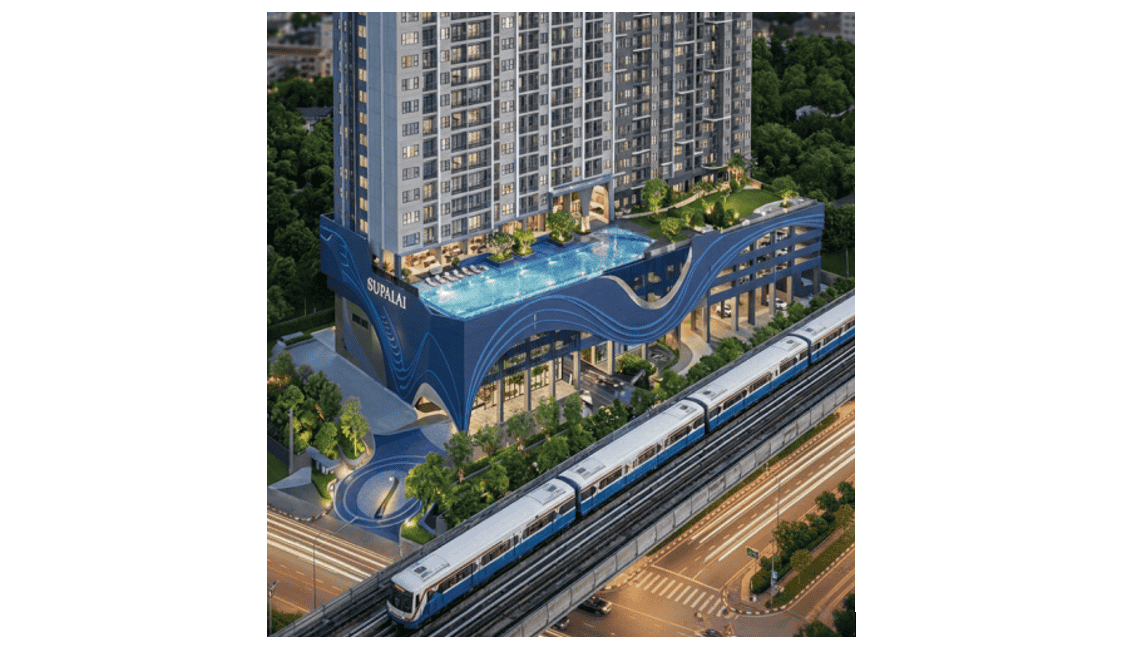
Equality Welfare Project
The company focuses on concretely building an organizational culture that embraces diversity and inclusion through the "Equality Welfare" project. This project provides benefits and privileges to employees and LGBTQ+ partners who are legally married, treating them equally to heterosexual married couples in all respects, such as a maximum 20% discount on housing purchases and providing gifts for starting a new life together, in timely response to the Marriage Equality Act. This initiative reflects the commitment to treat all personnel with respect, without discrimination, and aims to create a safe and inclusive workplace, which strengthens employee engagement with the organization and aligns with international human rights standards.

Worker Care in Construction Projects
Construction labour is a crucial mechanism driving the success of project development. The company prioritizes comprehensive worker care by collaborating with contractors to elevate safety, occupational health, and quality of life standards for workers. This is achieved through providing suitable and orderly accommodation, especially worker housing that meets safety and hygiene standards. The company mandates strong, partitioned accommodation with standard fire protection systems to create a safe living environment, alongside providing essential basic welfare such as separate male and female restrooms and showers in worker camps, hygienic separate male and female restrooms in project construction areas, and sufficient clean drinking water. Systematic accommodation management helps workers achieve a good quality of life, receive adequate rest, which positively impacts their physical and mental health, increases concentration, and improves work efficiency. Simultaneously, it reflects the company's responsibility in accordance with legal labour standards and human rights principles.
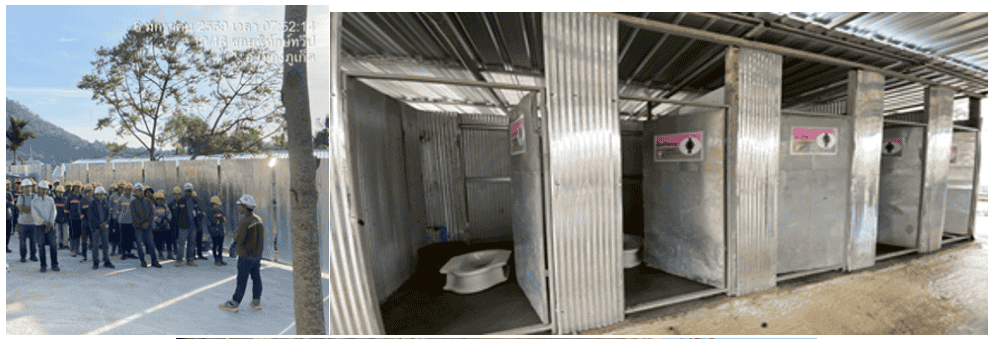
Restrooms in worker camps.
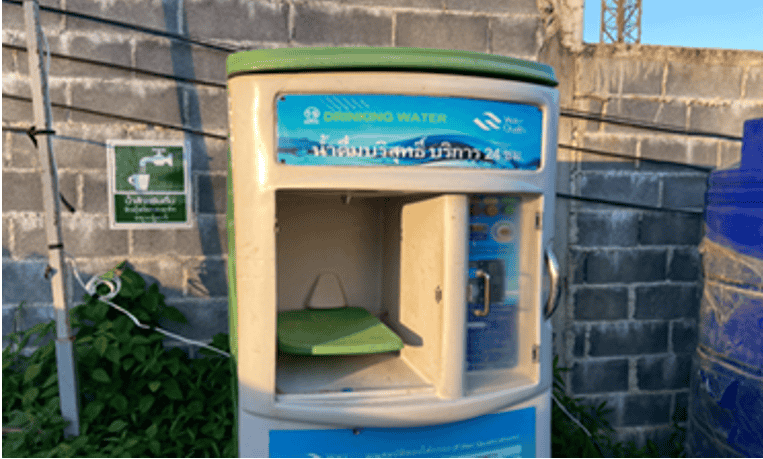
Drinking water dispensers within worker camps.
Plan Areas
| Plan Area |
|---|
| Fair employee compensation |
| Employee training and development |
| Promoting employee relations and participation |
| Migrant/foreign labor |
| Child labor |
| Occupational health and safety in workplace |
Employees — Workforce
Workforce Data
| Metric | Current Year | Previous Year | Two Years Ago |
|---|---|---|---|
| Total number of employees (Persons) | 1,459 | 1,485 | 1,439 |
| Number of male employees (Persons) | 724 | 748 | 747 |
| Number of female employees (Persons) | 735 | 737 | 692 |
| Total employment of disabled persons (people) | 18 | 10 | 4 |
| Total disabled employees (people) | 14 | 10 | 4 |
| Total male disabled employees (people) | 6 | 5 | 3 |
| Total female disabled employees (people) | 8 | 5 | 1 |
| Total disabled workers who are non-employee (people) | 4 | 0 | 0 |
| Contributions to the fund for promoting and improving the quality of life for disabled persons | 1 | 1 | 1 |
| Total number of male employees in operational level (Persons) | 586 | 607 | 614 |
| Total number of male employees in management level (Persons) | 130 | 134 | 126 |
| Total number of male employees in executive level (Persons) | 8 | 7 | 7 |
| Total number of female employees in operational level (Persons) | 610 | 617 | 579 |
| Total number of female employees in management level (Persons) | 121 | 116 | 109 |
| Total number of female employees in executive level (Persons) | 4 | 4 | 4 |
Employees — Remuneration & Provident Fund
Remuneration & Provident Fund
| Metric | Current Year | Previous Year | Two Years Ago |
|---|---|---|---|
| Total disabled employees (people) | 1,073,394,735 | 1,150,650,418 | 1,091,717,356 |
| Total male employee remuneration (Baht) | 618,525,402 | 677,753,527 | 639,271,910 |
| Total female employee remuneration (Baht) | 454,869,333 | 472,896,891 | 452,445,446 |
| Number of employees eligible to participate in PVD (persons) | 1,459 | 1,485 | 1,439 |
| Total number of employees joining employee provident fund (Persons) | 1,257 | 1,272 | 1,272 |
| Percentage of total number of employees joining employee provident fund to total number of employees (%) | 86.15 | 85.66 | 88.39 |
| Number of PVD members / Total eligible employees (%) | 86.15 | 85.66 | 88.39 |
| Total amount of provident fund contributed by the Company (Baht) | 38,840,975 | 38,407,154 | 35,487,751 |
| Total amount of provident fund contributed by employee (baht) | 50,994,993 | 48,533,697 | 44,560,798 |
Employees — Training & Development
Training Data
| Metric | Current Year | Previous Year | Two Years Ago |
|---|---|---|---|
| Average employee training hours (Hours / Person / Year) | 24.08 | 20.56 | 20.86 |
| Employee development and training expenses (baht) | 4,970,767 | 4,986,465 | 4,667,078 |
Employees — Occupational Health & Safety
Occupational Health & Safety Data
| Metric | Current Year | Previous Year | Two Years Ago |
|---|---|---|---|
| Total number of lost time injury incidents by employees (Cases) | 0 | 3 | 0 |
Employees — Labour Relations
Labour Relations Data
| Metric | Current Year | Previous Year | Two Years Ago |
|---|---|---|---|
| Total voluntary resignations (Persons) | 139 | 152 | 158 |
| Male employees who voluntary resigned (Persons) | 58 | 54 | 75 |
| Female employees who voluntary resigned (Persons) | 81 | 98 | 83 |
| Percentage of employee turnover leaving the Company voluntarily (%) | 9.53 | 10.24 | 10.98 |
| Evaluation result of employee engagement | 1 | 1 | 1 |
Employees — Employee Representation
Employees Are Represented Collectively
Yes
Forms of Representation
| Form |
|---|
| Welfare committee |
| Labor relations committee |
Employees — Targets
Has Set Employee Targets
Yes
Targets
| Indicator | Target Areas | Target Year | Target Year — Description |
|---|---|---|---|
| Year 2025: Average training and development hours of 24.08 per person per year. | 2984 · Description: Employee training and development | 2,026 | Average training and development hours per person per year: 18 hours. |
| Year 2025 - Employee work-related fatalities 0% - Contractor/partner work-related fatalities 0% - Employee severe work-related injuries 1.86% - Employee occupational illnesses 0% - Employee training in safety, occupational health, and working environment 100% | 2988 · Description: Safety and occupational health at work | 2,030 | No employee fatalities due to work - No severe employee injuries due to work - No employee illnesses due to work |
Employees — Performance & Outcomes
Has Performance Results
Yes
Performance Description
Awards Employee and Labour Management received by the company in 2025
The company is a member of Ministry of Labour and received the "Outstanding Establishment" award for labour relations and labour welfare at the national level for the year 2025 from the Department of Labour Protection and Welfare, for the 8th consecutive year. This reflects an establishment that respects human dignity and conducts business truly based on international standards. Therefore, it can be assured that the company is completely free from labour practices that violate human rights, and all processes, including recruitment, hiring, training, and compensation, are conducted equally, based on ability and experience, without discrimination based on any personal factors, to promote stable livelihoods and improve the quality of life for employees at all levels.
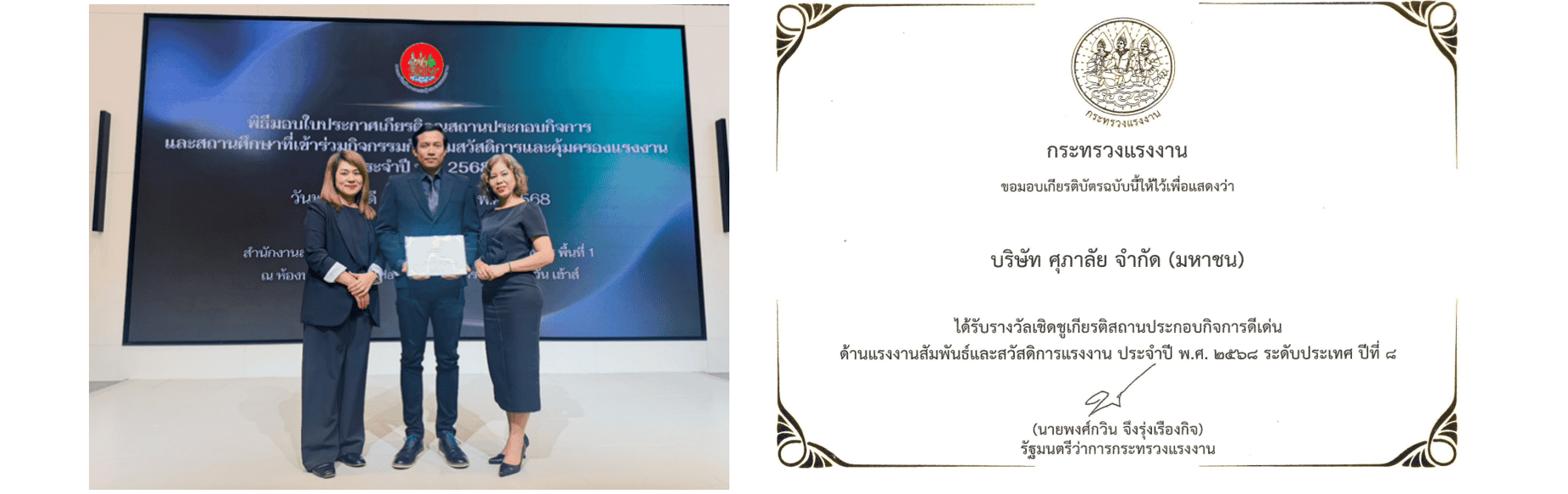
Performance Employee and Labour Management
Employee gender ratio (female:male): 0.42 : 0.58
Employment of persons with disabilities: 18 people, such as sustainability officers and others
Local employment: 53.21%
In collaboration with financial institutions, offering home loans for LGBTQ+ partners.
100% of employees trained in safety, occupational health, and working environment
Number of hours of potential development training: 24.08 hours per person per year
The rate of death or disability from work-related accidents is 0.
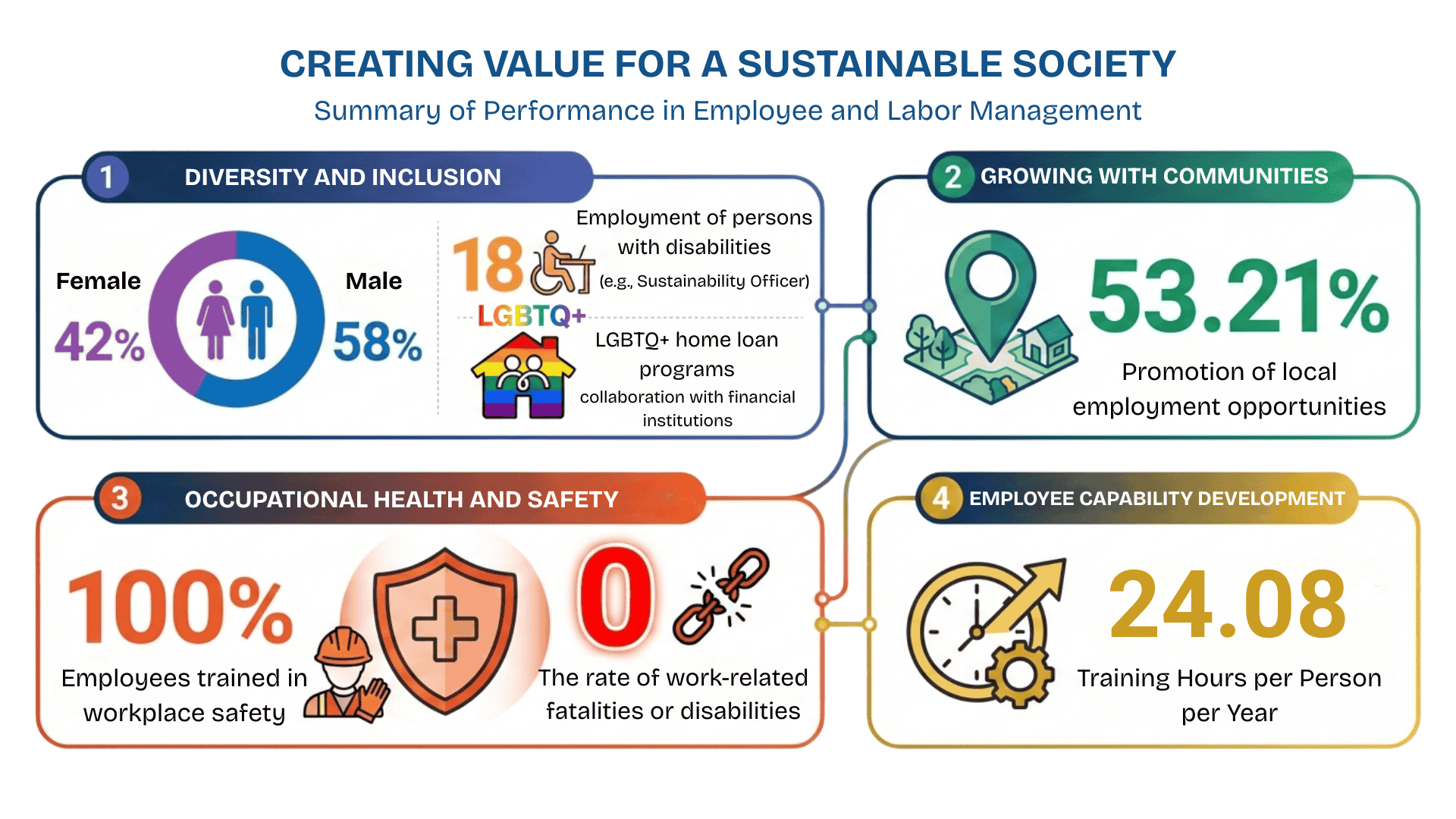
Customers — Plan & Guidelines
Has a Customer Management Plan
Yes
Plan Description
Customer Responsibility.
Key Sustainability Issues. | Impacts, Risks, and Opportunities. |
Consumers Responsibility
| The Company is committed to conducting its business responsibly toward customers and stakeholders. Operations are managed in accordance with the ISO 9001:2015 quality management standard, covering processes from planning and design to operational control, quality inspection, and data analysis. This systematic approach supports continuous improvement and enhances operational efficiency across the organization. The Company strives to continuously improve the quality of its products and services to meet customer needs and expectations while delivering maximum value. At the same time, the Company upholds transparency, integrity, and accountability to maintain stakeholder trust. Stakeholder feedback and recommendations are regularly considered and integrated into policy development and operational practices to further strengthen service quality and sustainable business performance. The Company has conducted a Materiality Assessment by evaluating Impacts, Risks, and Opportunities related to customers in accordance with the Double Materiality principle. The assessment considers both impacts on consumers and potential business risks that may affect the Company’s reputation, human rights-such as the rights to safety, privacy, and access to accurate information-stakeholder confidence, and financial value. Key risks identified include product quality risks, consumer safety, data privacy and protection, communication that may lead to misunderstanding, and legal risks related to consumer protection. To address these risks, the Company has established preventive measures and internal control systems and continues to monitor their effectiveness through executive-level oversight to ensure effective risk management and continuous improvement. |
FTSE Russell EGS Theme: Customer Responsibility Supporting SDGs.
|
Strategies and Management Approaches.
Responsible production and services for customers.
The Company discloses sustainability report data according to international GRI Standards criteria for customer responsibility, marketing, and communication, under GRI 416: Customer Health and Safety, GRI 417: Marketing and Labeling, and GRI 418: Customer Privacy. The company operates under the international standard ISO 9001:2015, emphasizing every process from planning and design, Control, inspection, and data analysis to continuously improve and develop work systems by the company is committed to continuously improving product and service quality for the benefit of consumers and considering the company's stakeholders, as declared in the quality policy and communicated to all employees for awareness and compliance.
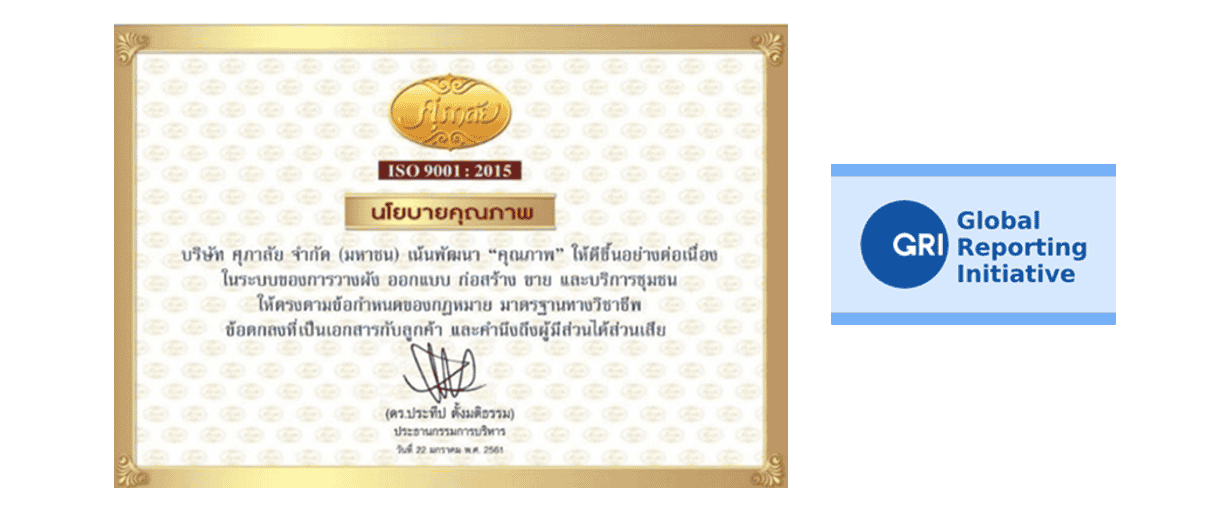
The Company is certified with ISO 9001:2015, which focuses on systematic management processes in all operations, allowing for traceability. It recognizes the organizational context that reflects the relationship between the business and its stakeholders, understanding their needs and expectations to align operational direction. Furthermore, it emphasizes risk management and considers operational opportunities as a fundamental basis for fostering a company-wide risk management culture, leading to the company's continuous sustainable development.
Continuous operational improvement and development.
The Company continuously improves various processes in all departments.
Define the organizational context regarding quality objectives, strategies, and the impact on the organization's ability to achieve expected outcomes, considering issues related to legal, social, cultural, environmental, knowledge, and organizational capabilities.
Identify key stakeholders of the company, including employees, customers, shareholders/investors, communities/society, suppliers/retailers, contractors, government agencies, external regulatory bodies, banks, and media, who impact the company's ability to deliver products in accordance with agreements with customers, legal requirements, and relevant regulations.
Define the necessary organizational knowledge for the operation of all processes, with knowledge being regularly reviewed and updated.
Consider risks and opportunities in all processes to ensure that all employees are aware of risk management approaches and opportunities that can lead to product and service development. This is to promote a risk management culture and enable the quality management system to achieve its defined objectives.
Review the "Quality Policy" to align with organizational goals and context, thereby supporting the organization's sustainable strategic direction and complying with ISO 9001:2015 requirements.
Product quality and standard development. (GRI 416-1)
The Company assesses product health and safety risks covering 100% of projects under construction and customer delivery, considering the entire Project Life Cycle from design, construction, delivery, and service.
after-sales. In 2025, there were no significant incidents related to customer safety or non-compliance with consumer health and safety laws.
In addition to the risk assessment process, the company has implemented risk management and operations in accordance with the international standard ISO 9001:2015 for quality management systems. This ensures that the company's products and services meet specified quality and safety standards, comply with legal requirements and customer expectations, effectively manage risks that may affect consumers, and are continuously monitored and controlled under the oversight of senior management.
The Company is committed to delivering quality products and services, and therefore strives to develop production processes to elevate standards. products to international standards, for which the company has been certified. Quality according to international standards. ISO 9001:2015. The company has a problem analysis process to lead to corrective actions, system improvements, risk management guidelines, and prevention of recurring problems. It also has tools for continuous improvement of work systems to connect all organizational processes, enabling the most efficient planning of sales, construction, and delivery of houses and condominiums, as follows.
Setting Key Performance Indicators (KPIs) to reflect operational efficiency and effectiveness, by reviewing indicators and targets of all departments to align with the company's policies and goals. This also includes emphasizing customer needs and expectations, focusing on measuring performance based on the principle that "customers are important individuals," encompassing both internal and external customers, to foster collaboration in all aspects and continuously improve the company's quality and service standards, such as.
Measuring customer satisfaction in terms of after-sales service, repair services, project management, information provision, and service speed.
The process for receiving complaints from customers and stakeholders, ensuring that all departments respond to complaints and resolve issues promptly. The company analyzes customer complaints, defines preventive measures for recurrence, and continuously monitors corrective actions. Furthermore, the company has established procedures, work instructions, and communicated them to all employees for awareness and compliance with the defined steps.
Measurement of the process for delivering houses/condominiums to customers, by evaluating quality and delivery time to ensure adherence to agreed-upon schedules with customers.
Requiring all departments to continuously improve their work systems in accordance with ISO 9001:2015 standards, with improvements and developments resulting from the following actions.
Data analysis and operational performance review.
Performance Measurement (KPIs: Key Performance Indicators).
Data collection and customer satisfaction measurement.
Improvement and development of work systems based on recommendations from ISO 9001 system monitoring: 2015, from both the Certifying Body and the company's Internal Quality Auditors (IQA).
Requires periodic review of the system and management processes in the operating principles (Work Instructions, operational procedures, and other related documents) to ensure that the management system is appropriate, sufficiently comprehensive, and continuously developed.
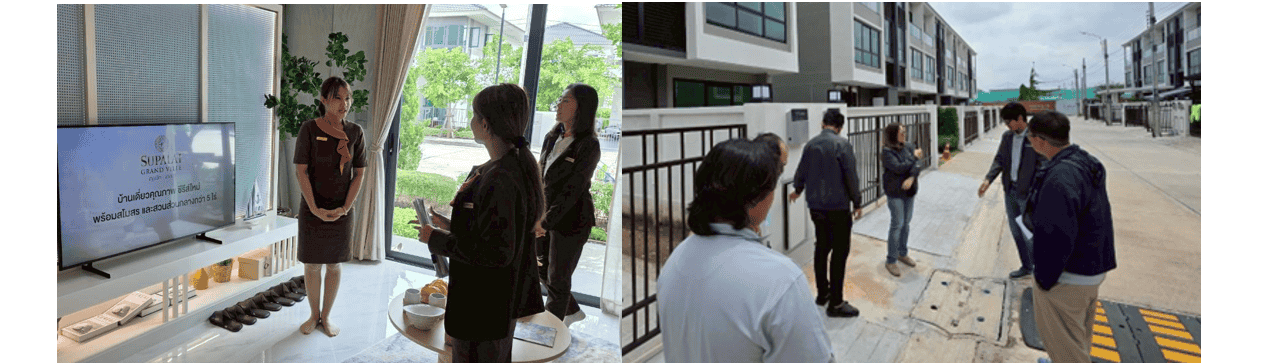
Establishing criteria for selection, procurement, operational control, and evaluation, covering all outsourced processes to ensure that external contractors engaged by the company meet the specified quality and qualifications, and that procurement is conducted transparently.
Close control and monitoring of operations by senior management in various forms, such as.
ISO 9001 System Monitoring. : 2015 by the ISO 9001 certifying body.
Internal quality system monitoring by company-appointed employees (Internal Quality Audit / IQA), with audit results used to continuously review and improve processes.
Monitoring the resolution of customer complaints and tracking ongoing complaints from the previous month to ensure that responsible parties are urged to take immediate corrective action.
Bringing issues related to work processes and operational-level risks to the Quality System Review and Improvement Committee meeting, where representatives from management of all departments discuss and then improve work procedures and define risk management guidelines.
In every meeting, risk issues are discussed to define risk management approaches that are crucial for business operations, such as; Operations impacting the environment, society, community, operations non-compliant with legal requirements or external regulatory criteria, customer satisfaction, product quality, company reputation, safety, corruption.
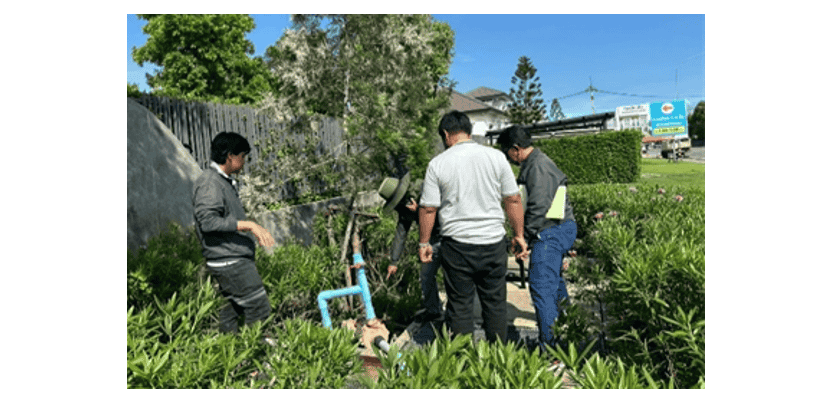
Enhancing Service Quality and Communication. (GRI: 417-1, 417-2)
The Company conducts marketing communications based on principles of accuracy, completeness, transparency, and non-misleading information (No Misleading or Deceptive Marketing) to protect consumers' right to accurate and verifiable information. All advertising content and public relations documents must undergo internal review and approval processes before public dissemination. To promote such governance, the Company has prepared "Communication and Advertising Regulations," which systematically define criteria and control processes, covering key issues as follows.
Establish clear criteria for presenting product and service information, including reference data, to ensure that the information is accurate, truth and traceable.
Requires the legal department or relevant units to review and approve all advertising content before publication, along with reviewing regulations and guidelines at least annually. once, to comply with changing laws and regulations.
Provide channels for complaints and mechanisms for correcting misleading communications, allowing for prompt correction, adjustment, or removal of content.
Provide regular training for employees involved in marketing communications on legal requirements, marketing ethics, and the company's internal guidelines to prevent risks from the outset.
This approach reflects the company's commitment to conducting business responsibly, transparently, and in compliance with consumer protection requirements, both in terms of internal governance and managing risks related to reputation and stakeholder trust.
In 2025, the Company had no significant violations related to marketing communications or labeling.
The Company is committed to delivering quality products and services, and therefore enhances employee engagement. Over 250 experienced, knowledgeable, capable, and skilled employees from all departments have been appointed as ISO 9001:2015 system auditors (Internal Quality Audit / IQA) Employees thus participate in monitoring the operations of other departments to ensure compliance with ISO 9001 standard requirements: 2015 and the operational procedures defined by the Company. This allows both auditors and auditees to learn and understand inter-departmental work processes, resulting in more efficient internal coordination.
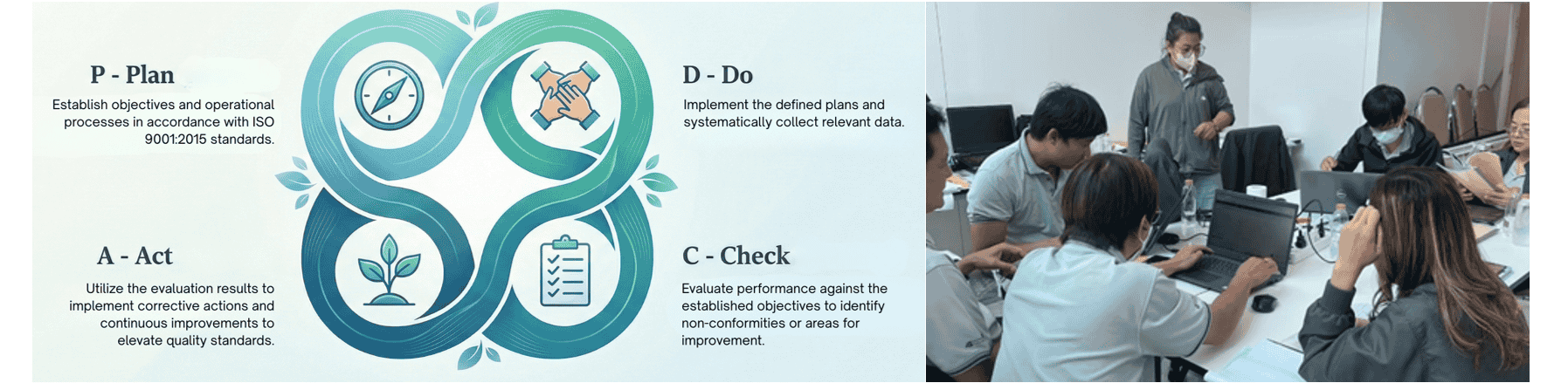
The Company developed the "SUPALAI SABAI" application, a comprehensive home management application that enhances living convenience in all dimensions. It supports two operating systems, iOS and Android, and is available in two languages, Thai and English, to improve service accessibility and speed for customers. This includes After-Service, a comprehensive after-sales customer care service for reporting repairs, scheduling appointments, and checking repair statuses, among others. The Company focuses on marketing and communication approaches that encompass ethical principles, sustainability, and social responsibility, prioritizing the best interests of customers.
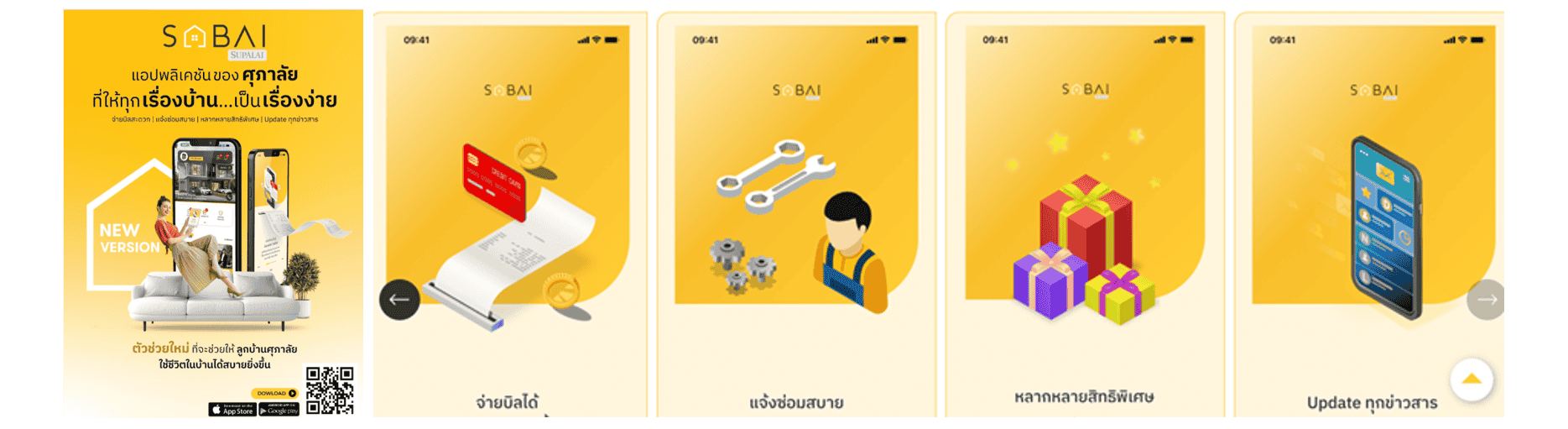
Customer Relationship Management.
The Company has processes for managing, analyzing, and developing relationships with both new and existing customers. The ultimate goal is to increase satisfaction, build brand loyalty, and boost long-term sales through insights. To meet customer needs, channels are provided for customers to communicate with the company, including expressing opinions, suggestions, and complaints regarding products, services, or other matters, via Supalai Contact Center 1720 and online channels such as social media, email, and the company's website. A central unit handles repair notifications, complaints, suggestions, feedback, and provides information to customers or those interested in projects. Additionally, the company's senior executives regularly visit various projects to identify issues, which leads to prompt corrective or preventive measures. These actions by the company aim for continuous improvement in product and service quality to meet customer needs and ensure the satisfaction of customers and stakeholders.

Data security.
Protection of customer personal data. (GRI: 418-1)
The Company recognizes the importance of protecting data privacy and security, and therefore has established a "Personal Data Protection Policy" to ensure that directors, executives, and employees at all levels adhere to guidelines for proper data retention, access, and use, especially for sensitive data concerning the company or stakeholders, in accordance with the Cybersecurity Act B.E. 2019 and the Personal Data Protection Act B.E. 2019.
The Company implements appropriate personal data security measures, including administrative, technical, and physical safeguards regarding access to or control over personal data, to maintain the confidentiality, integrity, and availability of personal data. This is to prevent unauthorized or unlawful loss, access, use, alteration, correction, or disclosure of personal data, in accordance with applicable laws.
The Company implements appropriate personal data security measures, including administrative, technical, and physical safeguards regarding access to or control over personal data, to maintain the confidentiality, integrity, and availability of personal data. This is to prevent unauthorized or unlawful loss, access, use, alteration, correction, or disclosure of personal data, in accordance with applicable laws.
Additionally, The company has appointed a Data Protection Officer (DPO) responsible for overseeing legal compliance and reporting directly to senior management. Additionally, cybersecurity risk assessments are conducted annually, and system tests (Vulnerability Assessment / Penetration Test) are performed to prevent data breaches.
In 2025, there were no data breach incidents requiring reporting to regulatory authorities.
Management of data breach complaints.
The Company provides channels for stakeholders to report incidents of confidential or personal data breaches and has a process for fact-finding. In cases of personal data complaints, the Data Protection Officer will consider and report to executives in sequence. Channels are provided for customers to submit complaints via Supalai Contact Center 1720, as well as a whistleblowing channel for reporting suspected misconduct or corruption via anti-corruption@supalai.com
Operational results for 2025: The company received no customer complaints regarding personal data.
Customer Complaint Management.
The Company's complaint handling mechanism is designed to align with effectiveness criteria according to. UNGP, namely transparency, accessibility, fairness, predictability, and continuous improvement.
Operational results for the year. In 2025, the company was able to resolve and close 99.17% of complaints within the SLA framework (1,314 out of 1,325 complaints).
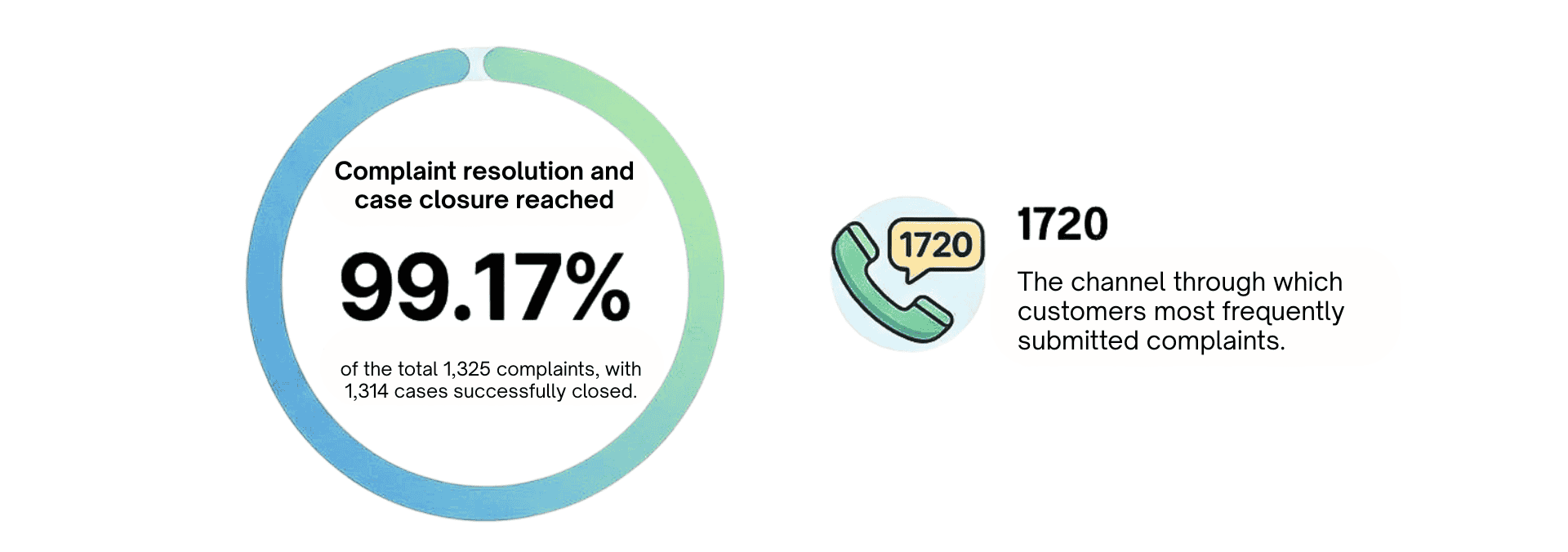
In the event of customer complaints, the company closely controls and monitors operations through senior management. Follow-up on results. Resolving customer complaints and tracking ongoing complaints from the previous month to ensure that responsible parties take immediate corrective action. This also includes bringing issues related to work processes and operational-level risks to the Quality System Review and Improvement Committee meeting, where representatives from management of all departments discuss and then improve work procedures and define risk management guidelines to maximize customer satisfaction.
In cases where customers report problems or complaints via Supalai Contact Center 1720, the company has a Ticket Expire SLA (Service Level Agreement) system. Employees must close cases within 48 hours of receiving them. The service SLA consists of 4 main processes:
Receiving and handling complaints.
Coordination with responsible parties.
Corrective actions and complaint management.
Notifying progress and inquiring about satisfaction.
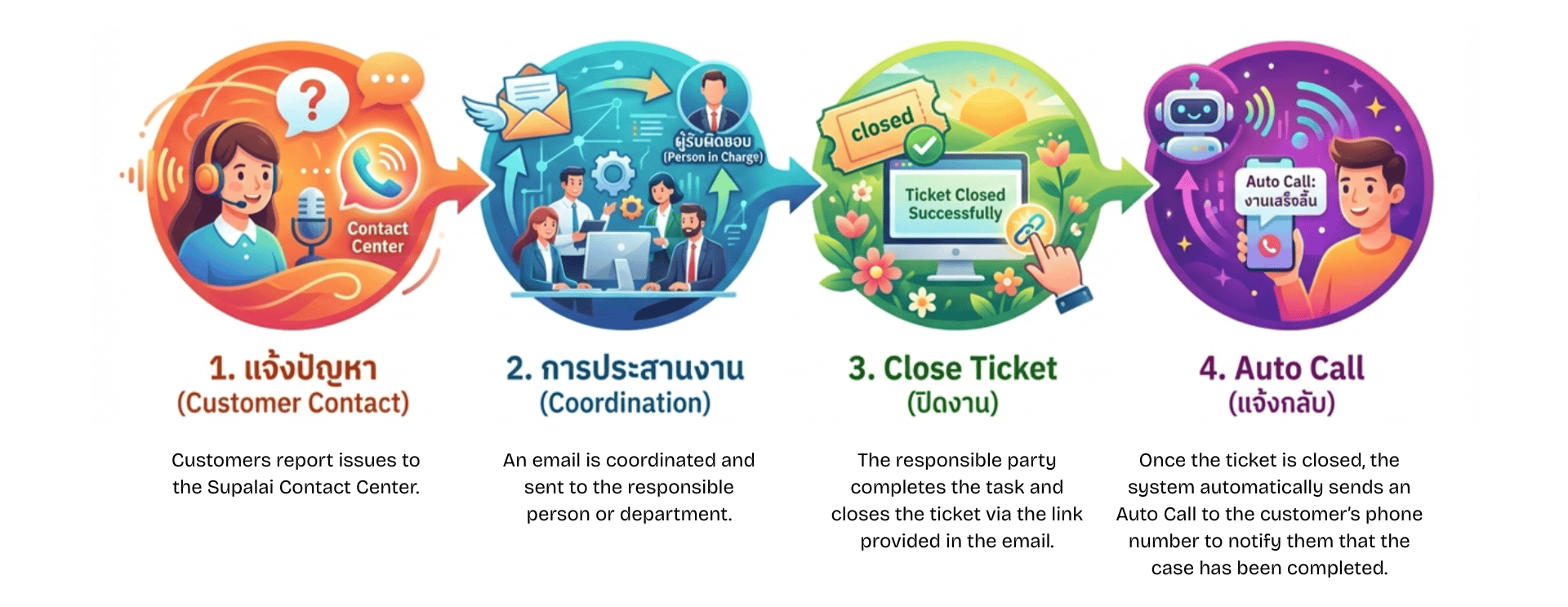
Plan Areas
| Plan Area |
|---|
| Responsible production and services for customers |
| Communication of product and service impacts to customers/consumers |
| Development of customer satisfaction and customer relationship |
| Protection of customer personal information |
Customers — Satisfaction Results
Introduction
Customer Satisfaction Evaluation
The Company mandates monthly customer satisfaction evaluations through surveys to rate customer satisfaction in terms of information/communication, service, and quality. In 2025, with a perfect score of 10, the Company achieved a customer satisfaction score of 9.35, which is higher than the target score of 9.25 and represents a 3.66% increase from 2024. The Company has analyzed customer recommendations from these evaluations and held meetings with relevant departments to plan the development and improvement of products, services, and business processes to further enhance the customer experience.
The trend of customer satisfaction scores during The past three years have shown continuous improvement, reflecting the efficiency of the quality management system and responsiveness to customer feedback.
The Company utilizes these survey results as one of the strategic indicators reported to senior management and links them to the performance evaluations of relevant departments.
Customer Satisfaction Survey Results Comparison Over the Past 3 Years
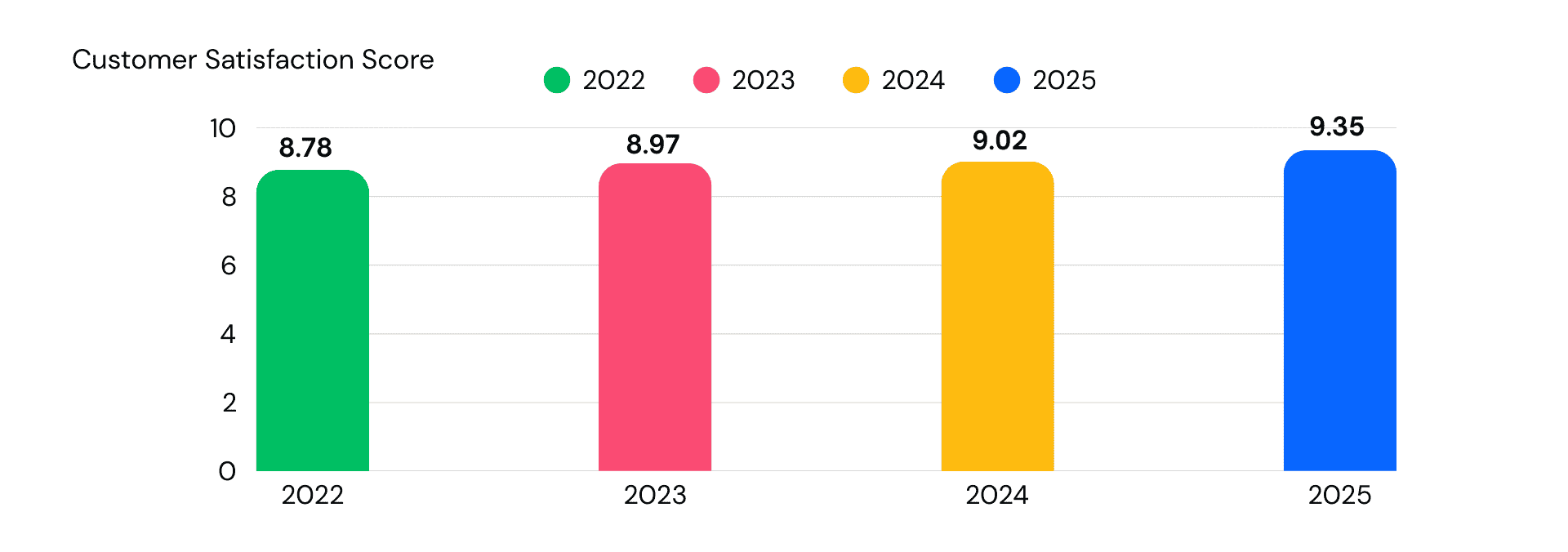
Customer Satisfaction Results
| Metric | Current Year | Previous Year | Two Years Ago |
|---|---|---|---|
| Evaluation results of customer satisfaction | 1 | 1 | 1 |
Customers — Targets
Has Set Customer Targets
Yes
Targets
| Indicator | Target Areas | Target Year | Target Year — Description |
|---|---|---|---|
| Achieved 100% compliance with the Ticket Expire SLA (Service Level Agreement) within 48 hours of receiving a problem or complaint. | 3008 · Description: Communication of product and service impacts to customers/consumers | 2,025 | Resolved 100% of customer issues and closed cases within SLA. |
| Customer Satisfaction Score: 9.35 / 10 | 3009 · Description: Development of customer satisfaction and customer relationship | 2,025 | Customer Satisfaction Score 9.25/10 |
Customers — Performance & Outcomes
Has Performance Results
Yes
Performance Description
Continuously developing and improving based on customer feedback.
In 2025, the company focuses on listening to the Voice of Customer (VOC) and customer insights, exploring ways to utilize customer feedback to improve products and services as a core driver for the organization to become a Customer-Centric Organization, aiming to enhance satisfaction and create sustainable value in 6 areas, namely:
1. Communication Enhance listening channels through Supalai Contact Center 1720 and the Supalai SABAI application, as well as various online channels such as Facebook, e-mail, etc., along with developing a tracking system feature for customers to monitor work status in real-time for transparency and speed in communication.
2. Quality and Excellent Service Utilize satisfaction survey results to improve repair work standards, focusing on reducing operational time and implementing a post-completion follow-up system to prevent recurring issues.
3. Residential Design that Meets Lifestyle Needs Apply Universal Design principles to develop flexible living spaces for all customer groups, ensuring safety and practical usability for members of all ages, thereby creating long-term residential value.
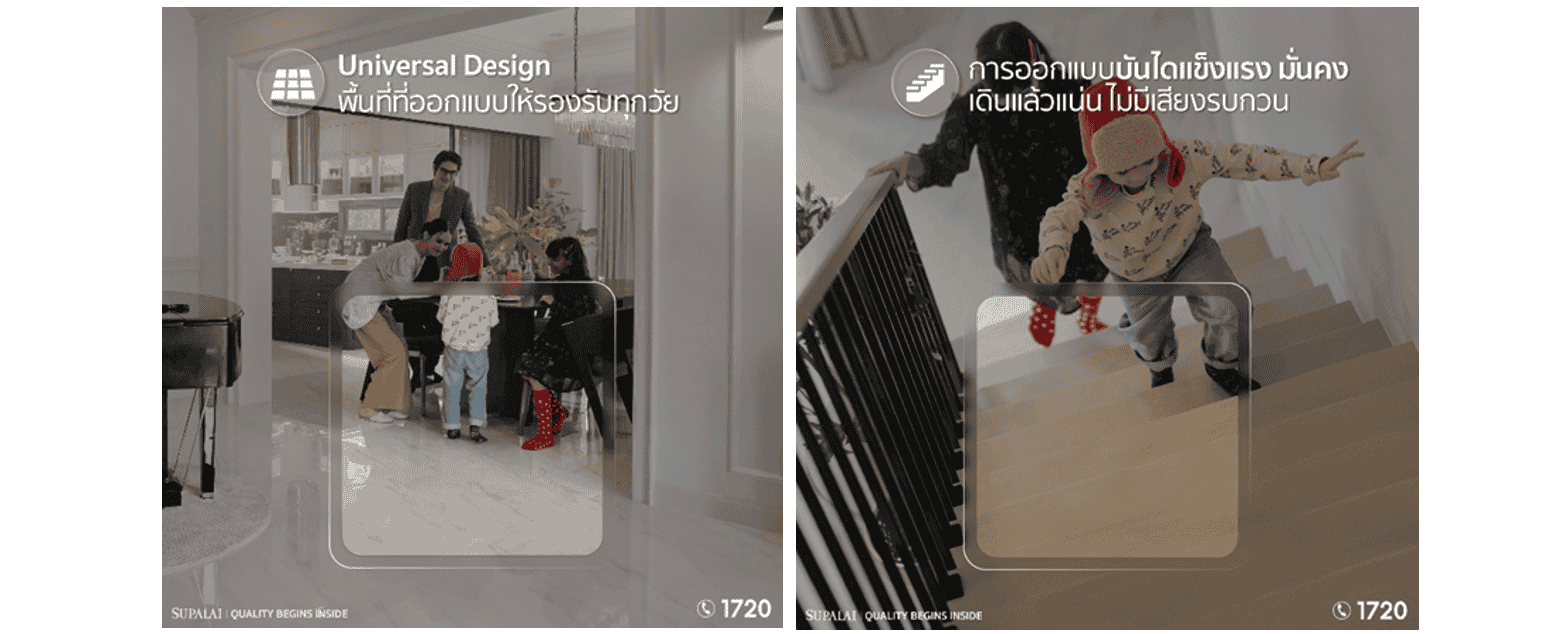
4. Digital Innovation Enhance convenience with an online repair notification system and digital loan transactions to streamline processes and create a modern, seamless experience.
5. Sustainability and Social Responsibility (ESG & Sustainability) Integrate environmentally friendly concepts into project development and organize stakeholder engagement activities to create a balance between business and community impact.
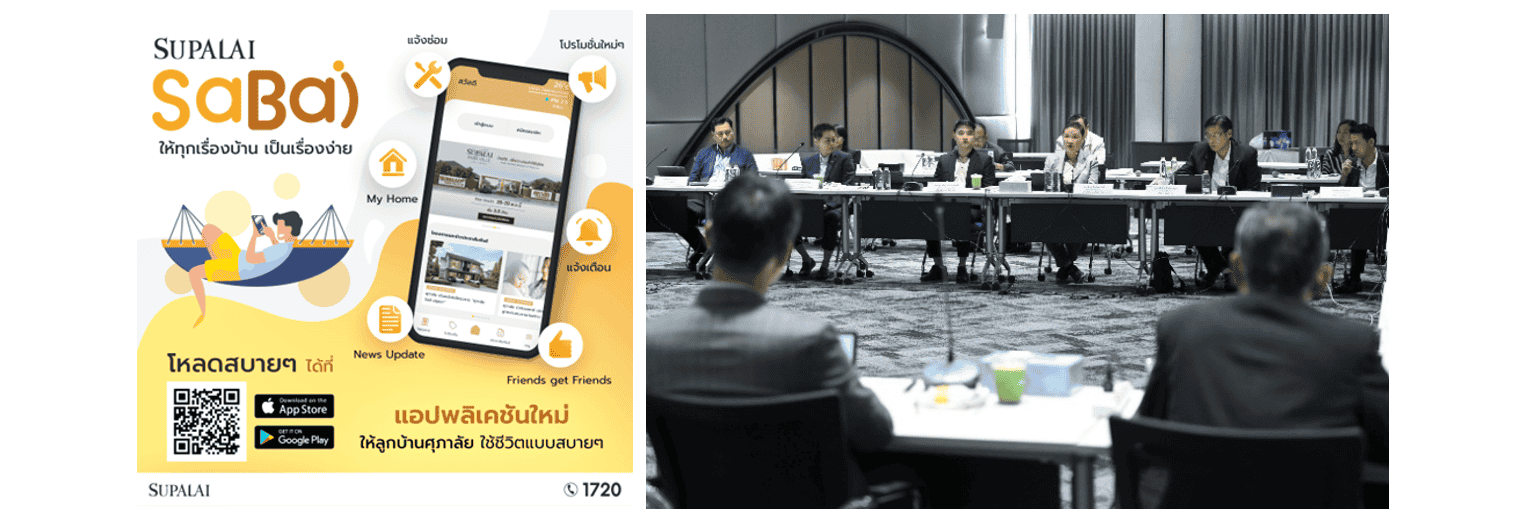
6. Resident Care in Emergency and Crisis Situations Establish measures to assist residents and ensure internal communication readiness to provide support during emergencies or disasters such as earthquakes or floods, thereby ensuring the company is prepared to care for and stand by residents in all situations.
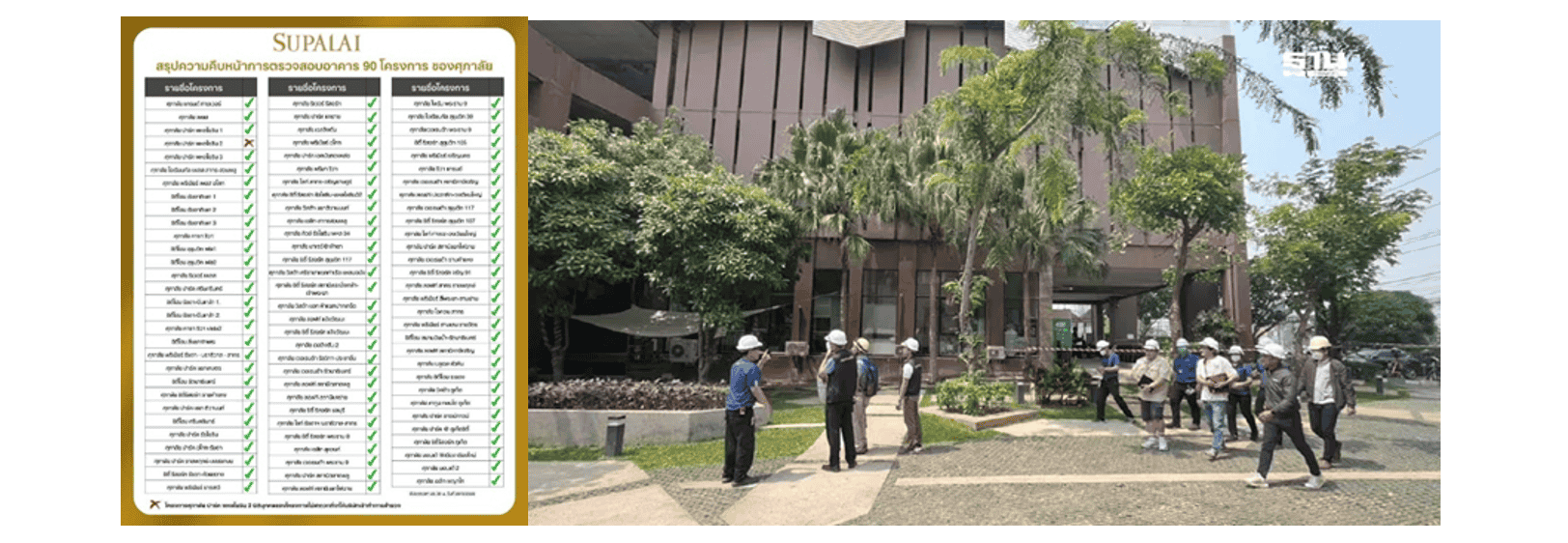
Community & Social — Plan & Guidelines
Has a Community & Social Plan
Yes
Plan Description
Creating Value for Communities and Society (GRI 413-1, 413-2)
Strategies and Management Approaches.
The Company has strategies and operational guidelines under "Supalai Srang Dee” focusing on enhancing the quality of life and sustainably developing the environment of surrounding communities and society. It drives projects that create positive social impact, covering infrastructure development, reducing impact to minimize environmental impact, and strengthening communities to grow robustly alongside the sustainability of the business and society as a whole.
The Company focuses on promoting local employment and procurement, prioritizing the selection of labour, contractors, and entrepreneurs in areas near developed projects to generate income and strengthen the economic resilience of communities. This operation helps reduce impacts from external labour migration, lowers transportation costs, and promotes community participation in the project development process, leading to mutual sustainable growth between the Company and local communities.
The Company recognizes its crucial role as part of the society and communities where it operates. Real estate project development is not solely aimed at meeting customers' housing needs but also at creating value in social, environmental, and community dimensions comprehensively and sustainably, amidst complex challenges such as balancing business expansion with environmental conservation, managing limited resources, and responding to higher expectations from consumers, investors, and society regarding transparency and social responsibility. To overcome these challenges, the Company has established clear management guidelines and practices for community engagement and development, as follows:
Guidelines for community engagement and development
1. Shared Value Creation with Communities
The Company prioritizes project development that not only creates business value but also generates comprehensive value for communities. It promotes environmentally friendly project design according to energy-efficient building criteria, reduction of greenhouse gas emissions, and increasing green spaces within project areas, along with local employment and procurement to support the long-term well-being of communities.
2. Supporting education and youth potential development
The Company recognizes that investment in human resources is a crucial foundation for sustainability and thus focuses on supporting educational projects. Development of vocational skills and promotion of youth potential in community areas, such as providing scholarships, organizing skill development training, and creating opportunities to access essential knowledge for career and quality living.
3. Strengthening communities and society
The Company promotes activities that enhance the quality of life and build resilience for communities, such as basic infrastructure development projects, community healthcare, support for natural resource conservation, and participation in disaster relief. All these efforts aim to create strong communities capable of effectively coping with economic, social, and environmental changes.
4. Building partnerships with networks
The Company recognizes that creating positive change for communities and society requires collaboration from various sectors, including the government, private sector, and civil society organizations. The Company therefore focuses on building strategic partnerships in community development projects to exchange knowledge, resources, and innovation, which will help make operations more efficient and sustainable.
5. Transparent communication and engagement
By using a participatory process of “Early Engagement” Prior to project approval providing opportunities for communities to participate in expressing opinions and reflecting needs, which will help the organization adjust its operational guidelines to align with the actual context and expectations of stakeholders. Community feedback is used to improve project design, traffic plans, and measures to reduce noise and dust impacts, along with the disclosure of responses to comments (Response Disclosure) to the community consistently every time operations are carried out.
With the comprehensive management guidelines and practices mentioned, the Company aims to create sustainable positive changes for communities and society, alongside stable long-term business growth, which will lead to becoming an organization truly contributing to national development. Therefore, the Company has established engagement approaches and actions to respond to the needs and expectations of communities/society, as follows:
Community/Social Engagement Approaches | Company's approaches to responding to needs and expectations to communities/society |
|
|
Approaches to sustainable community and social development through business processes
The Company establishes guidelines for engagement to sustainably develop communities or address social issues through business processes, which enables the Company to effectively manage negative impacts and appropriately create positive value for communities, fostering sustainable relationships and stakeholder acceptance, and to define operational frameworks and approaches for sustainably addressing social issues through business processes, in alignment with the strategies and operational guidelines of “Supalai Srang Dee" focusing on enhancing the quality of life and sustainably developing the environment of surrounding communities and society. It drives projects that create positive social impact, infrastructure development, reducing impact to minimize environmental impact, and strengthening communities to grow robustly alongside the sustainability of the business and society overall, with a participatory process to develop communities and society.
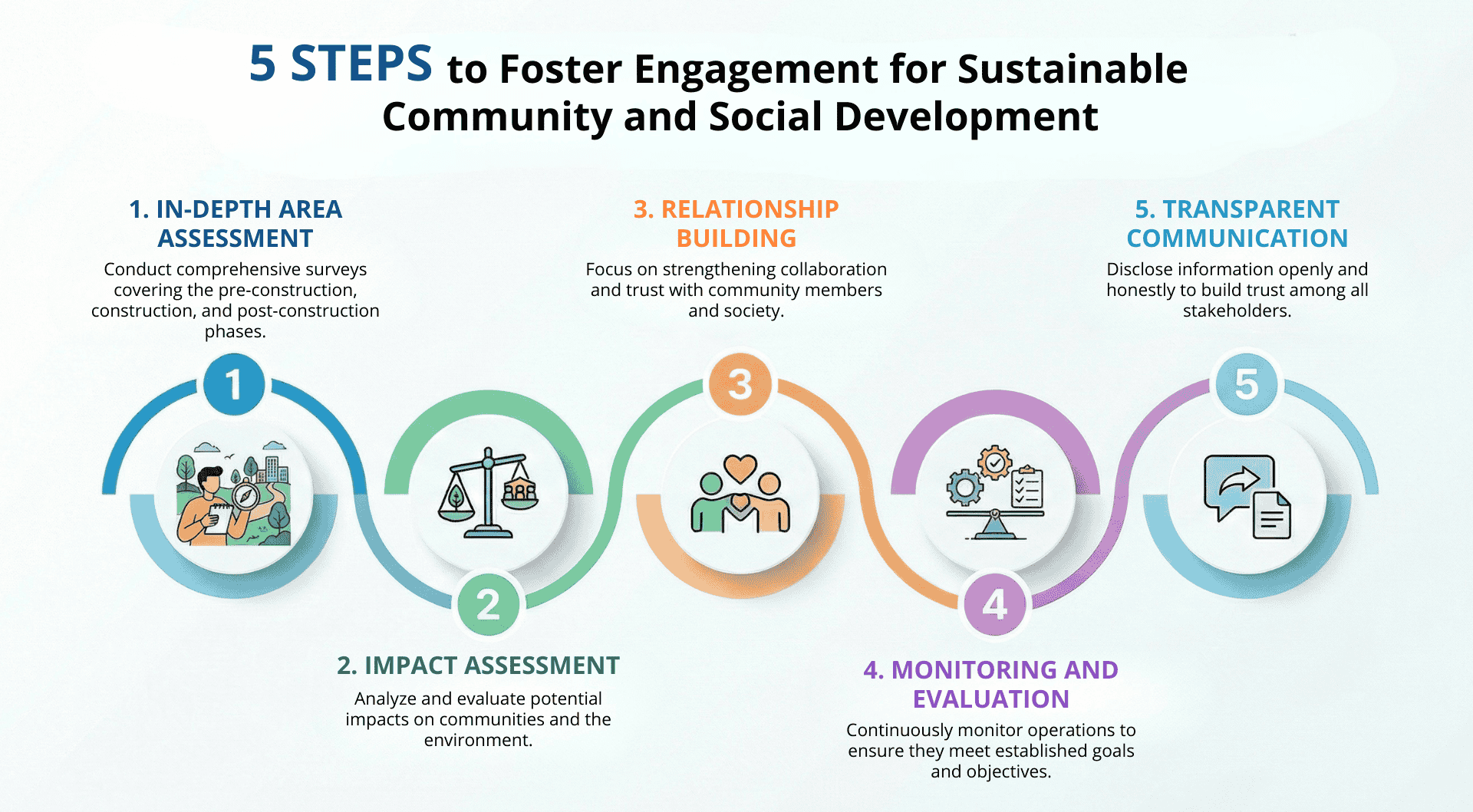
1. Site survey before, during, and after construction
Survey areas around the construction site, covering a radius of 100–1,000 meters
Assess and prioritize communities based on area, schools, and government agencies.
Define operational strategies
2. Impact assessment
Collect data from surveys, interviews, or public hearings
Analyze both positive and negative impacts, as well as the interests and expectations of communities and society in all dimensions.
3. Building relationships with communities and society
Design projects based on impact assessment results and community needs.
Implement various projects and activities that help reduce negative impacts and create positive impacts for communities.
Foster engagement among employees and other stakeholders to jointly develop local communities.
4. Monitoring and evaluation
Monitor and evaluate the impact management and success of various projects.
Survey community satisfaction with projects and their engagement with the Company
5. Communication and transparent disclosure of information to build trust
Various and easily accessible communication channels are available at Supalai Contact Center 1720 or by e-mail
anti-corruption@supalai.com
Plan Areas
| Plan Area |
|---|
| Employment and professional skill development |
| Education |
| Religion and culture |
| Sports and recreation |
| Occupational health, safety, health, and quality of life |
| Disadvantaged and vulnerable groups |
| Water and sanitation management |
| Reducing inequality and promoting social equality |
Community & Social — Targets
Has Set Community & Social Targets
Yes
Targets
| Indicator | Target Areas | Target Year | Target Year — Description |
|---|---|---|---|
| In 2025, local employment, defined as employees residing in their hometown or neighboring provinces, constituted an average of 53.21% of the total workforce in the company's operating areas. | 3036 · Description: Employment and professional skill development | 2,030 | Mid-term goal for 2030: Average local employment from the domicile or neighboring provinces in the company's operating areas ≥50% of the total employees. Long-term goal for 2050: Average local employment from the domicile or neighboring provinces in the company's operating areas ≥75% of the total employees. |
Community & Social — Performance & Outcomes
Has Performance Results
Yes
Performance Description
Performance results for 2025
Support for Children's Rights
The Company adheres to human rights principles and conducts business with an emphasis on children's rights, covering the entire supply chain, supporting Children's rights in the Company's operations and through various projects as follows:
1. Established safe zones for children by overseeing supply chain integrity. (GRI-408-1)
Established a human rights policy covering respect for and support of children's rights, setting zero tolerance on child labour as a key condition in the Supplier Code of Conduct, requiring 100% of new suppliers to sign Acknowledged and passed sustainable development assessments, covering no child labour and remediation in case of violations.
Established safe zones for children, with regular monitoring and evaluation systems for suppliers to ensure that the entire supply chain operates under ethical principles and is free from illegal labour.
2. Develop infrastructure and various facilities to provide children with access to public utilities (Community & Safety).
Designed and provided central areas for young children, including playgrounds and designated spaces. with safe and diverse play equipment such as swings, slides, and climbing structures, allowing children to develop physical skills and Society.
Developed public spaces in communities surrounding the project by collaborating with business partners to transform an open area in the Klong Toey community into a functional activity plaza, playground, reading book, and football field.
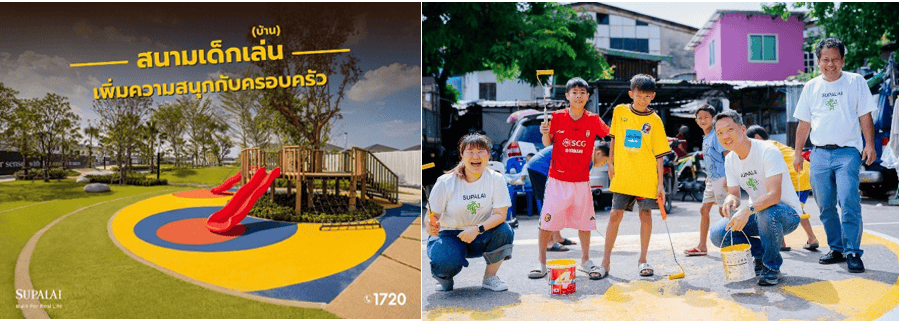
Promoting Development and Learning: Arranged a book corner and board games for children in the company library to enhance development and help alleviate the burden on employees in childcare after school, promoting work-life balance.
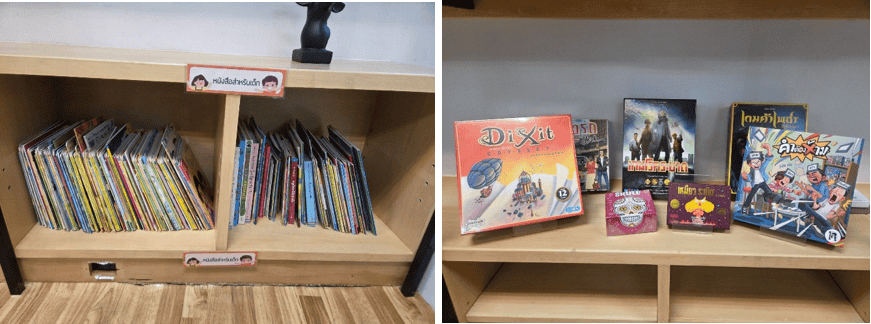
3. Right to equal access to education. All children must have access to education without discrimination (Equitable Education).
As the Company's core business involves real estate development and construction of residential projects, including low rise projects and high rise projects, it prioritizes promoting children's rights. The focus is on ensuring children have equal access to education and knowledge resources, coupled with providing safe spaces conducive to learning and age-appropriate potential development.
Additionally, the Company supports access to proper and sufficient nutrition to foster complete physical and mental health, which is a crucial foundation for learning, growth, and quality long-term development. through various activities such as:
Project "Supalai Srang Dee - Srang Fun Pua Nong"
The Company developed an educational model for the surrounding communities and society where it undertakes residential development and rehabilitation projects. It supports the development of learning spaces, teaching materials, and creates equal opportunities for children near the project areas. In 2025, the Company transformed the dilapidated multi-purpose building of Ban Mueang Ka School, Chiang Mai Province, which was unusable due to unstable structure and safety risks for students. The Company utilized its expertise in landscape architecture and construction, collaborating with business partners and employee volunteers from Regional Project 4 (Northern Zone), to develop and renovate the building, transforming the deteriorated area into "Huan Srang Dee" to become a learning and activity center for children, providing a creative space to foster imagination and safe learning, valued at development investment totaling 370,000 Baht.
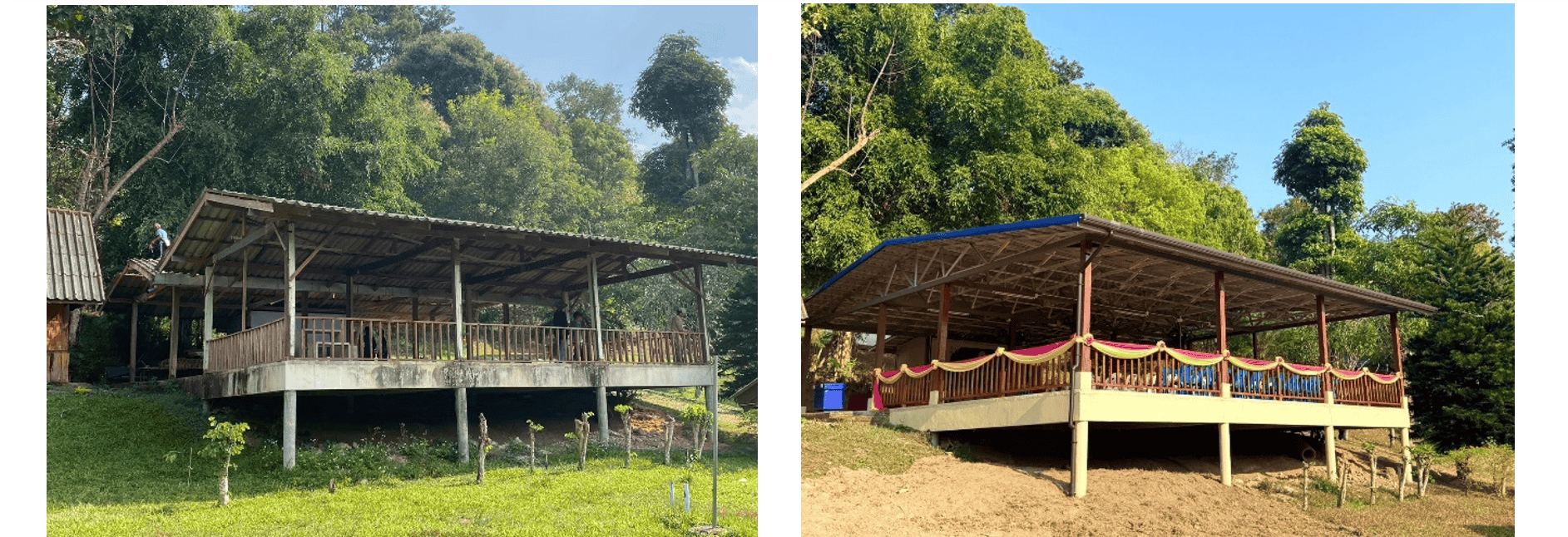
Before project After project implementation
Additionally, the Company continuously plans to develop learning spaces, support education, and create equal opportunities for children, as well as enhance the potential of teachers, to ensure that Thai education advances equitably, comprehensively, and sustainably.
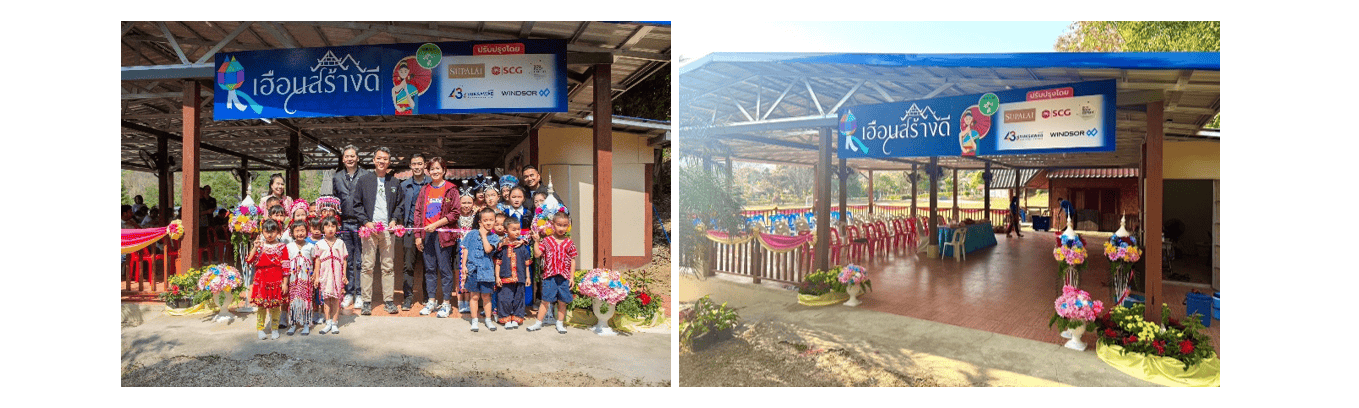
Project "Supalai Srang Dee - Srang Fun Pua Nong" | |
Goal | Regional Project 4 (Northern Zone), in collaboration with business partners, supports the development and renovation of dilapidated buildings and public utilities for schools and underprivileged communities. |
Performance | 2024: Ban Sri Suphan School, Lamphun Province
2025: Ban Mueang Ka School, Chiang Mai Province
|
Benefits to Society and Community |
|
Benefits to the Company |
|
Educational Equipment Support Project
The Company continuously implements the 'Supalai Srang Dee' project. Each year, it supports schools located in marginalized areas that face a lack of modern learning equipment and technology. This aims to enhance educational opportunities for children and youth, enabling them to access learning technology equally, reduce educational inequality, and promote appropriate potential development in the long term.
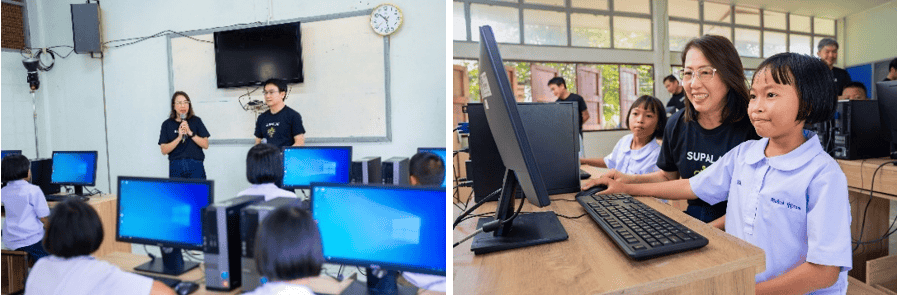
Project "Suanphak Srang Dee"
The Company implemented the "Suanphak Srang Dee" project. In 2025, it collaborated with Ban Chak Na School, Chonburi Primary Educational Service Area Office 1, Chonburi Province, to promote learning and create a sustainable food source for students, teachers, staff, and participating communities. This project aims to protect the fundamental rights to health and nutrition of youth (Children's Rights to Health and Nutrition). The Community Services Department shared knowledge and concepts of organic farming principles, including composting to reduce chemical use for vegetables, and transformed vacant school areas into sustainable organic food sources. This directly promotes good health and hygiene through the consumption of chemical-free fruits and vegetables, helping to reduce chemical accumulation in the body and establish food security within the school for access to nutrition safe from chemicals.
In addition to health, the Company imparted practical organic farming knowledge to students and villagers in the development community life skills and further develop environmental awareness, aligning with Sustainable Development Goals (SDGs) and international standards for Improve the quality of life and enhance economic value for local communities.
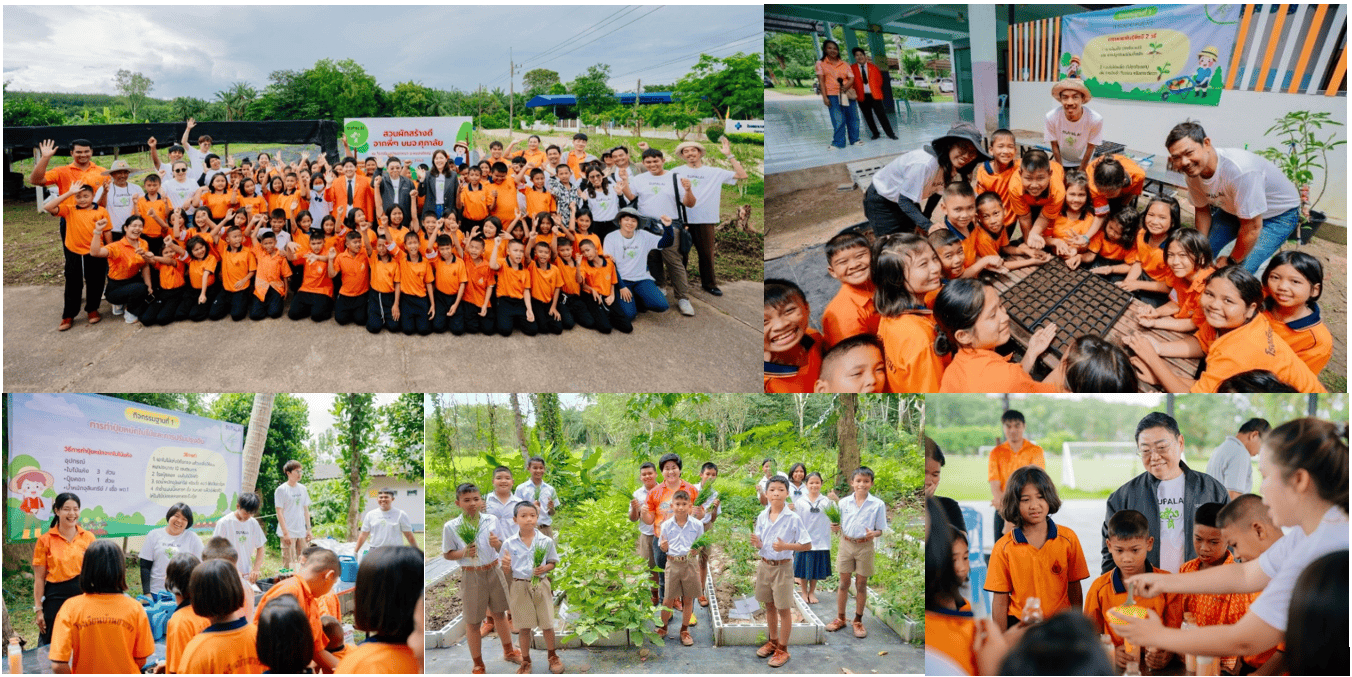
Project "Suanphak Srang Dee" | |
Performance | The project can reduce lunch costs, increase organic vegetable production. 180 teachers, students, and staff have access to organic vegetables. Participating communities can leverage knowledge to create supplementary occupations. |
Benefits to Students/Community | The school reduced expenses by 48,000 Baht per year for lunch ingredients. Create supplementary jobs and increase economic value for the community. more than 60 households |
Benefits to the Company | Very high satisfaction level in project participation. 4.86/5 Score From 92.9% of evaluators. Building positive relationships with schools and communities around the project area. |
Project "Nong Suk Dee, Phee Suk Jai , Year 3"
The Company, together with volunteer employees, delivered a "Learning Library" and provided skill-enhancing books and learning equipment sets to children in the New Klong Toey Development Community through the "Nong Suk Dee, Phee Suk Jai" activity under the "Supalai Srang Dee" project, aiming to create a learning space, promote skills, and provide equal access to knowledge for youth.
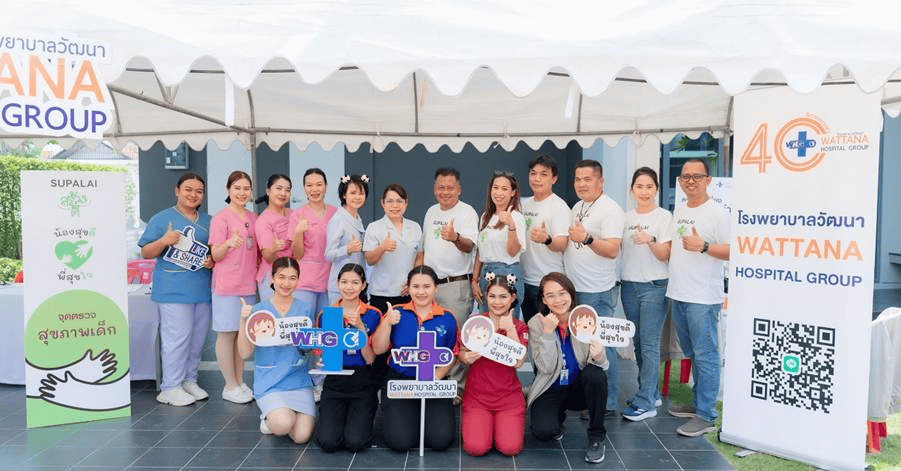
Reflects the Company's commitment to driving sustainable society, emphasizing the belief that "learning is the fundamental basis for youth development" and focusing on creating happiness for society to grow sustainably together. This is achieved by laying foundations that support social activities, encouraging participation in charity, with volunteer employees delivering a "Learning Library" along with books and learning equipment sets, and preparing food and beverages, creating smiles and warmth in the community.
Furthermore, the renovation and delivery of the learning library is a community investment that creates a learning space and an environment conducive to developing skills, creativity, and inspiration for children, grandchildren, construction worker families, and children in nearby communities, totaling 532 people. This is considered a crucial foundation for truly improving the quality of life for youth and the community.
Health check-ups, including BMI measurement, blood pressure measurement, blood type testing, oral health examination, Hepatitis B virus screening, 4-strain influenza vaccination, and booster shots for those who have not yet received them.
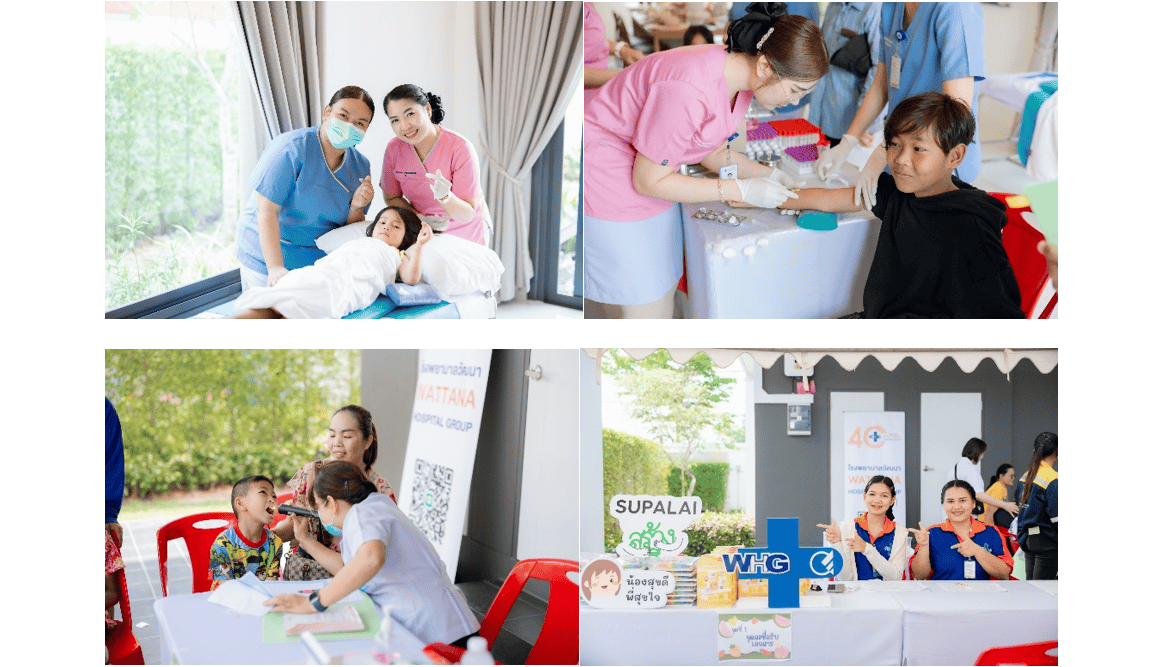
Provided skill-enhancing books and learning equipment sets.
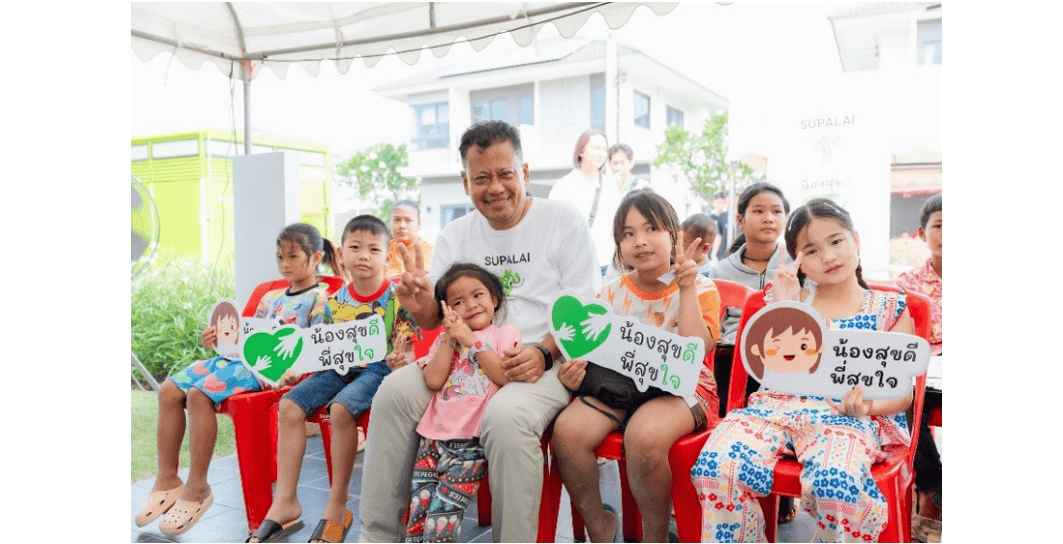
Project "Nong Suk Dee, Phee Suk Jai | |
Goal | Improve children's quality of life through health check-ups, providing educational and sports equipment to 300 children by 2025. |
Performance and Total Donations |
2023 = 84 people 2024 = 93 people 2025 = 355 people Total 532 people, exceeding the Company's set target.
Total donations helped reduce expenses by 1,000,000 Baht. |
Benefits to Society |
|
Benefits to the Company |
|
Creating Value for Community and Society
Goal | Long-term Goal 2050 | Medium-term Goal 2030 | Performance results for 2025 |
Average local employment in employees' home provinces or nearby provinces in areas where the Company operates. | ≥75% | ≥50% | 53.21% |
Local Employment
The Company recognizes the importance of local community and economic development as one of its core missions. It manages risks to mitigate the impact of supply chain disruptions while also creating opportunities for employment and promoting economic growth in areas where it operates. In 2025, the Company expanded its projects across Bangkok, its vicinity, and 30 provinces in total, leading to the employment of 1,275 local residents in their home provinces, representing 53.21% of all employees. Additionally, the Company procures (reserve) goods from domestic stores to support local products and ensure sufficient supply for operations.
Community Employment Support Project
The Company undertook the Supalai Sense Khao Rang Phuket project, located near communities, schools, and important landmarks. A survey and assessment of communities and society potentially affected by the Company's operations were conducted, covering periods before, during, and after construction, to systematically gather feedback, concerns, and suggestions from local communities. The survey results were used to plan, improve, and define measures to prevent and mitigate potential impacts. The surrounding communities prioritized traffic, employment, and the quality of life of nearby communities. The operations reflect the Company's commitment to responsible project development, respecting community rights, and promoting sustainable coexistence. Opinion surveys and discussion meetings were conducted as follows:
Target Group: communities around Supalai Sense Khao Rang Phuket project
Primary Areas
Household group adjacent to the project: 1 household.
Household group within 100 meters: 30 households.
Secondary Areas
Household group within 100-500 meters: 253 households.
Household group within 500-1,000 meters: 59 households.
Sensitive area group within 1,000 meters: 19 households.
Group of government agencies and state enterprises within 1,000 meters: 14 households.
Group of community leaders in the project area: 1 household.
From the survey, communities showed interest in managing issues directly impacting them, such as traffic, which could affect health and safety. Additionally, communities have expectations regarding the local economy, as well as the care and support for various traditional activities of the community and educational institutions. The Company has used the assessment results and community needs to implement initiatives for community care and development, including:
Key Issues | Operations | Survey Methods |
Traffic Management | Systematically managed traffic before, during, and after construction by coordinating with relevant agencies, organizing project entry/exit systems, installing signs, and providing staff for convenience, while continuously communicating information with the community. | 1. Opinion Survey
2. Discussion Meetings
|
Community Economic Development | Local employment and procurement, prioritizing the selection of labour, contractors, and businesses in areas near the project. |
The Company supports local employment in project areas, aiming to create job opportunities, distribute income, and strengthen the local economy. It hires contractors for structural work, public utilities, painting, and local labour, which helps reduce the relocation of external workers, minimizes community impact, and promotes local participation, leading to sustainable mutual growth between the Company and surrounding communities. This has created jobs and income for 17 local contractors, with a total contract value exceeding 13 million Baht.
Communication and feedback from communities surrounding construction projects.
The Company emphasizes community engagement around its projects by meeting and communicating with nearby residents to inform them of construction schedules and to listen to feedback or concerns regarding potential environmental impacts, which are then used to improve measures and mitigate impacts to the community.
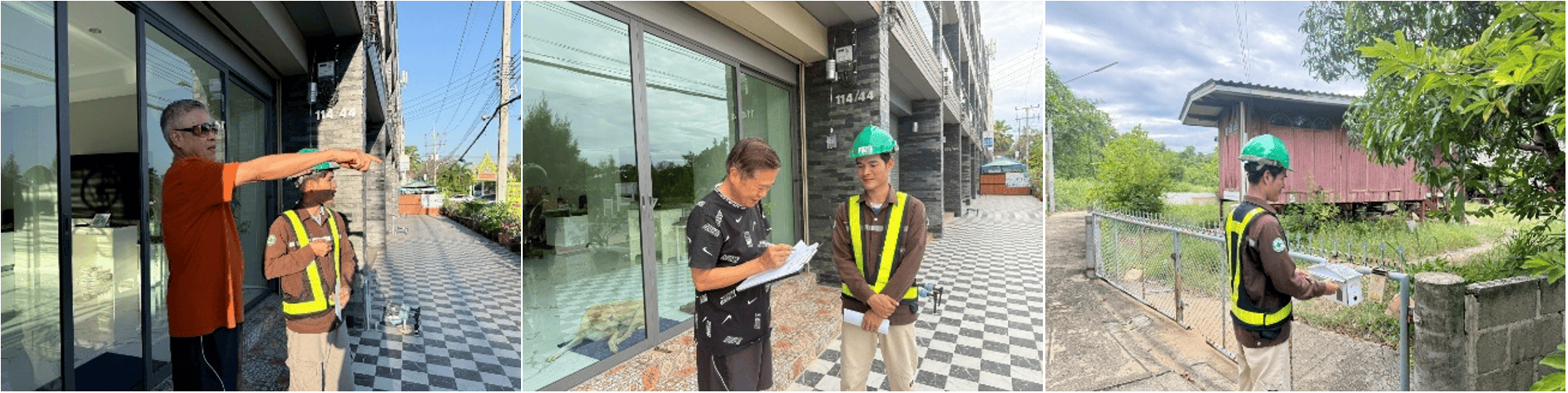
Community and Social Development Project.
The Company demonstrates its commitment to urban regeneration through a clear policy and structured process designed to revitalize urban spaces. such as the prime disclosed case study of Plian Thi Long Pen Thi Len project, Pun Aun Klai Nao (Share Warmth, Relieve Cold) project, Year 4, etc. with details as follows.
Project "Plian Thi Long Pen Thi Len" (Transforming Open Spaces into Play Areas) at Klong Toey Community.
The Company fosters community and social engagement by leveraging its expertise in real estate development, including architectural design and construction engineering, to improve the quality of life through the "Supalai Srang Dee: "Plian Thi Long Pen Thi Len" project in the New Klong Toey Development Community. This project aims to transform deteriorated areas into standardized and safe activity plazas and playgrounds.
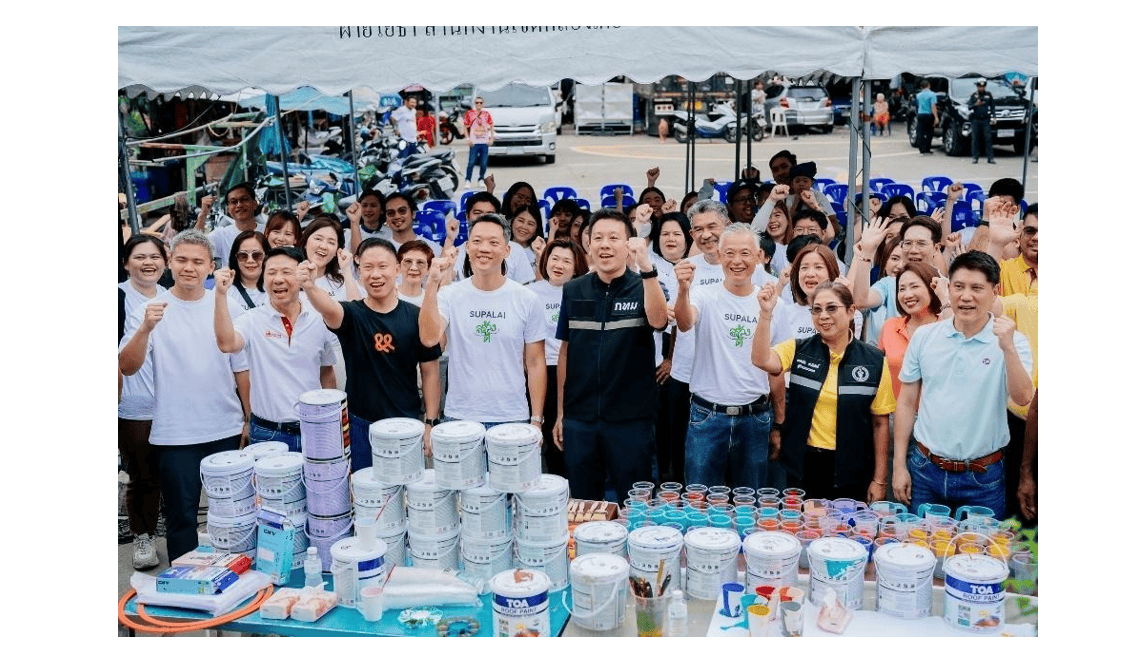
Operations reflect that using professional design and construction teams helps ensure that area improvements meet practical needs and are highly durable, reducing accident risks through robust structural repairs and systematic area planning. Meanwhile, communities found that applying professional standards, including lighting installation and appropriate material selection, enhances area usability both day and night, while also reducing long-term maintenance burdens by providing professional maintenance manuals.
The Company engaged employees with diverse expertise through collaboration with businesses partner and foundations. This project created shared value for over 500 households in the New Klong Toey Development Community and provided safe play and learning spaces for over 400 children and youth. It demonstrates how business knowledge can be leveraged to create benefits and grow sustainably with the community.
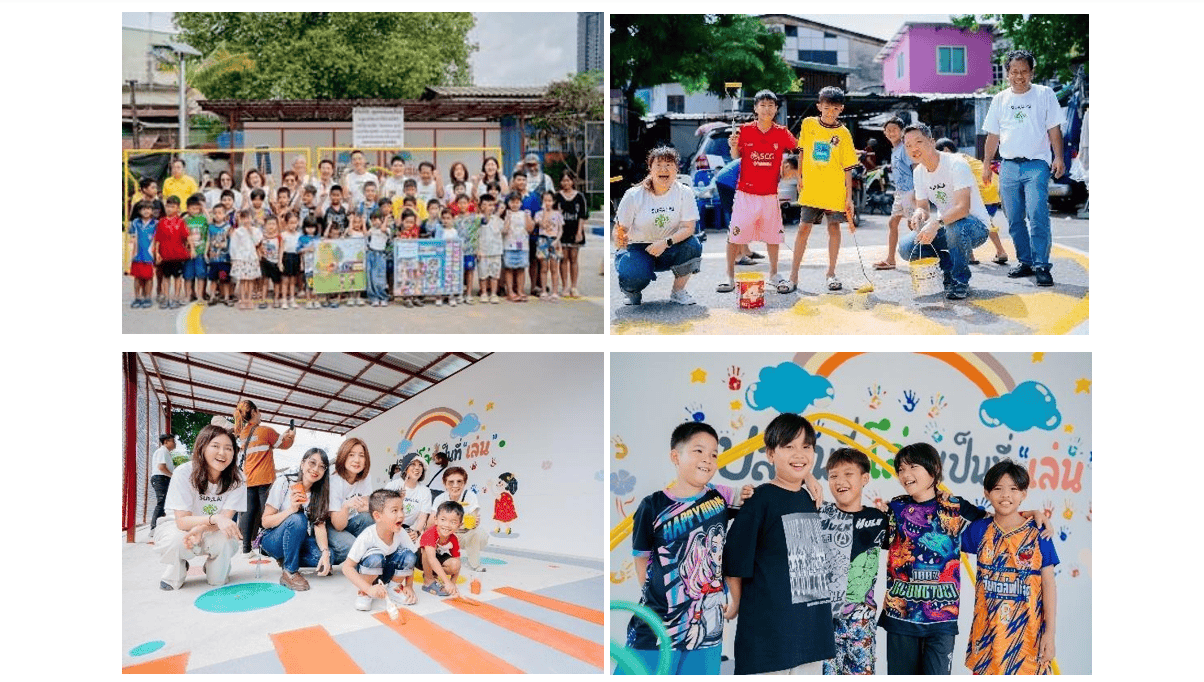
Project "Plian Thi Long Pen Thi Len" | |
Performance |
|
Benefits to Society | Improve the quality of life for the New Klong Toey Development Community, benefiting 500 households and over 400 children in the community. |
Benefits to the Company |
|
Project "Happy Glasses" Year 4
The Company fosters community and social engagement, supporting the quality of life for workers and neighboring communities around construction projects by providing glasses to correct vision problems affecting work and daily life throughout Over the past 3 years of this activity, satisfaction survey data from glasses recipients consistently shows improved work efficiency, reduced eye strain, and decreased risk of accidents due to blurred vision. Contractors commented that this project directly enhances worker productivity, reduces occupational accident risks, and mitigates health and safety impacts caused by poor eyesight, serving as a crucial safety measure. This initiative, conducted in collaboration with construction workers and neighboring communities, successfully delivered glasses to the group. Target: a total of 1,448 people, exceeding the Company's set goal.
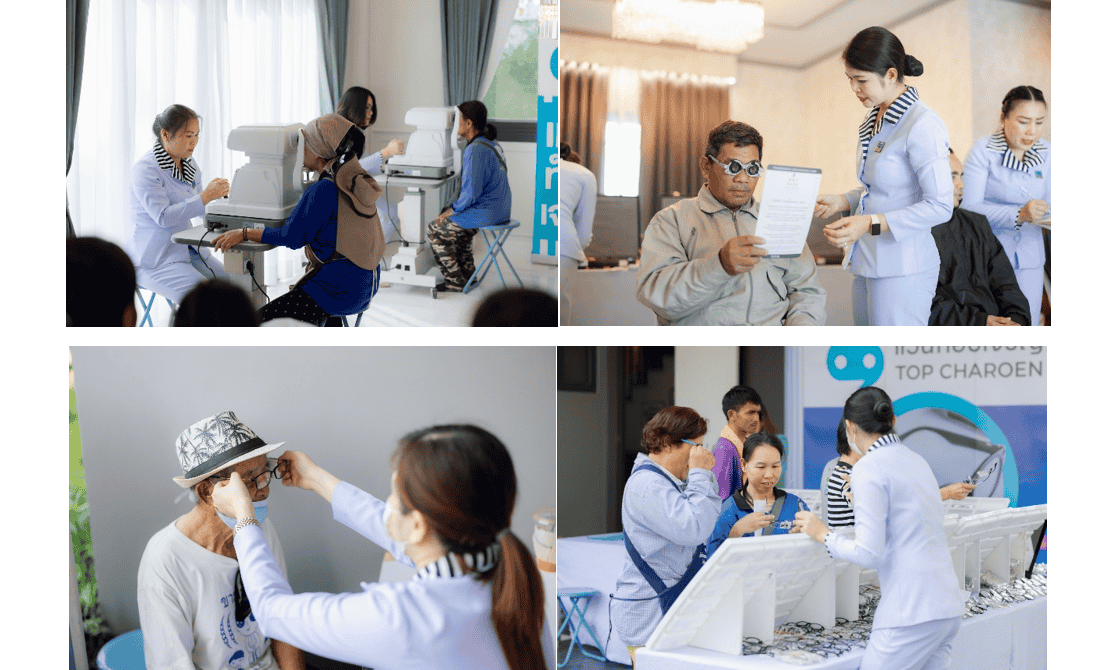
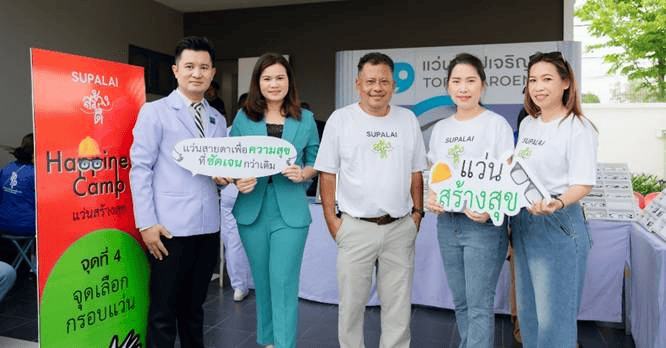
Project 'Happy Glasses' Year 4 | |
Goal | Promote better eye health for 1,000 construction workers and communities near the project by 2025. |
Performance | Supported construction workers. , contractors, and nearby communities. Total 1,448 people exceeded the set goal. |
Total Donations |
* Expenses include after-sales service and glasses delivery. |
Benefits to Community/Society |
Eye examination and glasses fitting 2023 (Pathum Thani, Rama 2) = 219 people 2024 (Nakhon Sawan, Phitsanulok, Chonburi, Phuket) = 620 people 2025 (Udon Thani, Ekkamai-Pattanakarn) = 609 people
|
Benefits to the Company | Reduce work-related accidents. |
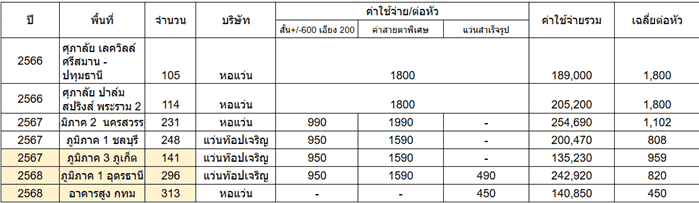
Donations of money and goods.
Project "Punrak" Year 2
The "Punrak" project supports and provides opportunities for employees to participate as project volunteers. Supalai residents in Chiang Mai and Chiang Rai provinces donated items in good condition, such as clothes, bedding, various daily necessities, and children's toys, to be delivered to contractors, construction workers, and over 150 families at the Supalai Grand Ville MaeKorn-Chiang Rai project's worker camp and community near the project area. It also helps reduce waste and refuse, lowers greenhouse gas emissions, promotes efficient resource utilization, maximizes reuse, and encourages participation in volunteer activities. This reflects the Company's commitment to sustainably supporting communities and the environment, and it will continue to advance social projects in various dimensions.
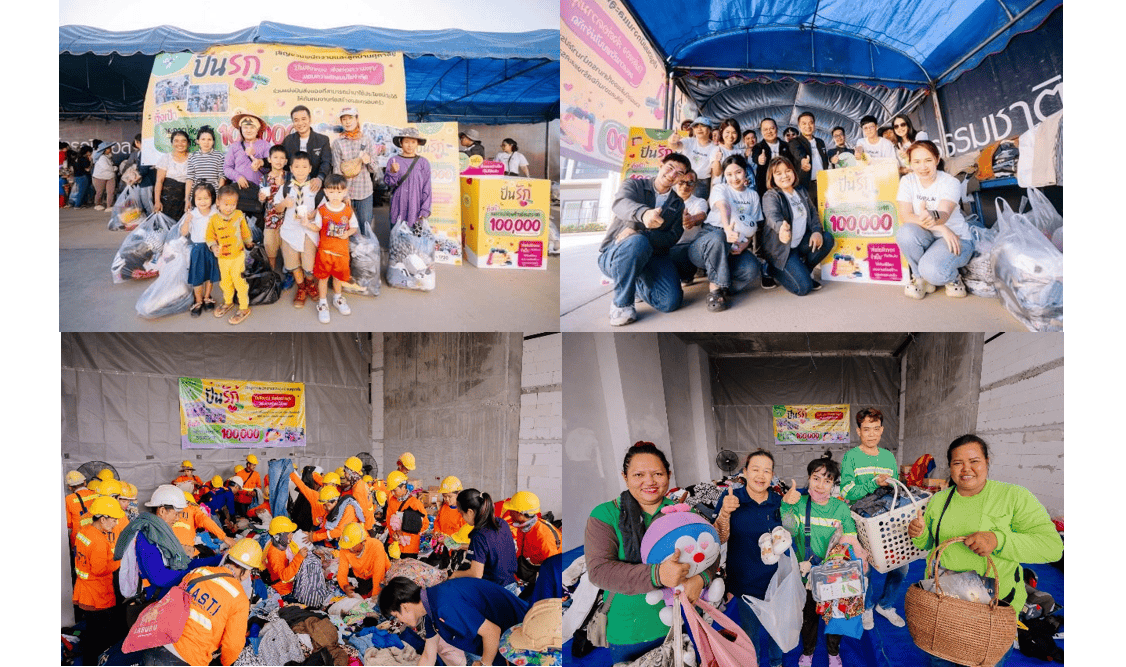
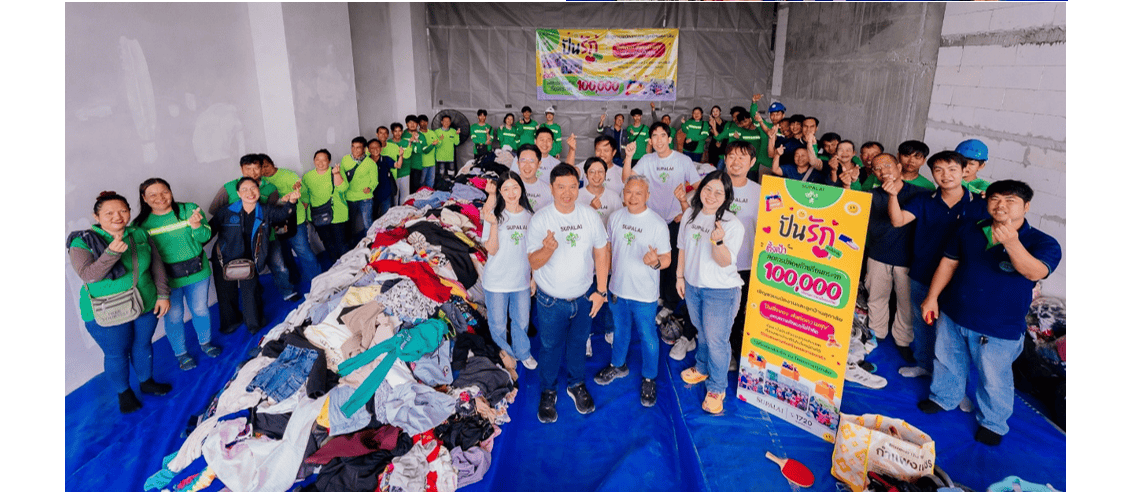
Project "Punrak" Year 2 | |
Goal | Collected and forwarded unused items from residents and employees to reduce waste by 50,000 kg and reduce CO2 emissions. 100,000 kilograms of carbon dioxide equivalent. |
Performance |
Total 45,000 KgCO2eq, representing 45% of the goal. |
Benefits to Society |
|
Benefits to the Company |
|
Project "Pun Aun Klai Nao" (Share Warmth, Relieve Cold), Year 4
The "Pun Aun Klai Nao" (Share Warmth, Relieve Cold) project assists vulnerable groups, mostly ethnic minorities and families lacking financial resources. who are underprivileged and affected by climate change. , discrimination, and create equal opportunities for access to clothing and educational equipment. Employees near the project area in the Northern Zone visited Radpattana School, Mae Fah Luang District, Chiang Rai Province to deliver clothes winter clothes to help students and staff stay warm during winter, prevent illness from changing weather conditions, and promote good health as a fundamental basis for learning. Also provided educational equipment such as notebooks, pens, pencils, sports equipment like footballs, volleyballs, badminton rackets, etc., and basic first-aid kits to support educational opportunities and enhance students' quality of life. Additionally, a full lunch was provided to students and school staff. Community investment can help reduce expenses for the school and families, and assistance can be extended to nearby childcare centers to improve the quality of life for young children in remote areas.
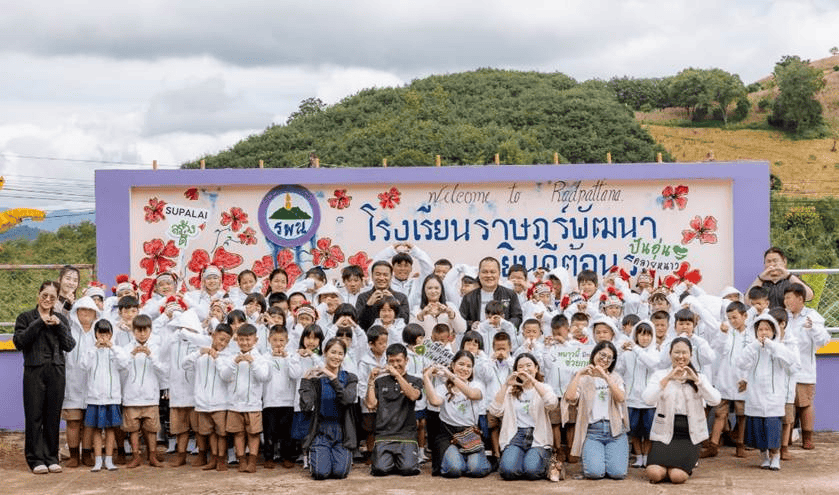
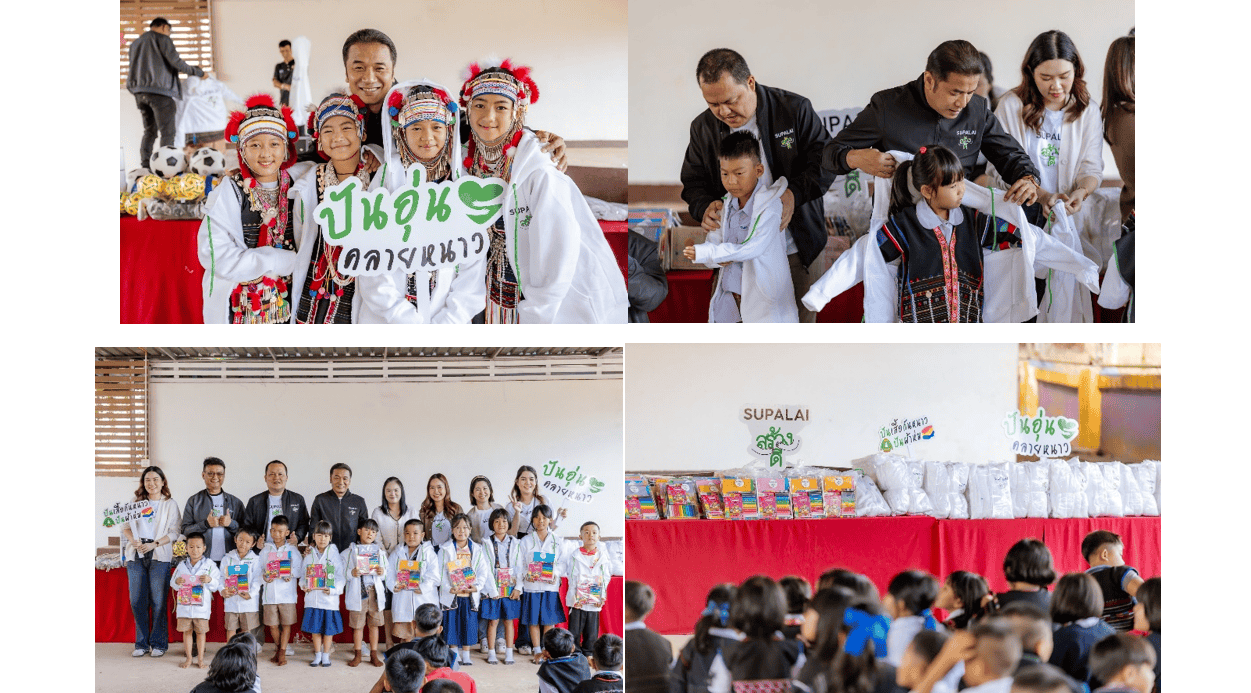
Project "Pun Aun Klai Nao" (Share Warmth, Relieve Cold), Year 4 | |
Goal | Provided consumer goods and supplies to protect students from the cold due to changing climate conditions. who are underprivileged and affected by climate change. |
Performance and Total Donations | Provided winter clothes, learning equipment, medicines, and lunch.
|
Benefits to Society |
|
Benefits to the Company |
|
Project "Punkan, Year 7"
Conducted social activities under the "Be a Bridge of Merit" project at the Pattaya Orphanage Foundation to promote a good quality of life and hygiene for orphans and disabled youth. This serves as a bridge of merit connecting compassion from employees and residents to vulnerable groups lacking opportunities. The Regional Community Services Department and Head Office established a network of cooperation between employees and residents from 6 projects, namely:
Supalai Ville Sriracha-Bowin
Supalai Bliss Sriracha-Bowin
Supalai S Avenue Bowin Commercial Buildings 1-2
Supalai Palm Springs Rayong
Supalai Grand Ville Rayong
Supalai Pride Bangna-Lat Krabang
Provided essential consumer goods such as rice, dried food, learning supplies, cleaning equipment, and infant products like powdered milk and diapers, to support the foundation's long-term operations.
In addition to basic support, the Company hosted a dinner for orphans and boarding students of Sotpattana School, along with recreational activities to enhance skills and development through coloring and Lego building, fostering positive interaction and encouragement for youth. The event concluded with educational contributions to lay a foundation for sustainable learning opportunities, reflecting the organization's commitment to building a sharing society and growing together strongly.
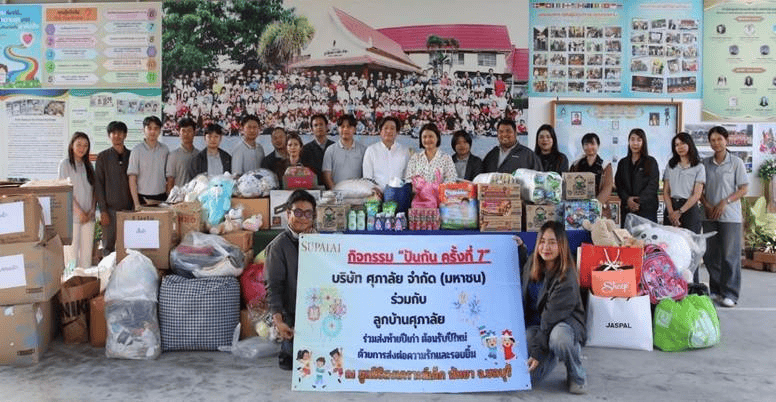
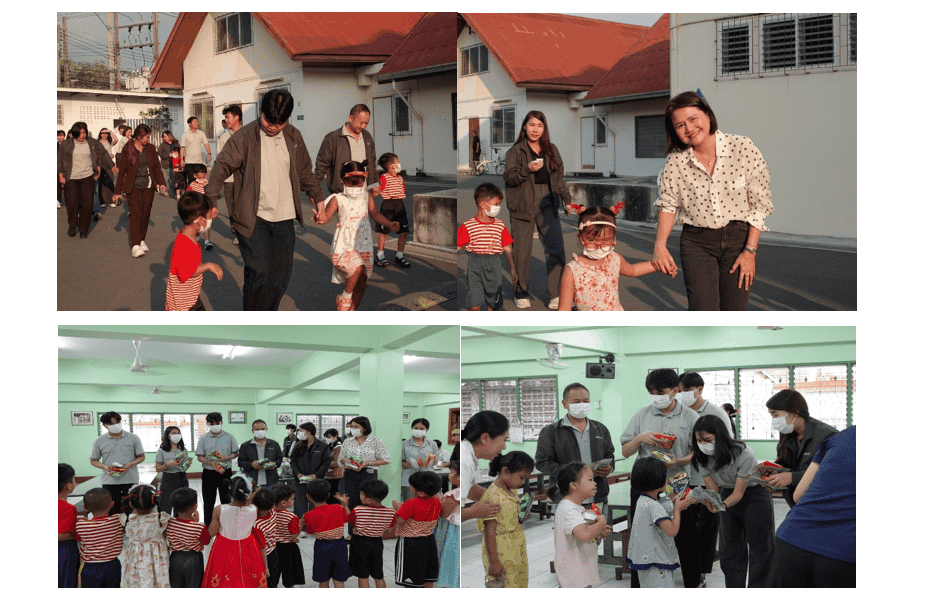
Project "Punkan, Year 7" | |
Performance and Total Donations |
|
Benefits to Community/Society |
|
Benefits to the Company |
|
"Punrak Special" activity
Following the floods in the Southern region at the end of 2025, the Company elevated its emergency relief measures to become a "Center of Sharing," utilizing its logistics capabilities and local project networks to urgently alleviate suffering. This operation reflects a sustainable vision focused on social responsibility and effective crisis management.
The Company not only delivers relief supplies but also focuses on fostering a "volunteer culture" within the organization. This involves integrating efforts from executives and head office employees to help pack essential consumer goods, medicines, and other necessities, as well as volunteers from the Company's employees in the three main southern provinces (Surat Thani, Nakhon Si Thammarat, and Phuket) to assist residents and frontline personnel comprehensively, efficiently, and quickly. This underscores the Company's commitment as a vital mission and mechanism that stands with society in all crisis situations.
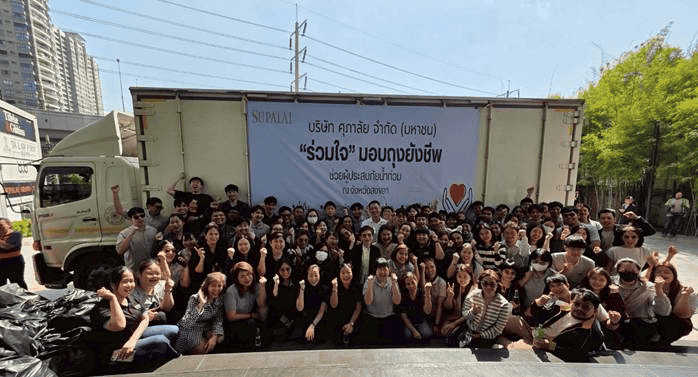
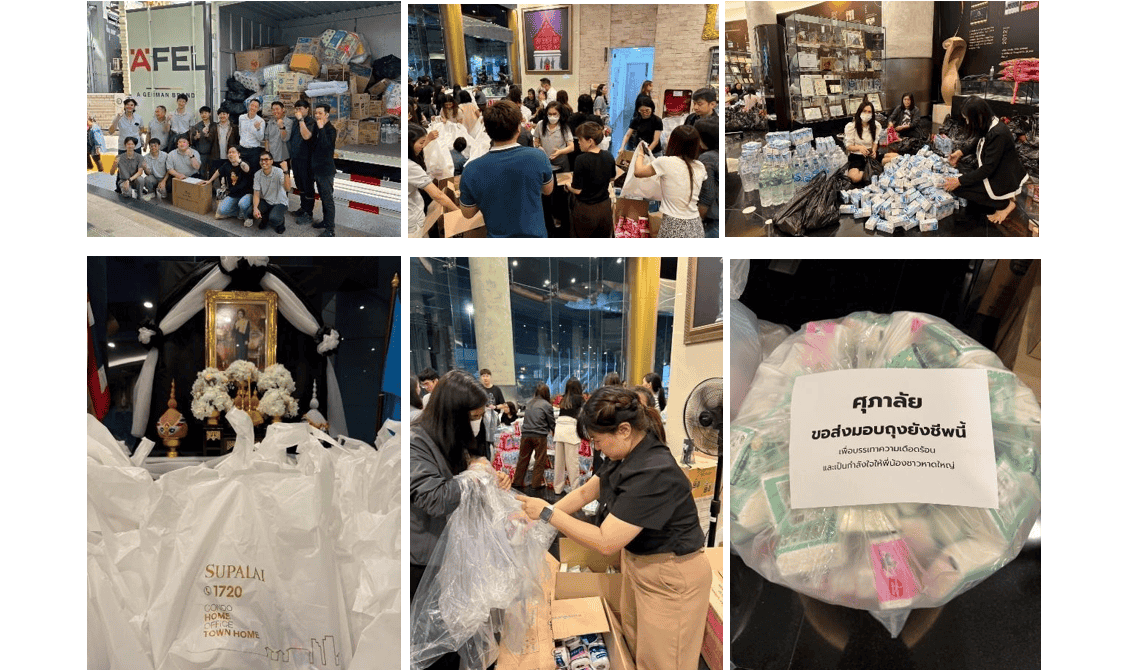
"Punrak Special" Activity | |
Performance |
|
Benefits to Community/Society |
|
Benefits to the Company |
|
Total Amount of Corporate or Group Donations/Community (GRI-204-1)
Financial Performance (1) | 2023 | 2024 | 2025 |
Distribution of Economic Value to Stakeholders | |||
| 13 | 14 | 16 |
| 1,269 | 1,438 | 966 |
| 21 | 19 | 17 |
| 2,831 | 2,636 | 2,701 |
| 21,870,000 | 18,970,000 | 15,825,000 |
| 1,000,000 | 1,000,000 | 2,000,000 |
N/A = Not Available
(1) Data from the financial statements of Supalai Public Company Limited for a 3-year period.
(2) This involves procuring goods and services. The Domestic
Other Social Management
Plan & Outcomes — Description
Sustainable Supply Chain Management
Key Sustainability Issues | Impacts, Risks, and Opportunities |
Supply Chain
FTSE Russell EGS Theme: Supply Chain: Environment Supply Chain: Social Supporting SDG Goals
| The Company prioritizes supply chain management as a business partnership which plays a crucial role in supporting the organization's sustainable operations under policies based on transparency, fairness, and consideration of impacts on communities, society, and comprehensive environmental considerations. Therefore, the Company sets criteria for selecting potential and qualified suppliers according to its standards, emphasizing the quality and standards of goods and services, on-time delivery, compliance with labour laws and human rights, as well as relevant regulations and rules, to foster a transparent and well-governed procurement system and reduce long-term business risks. The Company integrates supply chain management under the concept of Value Chain Responsibility, covering the entire lifecycle of products and services, from raw material sourcing, construction, and delivery to usage and demolition. It assesses environmental, social, and governance (ESG) impacts, risks, and opportunities (IROs) throughout the value chain, including direct and indirect suppliers (Tier-1 and Non-Tier Suppliers), to support disclosure in accordance with IFRS Sustainability Disclosure Standards, TCFD, and TNFD. In the context of rapid changes in the global supply chain, the Company recognizes significant challenges such as volatility of raw material cost, skilled labour shortages, risks from raw material scarcity, and the continuity of key suppliers. This also includes analyzing physical risks and transition risks related to climate conditions. Simultaneously, it sees opportunities to elevate cooperation standards with suppliers through systematic selection and performance evaluation, as well as building stable long-term business relationships and adapting with suppliers towards a circular economy to reduce resource consumption and emissions greenhouse gases is an opportunity to create a competitive advantage, not just for the Company, but also for its suppliers with a commitment to growth alongside value creation for all sectors, the Company continues to develop a strong, transparent, and stable supply chain. It also promotes ethics and sustainability in all processes to meet the expectations of customers and stakeholders in the era of the circular economy and sustainable competition. |
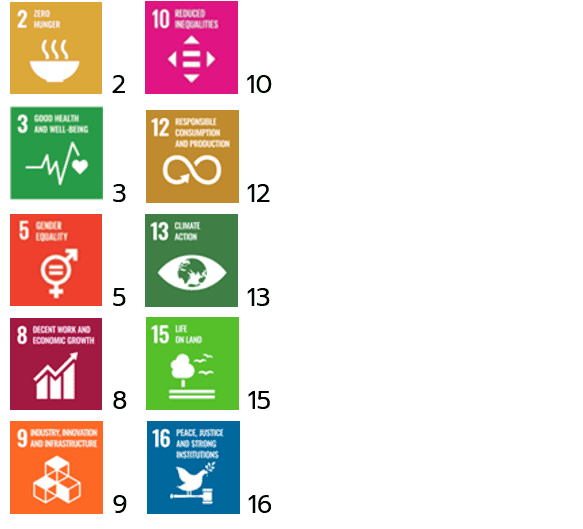
Sustainable Supply Chain Management Goals (GRI: 308-1, 414-1)
Goals | 2025 Goals | Performance in 2025 |
Proportion of new suppliers assessed for sustainability risks | 100% | 100% |
Proportion of ESG assessment criteria for contractors in Low Rise Projects and High Rise Projects | 100% | 100% |
Strategies and Management Approaches
Policy and Commitment (GRI: 414)
The Company prioritizes the selection of suppliers, contractors, and materials/equipment based on ESG principles (Environmental, Social, and Governance) to promote shared responsibility throughout the supply chain, especially in social, environmental, and business ethics aspects. The Company therefore establishes systematic processes for selecting, evaluating, and registering suppliers and contractors, and discloses relevant ESG issues, including expected impacts, to reduce supply chain management risks and to ensure suppliers Contractors acknowledge by signing “The Company's Supplier Code of Conduct” which consists of
Business Ethics and Transparency
Quality Standards, Business Continuity
Respect for human rights, covering equal treatment, prevention of forced labour, prevention of child labour. Contractors and suppliers comply with laws prohibiting working hours exceeding legal limits, fair wages, equal opportunities, and supporting the right to organize and collectively bargain.
occupational health and safety, providing safe and hygienic work areas and environments, and preventing employees from safety risks.
social responsibility, social and community care, land rights, and access to natural resources.
The Company conducts Human Rights and Environmental Due Diligence (HREDD) for suppliers, in line with the United Nations Guiding Principles on Business and Human Rights (UNGP) and OECD Due Diligence Guidance which covers identifying, preventing, mitigating, and monitoring human rights, labour, environmental, and community risks, along with establishing mitigation and remediation measures for at-risk suppliers.
Additionally, the Company has established “Terms of Reference (TOR)”
to serve as a framework and guidelines for fair procurement practices with contractors and suppliers, as well as to promote value creation for local communities.
to serve as guidelines for conducting business with suppliers and contractors on social and environmental aspects in construction operations, by setting operational conditions for creating sustainability throughout the supply chain to reduce risks and negative impacts on the environment, society, and economy across the supply chain. It consists of 3 main parts: environmental impact management and reduction plans (e.g., dust, noise, wastewater, waste management), prevention and reduction of social impacts (e.g., traffic), and monitoring measures (e.g., pre-construction, during-construction, and post-construction checks).
The Company integrates environmental policy as part of its business operations, from sourcing environmentally friendly materials, production, product delivery, marketing and sales, and after-sales service, to supply chain management and waste disposal, considering environmental impact reduction, environmental conservation, climate management, and adaptation to climate change. This is done in alignment with the Company's greenhouse gas reduction targets, including biodiversity and ecosystem preservation through efficient resource utilization.
For more information, please visit: Policy on Environmental and Practices
The Company communicates its Supplier Code of Conduct and procurement regulations for contractors, suppliers, and employees, establishing clear operational guidelines under relevant laws and regulations. This covers business ethics, human rights, safety, and environmental aspects, aligning with the Supplier Code of Conduct that is consistent with sustainable business principles, to foster trust, confidence, and cooperation among the Company, contractors, suppliers, and relevant stakeholders.
For more information on the Code of Conduct, please visit: Supplier Code of Conduct
Governance Structure
The Company assigns a committee, comprising relevant departments such as Procurement, Creative & Product Development, Marketing & Sales, Engineering & Estimate, and Construction, to consider and select materials and equipment, and to be responsible for implementing the policy to achieve the specified goals. Manage suppliers in the supply chain in accordance with international practices and standards to reduce supplier risks and ensure that selection covers all dimensions, including product quality, price, delivery capability, and social and environmental responsibility. The corporate governance unit develops and publishes a Supplier Code of Conduct to communicate the Company's intention to conduct business ethically, transparently, and with social and environmental responsibility throughout the supply chain. Oversight is provided at the Board of Directors level through the Sustainability Committee, which is responsible for directing strategy and supply chain risk management, as well as monitoring ESG Supply Chain Performance indicators monthly.
Strategies and Management Approaches.
Establish criteria for suppliers to reduce greenhouse gas emissions from their operations.
The Company is committed to procuring environmentally friendly products, emphasizing the selection of products that has a certification label for being friendly to environment and has a policy to encourage all suppliers to develop environmentally friendly products for presentation to the Company. Including encouraging suppliers organizations to prioritize production processes, material sourcing, delivery processes, and waste disposal in the form of Recycle including inquiring about and visiting waste disposal processes that do not harm the environment. All suppliers are required to register sustainable products (ESG -Driven Product) to control and reduce supply chain risks that may arise from suppliers, such as violations of
human rights or environmental impacts.
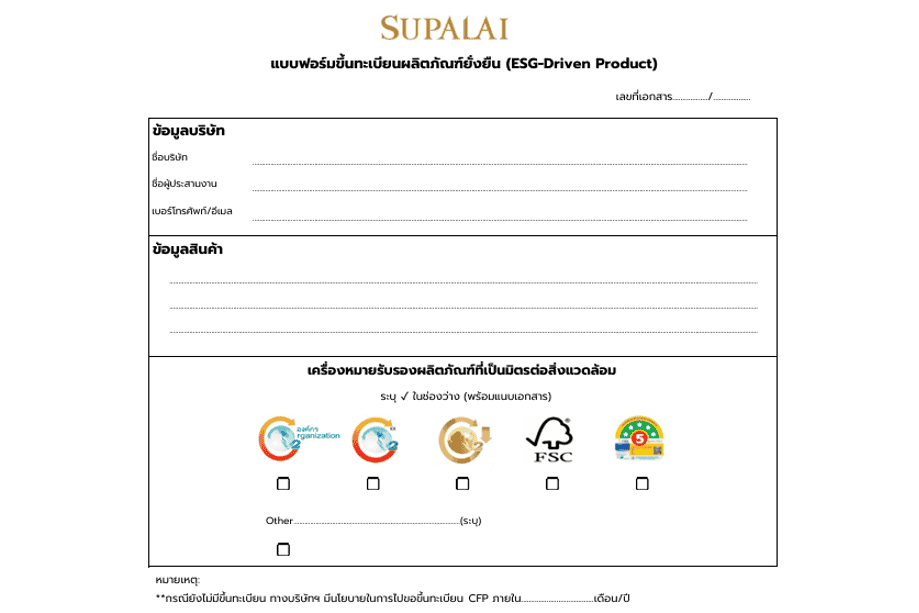
Supply Chain Management
The Company follows operational processes to develop a sustainable supply chain as follows: 1) Selection and registration of new suppliers 2) Supplier classification 3) Supplier risk assessment 4) Supplier audit, and 5) Building relationships and joint development with suppliers, with procurement practices to control and reduce supply chain risks that may arise from suppliers, such as human rights violations, unfair practices, or environmental impacts, and conduct comprehensive investigations (Due diligence) to prevent and mitigate social and environmental impacts in the value chain, and to disclose sustainability reports according to international standards such as GRI Standard GRI 204: Procurement Practices, Supply Chain Environmental GRI Standard GRI 308: Supplier Environmental Assessment, and Supply Chain Social GRI 414: Supplier Social Assessment, as well as complying with laws and regulations, in accordance with SEC requirements that mandate listed companies to disclose ESG information via Form 56-1 e-One Report.
Operational Processes for Sustainable Supply Chain Development
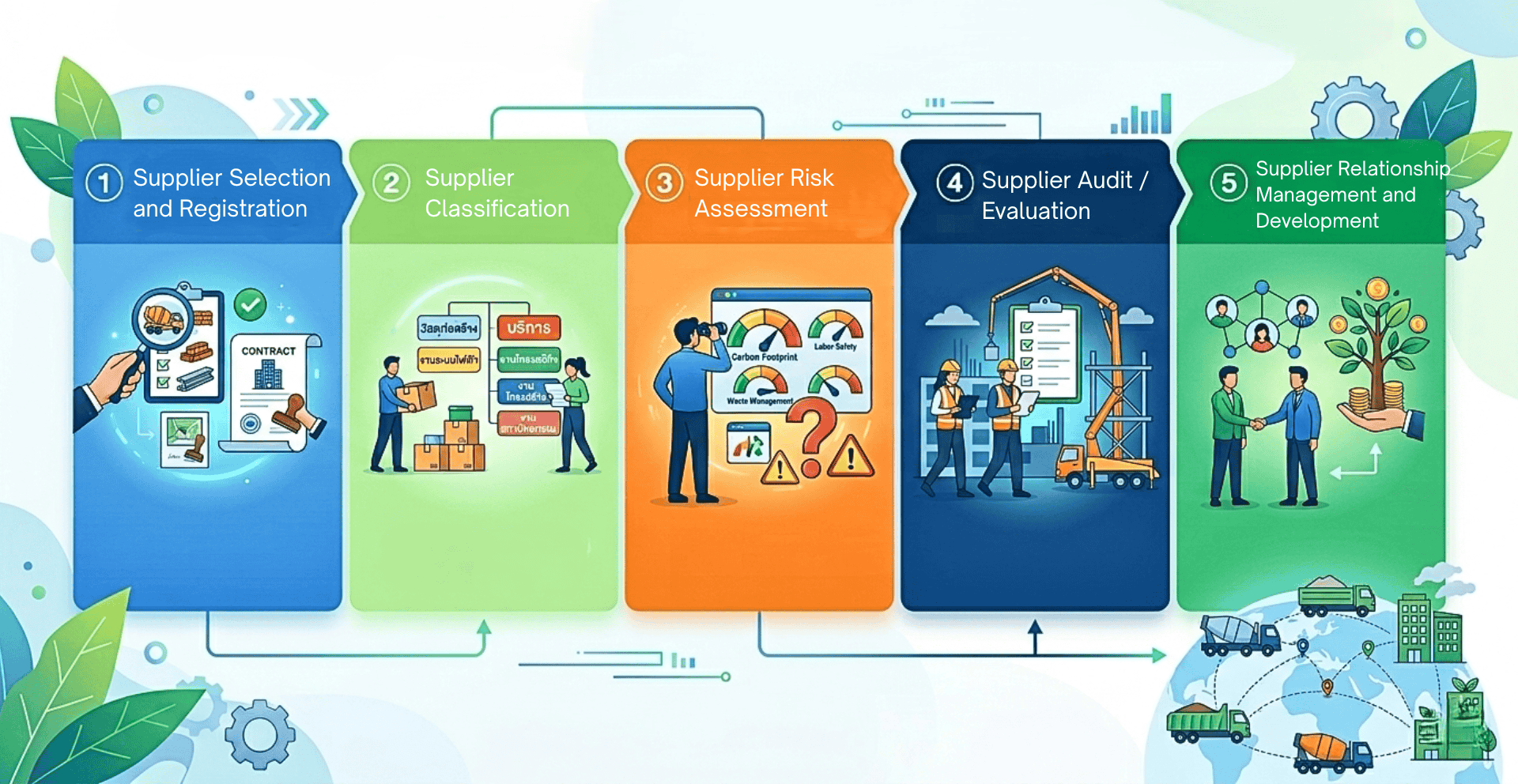
Grievance and Remediation Mechanism in the Supply Chain
The Company provides a Supply Chain Grievance Mechanism for workers, suppliers, communities, and
stakeholders in the supply chain, enabling them to safely, confidentially, and without retaliation report human rights violations, unfair labour practices, or environmental impacts. The Company establishes appropriate investigation, corrective, and remediation processes (Non-Retaliation), and continuously monitors results through quality control procedures according to ISO 9001:2015 via Supalai contact center 1720.
Performance results for 2025
The Company has developed a Supplier Code of Conduct whose content and scope align with the Company's Business Code of Conduct, as well as international principles and best practices. Training and communication are provided to all suppliers to raise awareness of the importance of conducting business responsibly towards the environment and society, and with good corporate governance, as well as to serve as guidelines for suppliers to operate in accordance with the Company's guidelines. All direct suppliers (Tier-1 suppliers) and new suppliers are required to sign an acknowledgment from the start of the supplier registration process. There is a process to monitor supplier operations and evaluate their performance to ensure compliance with the Supplier Code of Conduct. Suppliers must be able to demonstrate compliance with the Code of Conduct whenever requested. The Company will use various methods determined by the level criteria supplier risks, such as requiring suppliers to self-certify compliance with the Code of Conduct, conducting on-site supplier audits, or using questionnaires.
In 2025, the Company communicated and had suppliers sign an acknowledgment of the Supplier Code of Conduct as follows: (GRI: 308-1, 414-1)
Supplier Code of Conduct | 2025 |
Direct Suppliers (Tier-1 Suppliers)
| 100% 100% |
New Suppliers
| 100% 100% |
Supplier and Contractor Management
1. Selection and Registration of New Suppliers
The Company establishes guidelines for considering the selection and registration of new suppliers by checking the initial qualifications of suppliers and contractors before procurement, using a questionnaire with 4 basic qualification assessment criteria and checking relevant quality standard certification documents. Additionally, the Company requires all new suppliers to undergo risk assessment, sustainability, covering environmental, social, community rights, safety and hygiene, and governance aspects, using a supplier self-assessment form before proceeding with new supplier registration.
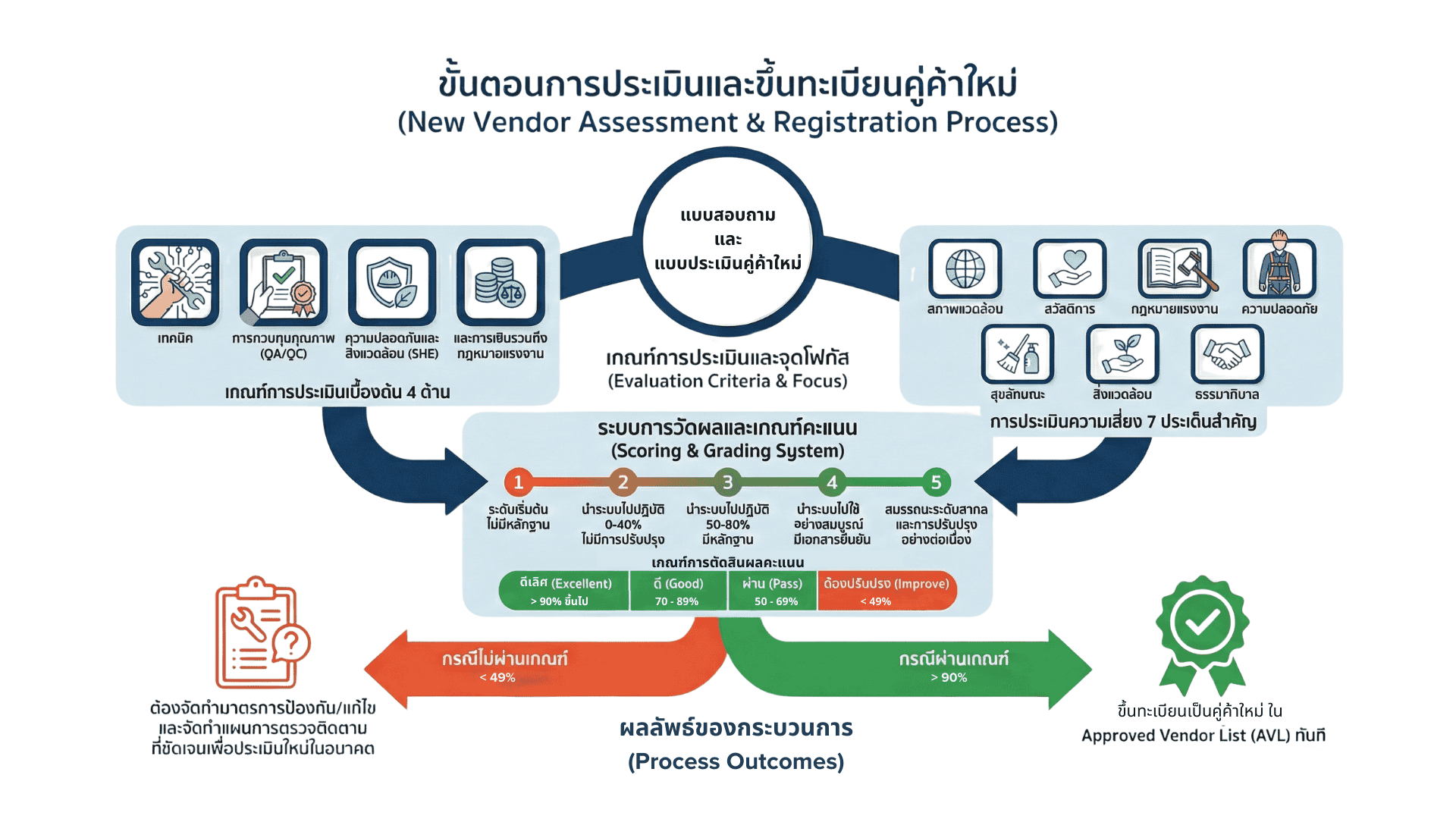
When new suppliers whose scores meet the criteria and have no economic, social, environmental, or governance risks sign an acknowledgment of the Supplier Code of Conduct, the Company will proceed with new supplier registration. However, if the scores do not meet the assessment criteria or there are risks, the supplier must implement corrective actions or preventive measures and have a clear monitoring plan to achieve an acceptable score before being registered as a new supplier with the Company.
In 2025, the Company registered 97 new suppliers who passed the selection process, representing 99% of all new suppliers.
2. Supplier Classification
Identification of Critical Suppliers
In 2025, the Company had a total of 123 direct suppliers and contractors in its supply chain (Tier-1 suppliers). Of these, 98 were construction material suppliers, accounting for 80% of all suppliers.
The Company analyzed and identified critical suppliers from those providing goods and services in the entire supply chain, using criteria to identify critical suppliers based on with annual procurement values exceeding 5 million THB, being a supplier of essential business components, and being a niche supplier in the market or one for whom no alternative products can be found. The criteria for identifying suppliers are as follows:
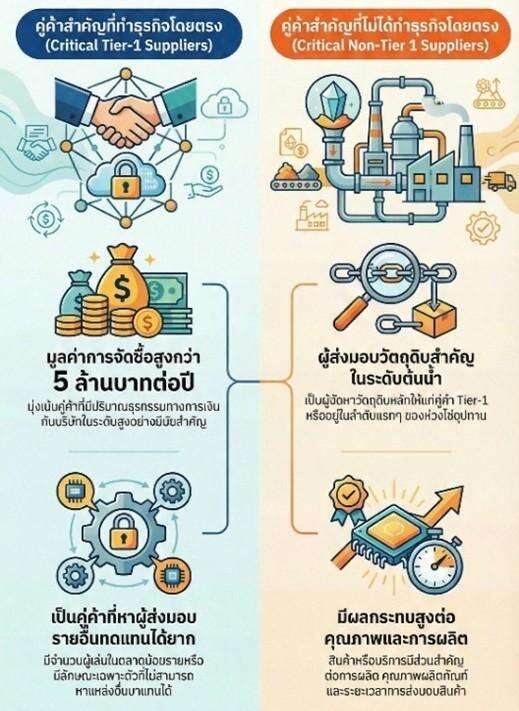
From the analysis, it was found that the Company has 123 critical tier-1 suppliers, accounting for 18% of all suppliers, with a procurement value representing 87% of the total procurement value. Of these, 98 are construction material suppliers, accounting for 80% of all critical tier-1 suppliers.
As for critical non-tier 1 suppliers, there are 78 entities.
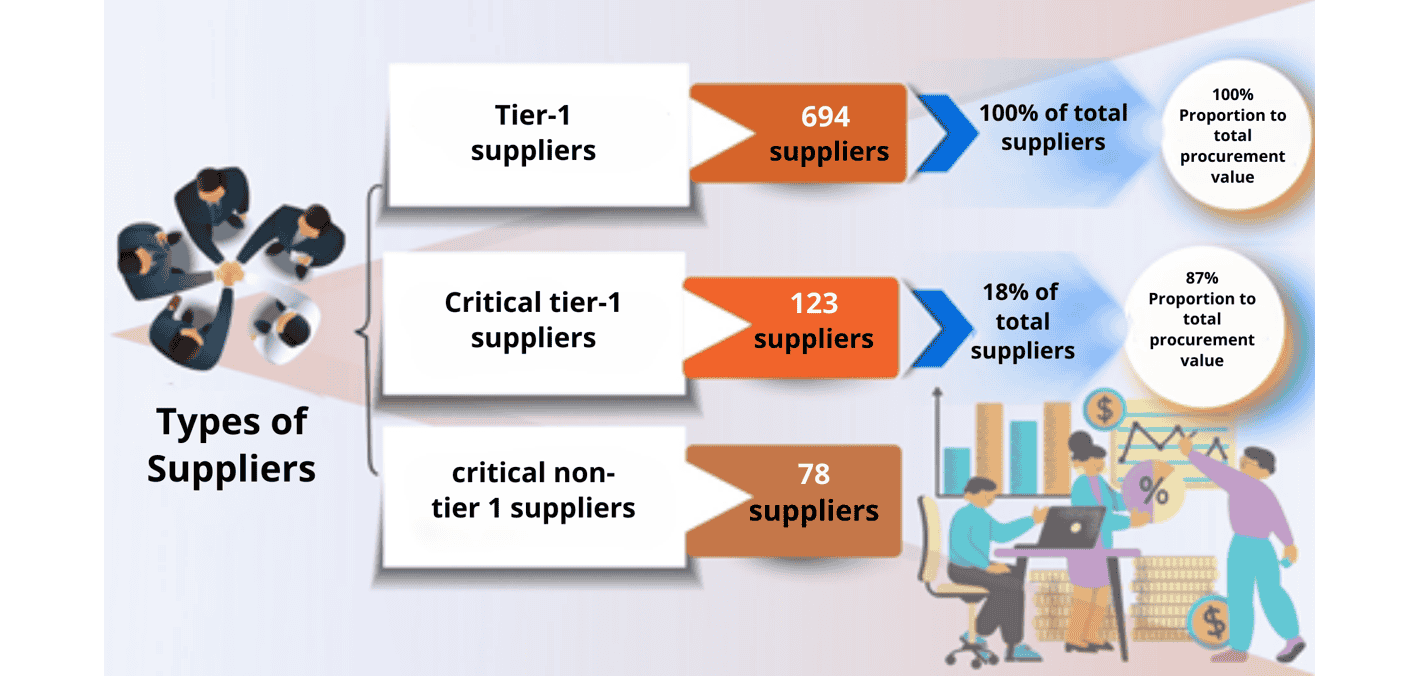
3. Supply Chain Risk Assessment
The Company assesses supplier risks that may impact its business operations, society, and the environment at least annually once, using supplier assessment forms, interviews, and reference document verification. This covers economic risks such as quality, delivery time and consistency, and origin; Environmental risks such as compliance with environmental laws, management, and prevention of impacts on environment and natural resources; Social aspects such as labour practices, respect for community rights, and safety; and Corporate governance aspects such as fair competition and prevention of corruption. The Company determines risk levels based on assessment scores and sets additional operational guidelines for suppliers with various risk levels as follows:
The assessment is linked to Enterprise Risk Management and climate-related risks, climate, including Nature-related Risks, to support the management of Scope 3 Greenhouse Gas Emissions and the long-term business continuity of the supply chain.
Risk Level | Operational guidelines for controlling and monitoring risks |
Very low |
|
Low |
|
Medium |
|
High |
|
Very high |
|
In 2025, the Company assessed the risks of its direct suppliers with procurement values exceeding 5 million Baht. and above, totaling 123 entities, representing 18% of all suppliers. "No suppliers were found to have very high risk." All suppliers met the Company's specified standards.
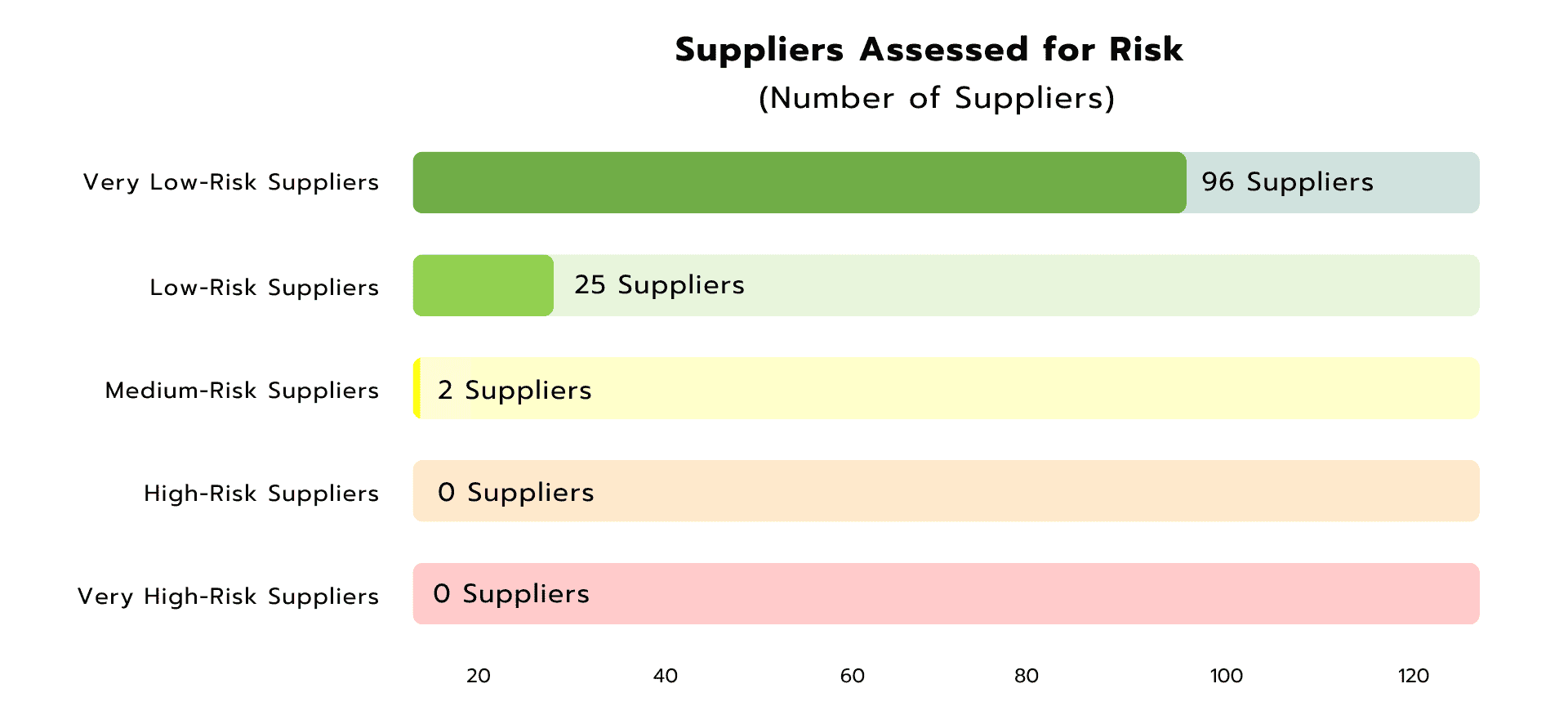
4. Supplier Audit
The Company conducts on-site supplier audits covering economic, environmental, social, and
governance (On-site ESG Audit), with criteria and frequency of assessment based on the supplier's risk level, conducted by the Procurement Department and the requested party. The Company will prepare a supplier audit plan for each supplier type and send a letter of intent to audit, specifying the visit date, time, and relevant audit criteria documents in advance. In 2025, the Company had no suppliers that met the criteria for an on-site audit.
However, the Company conducted site visits to 7 critical tier-1 suppliers to build trust, strengthen business relationships, and verify that production or service standards comply with agreements. This helps reduce operational risks, facilitates knowledge exchange for developing new innovations, and expands long-term sustainable business opportunities together.
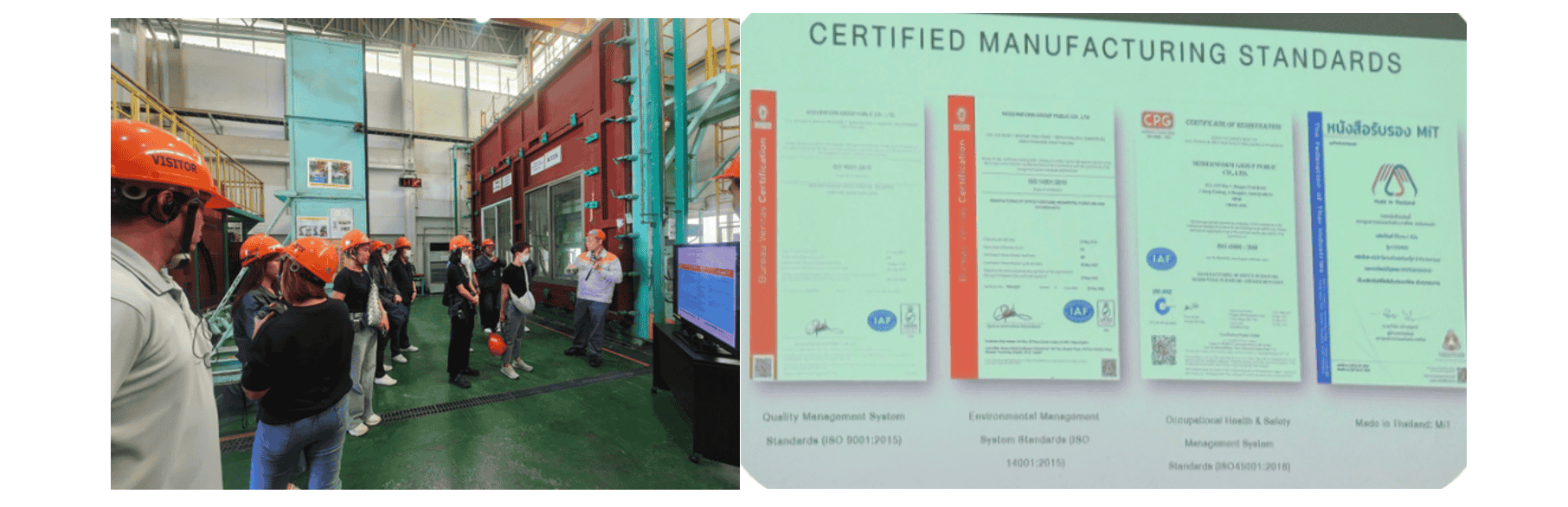
5. Relationships and Development of Supplier & Contractor Potential
Developing a sustainable supply chain with operations that comply with international standards or various regulations requires knowledge. Supplier understanding and engagement are very important, especially for material suppliers, equipment that supplies key raw materials in the construction process. Therefore, the Company focuses on raising supplier awareness for responsible business operations, providing knowledge on quality development, as well as practices consistent with human rights principles and new regulatory changes, both domestic and international, affecting the real estate development business.
The Company has a process of selecting key issues that suppliers and contractors are interested in and that impact them in terms of economy, health and safety, and the environment. These issues are then used to organize training sessions for suppliers and contractors.
Supply Chain: Environment
Project to develop new standard Green Products for sustainable quality of life and environment
The construction industry is another factor contributing to climate change. Therefore, the Company collaborates with leading business partners to initiate innovations in residential project development, focusing on mutual knowledge and experience exchange for studying and presenting new, high-quality, environmentally friendly products that can be further developed in the construction industry. This involves joint development with CPAC in the cement business, Siam Cement Group (SCG), to develop Green Products such as CPAC High Strength Concrete for 18 high rise projects, aiming to comprehensively meet the needs of environmentally conscious customers and promote Green Construction with the goal of elevating national construction standards to be environmentally friendly throughout all construction processes across the supply chain for sustainable growth.
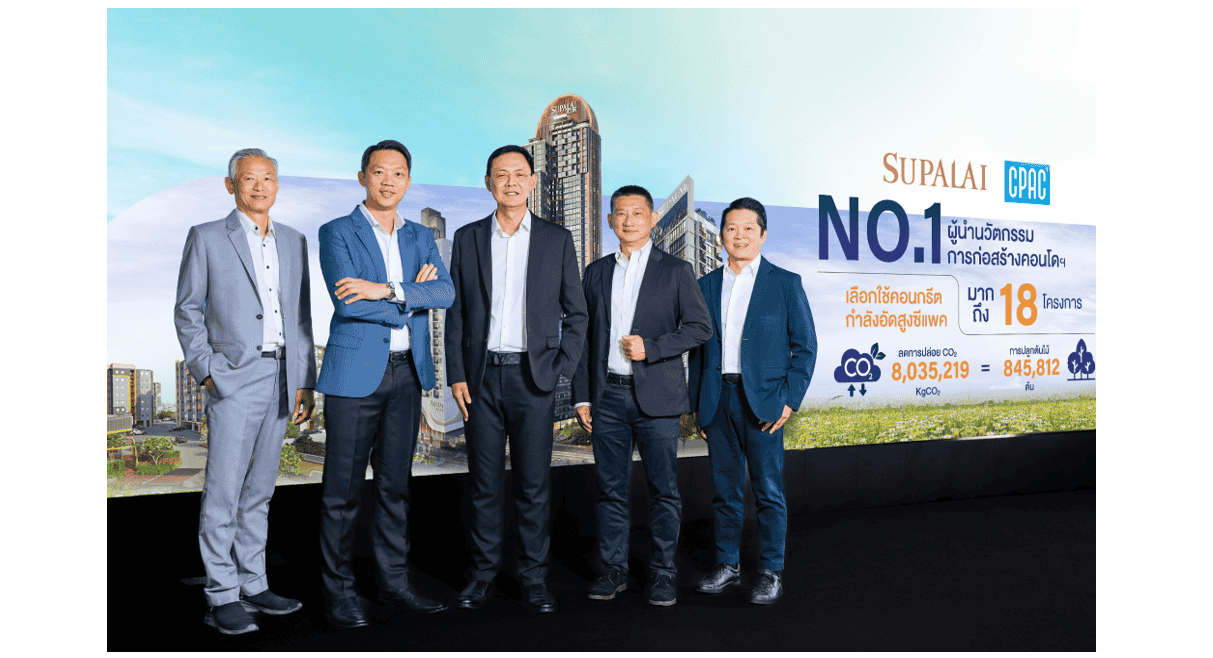
Supply Chain Social & Environment: Collaboration with Contractors
The Company has established operational guidelines for controlling and monitoring risks. In 2025, contractor audits were conducted operating in 60 projects, divided into 57 Low Rise projects and a number of High Rise Projects 3 projects. The Company continuously monitoring of social and environmental supply chain management in new and ongoing construction projects. This is linked to and sets indicators for ESG issues. The Company uses the audit results to jointly develop employees, contractors, and suppliers, and requires all contractors to pass the assessment criteria set by the Company.
In cases where a contractor does not meet the criteria, the Company requires immediate corrective actions on relevant issues, providing management advice, training, or improvement measures, along with continuously monitoring and evaluating supplier performance.
continuously.
ESG-linked audit guidelines consists of 3 main parts:
1) Environmental impact management and reduction plans, such as for dust, noise, wastewater, and waste management.
2) Prevention and reduction of social impacts, such as traffic.
3) Monitoring measures, such as pre-construction, during-construction, and post-construction checks.
Contractor Scoring: The audit results will be used as criteria for evaluating contractors to encourage them to collaborate and operate according to the Company's standards.
Score Level | Assessment Scoring Criteria |
≥ 90% or more = Excellent | Met criteria, 90% or more |
81 - 89% = Very Good | Met criteria, found only minor non-compliance issues. |
70 - 89% = Good | Met criteria, found moderate deficiencies. |
50 - 69% = Fair | Met criteria, found deficiencies that require collaboration with contractors to improve and develop issues that have not yet met the criteria. |
≤ 49% = Needs Improvement | Did not meet criteria
|
Continuous Improvement: Develop a Corrective Action Plan for identified deficiencies, set a timeframe for implementation, and support additional training on high-risk ESG issues such as occupational safety and health. If safety equipment is not available, immediately suspend work on the project, including human rights issues.
ESG Assessment | Number of projects assessed. | Contractors who passed the ESG assessment | |
Number (of entities) | Proportion (%) | ||
High Rise Projects | 3 | 2 | 100 |
Low Rise Projects | 57 | 140 | 100 |
Construction knowledge training
The Company promotes the development of skilled labour in construction projects by collaborating with manufacturers or suppliers to organize training on the installation of various materials and systems to meet the Company's standards. This aims to enhance construction quality and reduce risks from construction errors, including occupational safety and health. The training covers both theoretical and practical sessions, developing knowledge, skills, and abilities, which enables workers to further apply their knowledge and skills in future projects.
High Rise Project
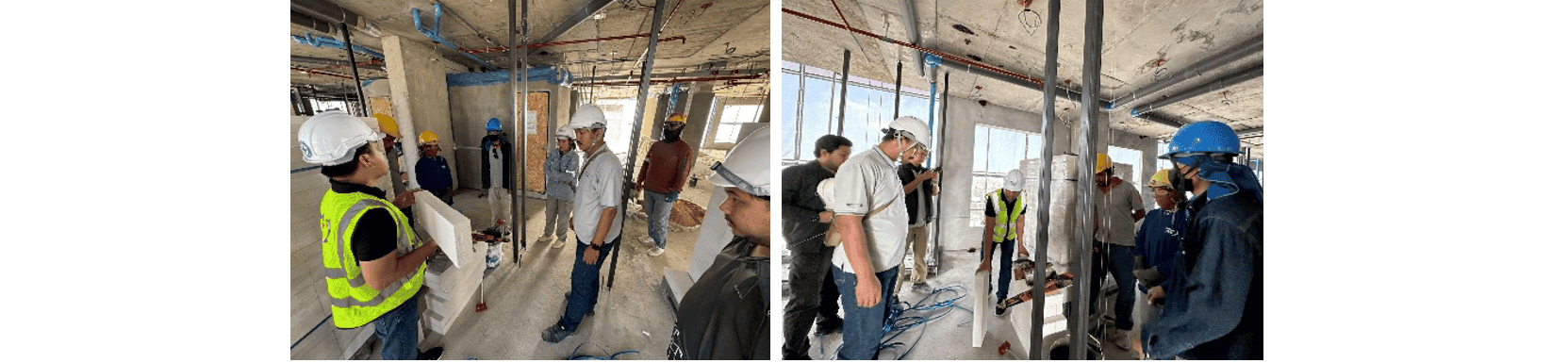
Bricklaying training
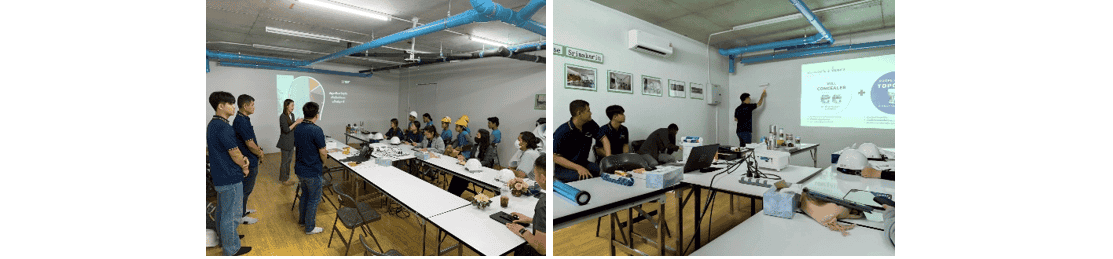 Painting training
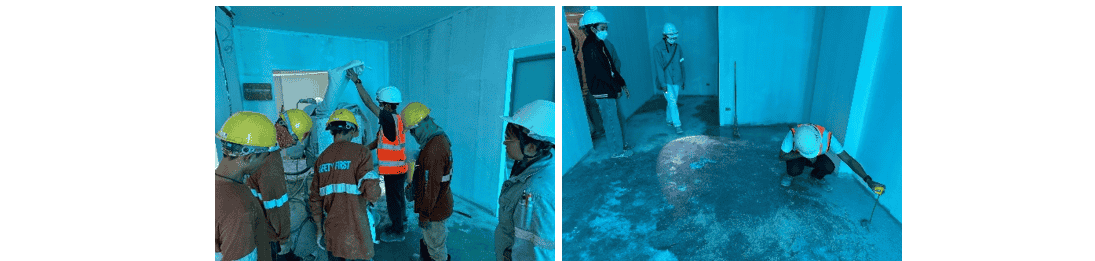
Floor leveling training
 PPR pipe welding training
Low Rise Projects
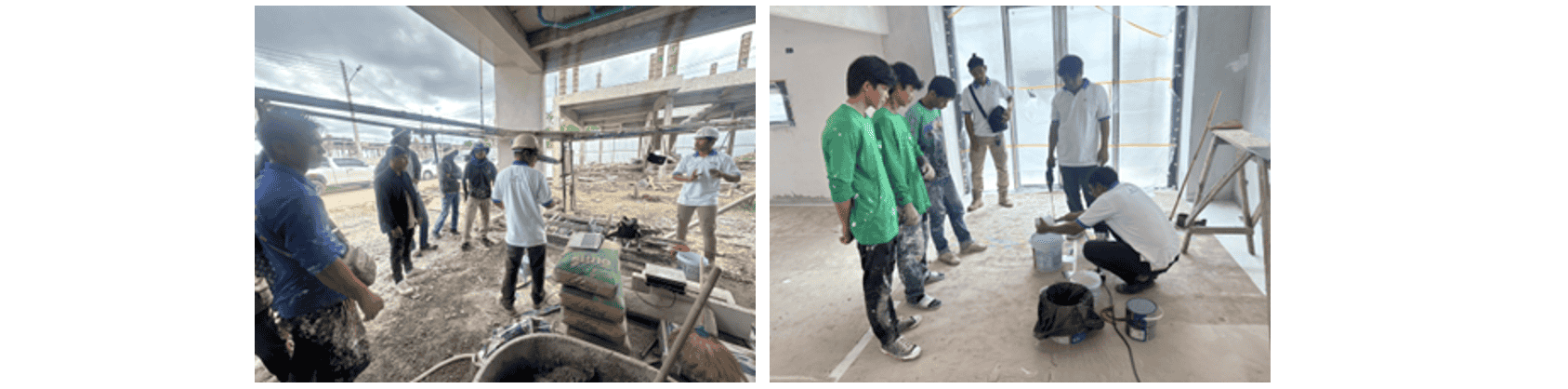
Ceiling installation standard training
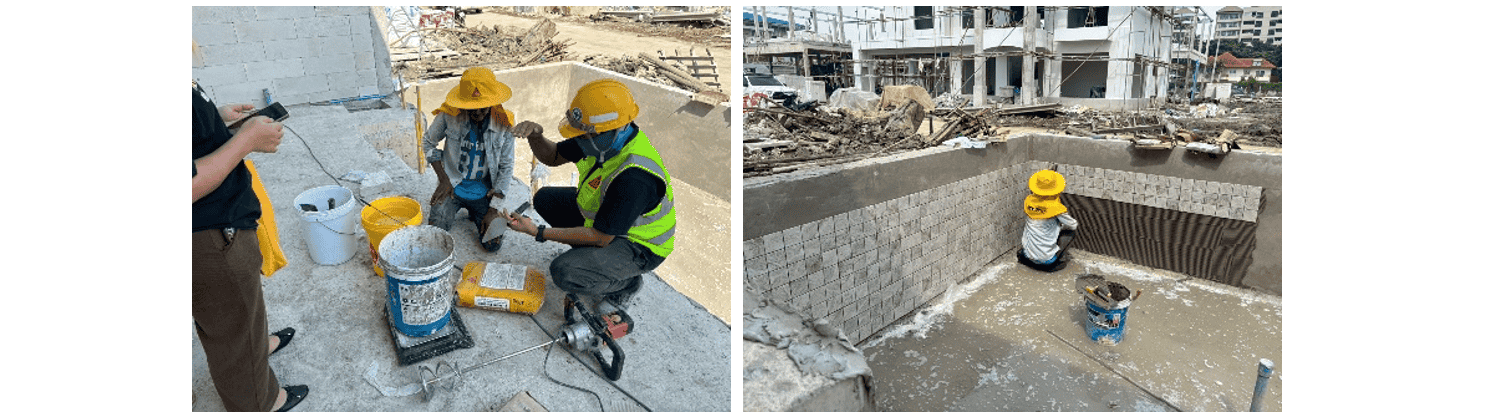
Training on exterior base painting for houses
Hosted a Focus Group for feedback in 2025
The Company organized a feedback forum ESG Focus Group with suppliers and business partners annually for the 7th consecutive year, by In 2025, the Company invited experts to participate in discussed social and environmental supply chain management to create sustainable value with key business partners, such as SCG Ceramics Public Company Limited., Westcon Co., Ltd., Deco Enterprises Co., Ltd., Starmark Manufacturing Co., Ltd., Sahamosaic Industry Public Company Limited (Durafloor) and SECCO Co., Ltd. to exchange views on important issues. Additionally, there was an exchange of views various issues are:
Product and Service Image (Quality of Products and Services)
Fairness to Suppliers (Fair Business)
Human Rights
Environmentally Friendly Procurement Guidelines (Green Procurement)
Impacts and Responses to Climate Change
The Company has incorporated the voices of its partners, which are a crucial force in driving the organization towards ESG goals and sustainable growth, and is committed to developing comprehensive organization for the benefit of stakeholders, society, and the environment, while creating Eco-system a business ecosystem with quality and shared value for long-term mutual benefit.
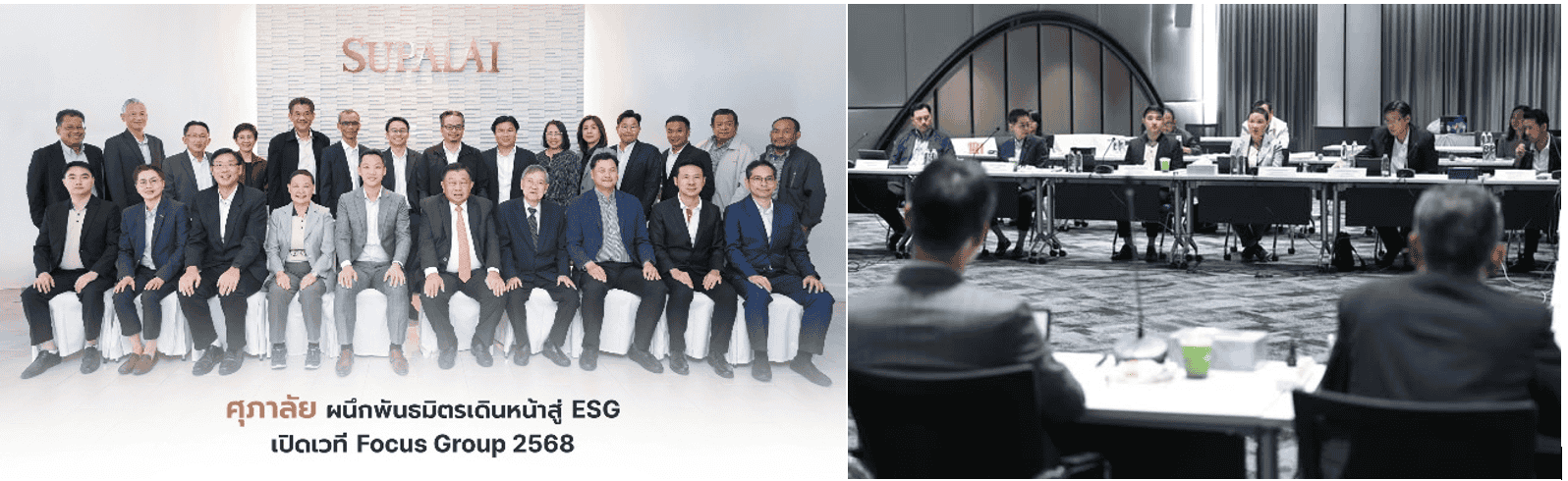
Training for suppliers and contractors on social and environmental issues.
The Company involvement in initiatives on social and environmental impacts in supply chain as following: :
1. Training for Suppliers and Contractors on Human Rights in the Real Estate Business.
The Company supports suppliers and contractors by sharing best practices to demonstrate its commitment to human rights within and outside the organization, such as fair treatment, non-discrimination, and workplace safety. This training focuses on developing skills in social supply chain management and risk management, social aspects (Social Risk Management). It supports suppliers and contractors in applying knowledge to ethically manage labour according to international standards, reducing supply chain risks, and helping to screen and prevent human rights violations for business continuity. A total of 117 suppliers and contractors participated in both online and onsite training, with an overall satisfaction level of 84%.
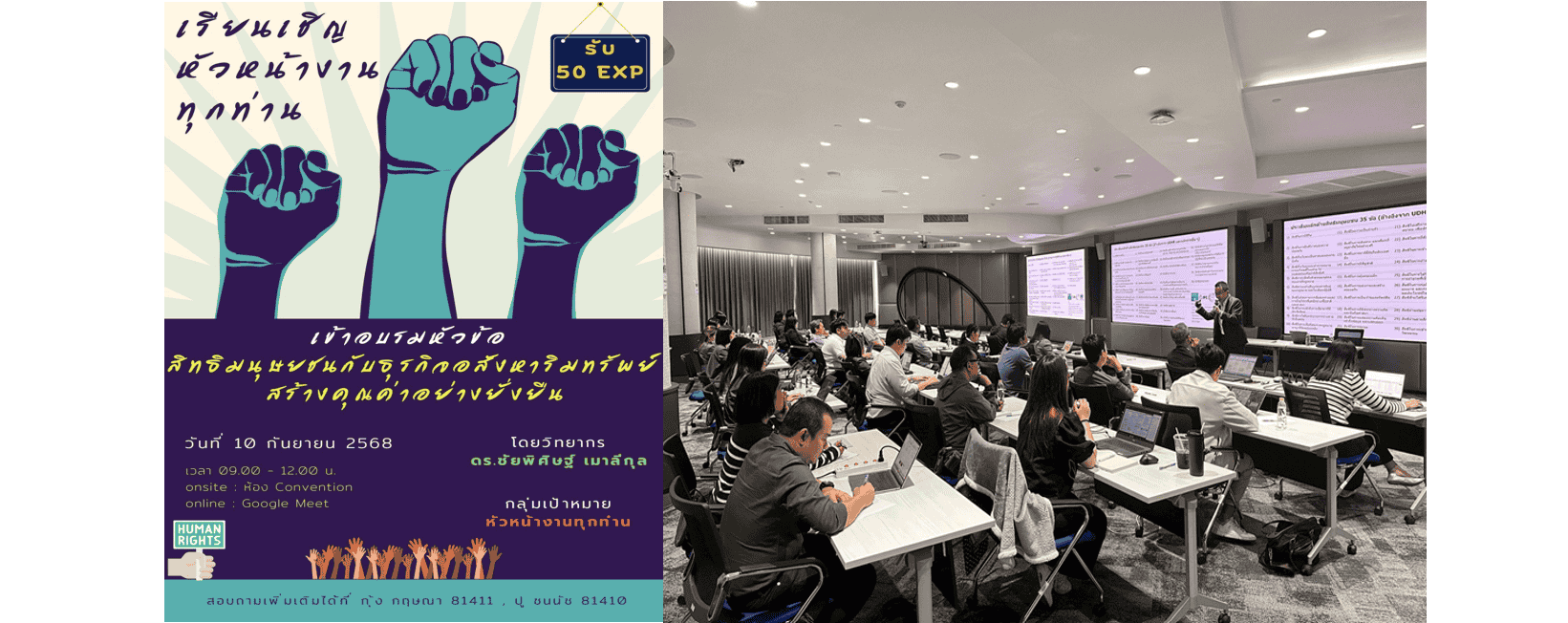
2. Supplier Training on Anti-Corruption
The Company invites suppliers SMEs to participated in lectures to raise awareness of corruption issues, including approaches to elevate transparent operational standards, and to expand the transparent business network to suppliers. by Support suppliers The Company's SMEs signed a declaration of intent with the CAC project to elevate SME suppliers in establishing a foundation for good corporate governance in Thailand and to enhance supplier potential and capabilities. This aims to collaboratively build a supply chain that aligns with the organization's sustainable development goals, while also considering responsibility towards all stakeholders.
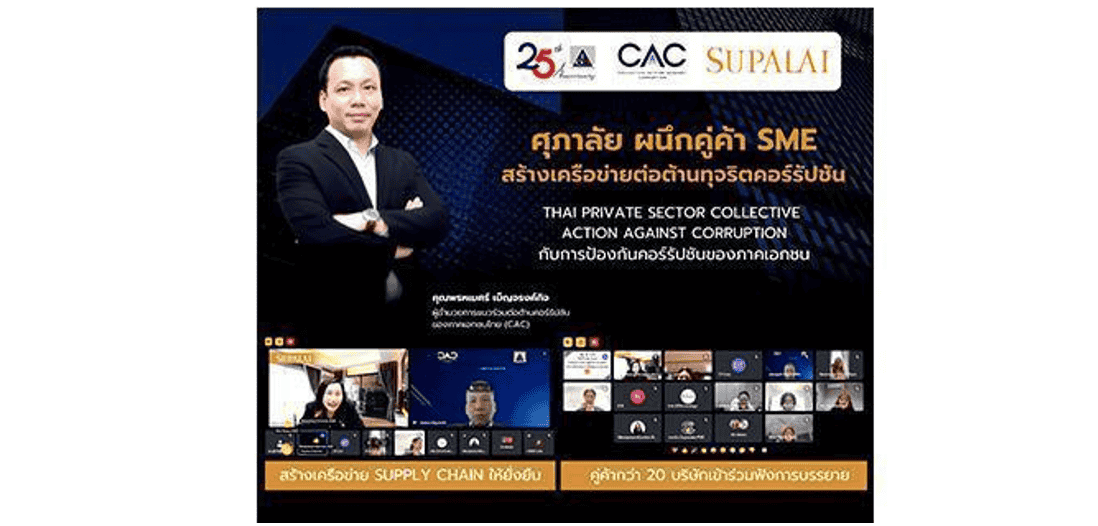
3. Supplier Development and Training in Greenhouse gas emission reduction
The Company has joined the Thailand Carbon Neutral Network (TCNN) under the operation of the Thailand Greenhouse Gas Management Organization (Public Organization) – TGO, a pioneering organization in greenhouse gas management, to demonstrate its intention and commitment to managing and reducing greenhouse gas emissions. The Company has a plan to manage Impacts environmental aspects in the supply chain, aiming to reduce other indirect greenhouse gas emissions (Scope 3), where most emissions come from transportation by construction material manufacturers. This also includes establishing recruitment criteria and Select suppliers with adaptive and flexible approaches to climate change and have approaches to reduce greenhouse gas emissions.
The Company recognizes the issue of climate change response and management, which suppliers still have limited understanding of. Therefore, the Company supports and develops training on "The CFO & CFP Advantage: Leveraging Carbon Footprint for Competitive Edge and Sustainable Growth" and "Unlocking the advantage of business as well CFO & CFP: Enhancing Competitiveness and Sustainable Growth" by inviting suppliers to attend lectures to build knowledge on carbon footprint assessment CFO & CFP for management
environment throughout the supply chain.
Additionally, the Company has supported suppliers in registering CFO & CFP, which will lead to the establishment of effective management guidelines for reducing greenhouse gas emissions at factory, industry, and global levels. It also promotes supplier potential and capabilities to collaboratively build an Environmental Supply Chain that aligns with the organization's sustainable development goals, while also considering social and environmental responsibility, with participants. Number of suppliers: 105 suppliers
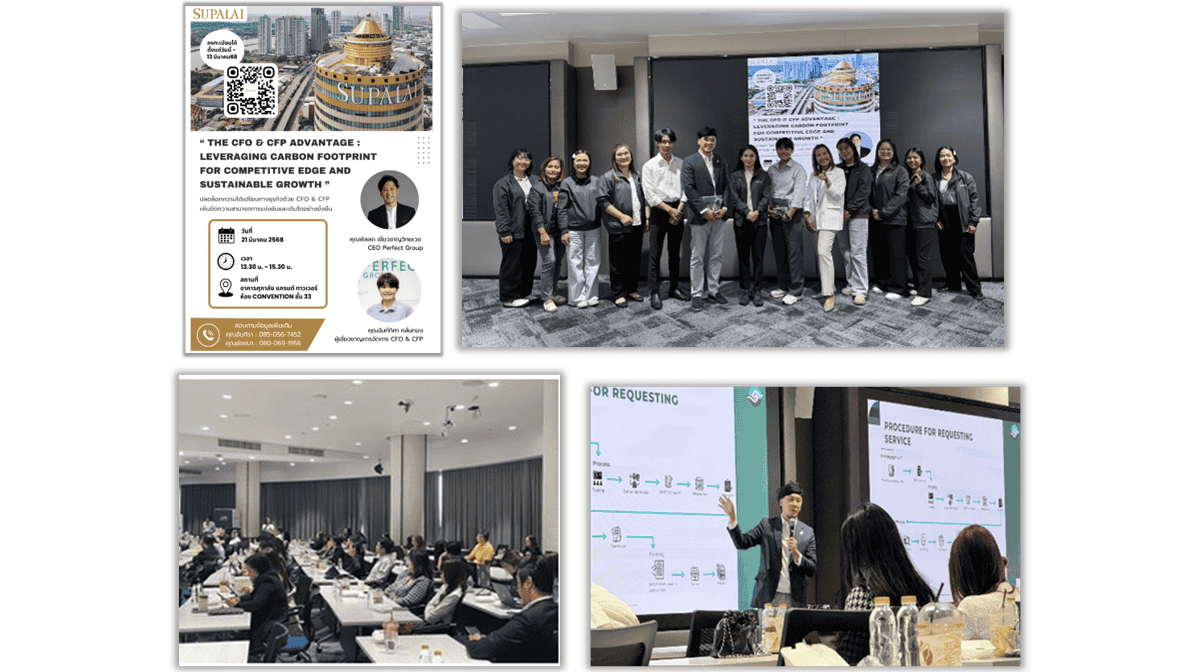
Benefits for Suppliers | Benefits for the Company | Benefits for Environmental |
|
|
|
Procurement of environmentally friendly materials (Green Procurement) (GRI 204-1)
The Company believes that sustainable success must be based on systematic social and environmental responsibility in all business processes of the Company and its suppliers. Therefore, it has established a responsible sourcing policy to ensure that the Company's procurement or sourcing processes help reduce negative impacts on the environment, society, and economy throughout the supply chain, while creating value and sustainability for all stakeholders, and operating transparently and respecting human rights as a priority.
In 2025, the Company focuses on promoting supplier operations and supporting green procurement and the selection of construction materials with environmental standards. This is for procurement that considers environmental, social, and governance (ESG) principles, which not only helps reduce negative impacts but also promotes the responsible growth of suppliers and enhances the Company's long-term competitiveness.
The Company promotes supply chain traceability for key construction materials to prevent risks related to human rights violations, ecosystem destruction, and unsustainable resource use.

2023 | 2024 | 2025 | ||
Proportion of spending on local suppliers (Thailand) | 13% | 14% | 16% | |
Proportion of environmentally friendly construction material purchases out of total orders | N/A | 54% | 51%* | |
*In 2025, the proportion of procurement significantly decreased due to a reduction in construction projects.
Fair and Transparent Procurement
The Company is committed to conducting procurement with honesty and fairness, operating with transparency and good governance. It elevates transparency standards in procurement processes, reduces corruption risks, and promotes ethical business operations by establishing verifiable procurement principles, measures, and guidelines, and valuing all suppliers without discrimination. The Company has processes for price comparison and competitive bidding before procurement, with the construction project committee jointly considering procurement for transparency and fairness.
Promoting good liquidity for suppliers
The Company prioritizes fair business practices with its suppliers to promote cash flow liquidity and capital management for both suppliers and the Company. Therefore, it has established policies and guidelines for paying for goods and services to suppliers, fairly, accurately, transparently, and promptly, by making payments according to installments or credit terms specified in the contract conditions, and has communicated the policy mentioned above for mutual acknowledgment from the time suppliers are registered. The Company's average annual payment period to suppliers is as follows:
Details | according to the policy | 2023 | 2024 | 2025 |
Average supplier payment period | 30 business days | 30 days | 30 days | 30 days |
However, payment periods may not always align with the policy due to business-specific limitations and various additional factors that need consideration, such as the type of goods and services business, contract duration with suppliers, etc.
Law Violation Incidents
Law Violation Incidents
| Metric | Current Year | Previous Year | Two Years Ago |
|---|---|---|---|
| The total number of cases or incidents of significant violations of laws or regulations regarding social and human rights (Cases) | 0 | 0 | 0 |
| The total number of cases or incidents that cause significant labor disputes (Cases) | 0 | 0 | 0 |
| The total number of cases or complaints related to consumer rights violations (Cases) | 0 | 0 | 0 |
| The total number of cases or complaints related to partner rights violations (Cases) | 0 | 0 | 0 |
| The total number of cases or incidents that cause disputes with the community/society (Cases) | 0 | 0 | 0 |
| The total number of cases or incidents related to cyber security or customer data breaches (Cases) | 0 | 0 | 0 |
| The total number of cases or incidents related to safety and occupational health at work (Cases) | 0 | 0 | 0 |